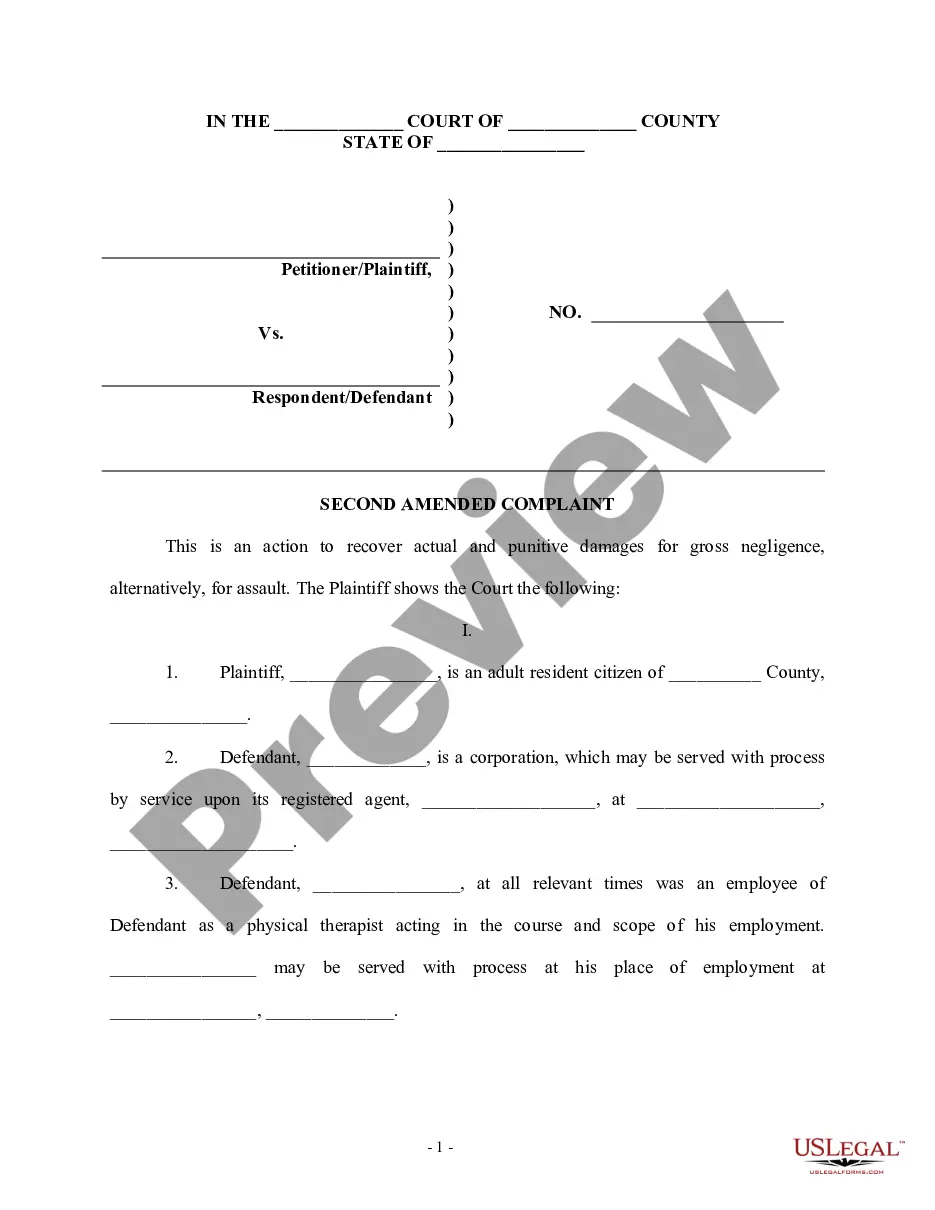
Second Amended Print Without Newline In Queens
Description


Get your form ready online
Our built-in tools help you complete, sign, share, and store your documents in one place.
Make edits, fill in missing information, and update formatting in US Legal Forms—just like you would in MS Word.
Download a copy, print it, send it by email, or mail it via USPS—whatever works best for your next step.
Sign and collect signatures with our SignNow integration. Send to multiple recipients, set reminders, and more. Go Premium to unlock E-Sign.
If this form requires notarization, complete it online through a secure video call—no need to meet a notary in person or wait for an appointment.
We protect your documents and personal data by following strict security and privacy standards.

Make edits, fill in missing information, and update formatting in US Legal Forms—just like you would in MS Word.

Download a copy, print it, send it by email, or mail it via USPS—whatever works best for your next step.

Sign and collect signatures with our SignNow integration. Send to multiple recipients, set reminders, and more. Go Premium to unlock E-Sign.

If this form requires notarization, complete it online through a secure video call—no need to meet a notary in person or wait for an appointment.

We protect your documents and personal data by following strict security and privacy standards.
Looking for another form?




Form popularity
FAQ
By default, Python's print statement ends each string that is passed into the function with a newline character, \n . This behavior can be overridden with the function's end parameter, which is the core of this method. Rather than ending the output with a newline, we use a carriage return.
To overwrite a pre-existing file with new content, use the open() function with the 'w' parameter (for write) included. This parameter tells Python that you want to overwrite any existing content in the file. Then, use the write() method to write a string or bytes to the file.
Though you can't replace the print keyword (in Python 2. x print is a keyword), it's common practice to replace sys. stdout to do something similar to print overriding; for example, with an instance of StringIO. StringIO .
The end of the line on each print is added through the parameter end of print. By default, it's ``end='\n''', where ``\n'' means new line. If you replace it with ``end='''' it will no longer add a new line after the print.
However, if you want to print over and over the same line in Python, you have to use the carriage return \r symbol with the end argument. Even though the first 2 print statements are executed, the carriage return makes the next stdout line start at the beginning of the current line.
To print without adding a new line in Python, you can use the end parameter in the print() function. If you set the end parameter to an empty string, the output continues in the same line.
The replace() function is used in Python to replace occurrences of a substring within a string. It takes two arguments: the substring to be replaced and the substring to replace it with. Example: my_string. replace('old', 'new') replaces 'old' with 'new' in my_string .
Using printf it's easy—just leave off the ending \n in your format string. With echo, use the -n option.
A newline character in Python, also called an escape sequence, is represented by \n . This character is used to insert a line break in text, separating one line from the next. For instance, consider this simple example: print("Hello,\nWorld!")