Discrimination Title Vii Rights With Child Protective Services
Description
Get your form ready online
Our built-in tools help you complete, sign, share, and store your documents in one place.
Make edits, fill in missing information, and update formatting in US Legal Forms—just like you would in MS Word.
Download a copy, print it, send it by email, or mail it via USPS—whatever works best for your next step.
Sign and collect signatures with our SignNow integration. Send to multiple recipients, set reminders, and more. Go Premium to unlock E-Sign.
If this form requires notarization, complete it online through a secure video call—no need to meet a notary in person or wait for an appointment.
We protect your documents and personal data by following strict security and privacy standards.

Make edits, fill in missing information, and update formatting in US Legal Forms—just like you would in MS Word.

Download a copy, print it, send it by email, or mail it via USPS—whatever works best for your next step.

Sign and collect signatures with our SignNow integration. Send to multiple recipients, set reminders, and more. Go Premium to unlock E-Sign.

If this form requires notarization, complete it online through a secure video call—no need to meet a notary in person or wait for an appointment.

We protect your documents and personal data by following strict security and privacy standards.
Looking for another form?
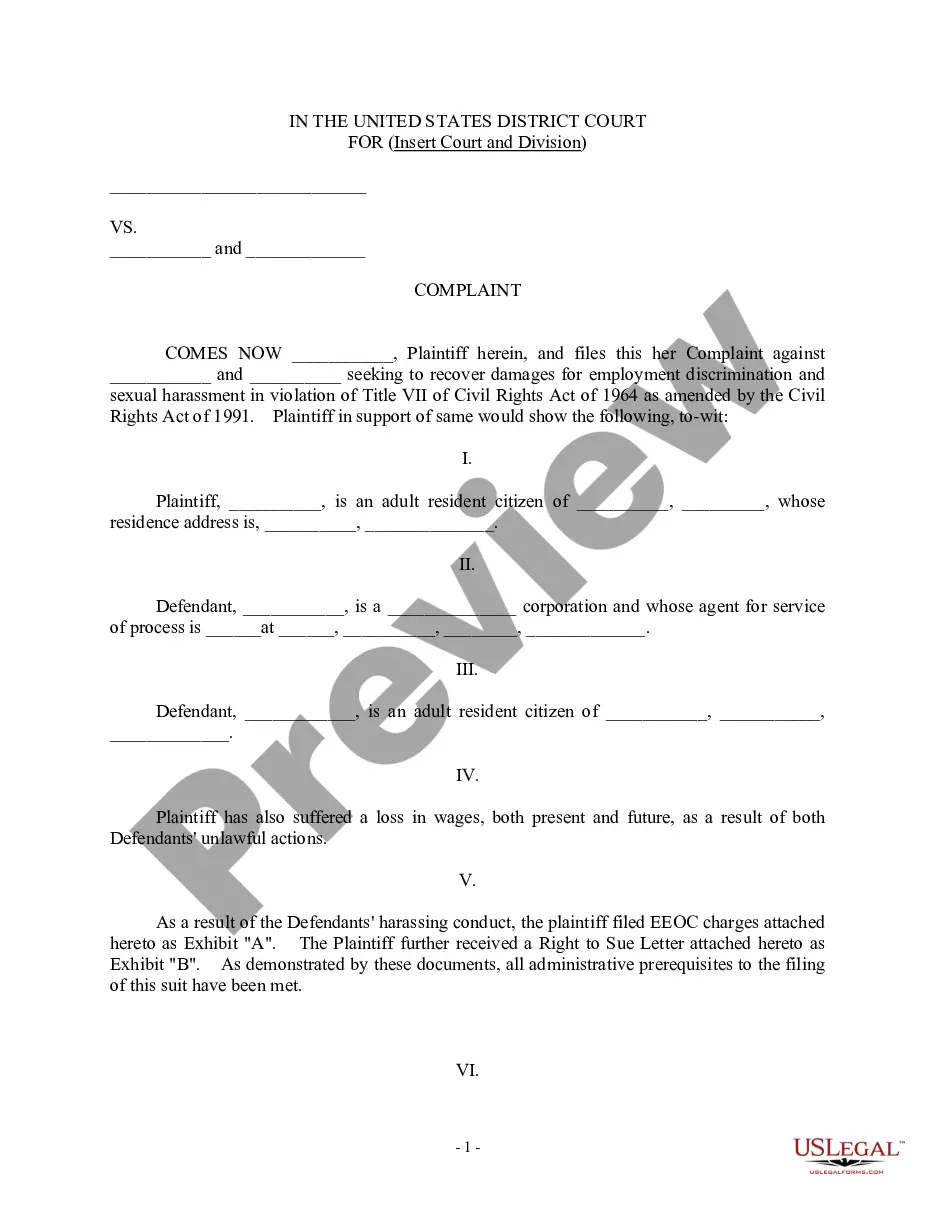
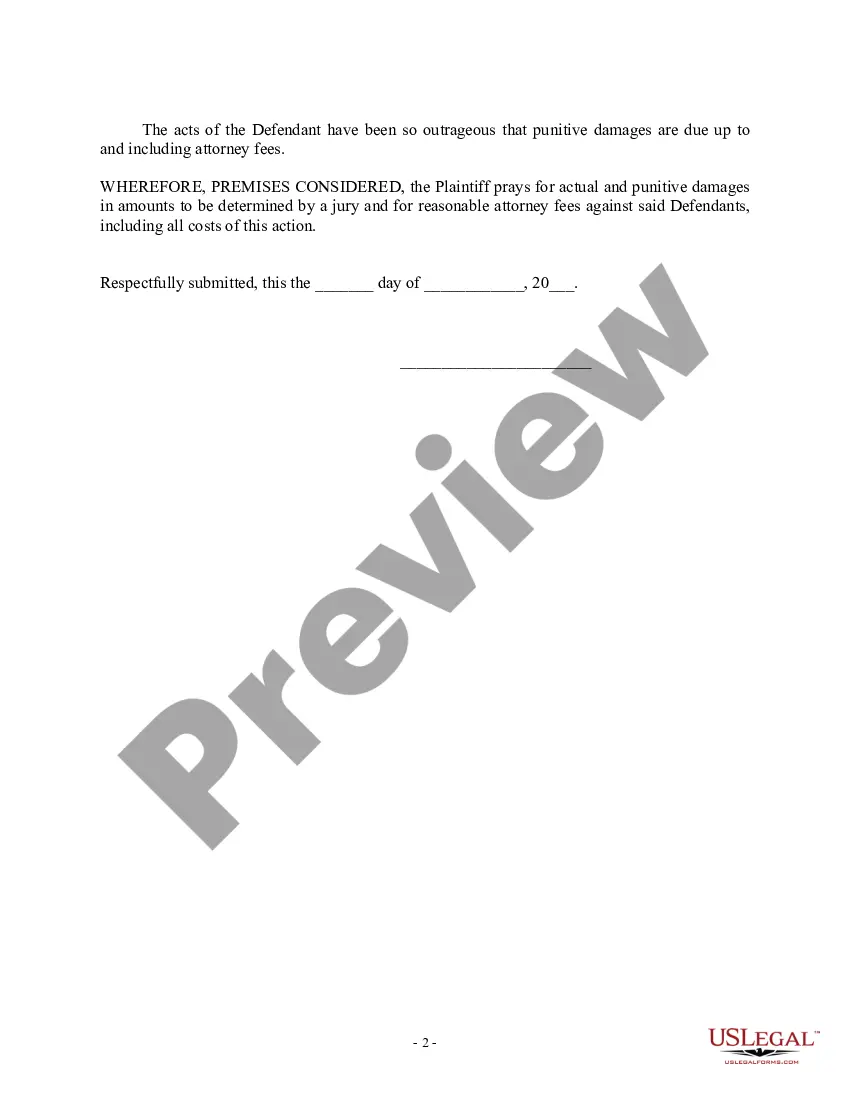
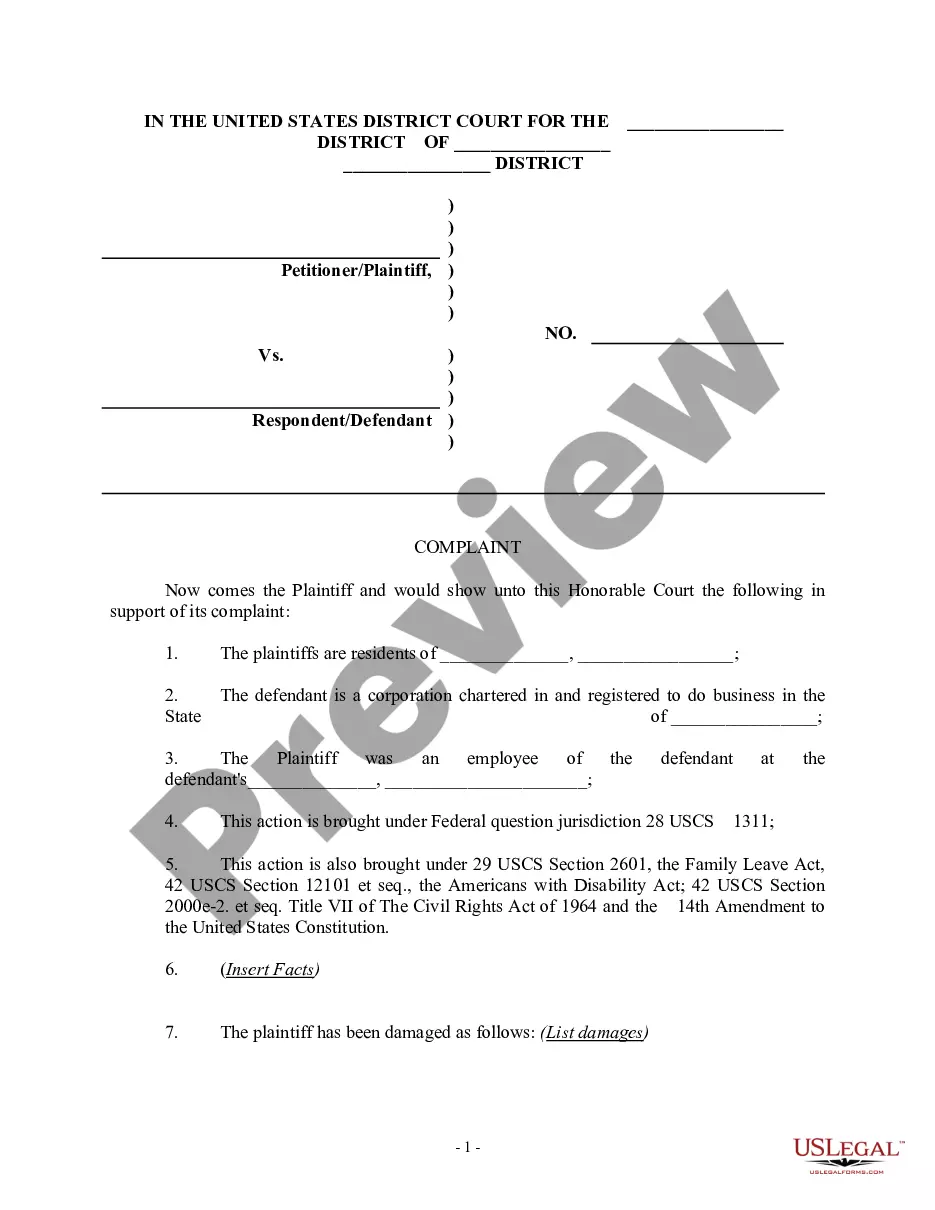
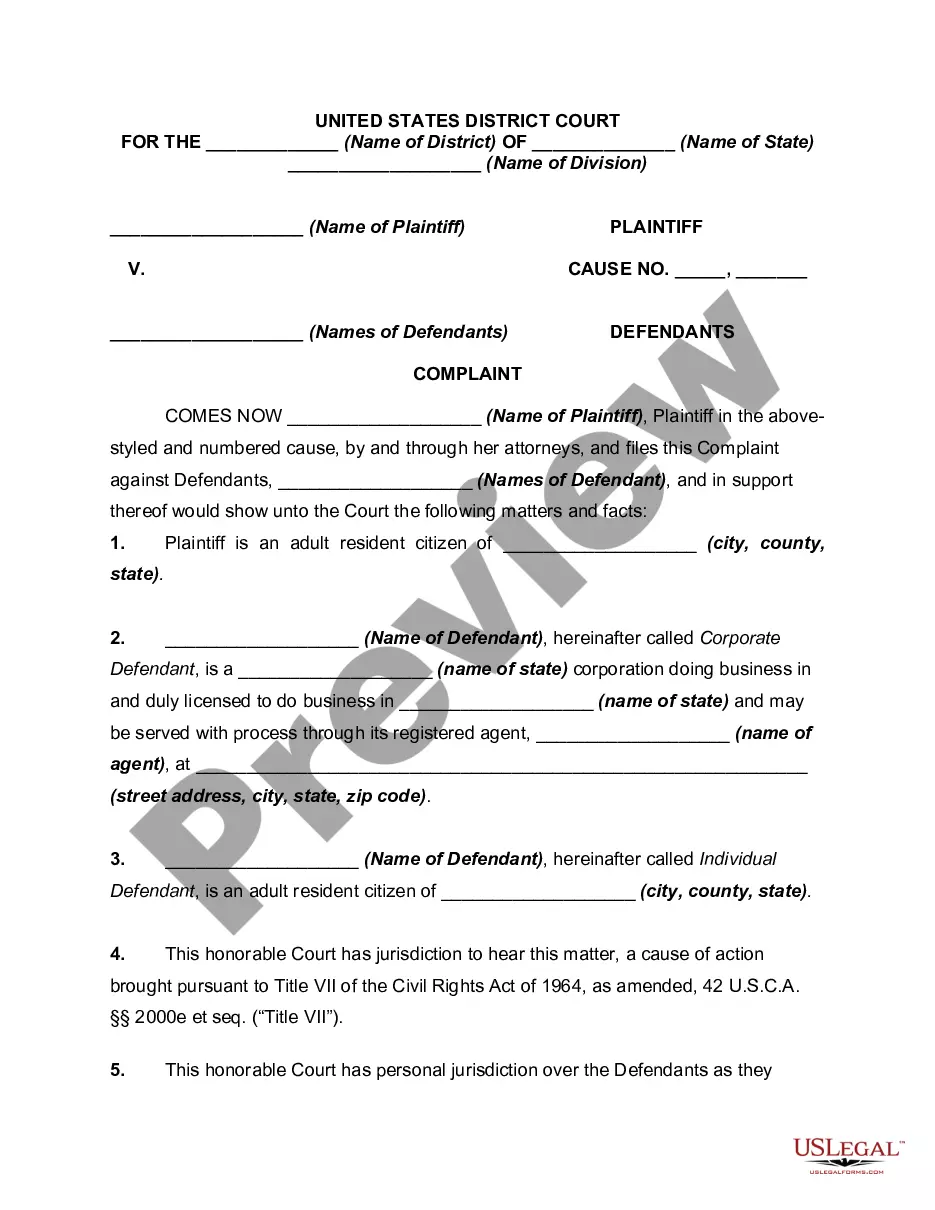
How to fill out Complaint For Employment Or Workplace Discrimination And Sexual Harassment - Title VII Civil Rights Act?
Whether for business purposes or for individual affairs, everybody has to handle legal situations at some point in their life. Completing legal documents demands careful attention, starting with choosing the correct form sample. For instance, when you choose a wrong version of the Discrimination Title Vii Rights With Child Protective Services, it will be turned down once you submit it. It is therefore important to get a reliable source of legal documents like US Legal Forms.
If you have to get a Discrimination Title Vii Rights With Child Protective Services sample, follow these easy steps:
- Find the template you need by using the search field or catalog navigation.
- Check out the form’s description to make sure it matches your case, state, and county.
- Click on the form’s preview to view it.
- If it is the wrong document, go back to the search function to find the Discrimination Title Vii Rights With Child Protective Services sample you need.
- Get the file when it matches your requirements.
- If you already have a US Legal Forms account, just click Log in to access previously saved documents in My Forms.
- If you don’t have an account yet, you may download the form by clicking Buy now.
- Choose the appropriate pricing option.
- Complete the account registration form.
- Pick your transaction method: use a bank card or PayPal account.
- Choose the document format you want and download the Discrimination Title Vii Rights With Child Protective Services.
- Once it is downloaded, you can fill out the form with the help of editing software or print it and finish it manually.
With a substantial US Legal Forms catalog at hand, you never have to spend time seeking for the appropriate template across the internet. Use the library’s easy navigation to get the right template for any occasion.
Form popularity
FAQ
Under a court's ?disparate impact? or ?adverse impact? analysis, a plaintiff can prevail in a lawsuit by establishing an employer's policy or practice affects members of the protected group so disproportionately that the court can infer discrimination from that impact.
When you make a discrimination claim, you need to provide the court with evidence from which it could decide that the discrimination took place. The obligation on you to provide this evidence is called the burden of proof.
?Put simply, the plaintiff in any Title VII case may establish a violation through a preponderance of evidence (whether direct or circumstantial) that a protected characteristic played 'a motivating factor. '? Costa, 299 F. 3d at 853-54; see also E.E.O.C. v.
A: Title VII prohibits disparate treatment based on sex, which may include treatment based on sex-based stereotypes. For example: An employer terminates an employee after learning she has been subjected to domestic violence, saying he fears the potential "drama battered women bring to the workplace."
Remedies May Include Compensatory & Punitive Damages Compensatory and punitive damages may be awarded in cases involving intentional discrimination based on a person's race, color, national origin, sex (including pregnancy, gender identity, and sexual orientation), religion, disability, or genetic information.