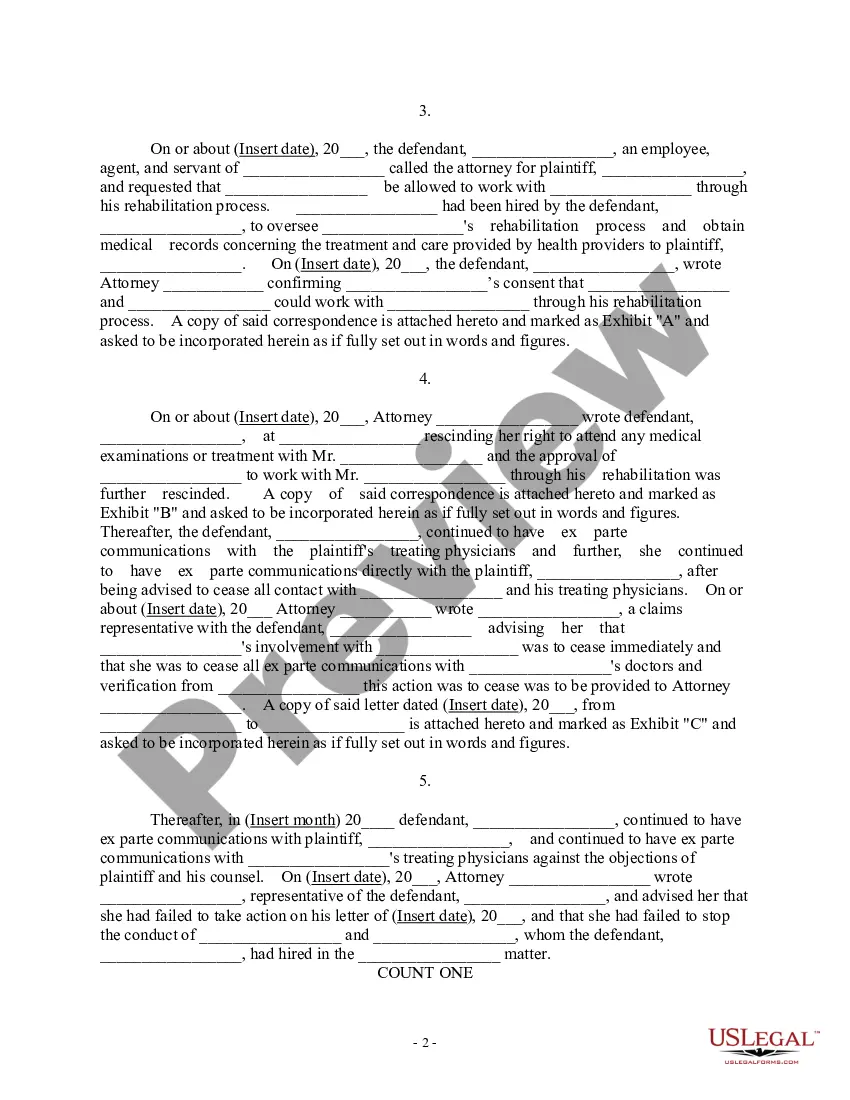
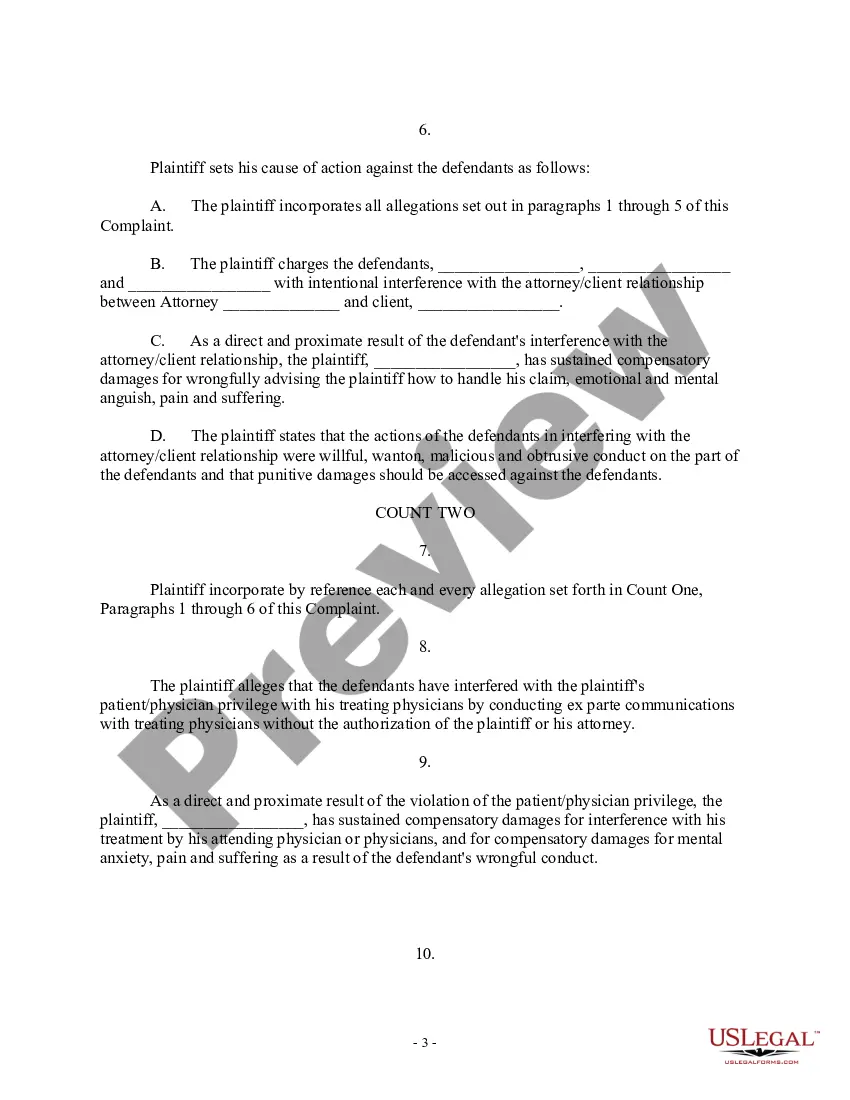
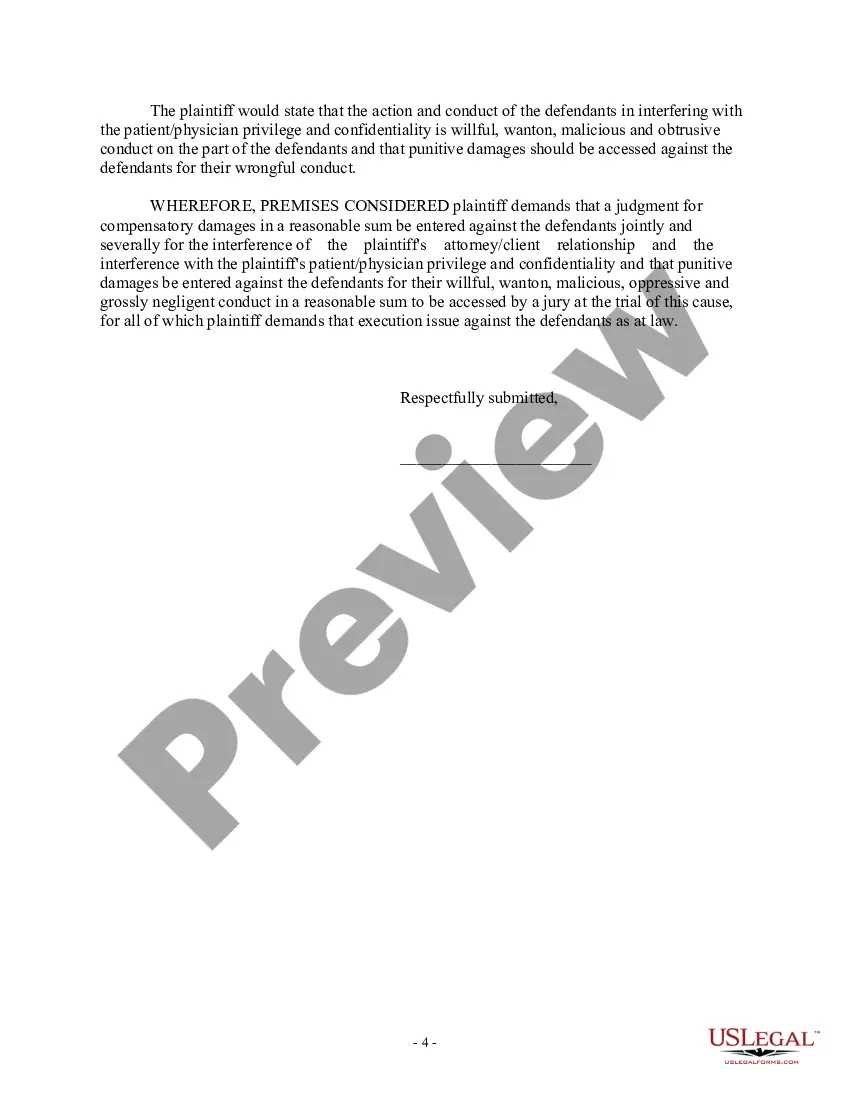
Interference With Attorney Client Relationship In Florida
Description






Get your form ready online
Our built-in tools help you complete, sign, share, and store your documents in one place.
Make edits, fill in missing information, and update formatting in US Legal Forms—just like you would in MS Word.
Download a copy, print it, send it by email, or mail it via USPS—whatever works best for your next step.
Sign and collect signatures with our SignNow integration. Send to multiple recipients, set reminders, and more. Go Premium to unlock E-Sign.
If this form requires notarization, complete it online through a secure video call—no need to meet a notary in person or wait for an appointment.
We protect your documents and personal data by following strict security and privacy standards.

Make edits, fill in missing information, and update formatting in US Legal Forms—just like you would in MS Word.

Download a copy, print it, send it by email, or mail it via USPS—whatever works best for your next step.

Sign and collect signatures with our SignNow integration. Send to multiple recipients, set reminders, and more. Go Premium to unlock E-Sign.

If this form requires notarization, complete it online through a secure video call—no need to meet a notary in person or wait for an appointment.

We protect your documents and personal data by following strict security and privacy standards.
Looking for another form?



Form popularity
FAQ
Earlier this year, the Florida Supreme Court amended Bar Rule 1-3.3, which requires each member of The Florida Bar designate an official Bar name, mailing address, business telephone number, and business email address.
Florida's “two-dismissal rule” holds that a second voluntary dismissal will operate as a denial of adjudication “of any claim for benefits previously subject to voluntary dismissal.” In other words, if your claim is dismissed twice, that specific claim is forever barred from being brought again.
A lawyer's reasonable belief that evidence is false does not preclude its presentation to the trier of fact. The rule generally recognized is that, if necessary to rectify the situation, an advocate must disclose the existence of the client's deception to the court.
A tortious interference with a contractual or business relationship in Florida occurs when a third party to a business agreement intentionally disrupts that business relationship. Written contracts are necessary for businesses to operate efficiently.
Bar Rule 4-3.4(h) prohibits an attorney from presenting, participating in presenting, or threatening to present disciplinary charges under the Rules Regulating the Florida Bar to obtain an advantage in a civil matter.
Key Provisions of Rule 4-4.2 Prohibition of Communication: Attorneys are prohibited from directly contacting a represented person about the subject matter of the representation without the consent of the represented person's counsel.
A conflict of interest refers to the ethical problems that may arise between parties with a preexisting relationship. In law, a conflict of interest arises between an attorney and a client if the interests of the attorney, a different client, or a third-party conflict with the interests of the present client.
At 1066 (Rule 4-4.3) (lawyer should not state or imply to an unrepresented party that the lawyer is a disinterested authority on the law and should correct any misunderstanding that the unrepresented party may have concerning the lawyer's role).
Importantly, the Model Rules do not prohibit a lawyer from talking to opposing counsel. So, why even talk about Rule 8.4 here? Well, unfortunately, there are lawyers out there who will seek to have a paralegal do their dirty work for them.
Rule 4-4.4 - RESPECT FOR RIGHTS OF THIRD PERSONS (a) In representing a client, a lawyer may not use means that have no substantial purpose other than to embarrass, delay, or burden a third person or knowingly use methods of obtaining evidence that violate the legal rights of such a person.