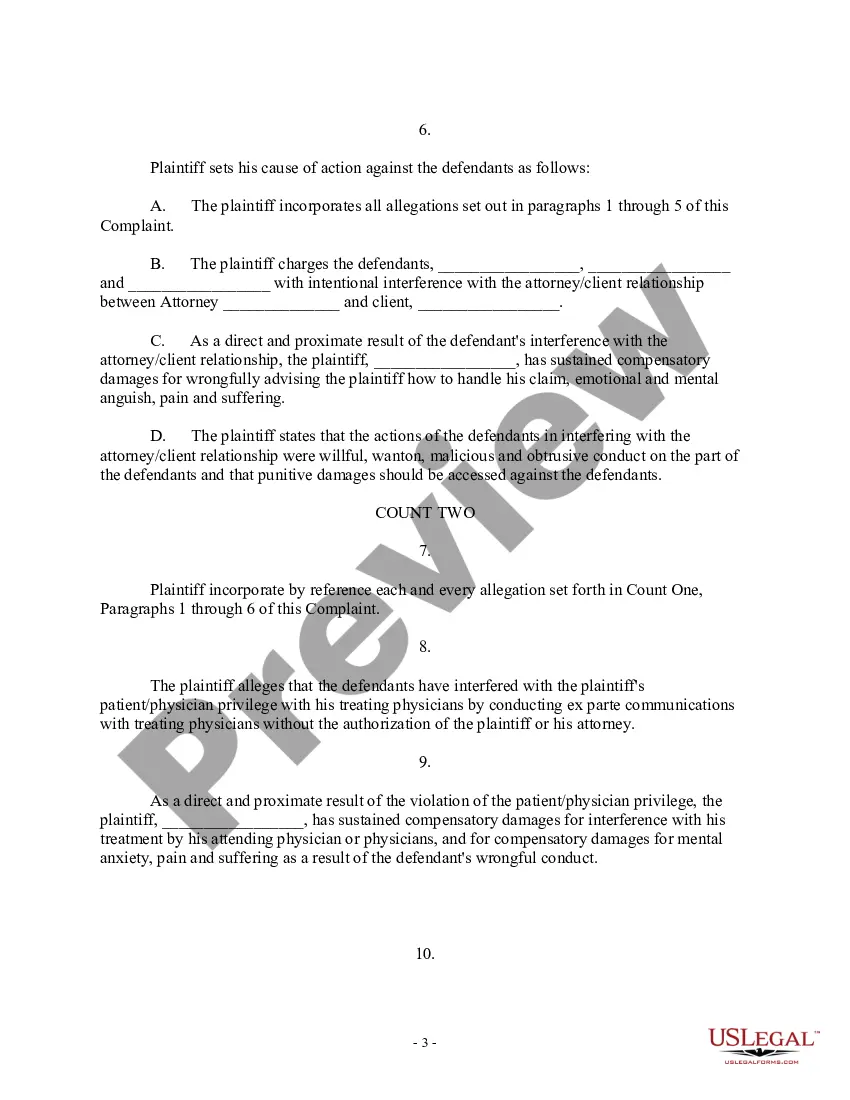
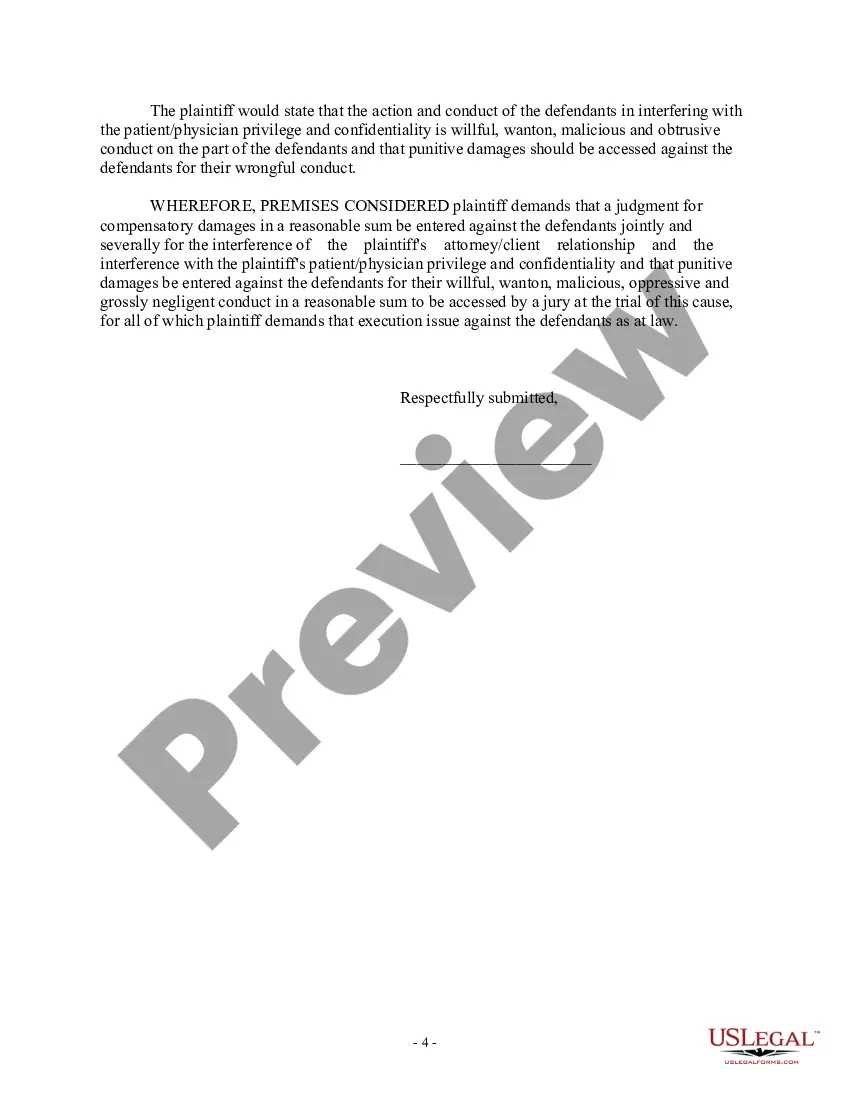
Interference With Attorney Client Relationship In Alameda
Description



Get your form ready online
Our built-in tools help you complete, sign, share, and store your documents in one place.
Make edits, fill in missing information, and update formatting in US Legal Forms—just like you would in MS Word.
Download a copy, print it, send it by email, or mail it via USPS—whatever works best for your next step.
Sign and collect signatures with our SignNow integration. Send to multiple recipients, set reminders, and more. Go Premium to unlock E-Sign.
If this form requires notarization, complete it online through a secure video call—no need to meet a notary in person or wait for an appointment.
We protect your documents and personal data by following strict security and privacy standards.

Make edits, fill in missing information, and update formatting in US Legal Forms—just like you would in MS Word.

Download a copy, print it, send it by email, or mail it via USPS—whatever works best for your next step.

Sign and collect signatures with our SignNow integration. Send to multiple recipients, set reminders, and more. Go Premium to unlock E-Sign.

If this form requires notarization, complete it online through a secure video call—no need to meet a notary in person or wait for an appointment.

We protect your documents and personal data by following strict security and privacy standards.
Looking for another form?







Form popularity
FAQ
If your situation meets the required elements for a legal claim, you absolutely can. In California, intentionally interfering with another person's expected inheritance is a tort (a civil wrong, which allows a person to sue another person in court, assuming the elements are met).
Interference With Existing Contractual Relationships A contract exists between the business and another individual or business. The contract was valid. An outside (third) party had knowledge of this contract. The outside party purposefully and wrongfully disrupted the contractual relationship.
A tort of negligent interference occurs when one party's negligence damages the contractual or business relationship between others, causing economic harm, such as by blocking a waterway or causing a blackout preventing the utility company from being able to uphold its existing contracts with consumers.
Tortious interference is a common law tort allowing a claim for damages against a defendant who wrongfully interferes with the plaintiff's contractual or business relationships. See also intentional interference with contractual relations.
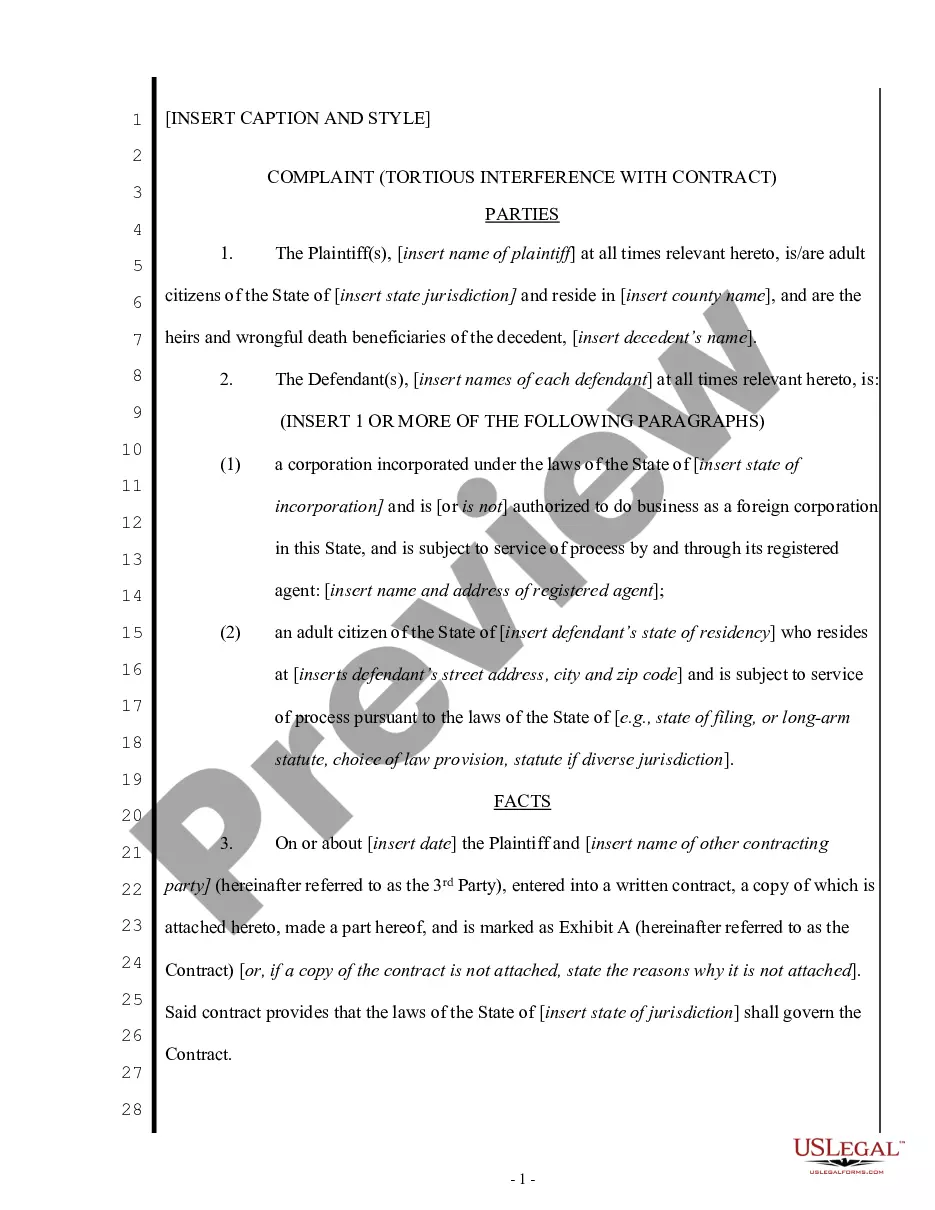
The requisite elements of tortious interference with contract claim are: (1) the existence of a valid and enforceable contract between plaintiff and another; (2) defendant's awareness of the contractual relationship; (3) defendant's intentional and unjustified inducement of a breach of the contract; (4) a subsequent ...
If a third party interferes with a contract or business relationship, it may be tortious interference in a business relationship. Some examples of actionable interference may include convincing a shared supplier to renege on a contract or a third party interrupting the sale of property to a business.
Proving tortious interference in court is complicated. It is a complex legal issue that requires a great deal of evidence. Your best recourse is to have a business attorney who specializes in tort and contract law.
Broadly speaking, interference in a legal setting is wrongful conduct that prevents or disturbs another in the performance of their usual activities, in the conduct of their business or contractual relations, or in the enjoyment of their full legal rights.
Even if the matter is not pending before a tribunal, the ethics rules of most states provide that a lawyer cannot withdraw until he or she has taken reasonable steps to avoid foreseeable prejudice to the rights of his client, such as giving notice to the client, allowing time for employment of other counsel, delivering ...
However, both California contract law and tort law allow for legal action when a third party wrongfully interferes with a contract or ongoing business relationship to the detriment of the affected party. This type of action falls under the general label of tortious interference.