This is a multi-state form covering the subject matter of the title.
Pregnancy Discrimination At Work Uk In Suffolk
State:
Multi-State
Category:
County:
Suffolk
Control #:
US-000291
Format:
Word;
Rich Text
99 downloads
Description
Free preview

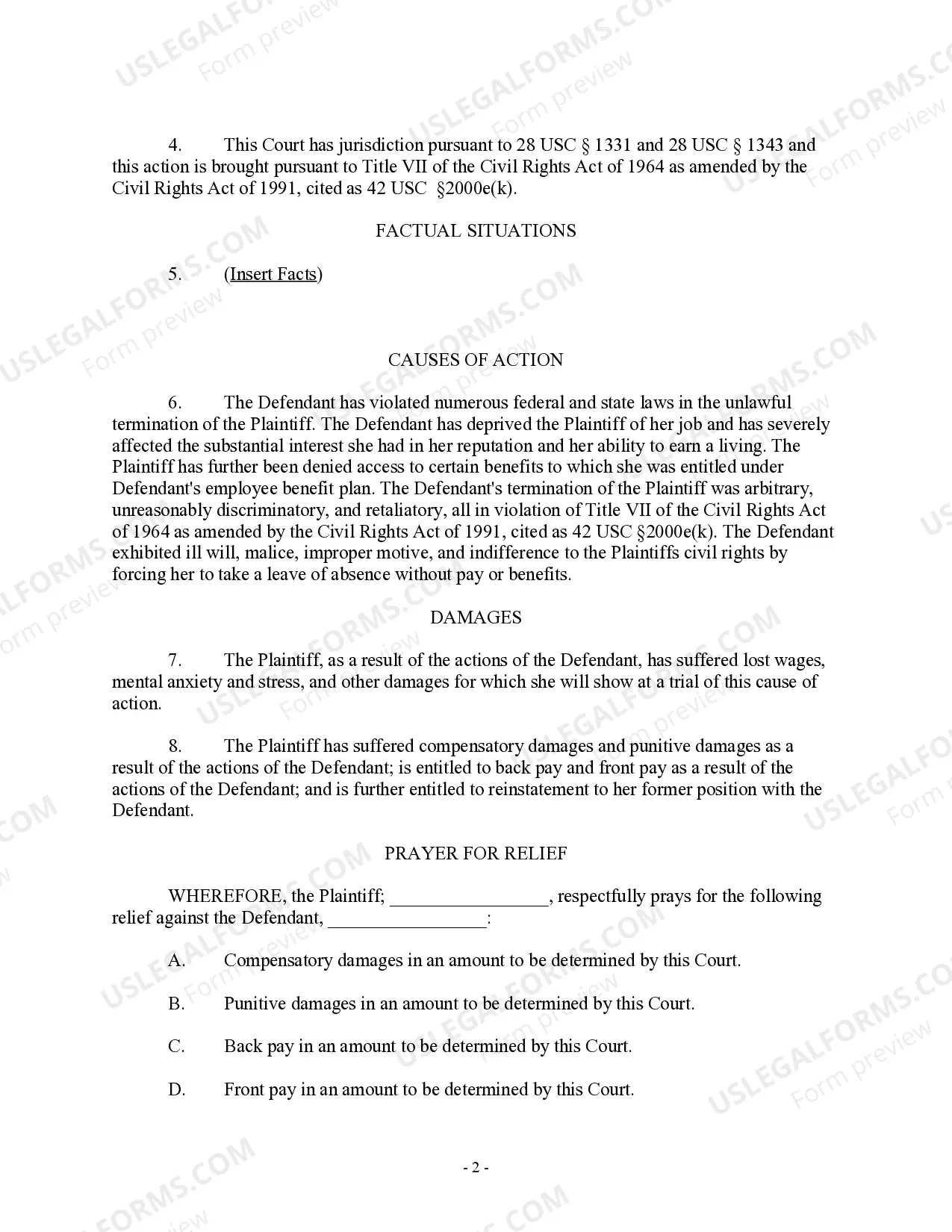




Get your form ready online
Our built-in tools help you complete, sign, share, and store your documents in one place.
Built-in online Word editor
Make edits, fill in missing information, and update formatting in US Legal Forms—just like you would in MS Word.
Export easily
Download a copy, print it, send it by email, or mail it via USPS—whatever works best for your next step.
E-sign your document
Sign and collect signatures with our SignNow integration. Send to multiple recipients, set reminders, and more. Go Premium to unlock E-Sign.
Notarize online 24/7
If this form requires notarization, complete it online through a secure video call—no need to meet a notary in person or wait for an appointment.
Store your document securely
We protect your documents and personal data by following strict security and privacy standards.

Make edits, fill in missing information, and update formatting in US Legal Forms—just like you would in MS Word.

Download a copy, print it, send it by email, or mail it via USPS—whatever works best for your next step.

Sign and collect signatures with our SignNow integration. Send to multiple recipients, set reminders, and more. Go Premium to unlock E-Sign.

If this form requires notarization, complete it online through a secure video call—no need to meet a notary in person or wait for an appointment.

We protect your documents and personal data by following strict security and privacy standards.
Looking for another form?






Form popularity
FAQ
The Equality Act says you must not be discriminated against during the protected period because: of your pregnancy, or. because of illness suffered by you as a result of your pregnancy. you are a woman on compulsory maternity leave.
Direct discrimination. Direct pregnancy and maternity discrimination is when someone is put at a disadvantage or treated unfavourably because: they're pregnant. they're on maternity leave or have the right to take maternity leave.
Pregnant employees should feel comfortable discussing their pregnancy, any related challenges and their needs with their managers without fear of judgment or reprisal. This requires managers to approach these conversations with empathy, active listening and a genuine willingness to accommodate their employees' needs.
Under the Equality Act 2010, it is unlawful to treat someone unfavourably because they are pregnant, have a pregnancy-related illness, have recently given birth, are breastfeeding, or are taking or seeking to take maternity leave.
Employers are not required to reduce working hours below 40 hours a week, which is the average number of hours to work a week in the UK. Therefore, pregnant women can work 40 hours a week if the working conditions are safe for them to do so.
Unwanted touching, commonly of a pregnant woman's stomach. Resentful comments about a woman's pregnancy. Negative comments about the impact of a woman's impending maternity leave on the workplace, or the fact that she has been pregnant more than once while working at the same job.
The amount of damages that can be awarded depends on the size of the employer; these limits are for the combined total of pain and suffering and punitive damages: The court can award up to $50,000 if the employer has 15 to 100 employees. The court can award up to $100,000 if the employer has 101 to 200 employees.
If you work with chemicals, radiation, heavy metals, gases, or biological agents (virus, bacteria, fungus, or parasites) you may need to take extra precautions during pregnancy. Some hazardous agents get into the mother's blood and can pass to the fetus.
A woman who is having a normal, healthy pregnancy can work right up until the start of labour. However, you can choose to stop working whenever suits you. Some women choose to stop several weeks before their due date but others will be at work even in early labour.
Compensation for Pregnancy Discrimination Band 1 - £900 - £8,800; Band 2 - £8,800 - £26,300; Band 3 - £26,300 - £44,000.