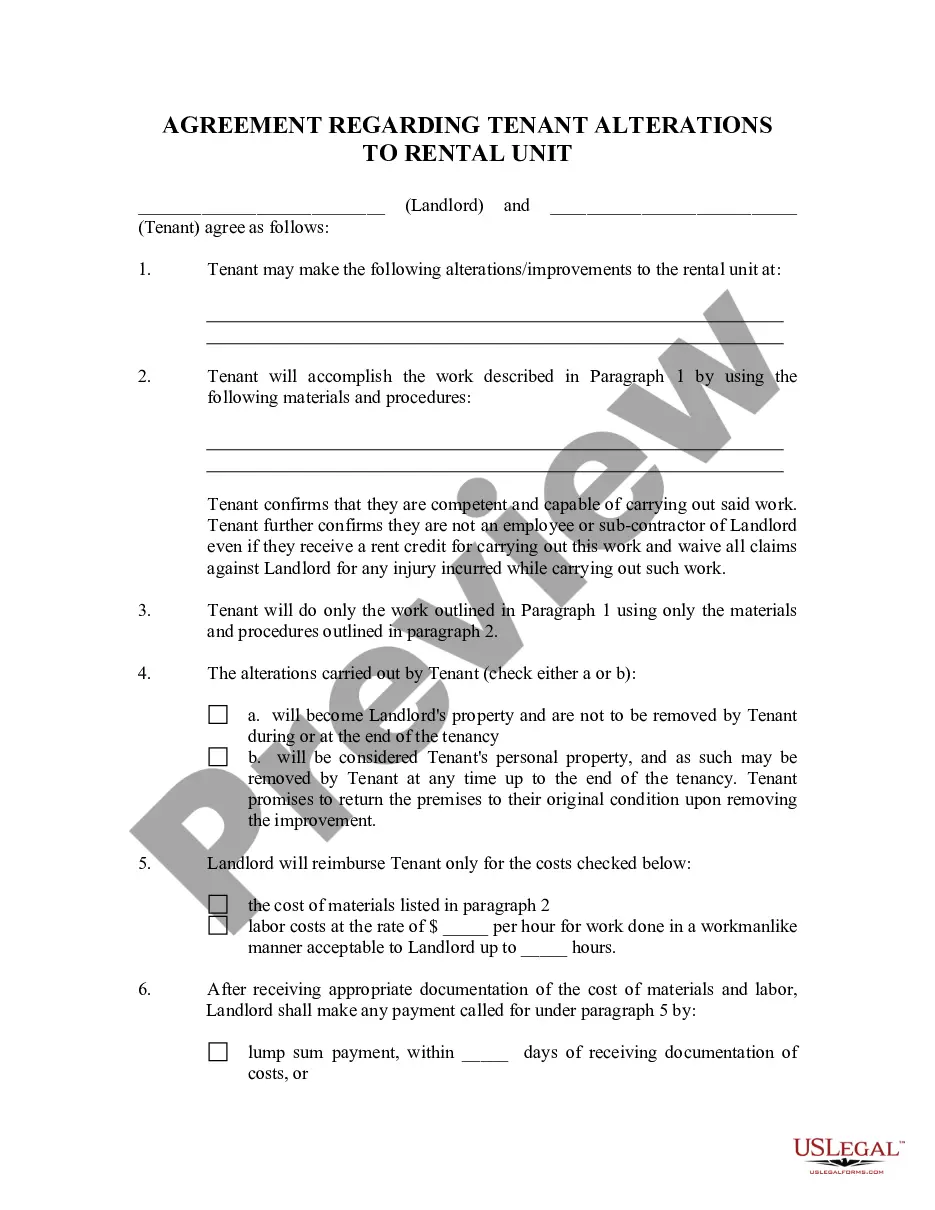
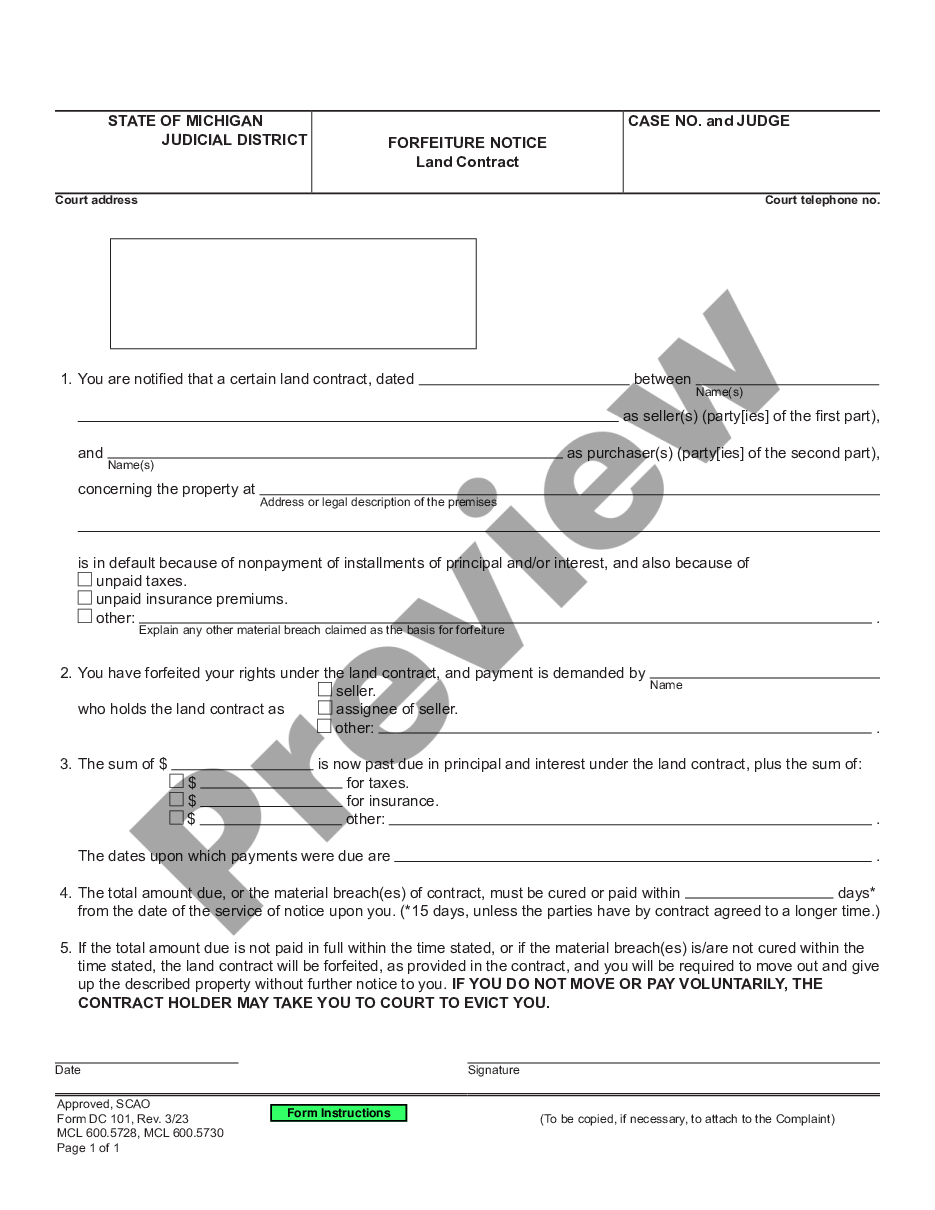
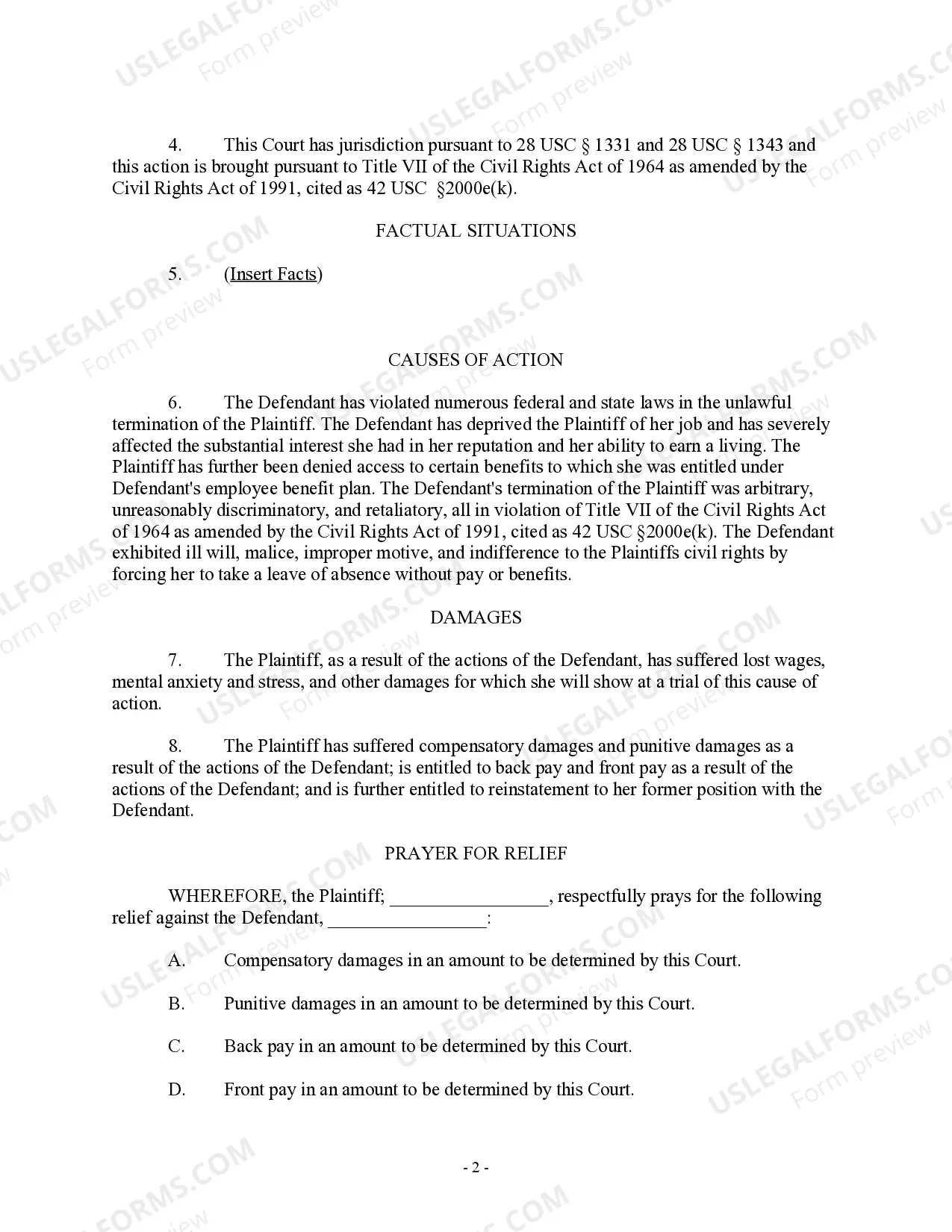
This is a multi-state form covering the subject matter of the title.
Wrongful Termination Court For False Accusations In New York
Category:
State:
Multi-State
Control #:
US-000291
Format:
Word;
Rich Text
Instant download
Description
Free preview




Get your form ready online
Our built-in tools help you complete, sign, share, and store your documents in one place.
Built-in online Word editor
Make edits, fill in missing information, and update formatting in US Legal Forms—just like you would in MS Word.
Export easily
Download a copy, print it, send it by email, or mail it via USPS—whatever works best for your next step.
E-sign your document
Sign and collect signatures with our SignNow integration. Send to multiple recipients, set reminders, and more. Go Premium to unlock E-Sign.
Notarize online 24/7
If this form requires notarization, complete it online through a secure video call—no need to meet a notary in person or wait for an appointment.
Store your document securely
We protect your documents and personal data by following strict security and privacy standards.

Make edits, fill in missing information, and update formatting in US Legal Forms—just like you would in MS Word.

Download a copy, print it, send it by email, or mail it via USPS—whatever works best for your next step.

Sign and collect signatures with our SignNow integration. Send to multiple recipients, set reminders, and more. Go Premium to unlock E-Sign.

If this form requires notarization, complete it online through a secure video call—no need to meet a notary in person or wait for an appointment.

We protect your documents and personal data by following strict security and privacy standards.
Looking for another form?








Form popularity
FAQ
If your termination violates state or federal employment laws, it may be deemed wrongful. Common reasons for wrongful termination include discrimination based on race, gender, age, disability, religion, national origin, or sexual orientation.
Damage Done by False Allegations—Even Without a Conviction Even if charges are dropped or you are acquitted at trial, false accusations can have lasting personal and professional consequences: Job loss or suspension. Damage to professional licenses or security clearances. Loss of child custody or visitation rights.
If it is found that someone has made a false allegation, it's also possible that they could face further charges such as perjury or obstruction of justice – both of which could be considered felonies carrying potential jail time.
You can sue an employer for firing you under false accusations if the termination violates your employment contract, discriminates against protected classes, or is considered retaliatory under labor laws.
A false accusation can backfire on your accuser Even if your false accusation does not make it to the courtroom, your accuser can still face consequences in the workplace. If a workplace investigation clears you of any wrongdoing, your employer can fairly dismiss your accuser for knowingly making a false accusation.
Yes, if you are falsely accused and do not have a proper defense, you could be convicted and sentenced to jail or prison. The severity of the potential punishment depends on: The Type of Crime Alleged – Misdemeanor accusations may result in fines or probation, while felony accusations can lead to significant jail time.
In New York, defamation is a civil matter. A person who suffers financial or emotional damages following another person's false statement may choose to sue the offender, which would bring about a case in the appropriate New York court.
While multimillion awards are possible, it is crucial to keep in mind that federal laws limit the amount of punitive and compensatory damages awarded in cases involving wrongful termination. They cannot exceed $50,000 – $300,000, depending on the number of employees working for the employer's business.