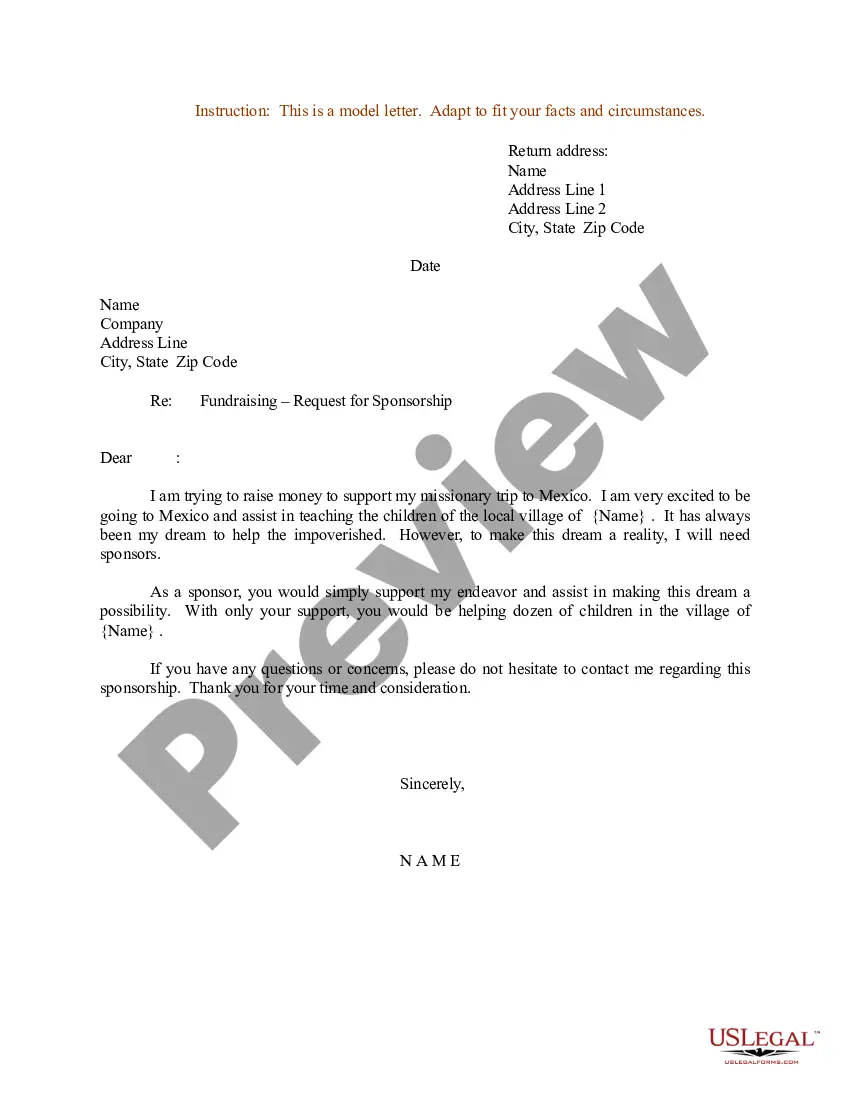
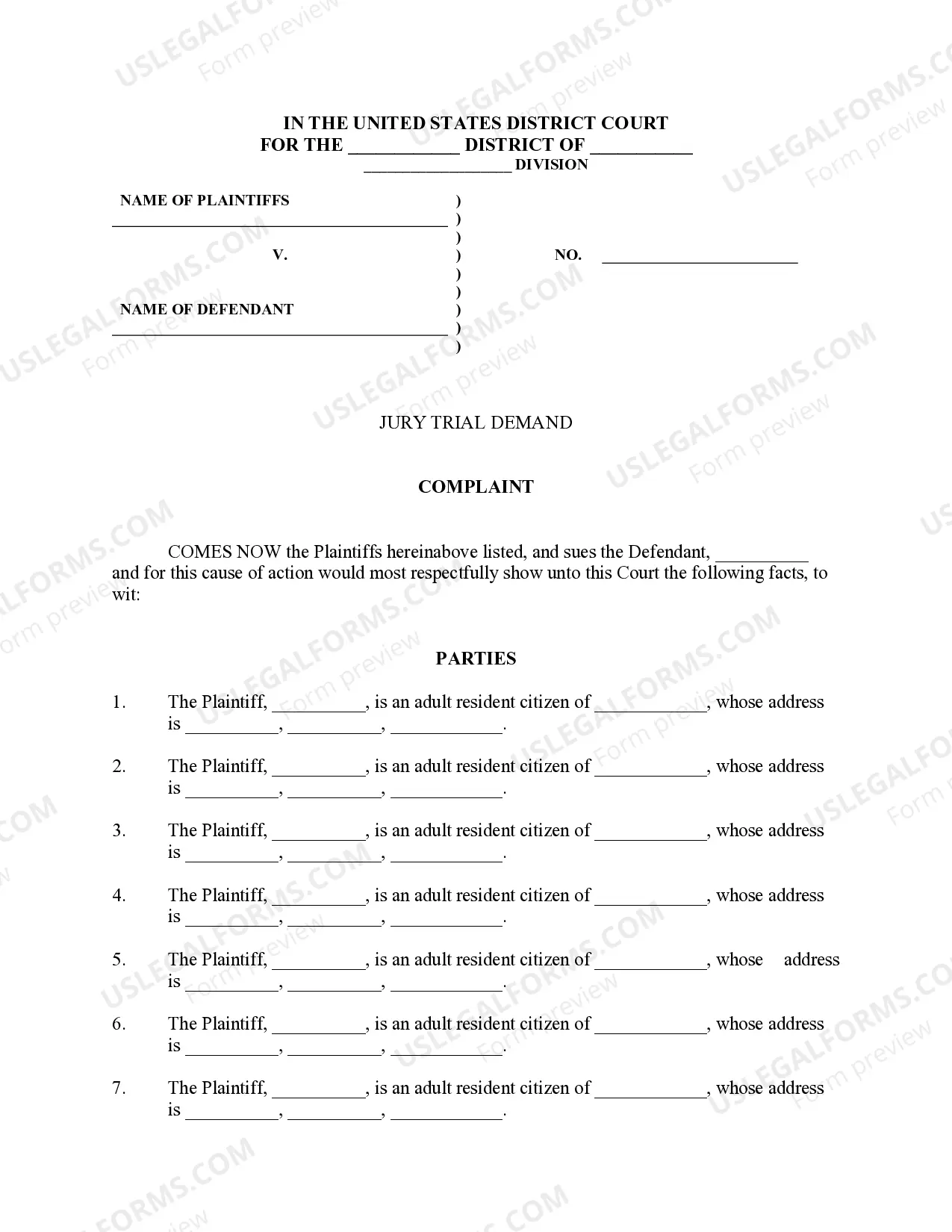
This is a multi-state form covering the subject matter of the title.
Trial Request Form Template In Minnesota
State:
Multi-State
Category:
Control #:
US-000291
Format:
Word;
Rich Text
99 downloads
Description
Free preview





Get your form ready online
Our built-in tools help you complete, sign, share, and store your documents in one place.
Built-in online Word editor
Make edits, fill in missing information, and update formatting in US Legal Forms—just like you would in MS Word.
Export easily
Download a copy, print it, send it by email, or mail it via USPS—whatever works best for your next step.
E-sign your document
Sign and collect signatures with our SignNow integration. Send to multiple recipients, set reminders, and more. Go Premium to unlock E-Sign.
Notarize online 24/7
If this form requires notarization, complete it online through a secure video call—no need to meet a notary in person or wait for an appointment.
Store your document securely
We protect your documents and personal data by following strict security and privacy standards.

Make edits, fill in missing information, and update formatting in US Legal Forms—just like you would in MS Word.

Download a copy, print it, send it by email, or mail it via USPS—whatever works best for your next step.

Sign and collect signatures with our SignNow integration. Send to multiple recipients, set reminders, and more. Go Premium to unlock E-Sign.

If this form requires notarization, complete it online through a secure video call—no need to meet a notary in person or wait for an appointment.

We protect your documents and personal data by following strict security and privacy standards.
Looking for another form?








Form popularity
FAQ
If you want to file a motion, the process is generally something like this: You write your motion. You file your motion with the court clerk. The court clerk inserts the date and time your motion will be heard by the judge. You “serve” (mail) your motion to the other side.
A judge or judicial officer who has presided at a motion or other proceeding or who is assigned by the Chief Justice of the Minnesota Supreme Court may not be removed except upon an affirmative showing that the judge or judicial officer is disqualified under the Code of Judicial Conduct.
Four search tabs are available to help users access court records and documents: Case Search allows users to search for court cases by person name, business name, attorney name, case number, citation number, or attorney bar number.
In motion hearings, parties' attorneys submit documents to the court before the hearing explaining what their side wants and why it should be granted. Except in special circumstances, witnesses do not testify in motion hearings.
Instructions for filing a. Motion. in the Minnesota Court of Appeals. Step 1: Fill out the Motion form. Step 2: Fill out the Affidavit in Support of Motion form. Step 3: Serve your Motion and Affidavit on the opposing parties. Step 4: Proof of Service. Step 5: File the Motion, Affidavit, and Certificate of Service by Mail.
Go to the court on the date/time you're assigned. They will call your name, and you can ask for a continuance for dismissal. In my case, I didn't have to ask for a continuance for dismissal - the judge saw my record of zero tickets and automatically offered it to me.
You absolutely can appear in court and inform them that you were unable to properly serve, and ask for a formal 'continuance' (delay) asking for more time to find the defendant. If this is a first time, judges tend to allow such a delay if it is not too long.
What are valid reasons for requesting a continuance? Valid reasons include personal emergencies, unavailability of essential evidence, and lack of legal representation.