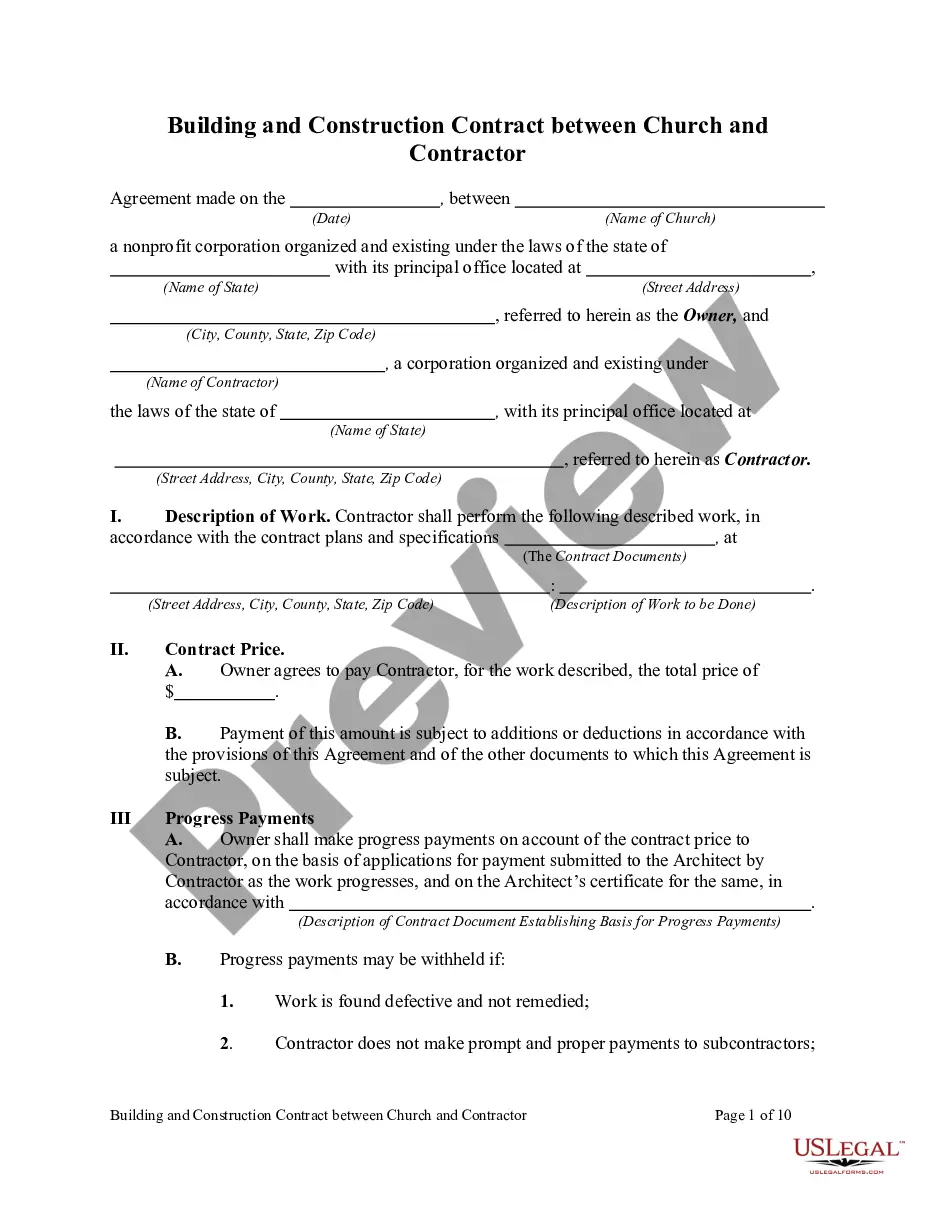
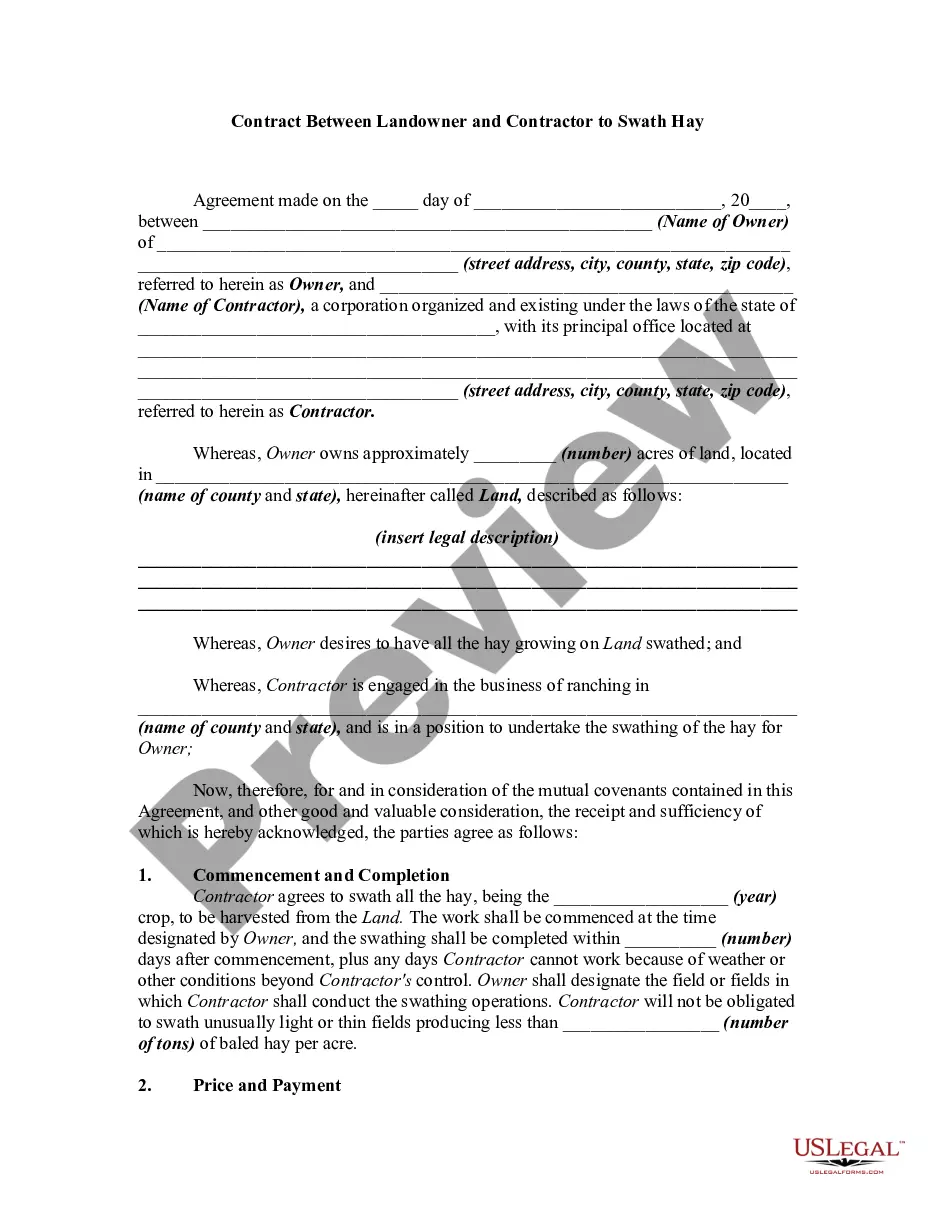
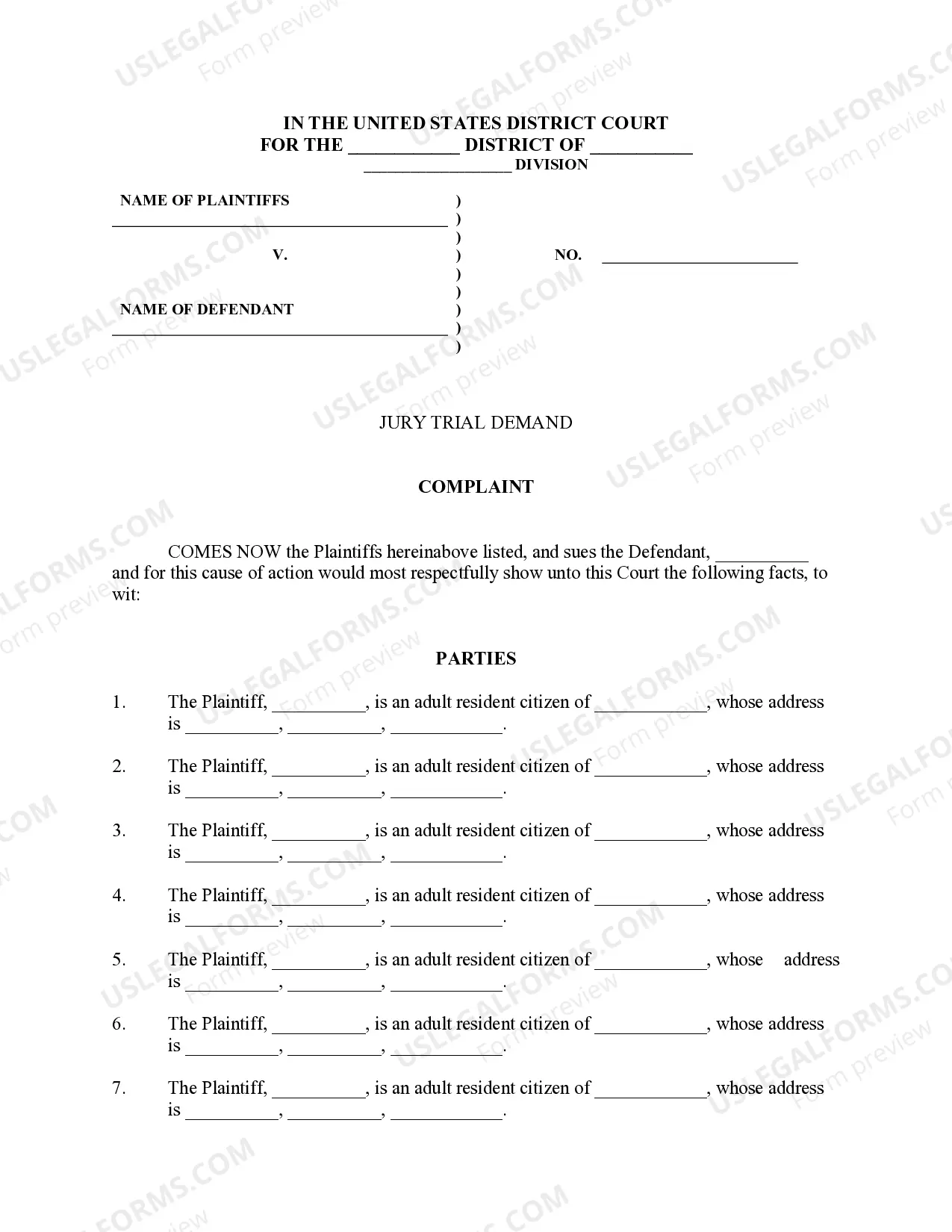
This is a multi-state form covering the subject matter of the title.
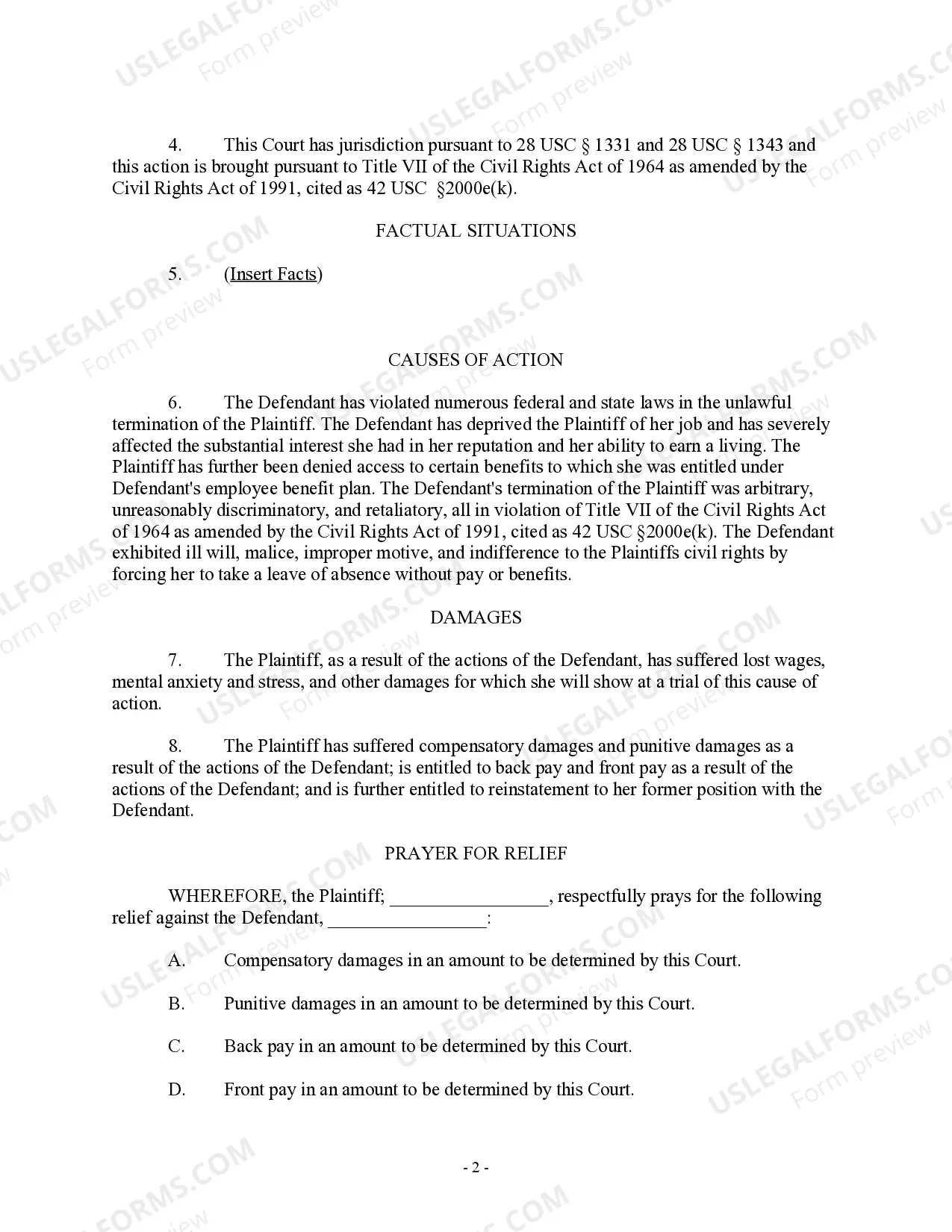
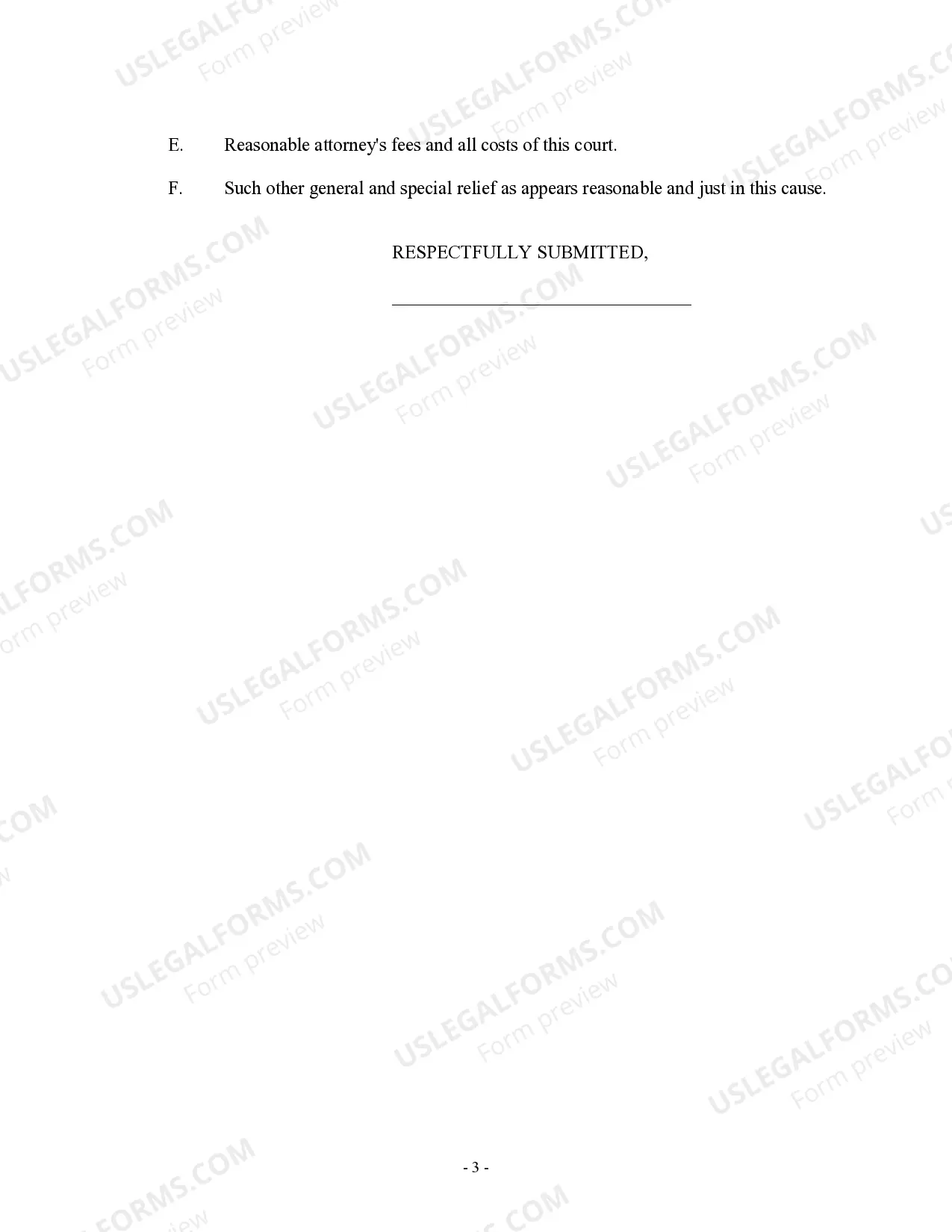
Wrongful Termination Court Form California In Los Angeles
Category:
State:
Multi-State
County:
Los Angeles
Control #:
US-000291
Format:
Word;
Rich Text
Instant download
Description
Free preview




Get your form ready online
Our built-in tools help you complete, sign, share, and store your documents in one place.
Built-in online Word editor
Make edits, fill in missing information, and update formatting in US Legal Forms—just like you would in MS Word.
Export easily
Download a copy, print it, send it by email, or mail it via USPS—whatever works best for your next step.
E-sign your document
Sign and collect signatures with our SignNow integration. Send to multiple recipients, set reminders, and more. Go Premium to unlock E-Sign.
Notarize online 24/7
If this form requires notarization, complete it online through a secure video call—no need to meet a notary in person or wait for an appointment.
Store your document securely
We protect your documents and personal data by following strict security and privacy standards.

Make edits, fill in missing information, and update formatting in US Legal Forms—just like you would in MS Word.

Download a copy, print it, send it by email, or mail it via USPS—whatever works best for your next step.

Sign and collect signatures with our SignNow integration. Send to multiple recipients, set reminders, and more. Go Premium to unlock E-Sign.

If this form requires notarization, complete it online through a secure video call—no need to meet a notary in person or wait for an appointment.

We protect your documents and personal data by following strict security and privacy standards.
Looking for another form?








Form popularity
FAQ
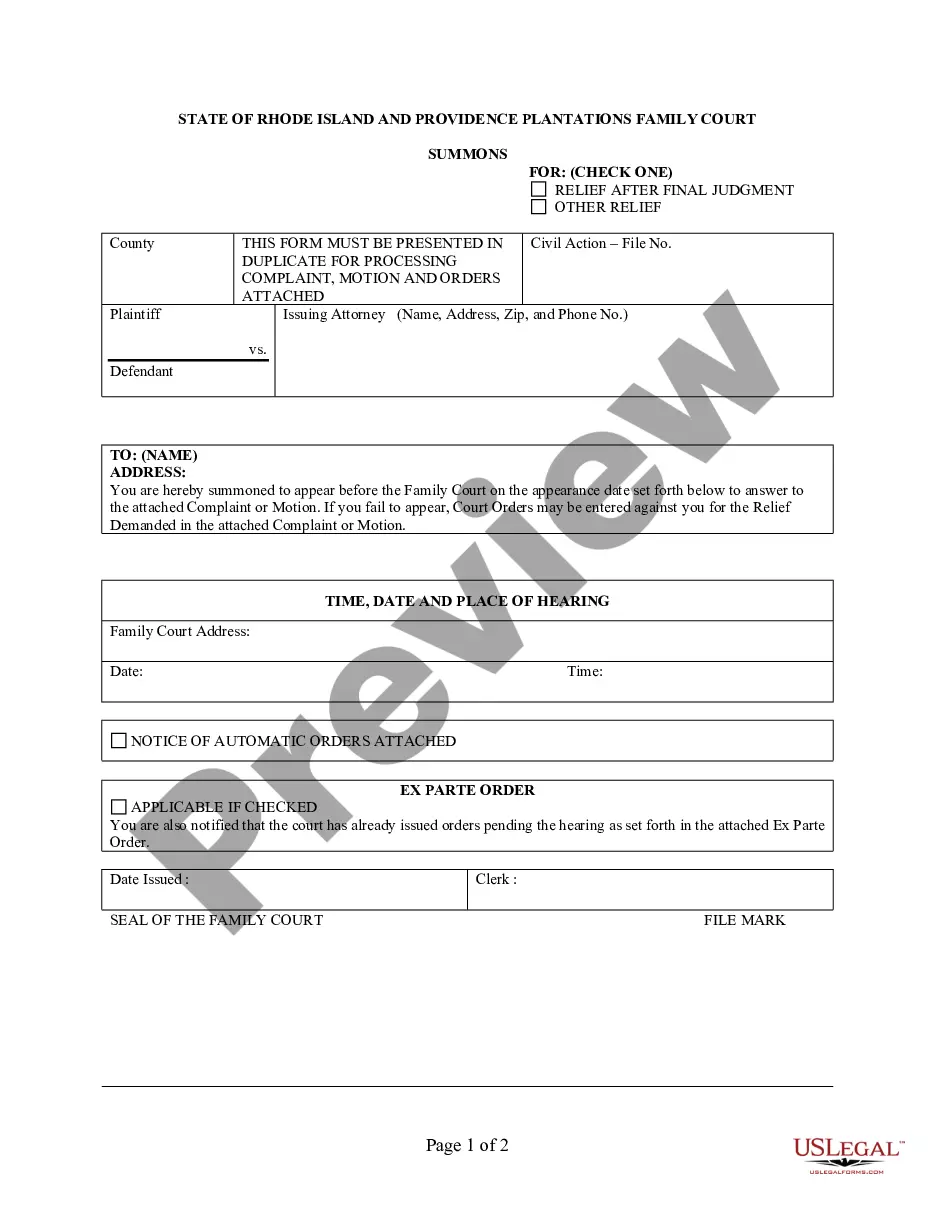
Request for Dismissal (CIV-110) Tell the court and the parties that you do not want to go forward with the case. You also need to use Notice of Entry of Dismissal and Proof of Service (form CIV-120). Get form CIV-110. Effective: January 1, 2025.
MOTIONS TO DISMISS IN CIVIL CASES ARE COMMON In these civil litigation cases, motions to dismiss are likely based on “failure to state a claim.” A motion to dismiss is filed in response to a complaint filed by the Plaintiff requesting that the court grant them some form of relief usually damages.
For example, before disgraced comedian Bill Cosby's retrial, his defense team filed a motion to dismiss, arguing that the sexual assault alleged in the criminal complaint had happened outside of the statute of limitations.
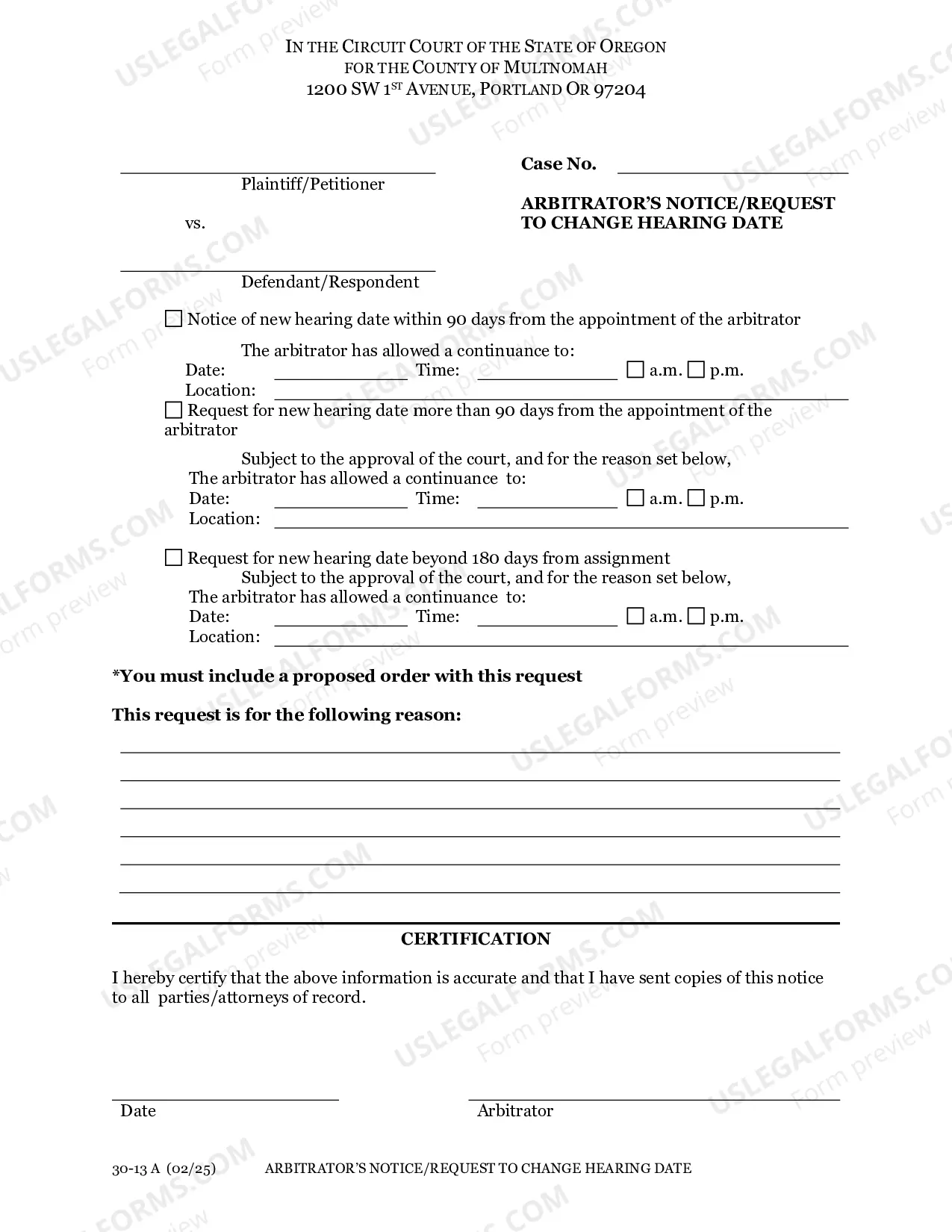
General format - each motion generally consists of a case caption, a title that briefly identifies the relief sought, a series of numbered paragraphs that explains -- in a logical way -- why you are entitled to that relief, a prayer for relief, a signature block, a certification that a copy of the motion was sent to ...
How do I fill this out? Review the form to understand the required sections. Fill in the plaintiff and defendant details accurately. Select the reason for dismissal from the listed options. Ensure the motion is signed by the plaintiff or their attorney. Print the completed forms and bring them to court.
Writing a Persuasive Motion to Dismiss Be Clear and Concise: Use straightforward language and be diligent with proofreading. Stay Focused on the Legal Issues: Avoid unnecessary details and stick to the relevant legal arguments. Support Every Claim: Use statutes, case law, and rules of procedure to back up your points.
Wrongful termination cases can be difficult to win since the employee must provide evidence that their discharge was unlawful. Although assembling solid proof and hiring legal counsel improves the odds, employers frequently contend the dismissal was justified due to performance-related issues.
Wrongful termination occurs when an employer fires a worker for unlawful reasons. Common unlawful reasons for unlawful termination includes firing employees for discriminatory reasons based on age, disability or pregnancy. Employees may be able to sue former employers for wrongful termination in California.
How to File a Complaint with California's Labor Commissioner for Wrongful Termination Step 1: Understand Wrongful Termination. Step 2: Gather Supporting Evidence. Step 3: Contact the Labor Commissioner's Office. Step 4: Complete the Required Forms. Step 5: Submit the Complaint. Step 6: Review the Investigation Process:
In most lawsuits, the burden is on you to prove that you are a victim of wrongful termination in California. Five types of evidence that can help demonstrate that you were fired unlawfully include: Recorded communications. Examples include emails or voicemails from managers that show harassing or prejudicial behavior.