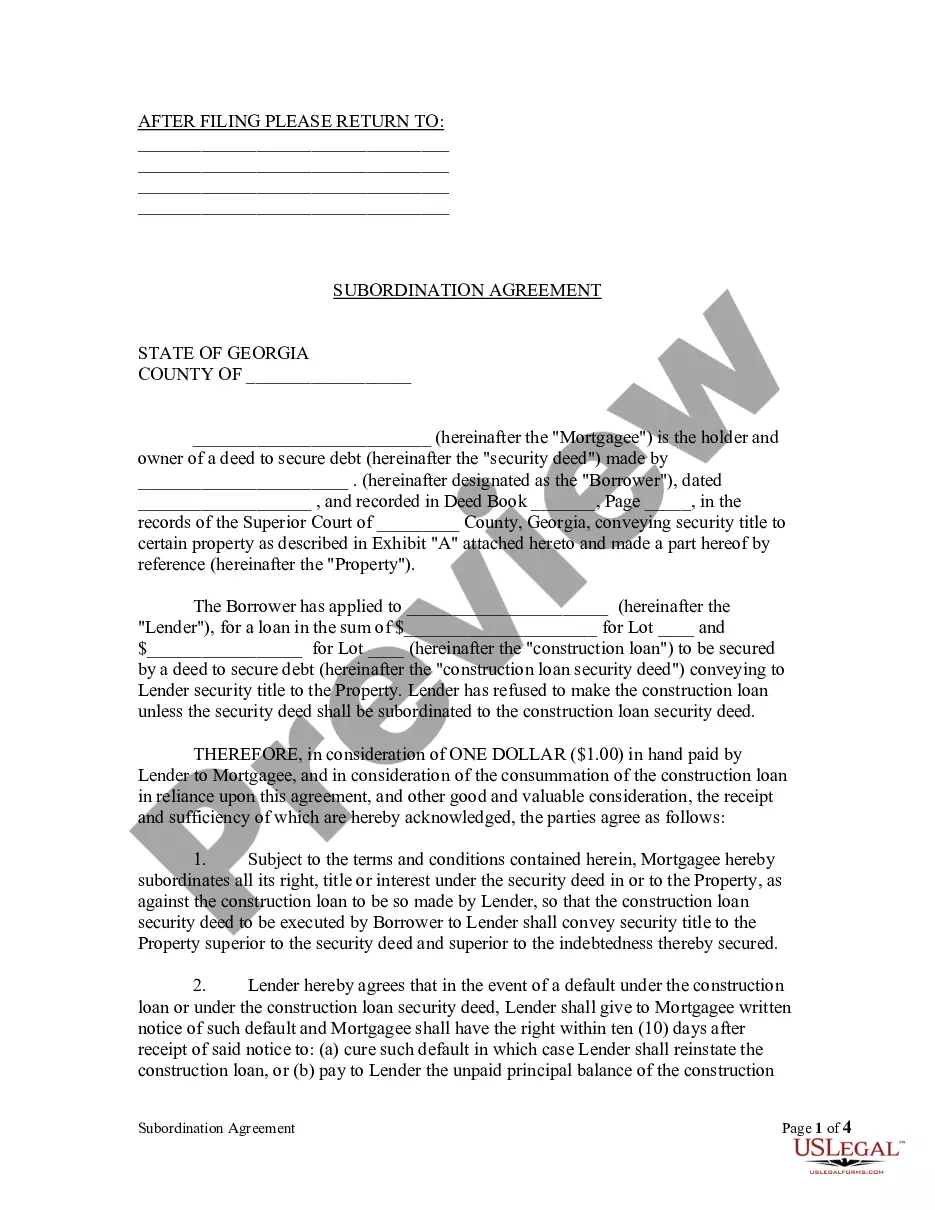
This is a multi-state form covering the subject matter of the title.
Wrongful Termination Court Forced Resignation In Arizona
State:
Multi-State
Category:
Control #:
US-000291
Format:
Word;
Rich Text
99 downloads
Description
Free preview

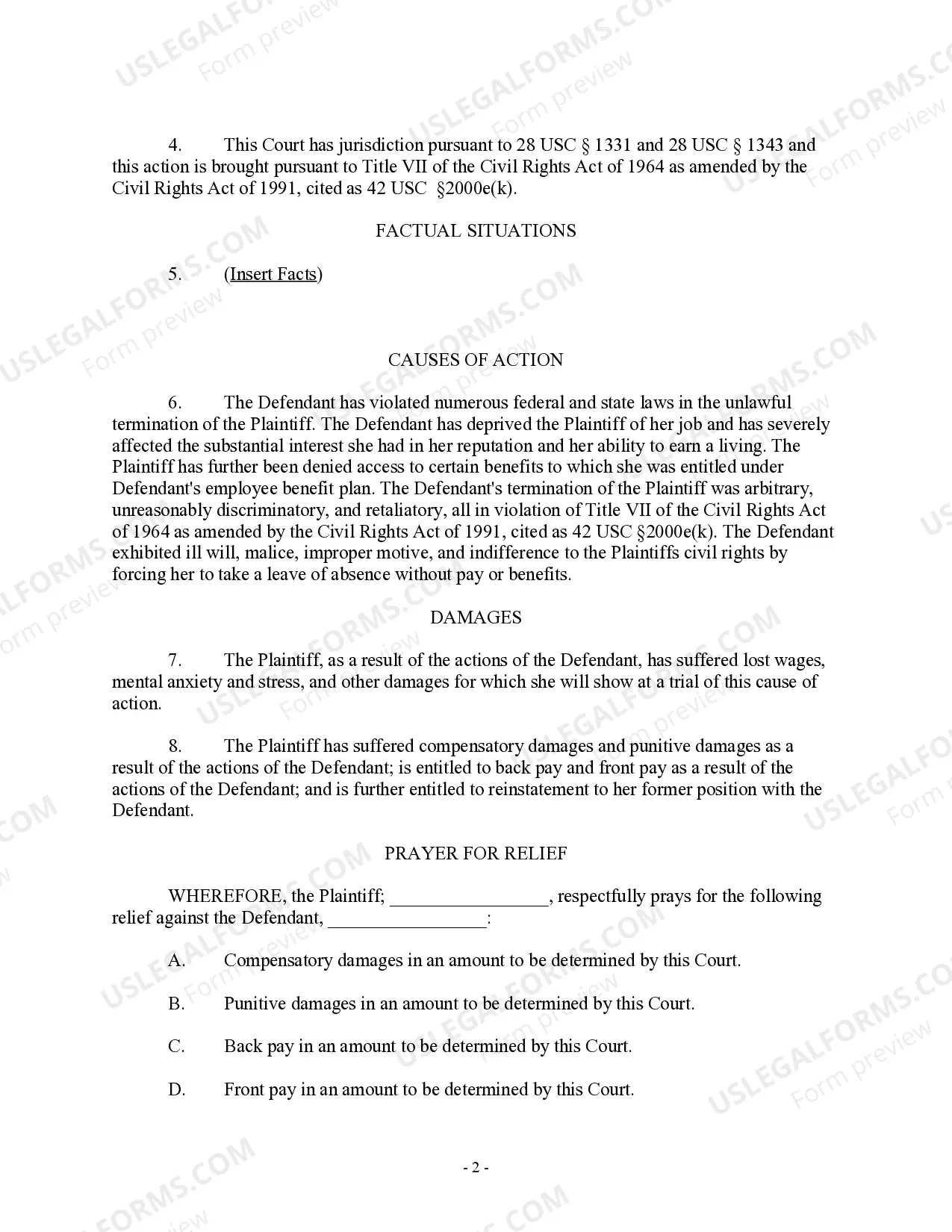



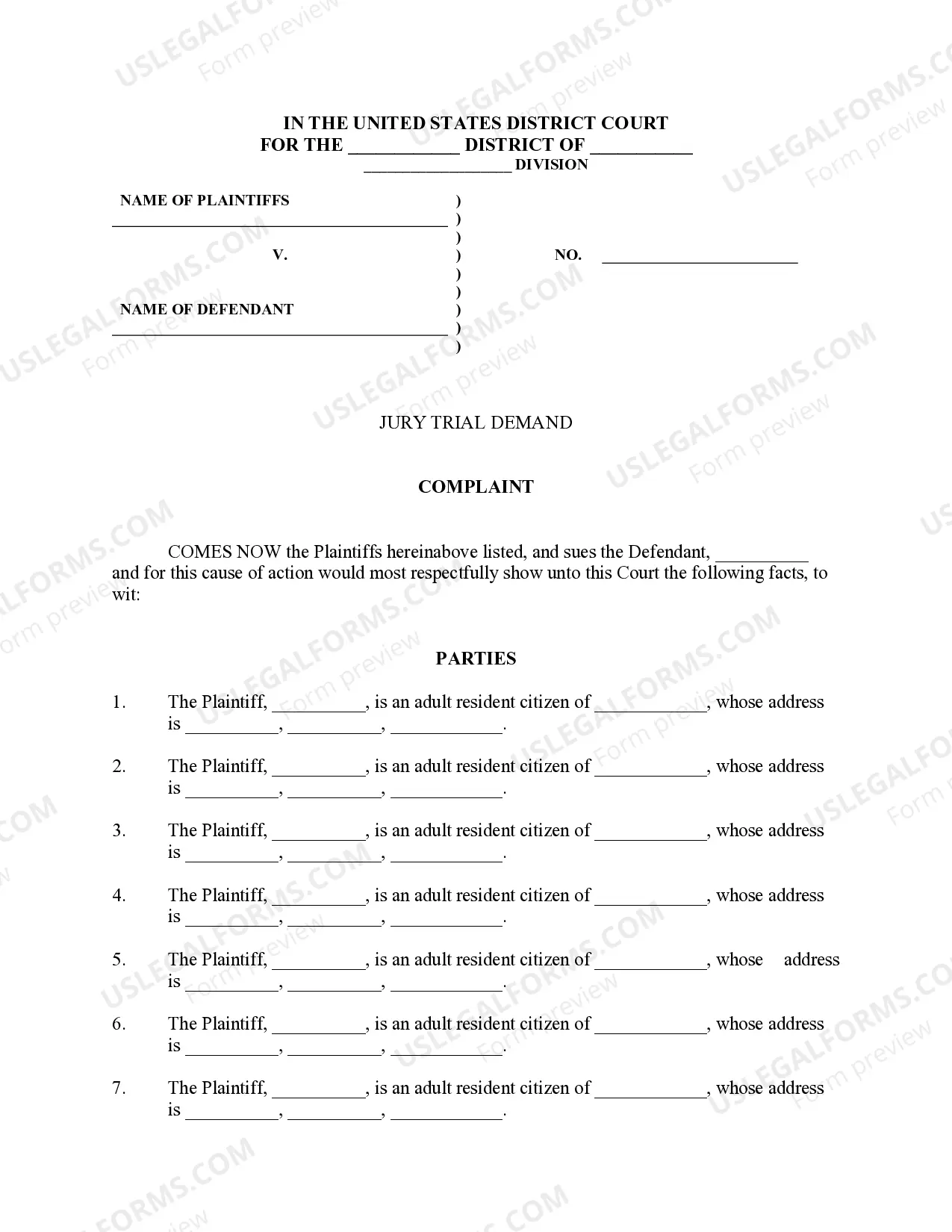
Get your form ready online
Our built-in tools help you complete, sign, share, and store your documents in one place.
Built-in online Word editor
Make edits, fill in missing information, and update formatting in US Legal Forms—just like you would in MS Word.
Export easily
Download a copy, print it, send it by email, or mail it via USPS—whatever works best for your next step.
E-sign your document
Sign and collect signatures with our SignNow integration. Send to multiple recipients, set reminders, and more. Go Premium to unlock E-Sign.
Notarize online 24/7
If this form requires notarization, complete it online through a secure video call—no need to meet a notary in person or wait for an appointment.
Store your document securely
We protect your documents and personal data by following strict security and privacy standards.

Make edits, fill in missing information, and update formatting in US Legal Forms—just like you would in MS Word.

Download a copy, print it, send it by email, or mail it via USPS—whatever works best for your next step.

Sign and collect signatures with our SignNow integration. Send to multiple recipients, set reminders, and more. Go Premium to unlock E-Sign.

If this form requires notarization, complete it online through a secure video call—no need to meet a notary in person or wait for an appointment.

We protect your documents and personal data by following strict security and privacy standards.
Looking for another form?






Form popularity
FAQ
Sometimes, encouraging an employee to resign is best for the employee and the employer. However, if an employee believes he or she was forced to resign under duress, as a form of discrimination or retaliation, or due to other unlawful reasons, the employee may take legal action against the employer.
You might research wrongful termination and constructive dismissal with the Equal Employment Opportunity Commission and the Department of Labor. Speak with an attorney. Schedule a consultation with an employment attorney to discuss your situation and learn if you have a case under your local employment laws .
Sometimes, encouraging an employee to resign is best for the employee and the employer. However, if an employee believes he or she was forced to resign under duress, as a form of discrimination or retaliation, or due to other unlawful reasons, the employee may take legal action against the employer.
In California, proving constructive discharge requires demonstrating that your employer intentionally created intolerable working conditions, forcing you to resign. This may involve gathering evidence of the hostile work environment.
“Constructive discharge” occurs when an employer makes working conditions so difficult, unpleasant, or outrageous that an employee is forced to quit. Arizona law prohibits employers from constructively discharging employees. A.R.S. § 23-1502.
You may have been forced out because of harassment, discrimination, or another unlawful act, but you will need to find evidence to prove your claim. Evidence may include emails or other communications, witness statements, or prior claims of harassment.
Speak with an attorney. Schedule a consultation with an employment attorney to discuss your situation and learn if you have a case under your local employment laws .