Deceptive Trade With Texas In San Diego
Description




Get your form ready online
Our built-in tools help you complete, sign, share, and store your documents in one place.
Make edits, fill in missing information, and update formatting in US Legal Forms—just like you would in MS Word.
Download a copy, print it, send it by email, or mail it via USPS—whatever works best for your next step.
Sign and collect signatures with our SignNow integration. Send to multiple recipients, set reminders, and more. Go Premium to unlock E-Sign.
If this form requires notarization, complete it online through a secure video call—no need to meet a notary in person or wait for an appointment.
We protect your documents and personal data by following strict security and privacy standards.

Make edits, fill in missing information, and update formatting in US Legal Forms—just like you would in MS Word.

Download a copy, print it, send it by email, or mail it via USPS—whatever works best for your next step.

Sign and collect signatures with our SignNow integration. Send to multiple recipients, set reminders, and more. Go Premium to unlock E-Sign.

If this form requires notarization, complete it online through a secure video call—no need to meet a notary in person or wait for an appointment.

We protect your documents and personal data by following strict security and privacy standards.
Looking for another form?

Form popularity
FAQ
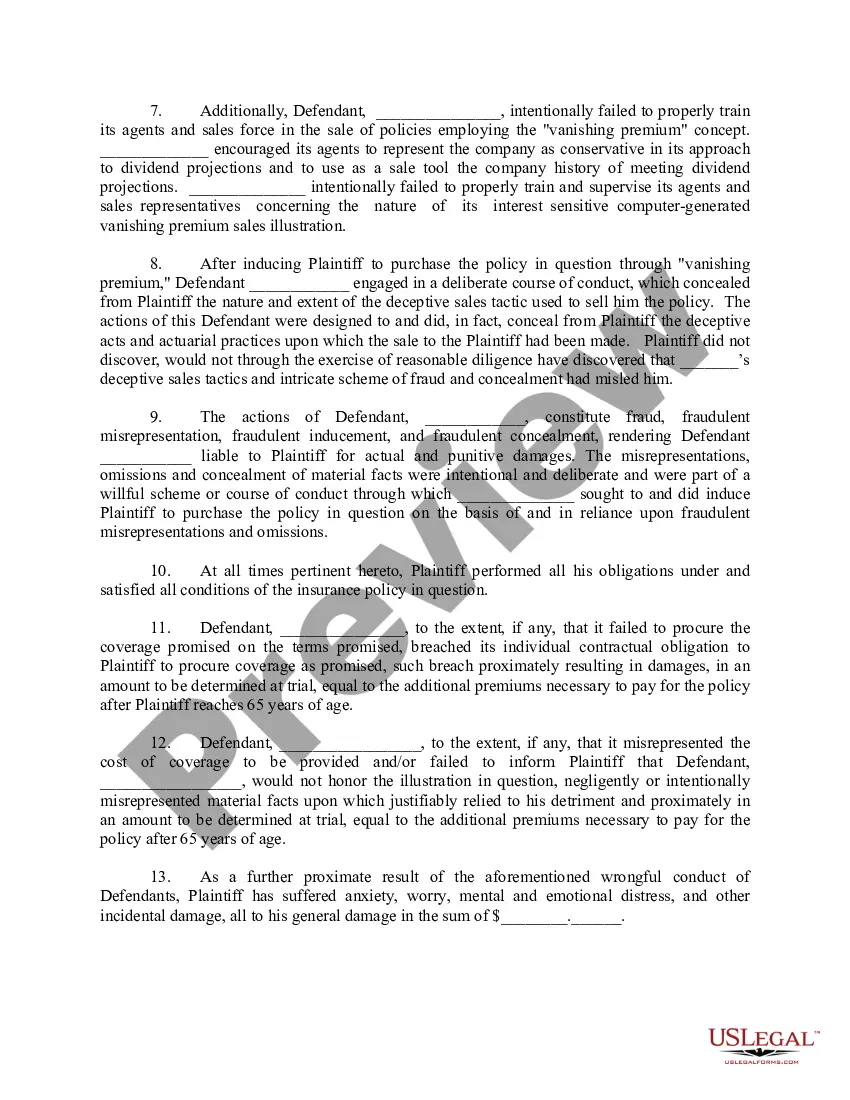
California has not adopted the Uniform Deceptive Trade Practices Act. Deceptive trade practices in the state are dealt under California Business and Professions Code § 17500 et seq. Sections 17500, 17500.5 and 17505 prohibit false advertisements.
One of the best ways to avoid giving misinformation and violating the Texas Deceptive Trade Practices-Consumer Protection Act is to ensure that the information you provide is accurate and factually supported. Always double-check your facts and sources before sharing information.
(These practices are commonly called misleading or unfair business practices.) They include false advertising, misrepresentation, tied selling, and failing to comply with regulations. Under consumer protection laws, they are illegal and can lead to compensatory or punitive damages.
The Statute of Limitations for DTPA Claims Specifically, any action under the act must be initiated within two years after the occurrence of the false, misleading, or deceptive act or practice, or after the consumer becomes aware or should have been aware of it.
(a) It is unlawful for any person, firm, corporation or association to falsely represent by advertisement the quantity of any article so advertised that will be sold to any one customer on his demand in a single transaction, and willfully or negligently to fail to include in such advertisement a statement that any ...
California Trade practice act (Chapter 338) enacted in 1996. The law in California prohibits unethical home inspection practices, including repairing properties that home inspectors have inspected in the previous 12 months.
Explanation: The most likely action to be a violation of the Texas Deceptive Trade Practices-Consumer Protection Act would be misleading advertising. This act prohibits false, misleading, or deceptive acts or practices in connection with the sale of goods or services.
The DTPA provides that "false, misleading, or deceptive acts or practices in the conduct of any trade or commerce are hereby declared unlawful." The DTPA prohibits certain acts or practices "in the conduct of any trade or commerce." This is a very broad provision.
A breach of the warranty can be asserted in an action for violations of the DTPA, but it also can be asserted in a common-law action. A corollary to La Sara's pronouncement that warranty claims must be established independently of the DTPA is that defenses to these warranties also will be brought into the DTPA.