Patent Infringement In Europe In King
Description

Get your form ready online
Our built-in tools help you complete, sign, share, and store your documents in one place.
Make edits, fill in missing information, and update formatting in US Legal Forms—just like you would in MS Word.
Download a copy, print it, send it by email, or mail it via USPS—whatever works best for your next step.
Sign and collect signatures with our SignNow integration. Send to multiple recipients, set reminders, and more. Go Premium to unlock E-Sign.
If this form requires notarization, complete it online through a secure video call—no need to meet a notary in person or wait for an appointment.
We protect your documents and personal data by following strict security and privacy standards.

Make edits, fill in missing information, and update formatting in US Legal Forms—just like you would in MS Word.

Download a copy, print it, send it by email, or mail it via USPS—whatever works best for your next step.

Sign and collect signatures with our SignNow integration. Send to multiple recipients, set reminders, and more. Go Premium to unlock E-Sign.

If this form requires notarization, complete it online through a secure video call—no need to meet a notary in person or wait for an appointment.

We protect your documents and personal data by following strict security and privacy standards.
Looking for another form?




Form popularity
FAQ
To protect your innovative product or process in the European Union (EU), you can apply to the European Patent Office (EPO) for a European patent. A European patent is really a bundle of national patents.
For European-wide protection, you can register a European patent with the European Patent Office (EPO). A European patent also needs to be validated by the national patent office in each country where protection is required.
There currently is no single international patent you can get that provides worldwide patent protection. While there is no such thing as an international patent, there are some international patent applications you can file that can help acquire patent rights in foreign countries.
Opposition to any European patent granted by the EPO under the European Patent Convention (EPC) may be filed by any member of the public except for the proprietor himself. Opposition must be filed within nine months of the publication of the mention that the patent has been granted.
Geographic scope of the European patent protection European patents provide protection not only in the 39 member states of the European Patent Organisation but also in one extension state and five validation states. This represents an area with some 700 million inhabitants.
Since the rights granted by a U.S. patent extend only throughout the territory of the United States and have no effect in a foreign country, an inventor who wishes patent protection in other countries must apply for a patent in each of the other countries or in regional patent offices.
A U.S. patent holder can block importation and sale of an infringing machine, manufacture or composition of matter in the U.S. and can sue for damages. Suit can be brought against foreign companies in U.S. federal court, so long as the patent holder can serve the infringer.
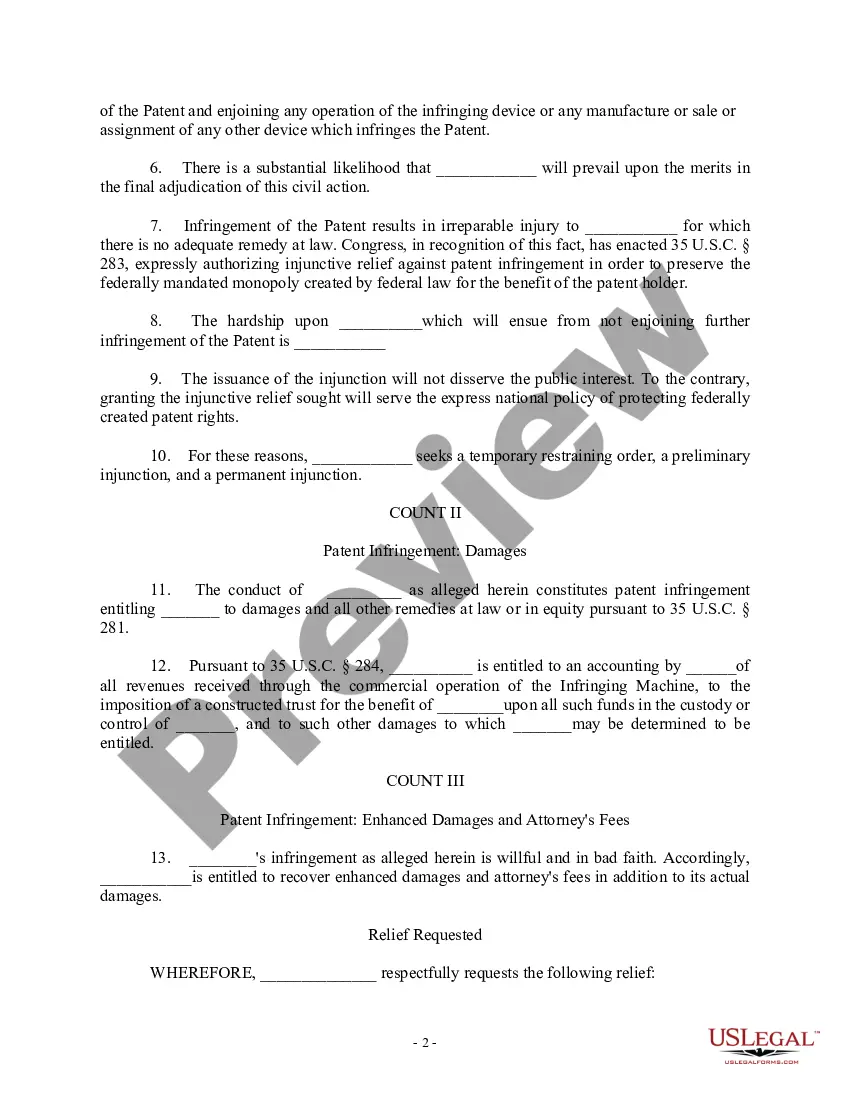
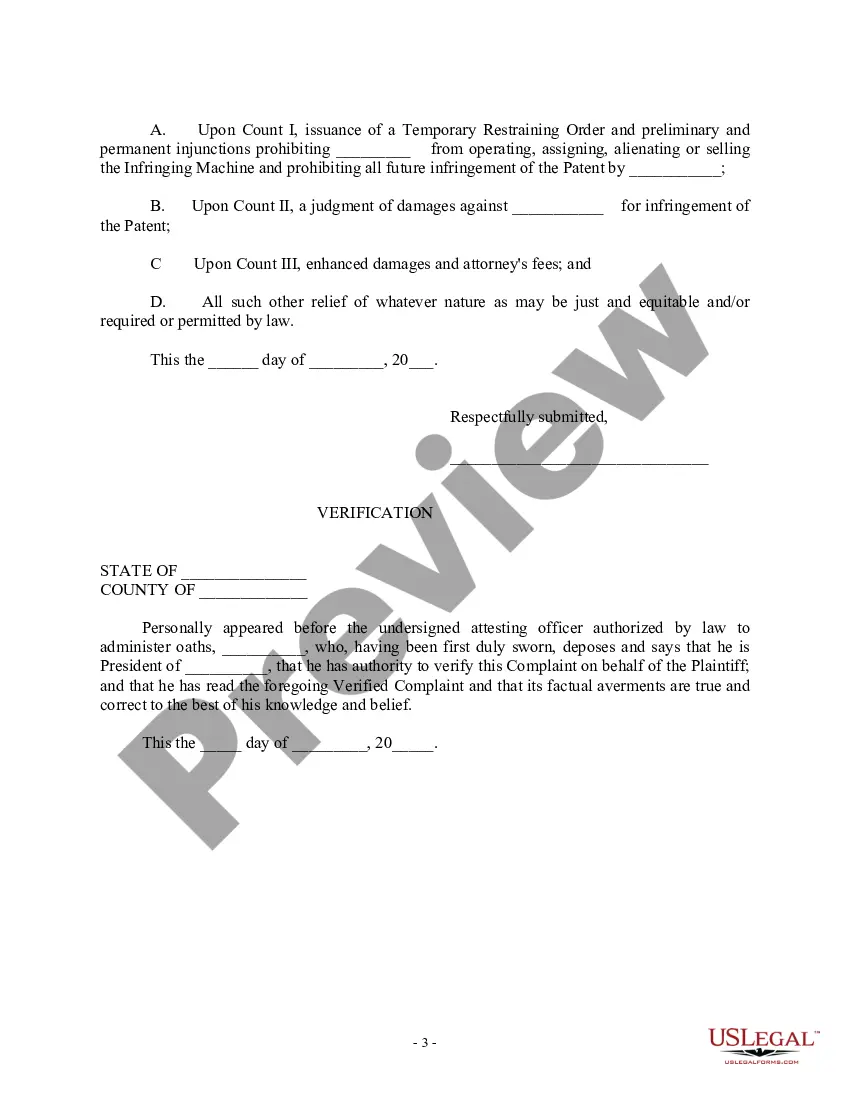
Getting Started in Litigation Your attorney will file a formal complaint in federal court, explaining how the defendant has infringed on your patent. Together with your attorney, you will need to compile evidence of your ownership of the patent and the infringement.
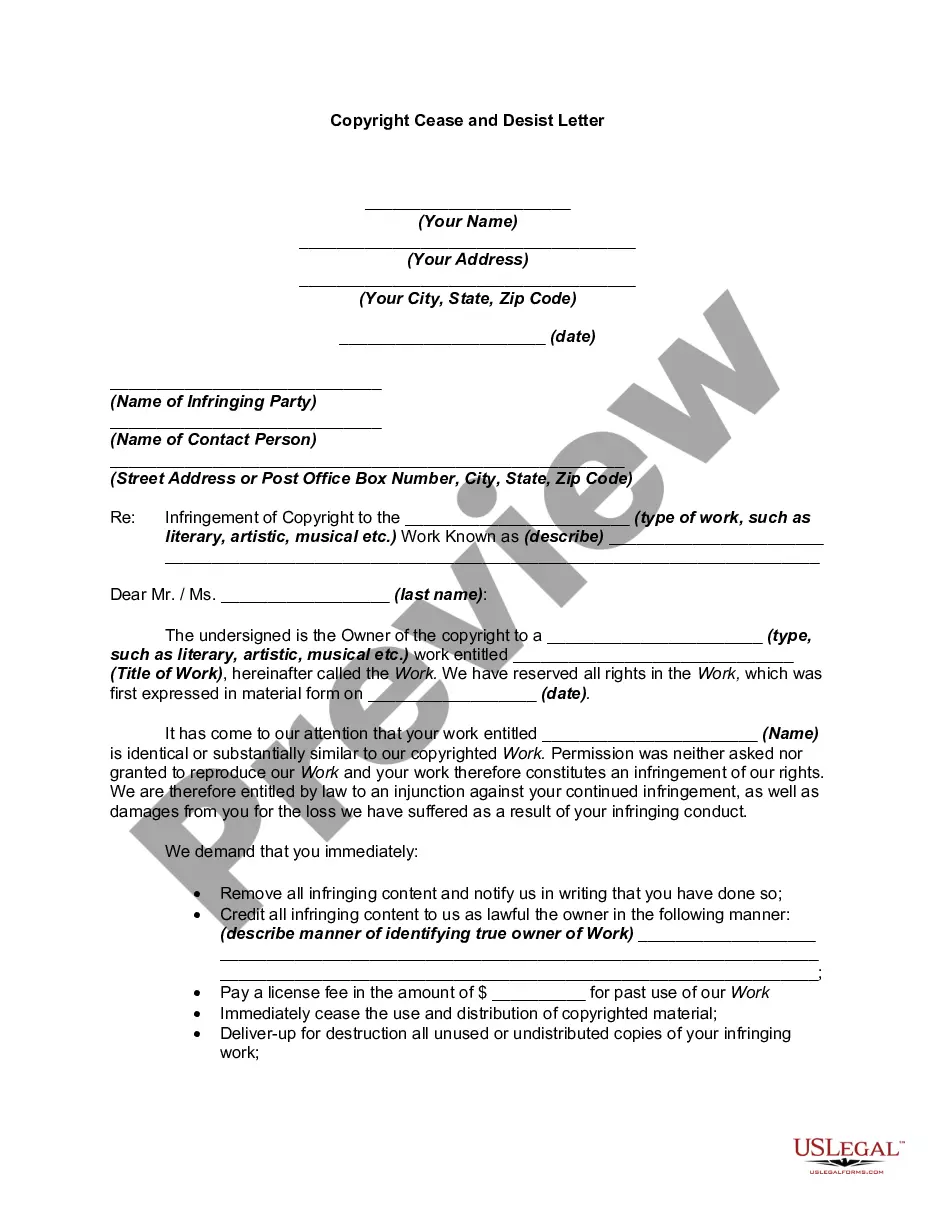
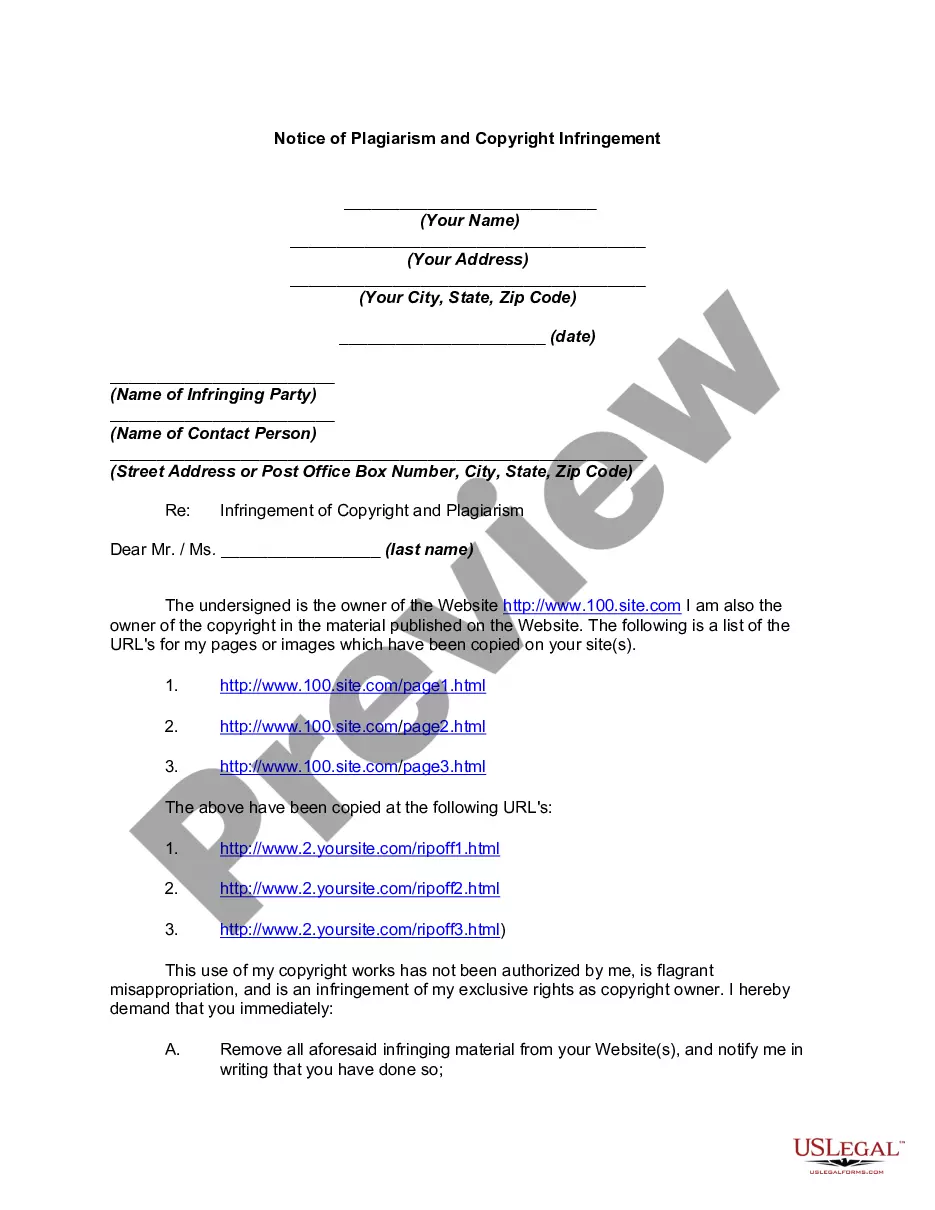
Infringement is where someone uses the whole or a substantial part of your work without your permission and none of the exceptions to copyright apply.
Patent infringement is the unlawful use, selling, or copying of a patented invention. United States patent law protects such inventions. A patent is a type of intellectual property that the inventor could seek protection by filing a patent application.