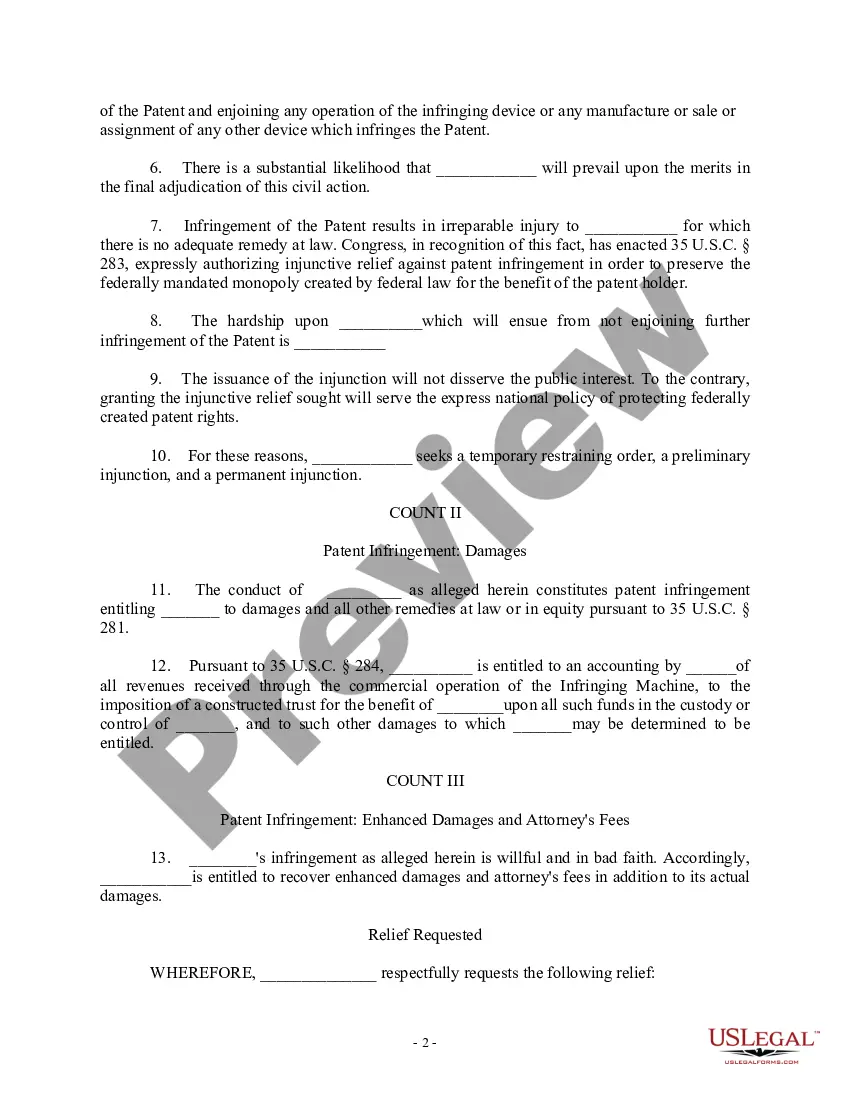
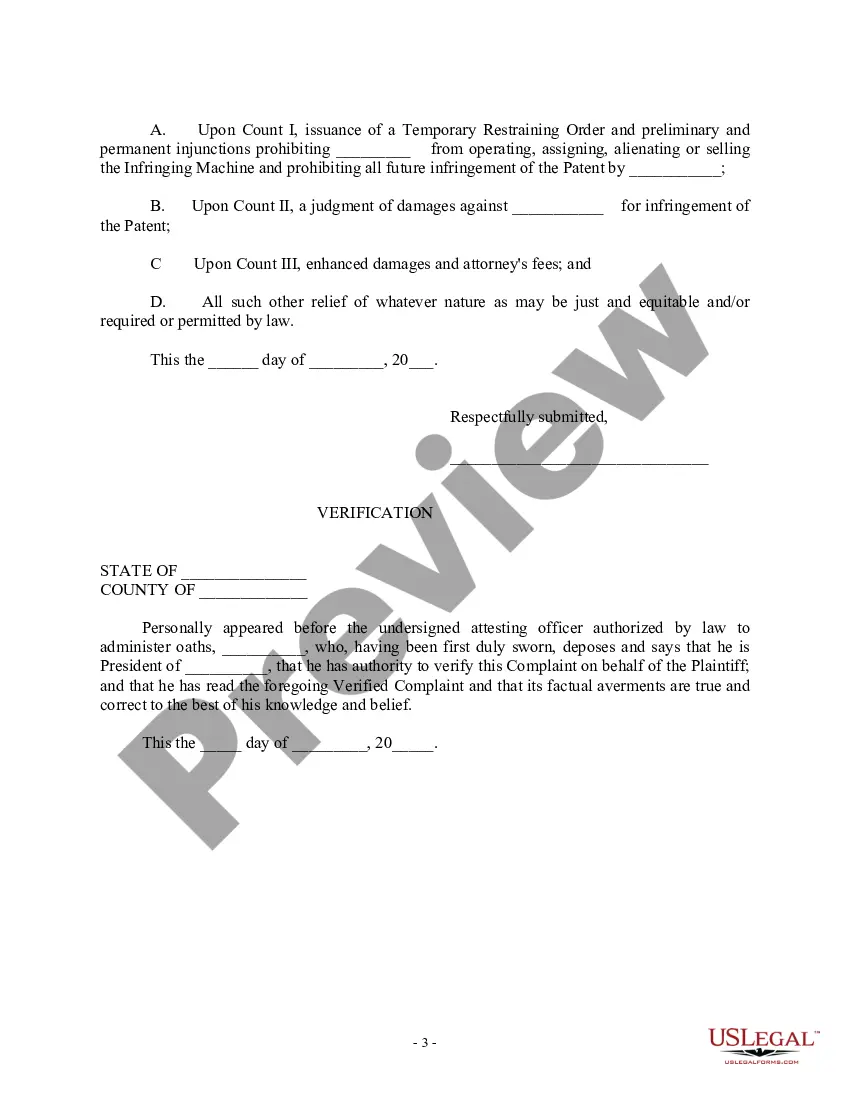
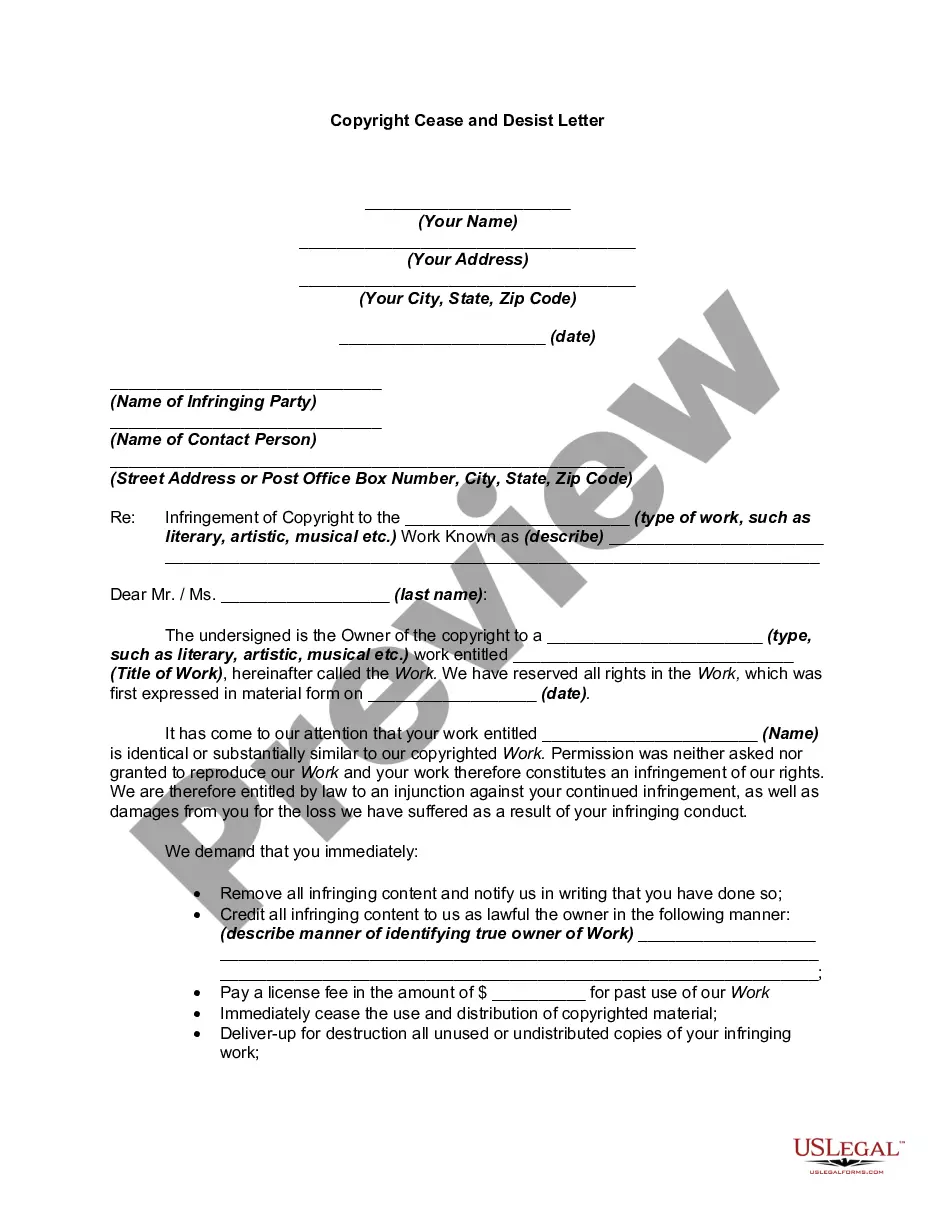
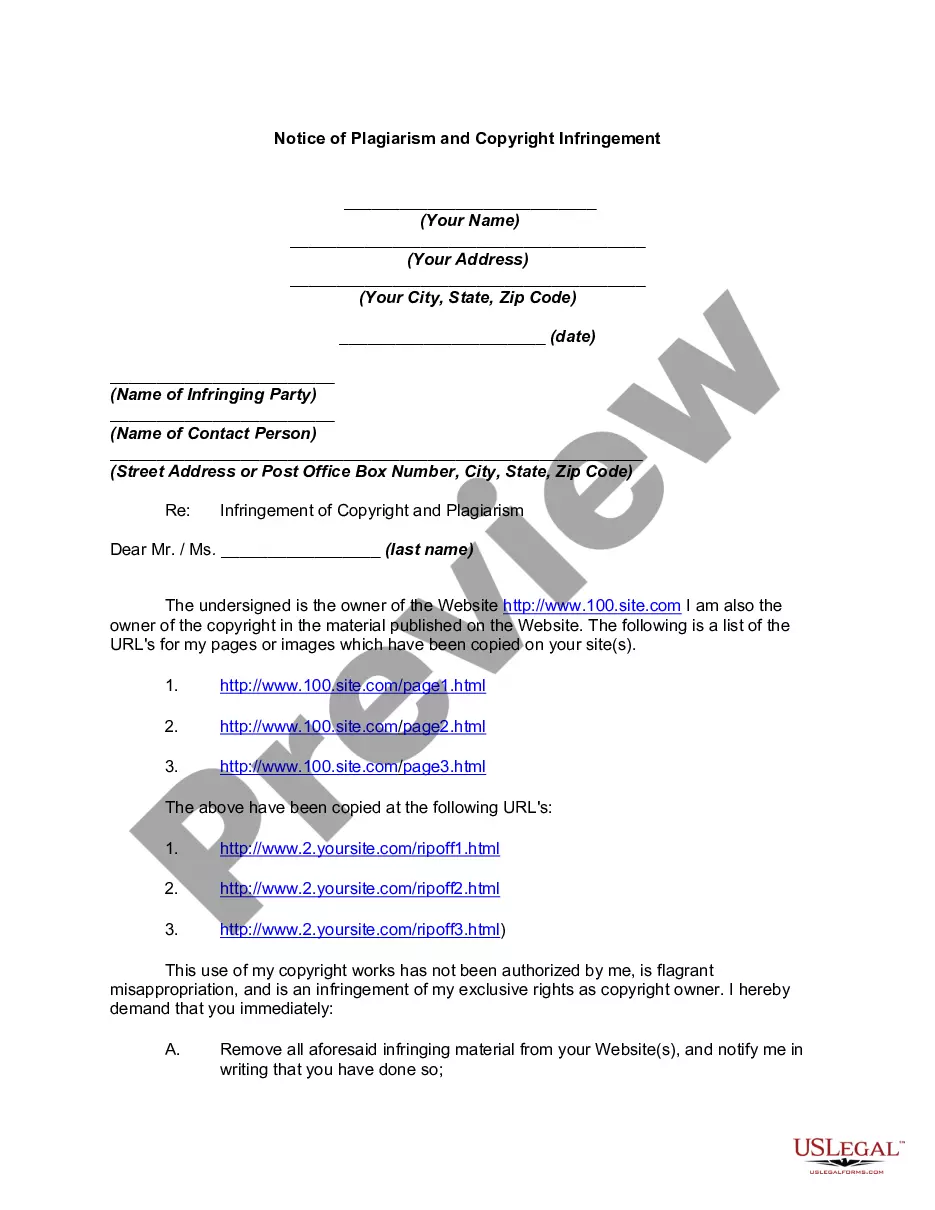
Patent Infringement In Pharmaceutical Industry In Cook
Description

Get your form ready online
Our built-in tools help you complete, sign, share, and store your documents in one place.
Make edits, fill in missing information, and update formatting in US Legal Forms—just like you would in MS Word.
Download a copy, print it, send it by email, or mail it via USPS—whatever works best for your next step.
Sign and collect signatures with our SignNow integration. Send to multiple recipients, set reminders, and more. Go Premium to unlock E-Sign.
If this form requires notarization, complete it online through a secure video call—no need to meet a notary in person or wait for an appointment.
We protect your documents and personal data by following strict security and privacy standards.

Make edits, fill in missing information, and update formatting in US Legal Forms—just like you would in MS Word.

Download a copy, print it, send it by email, or mail it via USPS—whatever works best for your next step.

Sign and collect signatures with our SignNow integration. Send to multiple recipients, set reminders, and more. Go Premium to unlock E-Sign.

If this form requires notarization, complete it online through a secure video call—no need to meet a notary in person or wait for an appointment.

We protect your documents and personal data by following strict security and privacy standards.
Looking for another form?



Form popularity
FAQ
A patent only gives an inventor the right to prevent others from using the patented invention. It says nothing about whether the product is safe for consumers and whether it can be supplied. Patented pharmaceuticals still have to go through rigorous testing and approval before they can be put on the market.
This probably will require hiring a patent attorney. You should make sure to find an attorney who has handled patent infringement cases previously and who is familiar with your industry. Your attorney will file a formal complaint in federal court, explaining how the defendant has infringed on your patent.
The IPR Center encourages victims to visit its website at .IPRCenter to obtain more information about the IPR Center and to report violations of intellectual property rights online or by emailing IPRCenter@dhs. You can also report IP crime by clicking on The IRP Center's “Report IP Theft” button.
To enforce a patent against a competitor, you'll need to show three things: That you own a valid patent. That the alleged infringer has engaged in an act of infringement. That the infringing product or process incorporates all the features of at least one independent claim.
A patent infringement action would typically name as a defendant every alleged patent infringer. This may be a particularly easy process if there is only one specific individual who has infringed on your patent. It can become much more complicated, however, when there are multiple individuals and businesses involved.
Selling, offering to sell, using, or manufacturing a patented product without the owner's permission (by license, waiver, or other contract) can constitute infringement and expose the unauthorized seller/user/manufacturer to liability, even if the infringement was unintentional.
The all-elements rule is a principle in patent law that states that every part of a claim must be present in a device that is accused of infringing the patent in order for it to be considered a literal infringement.
In the United States, a valid patent provides its proprietor with the right to exclude others from practicing the invention claimed in that patent. A person who practices that invention without the permission of the patent holder infringes that patent.
Typically, a party (other than the patentee or licensee of the patentee) that manufactures, imports, uses, sells, or offers for sale patented technology without permission/license from the patentee, during the term of the patent and within the country that issued the patent, is considered to infringe the patent.