Patent Infringement In Pharmaceutical Industry In Contra Costa
Description

Get your form ready online
Our built-in tools help you complete, sign, share, and store your documents in one place.
Make edits, fill in missing information, and update formatting in US Legal Forms—just like you would in MS Word.
Download a copy, print it, send it by email, or mail it via USPS—whatever works best for your next step.
Sign and collect signatures with our SignNow integration. Send to multiple recipients, set reminders, and more. Go Premium to unlock E-Sign.
If this form requires notarization, complete it online through a secure video call—no need to meet a notary in person or wait for an appointment.
We protect your documents and personal data by following strict security and privacy standards.

Make edits, fill in missing information, and update formatting in US Legal Forms—just like you would in MS Word.

Download a copy, print it, send it by email, or mail it via USPS—whatever works best for your next step.

Sign and collect signatures with our SignNow integration. Send to multiple recipients, set reminders, and more. Go Premium to unlock E-Sign.

If this form requires notarization, complete it online through a secure video call—no need to meet a notary in person or wait for an appointment.

We protect your documents and personal data by following strict security and privacy standards.
Looking for another form?




Form popularity
FAQ
Typically, a party (other than the patentee or licensee of the patentee) that manufactures, imports, uses, sells, or offers for sale patented technology without permission/license from the patentee, during the term of the patent and within the country that issued the patent, is considered to infringe the patent.
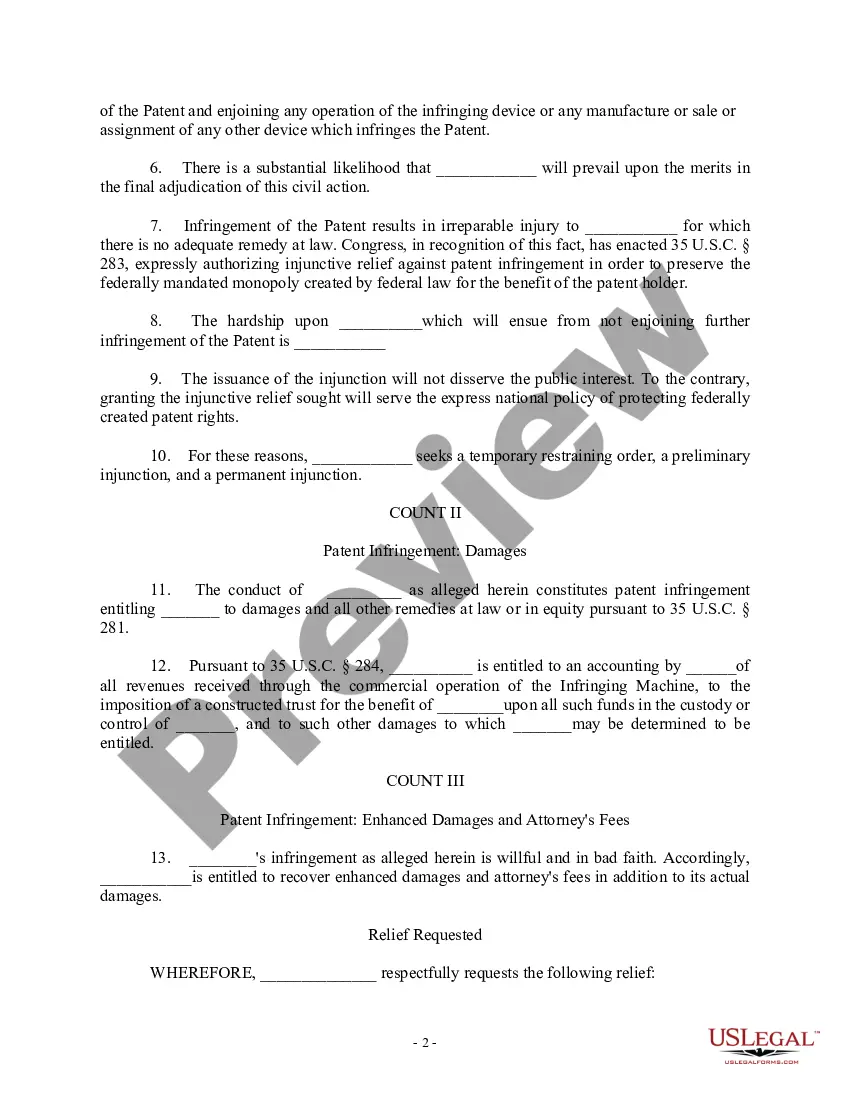
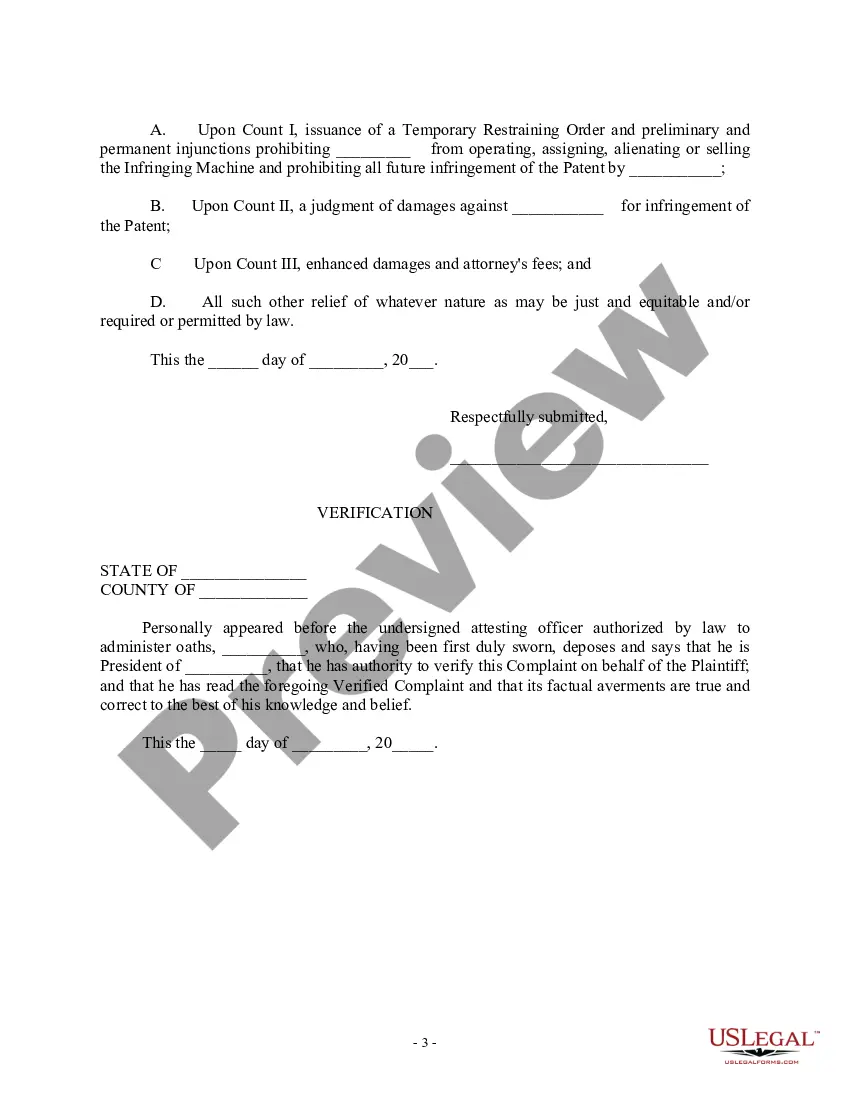
Getting Started in Litigation Your attorney will file a formal complaint in federal court, explaining how the defendant has infringed on your patent. Together with your attorney, you will need to compile evidence of your ownership of the patent and the infringement.
A patent holder must sue the unauthorized party in federal district court. The patent holder can sue in any federal court where the infringed product is found. Patent lawsuits are time-consuming. Depending on where you live, these suits can take years to get to trial.
Patents grant pharmaceutical corporations exclusive rights to market pharmaceuticals and ban others from manufacturing, selling, or manufacturing these drugs for 20 years. IPR is required for pharmaceutical businesses to identify, plan, commercialize, and protect their inventions.
There is no statutory cap on the damages for a patent infringement lawsuit. Whatever amount of harm you can prove the defendant caused, that's the amount you're entitled to.
A patent infringement action would typically name as a defendant every alleged patent infringer. This may be a particularly easy process if there is only one specific individual who has infringed on your patent. It can become much more complicated, however, when there are multiple individuals and businesses involved.
If someone infringes on your patent, you can file a lawsuit in federal court to make them stop the infringement, and potentially collect damages for your injuries that occurred within six years of the filing of the lawsuit, but the court may not allow you to recover past damages for patent infringement if you waited ...
A patent holder can file a suit for infringement in the District Court or High Court. However where counter-claims for revocation of the patent is made by the defendant, the suit along with the counter-claims are transferred to the High Court for a decision on the validity of the patent.
Your counsel should be a Registered Patent Attorney. Many attorneys who handle patent cases are not Registered Patent Attorneys. Registered Patent Attorneys have science and engineering degrees and have been admitted to the Patent Bar in addition to their State Bar.