Patent Infringement In India In Bexar
Description

Get your form ready online
Our built-in tools help you complete, sign, share, and store your documents in one place.
Make edits, fill in missing information, and update formatting in US Legal Forms—just like you would in MS Word.
Download a copy, print it, send it by email, or mail it via USPS—whatever works best for your next step.
Sign and collect signatures with our SignNow integration. Send to multiple recipients, set reminders, and more. Go Premium to unlock E-Sign.
If this form requires notarization, complete it online through a secure video call—no need to meet a notary in person or wait for an appointment.
We protect your documents and personal data by following strict security and privacy standards.

Make edits, fill in missing information, and update formatting in US Legal Forms—just like you would in MS Word.

Download a copy, print it, send it by email, or mail it via USPS—whatever works best for your next step.

Sign and collect signatures with our SignNow integration. Send to multiple recipients, set reminders, and more. Go Premium to unlock E-Sign.

If this form requires notarization, complete it online through a secure video call—no need to meet a notary in person or wait for an appointment.

We protect your documents and personal data by following strict security and privacy standards.
Looking for another form?







Form popularity
FAQ
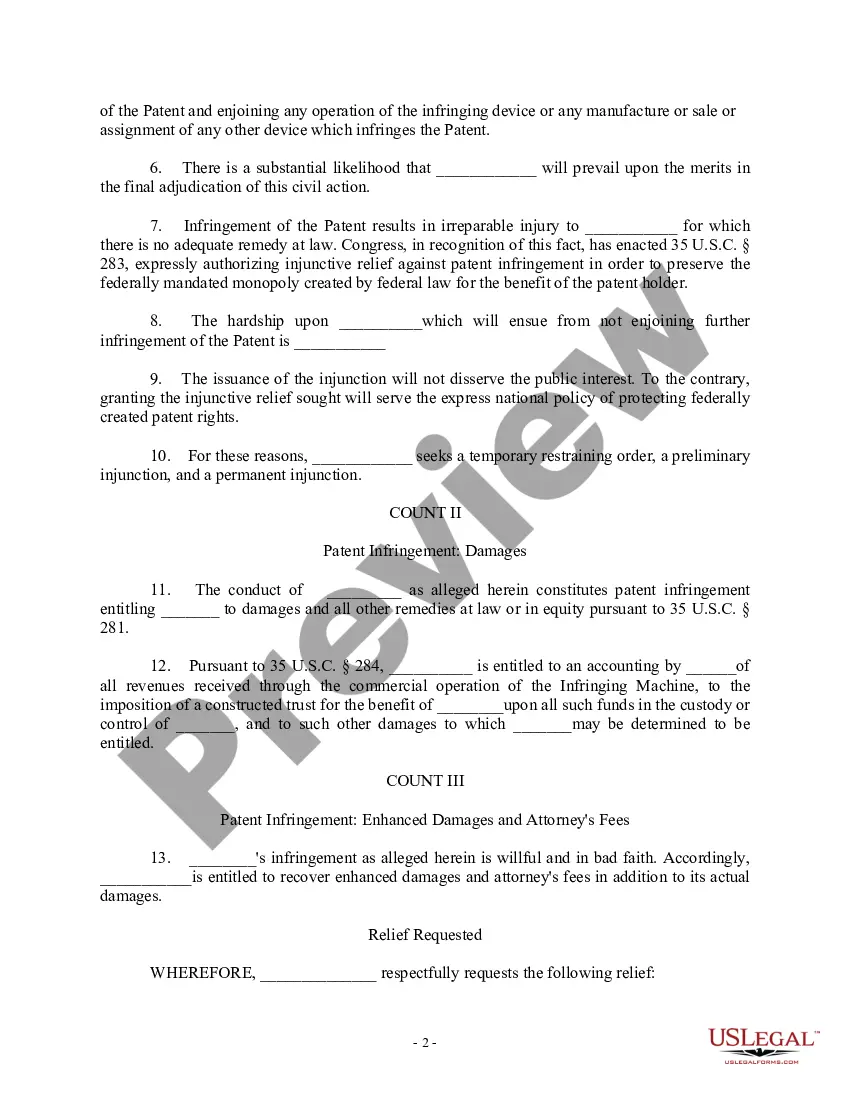
Patent infringement is the unlawful use, selling, or copying of a patented invention. United States patent law protects such inventions. A patent is a type of intellectual property that the inventor could seek protection by filing a patent application.
A patent infringement action would typically name as a defendant every alleged patent infringer. This may be a particularly easy process if there is only one specific individual who has infringed on your patent. It can become much more complicated, however, when there are multiple individuals and businesses involved.
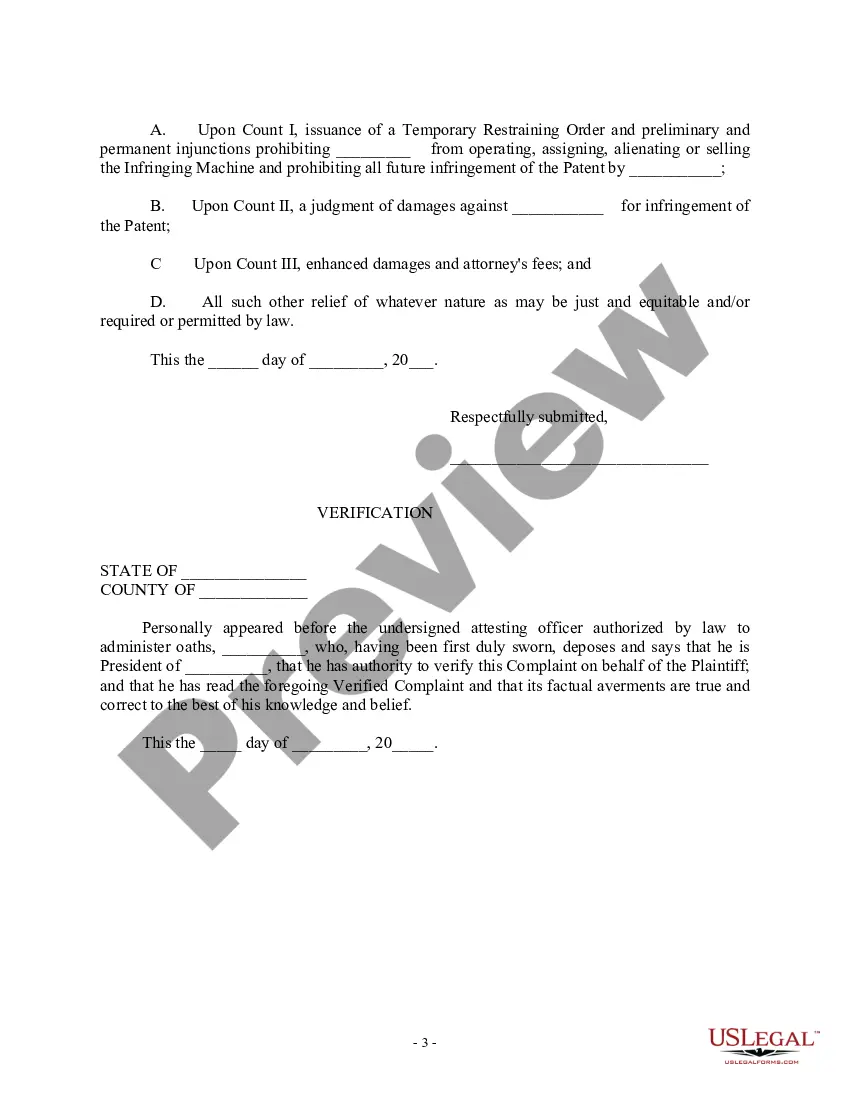
Getting Started in Litigation Your attorney will file a formal complaint in federal court, explaining how the defendant has infringed on your patent. Together with your attorney, you will need to compile evidence of your ownership of the patent and the infringement.
Getting Started in Litigation Your attorney will file a formal complaint in federal court, explaining how the defendant has infringed on your patent. Together with your attorney, you will need to compile evidence of your ownership of the patent and the infringement.
In India, the process of patent infringement involves filing an infringement suit in court, presenting evidence of infringement, and attending hearings to argue the case. The court assesses the evidence, including expert testimony, and delivers a judgement based on the merits of the case.
A U.S. patent holder can block importation and sale of an infringing machine, manufacture or composition of matter in the U.S. and can sue for damages. Suit can be brought against foreign companies in U.S. federal court, so long as the patent holder can serve the infringer.
To enforce a patent against a competitor, you'll need to show three things: That you own a valid patent. That the alleged infringer has engaged in an act of infringement. That the infringing product or process incorporates all the features of at least one independent claim.
Here is the procedure on how to apply for patent in India: STEP 1: Invention Disclosure. STEP 2: Patentability Search. STEP 3: Filing an Application for a Patent. STEP 4: Patent Drafting. STEP 5: Filing the Patent Application. STEP 6: Request for Examination. STEP 7: Responding to Objections (if any) ... STEP 8: Grant of Patent.
The IPR Center encourages victims to visit its website at .IPRCenter to obtain more information about the IPR Center and to report violations of intellectual property rights online or by emailing IPRCenter@dhs. You can also report IP crime by clicking on The IRP Center's “Report IP Theft” button.
The remedies to patent owners are based on certain rights granted under Section 48 of the Patents Act subject to certain exceptions. The Act also offers remedies on the infringement of these rights. The remedies include temporary injunction, permanent injunction, damages or account of profits.