14th Amendment Agreement With Abortion In Montgomery
Description






Get your form ready online
Our built-in tools help you complete, sign, share, and store your documents in one place.
Make edits, fill in missing information, and update formatting in US Legal Forms—just like you would in MS Word.
Download a copy, print it, send it by email, or mail it via USPS—whatever works best for your next step.
Sign and collect signatures with our SignNow integration. Send to multiple recipients, set reminders, and more. Go Premium to unlock E-Sign.
If this form requires notarization, complete it online through a secure video call—no need to meet a notary in person or wait for an appointment.
We protect your documents and personal data by following strict security and privacy standards.
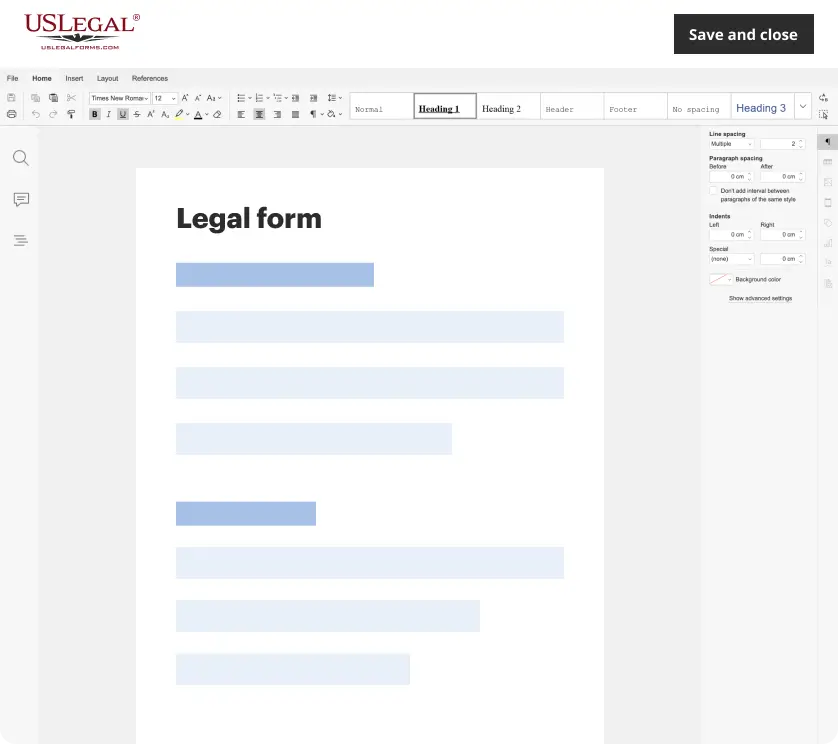
Make edits, fill in missing information, and update formatting in US Legal Forms—just like you would in MS Word.
Download a copy, print it, send it by email, or mail it via USPS—whatever works best for your next step.
Sign and collect signatures with our SignNow integration. Send to multiple recipients, set reminders, and more. Go Premium to unlock E-Sign.

If this form requires notarization, complete it online through a secure video call—no need to meet a notary in person or wait for an appointment.

We protect your documents and personal data by following strict security and privacy standards.
Looking for another form?








Form popularity
FAQ
A1: Although the Fourteenth Amendment does not contain the word “privacy” itself, nor does it appear in the rest of the Constitution, U.S. courts have long acknowledged an individual's right to privacy in home and family life. The Supreme Court first recognized a constitutional right to privacy in Griswold v.
As an effect of the unanimity of the states in holding unborn children to be persons under criminal, tort, and property law, the text of the Equal Protection Clause of the Fourteenth Amendment compels federal protection of unborn persons.
Abortion will remain legal in Maryland. In 2024, voters decided to amend the Maryland Constitution to create a right to reproductive freedom.
The Fourteenth Amendment only applies to actions by state governments (state actions), not private actions. Consider, for example, Obergefell, which involved the fundamental right to marry. Some state laws interfered with that right.
In the resulting Supreme Court case, the Court ruled that a woman's decision to have an abortion in the first trimester of pregnancy fell under the right of privacy and thus was protected by the Constitution.
The Supreme Court, however, beginning as early as 1923 and continuing through its recent decisions, has broadly read the "liberty" guarantee of the Fourteenth Amendment to guarantee a fairly broad right of privacy that has come to encompass decisions about child rearing, procreation, marriage, and termination of ...
The central decisions in Roe were (1) that the due process clause is a repository of substantive rights not specifically enumerated in the Constitution but deemed worthy of protection by a majority of the Court, and (2) that the freedom to terminate a pregnancy during the first three months is one of those rights.
