Event Planning Agreement Contracts For Clients In Washington
Description

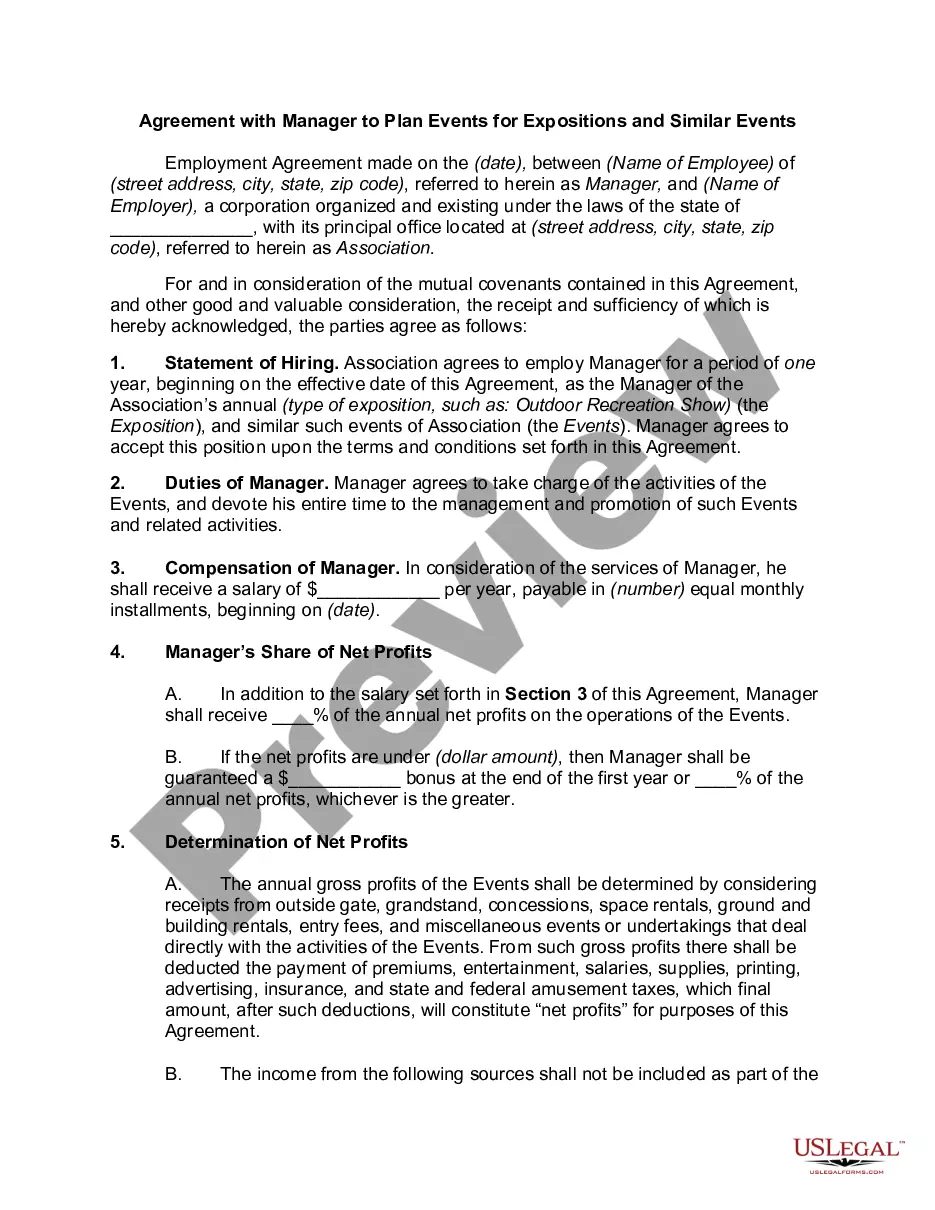
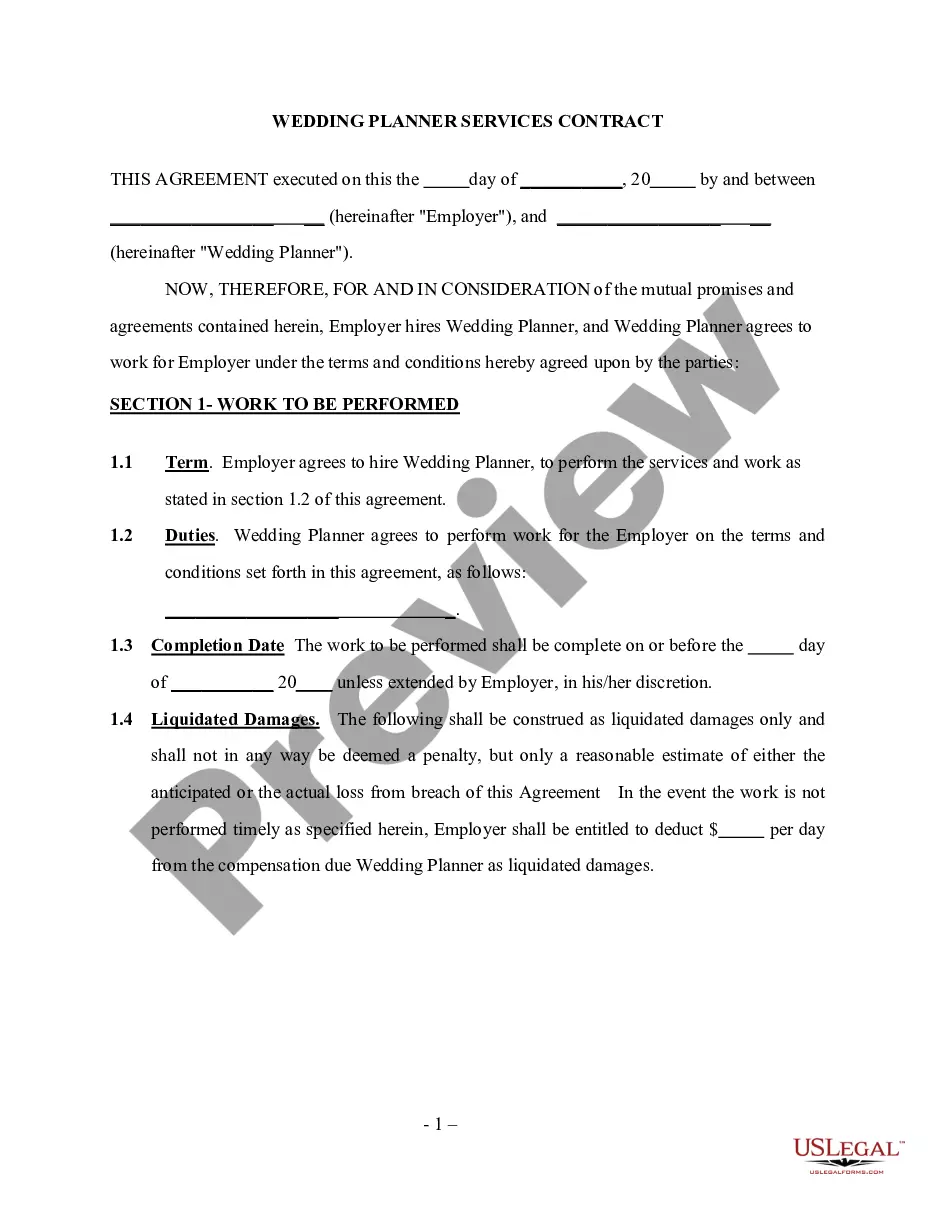
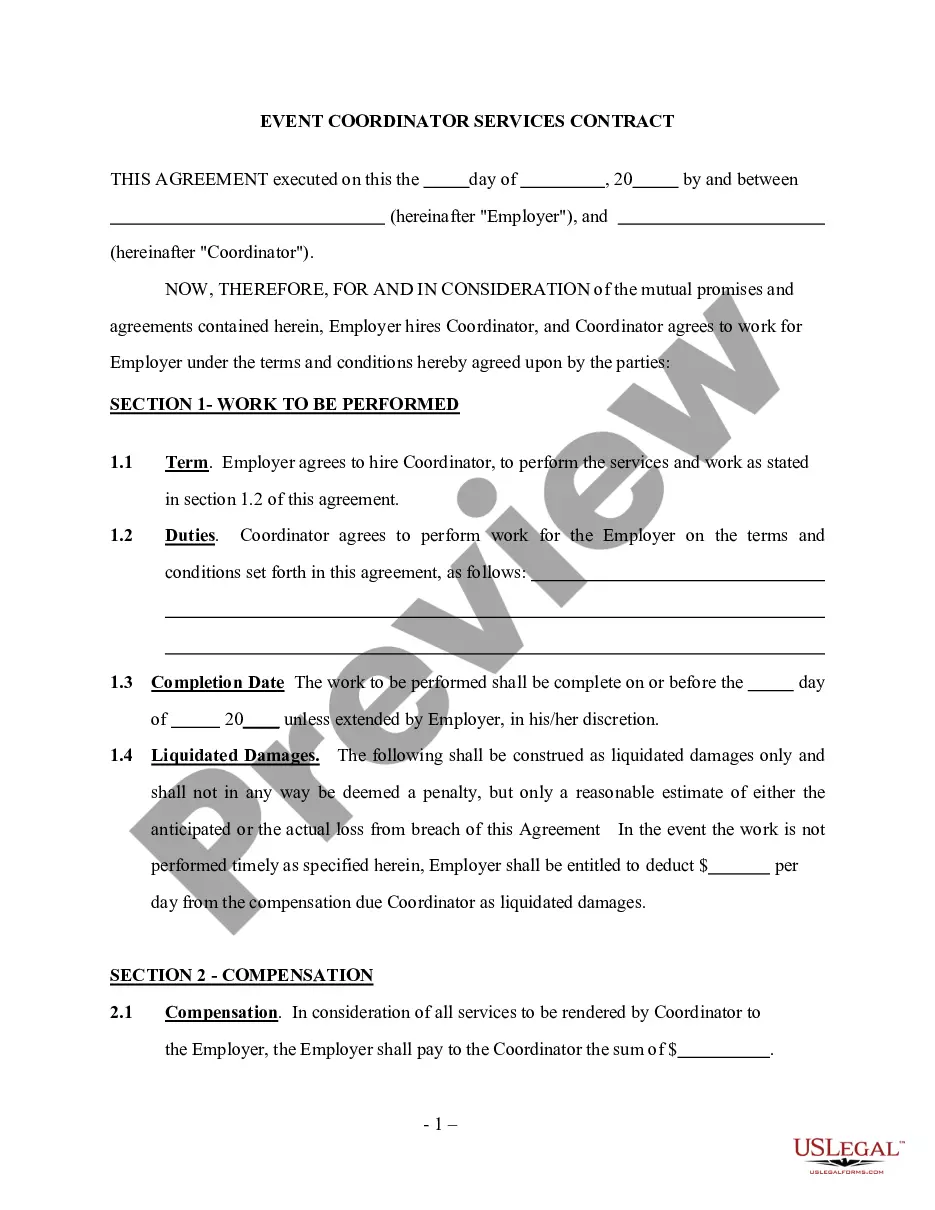
Get your form ready online
Our built-in tools help you complete, sign, share, and store your documents in one place.
Make edits, fill in missing information, and update formatting in US Legal Forms—just like you would in MS Word.
Download a copy, print it, send it by email, or mail it via USPS—whatever works best for your next step.
Sign and collect signatures with our SignNow integration. Send to multiple recipients, set reminders, and more. Go Premium to unlock E-Sign.
If this form requires notarization, complete it online through a secure video call—no need to meet a notary in person or wait for an appointment.
We protect your documents and personal data by following strict security and privacy standards.

Make edits, fill in missing information, and update formatting in US Legal Forms—just like you would in MS Word.

Download a copy, print it, send it by email, or mail it via USPS—whatever works best for your next step.

Sign and collect signatures with our SignNow integration. Send to multiple recipients, set reminders, and more. Go Premium to unlock E-Sign.

If this form requires notarization, complete it online through a secure video call—no need to meet a notary in person or wait for an appointment.

We protect your documents and personal data by following strict security and privacy standards.
Looking for another form?








Form popularity
FAQ
How to plan an event in 10 steps Organize your objectives. Establish a budget. Build an event team. Select a venue and date. Choose event management software. Establish vendors, sponsors and partners. Plan the program and entertainment. Brand and market the event.
There are two million events organized in the US every year. That is almost 5,500 events every single day. And a profit margin of planners is 15-40% of the budget (some $500 billion annually spent on events, ing to Entrepreneur).
In summary, the success of an event is determined by the following five essential event management elements: concept, coordination, control, culmination, and closeout. You can ensure that your event is well-organized, well-executed, and memorable for your attendees by incorporating these elements into your planning.
How to plan an event in 10 steps Organize your objectives. Establish a budget. Build an event team. Select a venue and date. Choose event management software. Establish vendors, sponsors and partners. Plan the program and entertainment. Brand and market the event.
Develop Your Event Goals and Objectives. Organize Your Team. Establish Your Budget. Create a Master Plan. Plan for VIPs, Keynote, and Entertainment. Set the Date. Reserve Your Venue. Market and Promote Your Event.
An event contract, also known as a prediction or information contract, is a derivative contract whose payoff is based on a specified event, occurrence, or value such as the value of a macroeconomic indicator, corporate earnings, level of snowfall, or dollar value of damages caused by a hurricane.
A legally-binding document once signed, it contains what your clients should expect once they start working with you in terms of the services you will render, what their responsibilities will be within the working relationship, and the steps that will take place should disagreements arise or unexpected events take ...
All contracts start with desire and responsibility. Someone wants (desires) something, and someone can fulfill (take responsibility for) that want. Known as “the offer,” this first essential element encompasses the duties and responsibilities of each party, but must also demonstrate an exchange of value.
When creating your event planner contract, be sure to include the following details: Contact information for both parties. Date and time of the event including an end time. A detailed description of the event. Description of the duties and responsibilities of the event planner. Breakdown of costs and fees.
Every agreement requires a clear and explicit mutual understanding between the involved parties. The parties involved must have the legal capacity to enter into a contract. The agreement must have a lawful purpose and not violate any legal principles or commonly recognized moral standards.
