Declaratory Judgment Statute Of Limitations In Palm Beach
Description




Get your form ready online
Our built-in tools help you complete, sign, share, and store your documents in one place.
Make edits, fill in missing information, and update formatting in US Legal Forms—just like you would in MS Word.
Download a copy, print it, send it by email, or mail it via USPS—whatever works best for your next step.
Sign and collect signatures with our SignNow integration. Send to multiple recipients, set reminders, and more. Go Premium to unlock E-Sign.
If this form requires notarization, complete it online through a secure video call—no need to meet a notary in person or wait for an appointment.
We protect your documents and personal data by following strict security and privacy standards.

Make edits, fill in missing information, and update formatting in US Legal Forms—just like you would in MS Word.

Download a copy, print it, send it by email, or mail it via USPS—whatever works best for your next step.

Sign and collect signatures with our SignNow integration. Send to multiple recipients, set reminders, and more. Go Premium to unlock E-Sign.

If this form requires notarization, complete it online through a secure video call—no need to meet a notary in person or wait for an appointment.

We protect your documents and personal data by following strict security and privacy standards.
Looking for another form?
Form popularity
FAQ
Once seven years are up, the judgment will finally fall off your credit report. If your state's statute of limitations is longer than seven years, the mark will stay as long as the statute of limitations.
“To plead a claim for declaratory relief in Florida, a plaintiff must plead facts to show: (1) there is a bona fide, actual, present practical need for the declaration; (2) that the declaration deals with a present, ascertained or ascertainable state of facts or present controversy; (3) that some right or privilege of ...
A judgment is good, and can be enforced, for up to 20 years. That seems like a long time, and it is. A judgment is good for 10 years and Florida allows a creditor to “renew” a judgment before the expiration of the 10 years for an additional 10 years, thus giving a judgment almost unending life.
In Florida, the statute of limitations requires that the concerned parties file a lawsuit for wrongful death within two years from the date of death. However, the deadline may extend if the defendant tries to hide the cause of death.
In Florida, a “void judgment” is so defective that it is deemed never to have had legal force and effect, while a “voidable judgment” is a judgment that has been entered based upon some error in procedure that allows a party to have the judgment vacated, but the judgment has legal force and effect unless and until it ...
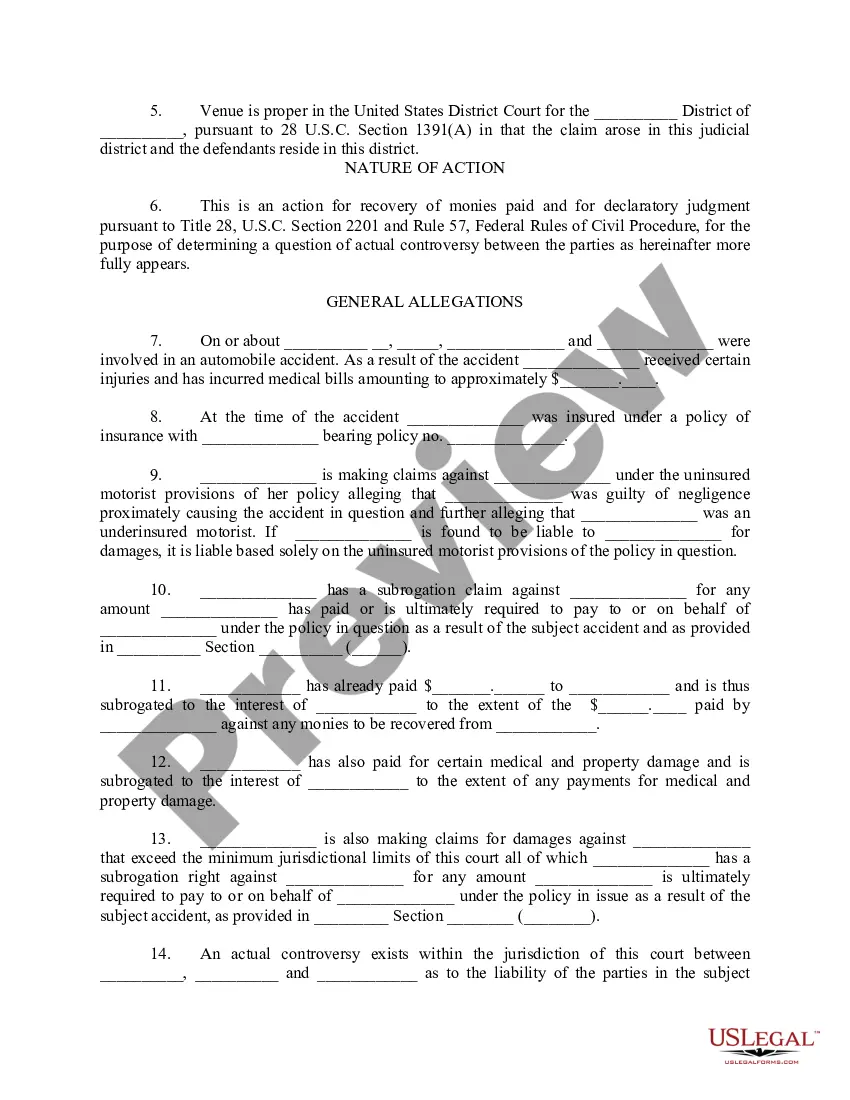
“”Declaratory judgment actions are subject to a four-year statute of limitations.”” See Lakeside v. Charlotte County, 2023 Fla.
55.081 Statute of limitations, lien of judgment. —Subject to the provisions of s. 55.10, no judgment, order, or decree of any court shall be a lien upon real or personal property within the state after the expiration of 20 years from the date of the entry of such judgment, order, or decree.
A judgment is good, and can be enforced, for up to 20 years. That seems like a long time, and it is. A judgment is good for 10 years and Florida allows a creditor to “renew” a judgment before the expiration of the 10 years for an additional 10 years, thus giving a judgment almost unending life.
An example of a declaratory judgment in an insurance situation may occur when a policyholder and an insurer disagree about whether a particular claim is covered under the insurance policy. For instance, suppose a homeowner files a claim with their insurance company for damages to their home caused by a storm.
A declaratory judgment is a ruling of the court to clarify something (usually a contract provision) that is in dispute. A summary judgment is a ruling that a case or portion of a case must be dismissed because there are no triable issues of material fact in dispute.