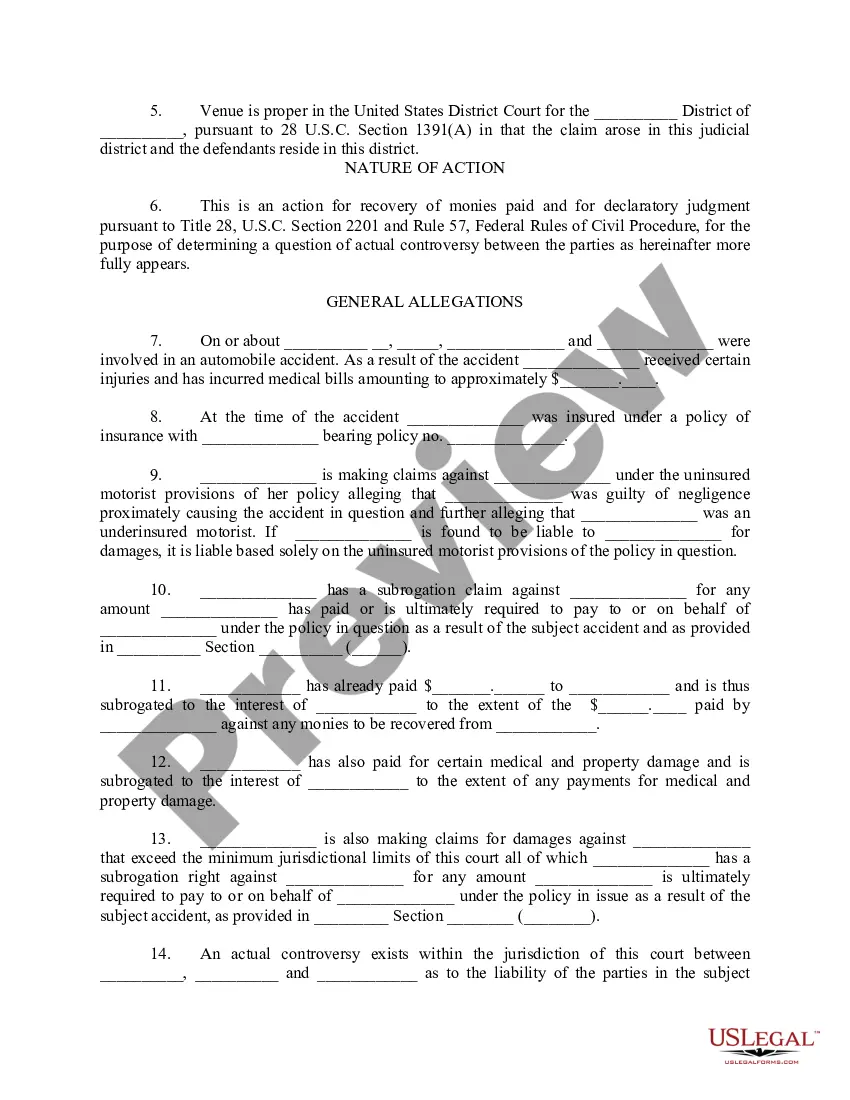
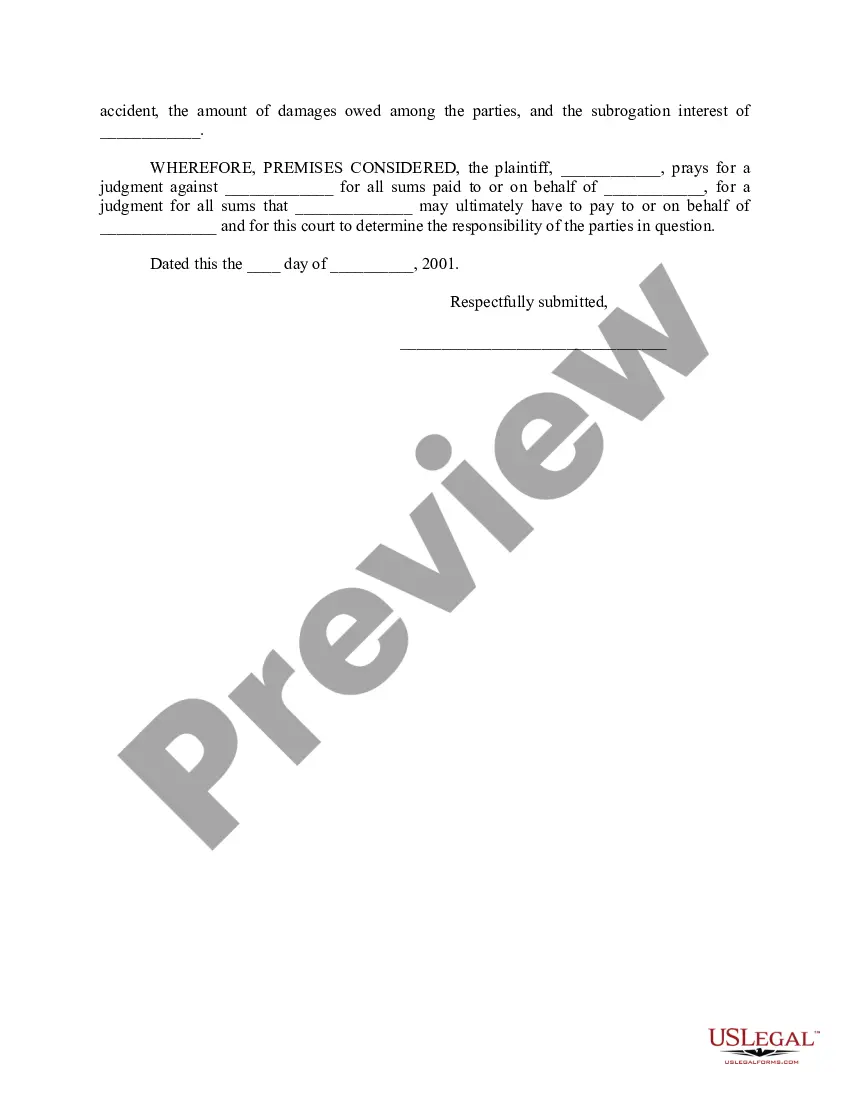
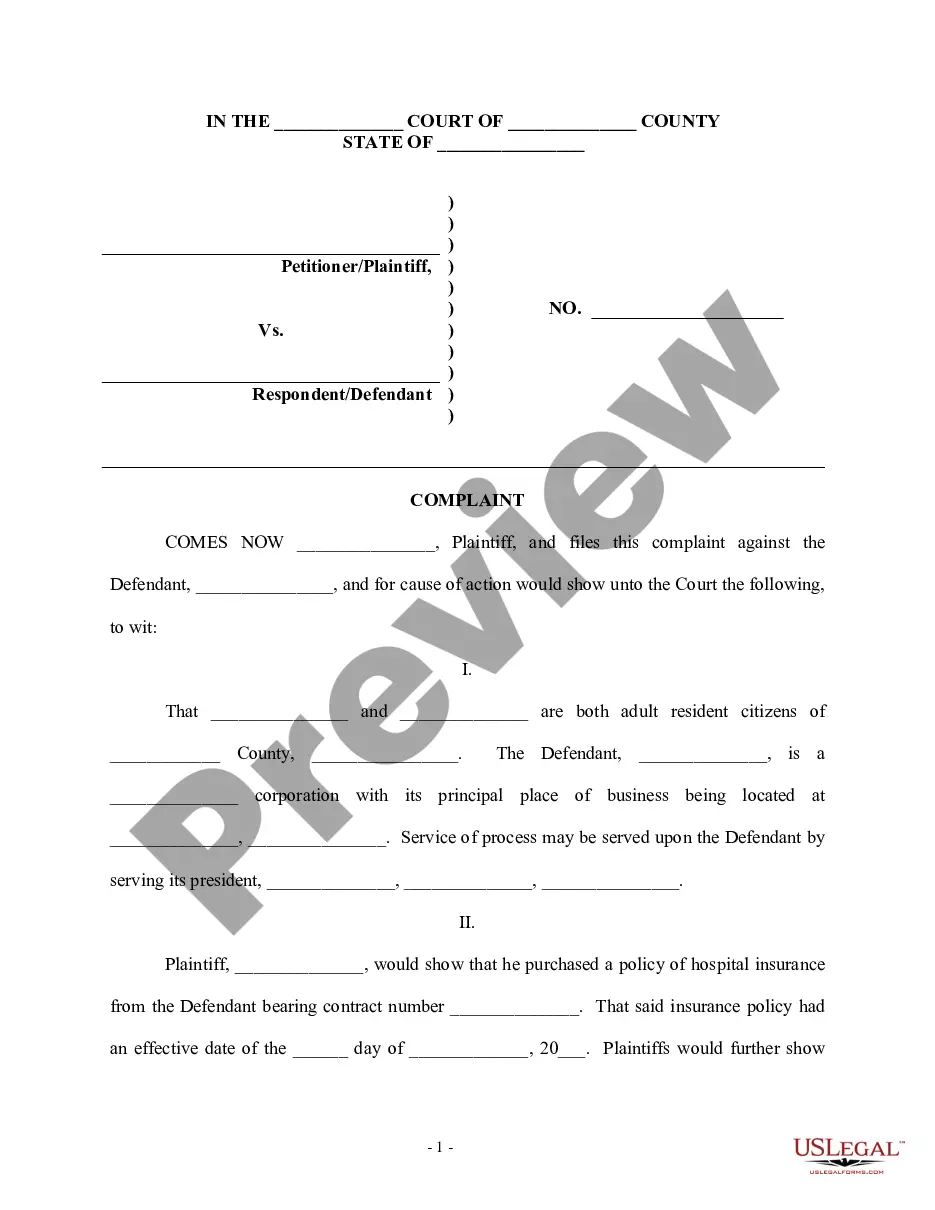
Complaint Subrogation Sample For Workers Compensation In Georgia
Description




Get your form ready online
Our built-in tools help you complete, sign, share, and store your documents in one place.
Make edits, fill in missing information, and update formatting in US Legal Forms—just like you would in MS Word.
Download a copy, print it, send it by email, or mail it via USPS—whatever works best for your next step.
Sign and collect signatures with our SignNow integration. Send to multiple recipients, set reminders, and more. Go Premium to unlock E-Sign.
If this form requires notarization, complete it online through a secure video call—no need to meet a notary in person or wait for an appointment.
We protect your documents and personal data by following strict security and privacy standards.

Make edits, fill in missing information, and update formatting in US Legal Forms—just like you would in MS Word.

Download a copy, print it, send it by email, or mail it via USPS—whatever works best for your next step.

Sign and collect signatures with our SignNow integration. Send to multiple recipients, set reminders, and more. Go Premium to unlock E-Sign.

If this form requires notarization, complete it online through a secure video call—no need to meet a notary in person or wait for an appointment.

We protect your documents and personal data by following strict security and privacy standards.
Looking for another form?








Form popularity
FAQ
To further avoid falling prey to a workers comp adjuster's tricks and tactics, here are some things you absolutely must not say to them: Information about your or your family's financial situation. They can use this to lowball you or delay the claims process so you'll agree to a much lower settlement.
The most costly lost-time workers' compensation claims by part of body are for those involving the head or central nervous system.
If it denies your claim, you might be able to sue. Your right to sue depends on the reasoning behind the denial and the insurance company's approach. If the insurer rejects your claim for a legitimate reason, such as you filed too late or the injury isn't connected to work, you typically don't have the option to sue.
It's important to note that the appeals process can take time, and there are no guarantees of success. However, with a well-prepared case, strong evidence, and skilled legal representation, your chances of winning a workers' compensation appeal in California can be significantly improved.
In California, for example, approval rates are as high as 94.1%, following recent legislative changes that improved the medical review process.
We file a form called the WC-14, which is essentially a notice of claim (it also can serve as a request for a hearing) that we file with the State Board of Workers' Compensation. Over the last 10 years, attorneys have been able to file these forms electronically with the State Board's website. That initiates the claim.
It's important to note that the appeals process can take time, and there are no guarantees of success. However, with a well-prepared case, strong evidence, and skilled legal representation, your chances of winning a workers' compensation appeal in California can be significantly improved.
The form asks for basic information like your name and phone number. It asks you to describe the accident and your injuries. You provide information like whether you miss work because of your injuries and what witnesses you think there might be to the accident. You sign and date the form.
Q2- What states allow waiver of subrogation in workers' compensation? Ans 2- All states except Missouri and Kentucky allow waiver of subrogation in workers' compensation.
At each doctor's visit, an injured worker should request a copy of the physician progress report (PPR) that shows notes about the worker's injury, diagnosis, treatments, physical limitations, improvements, and work status.