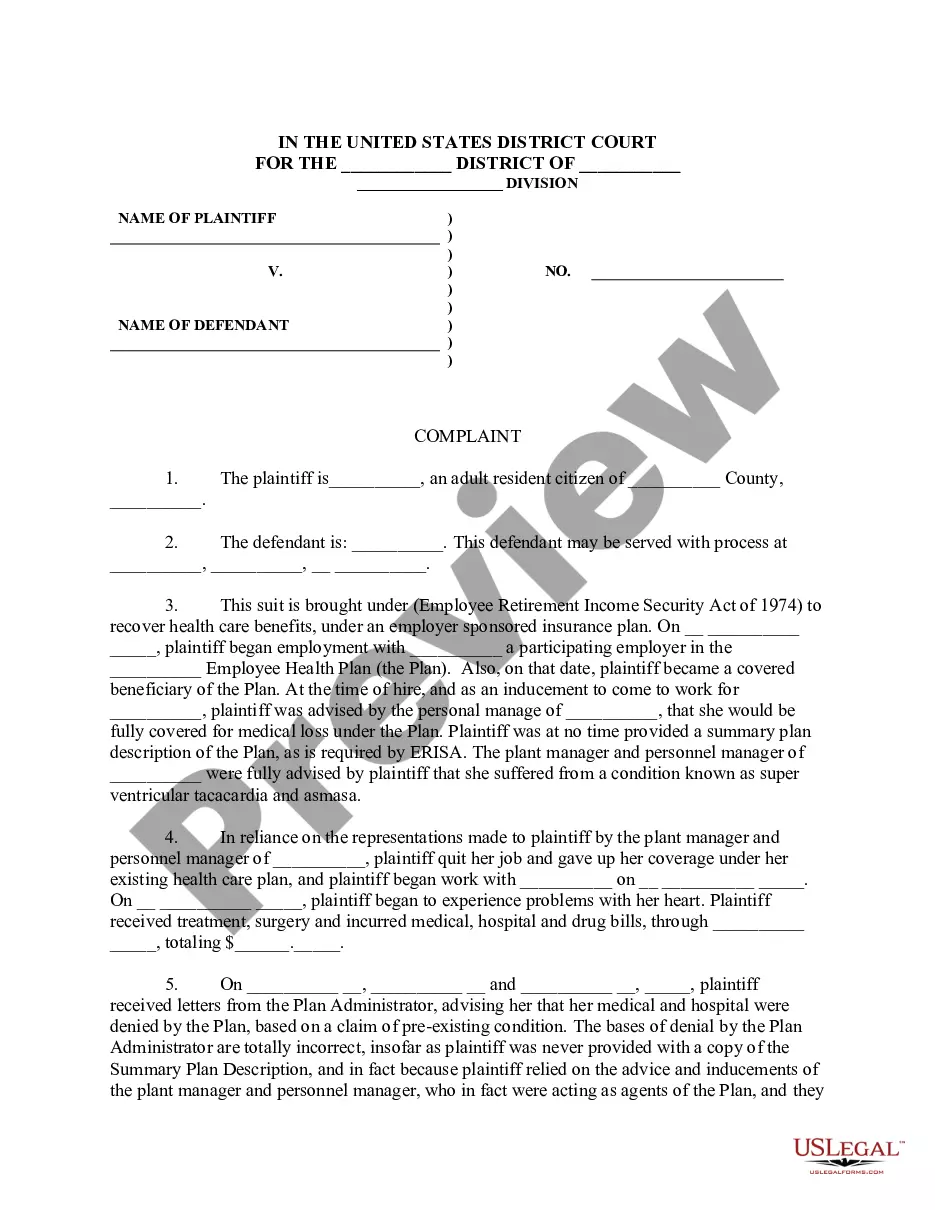
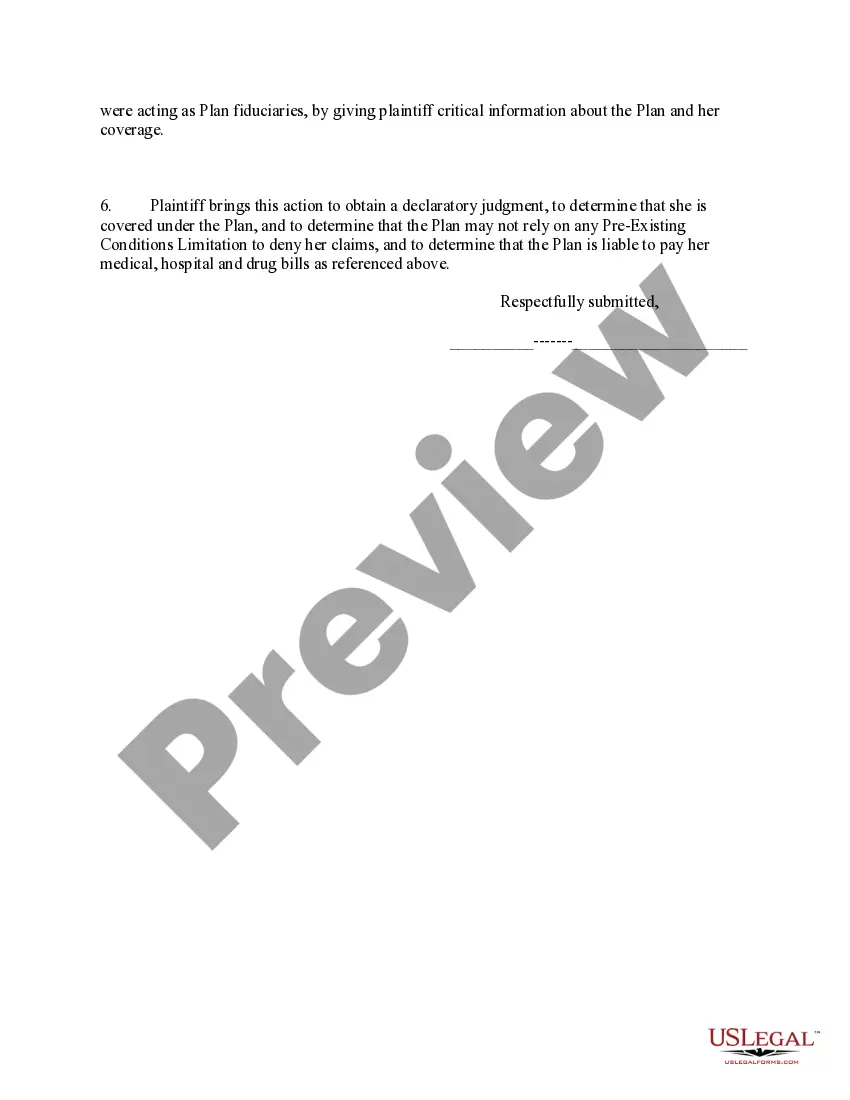
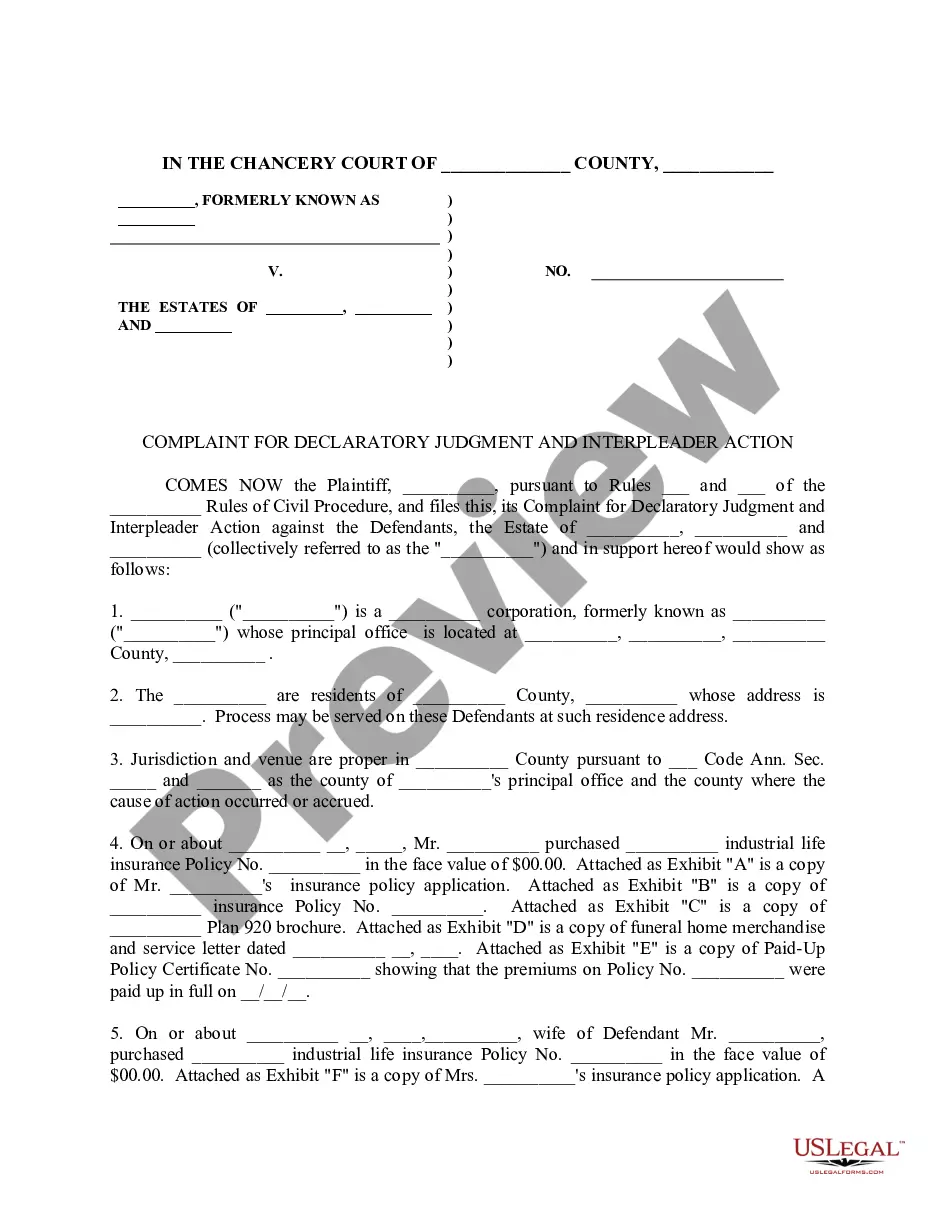
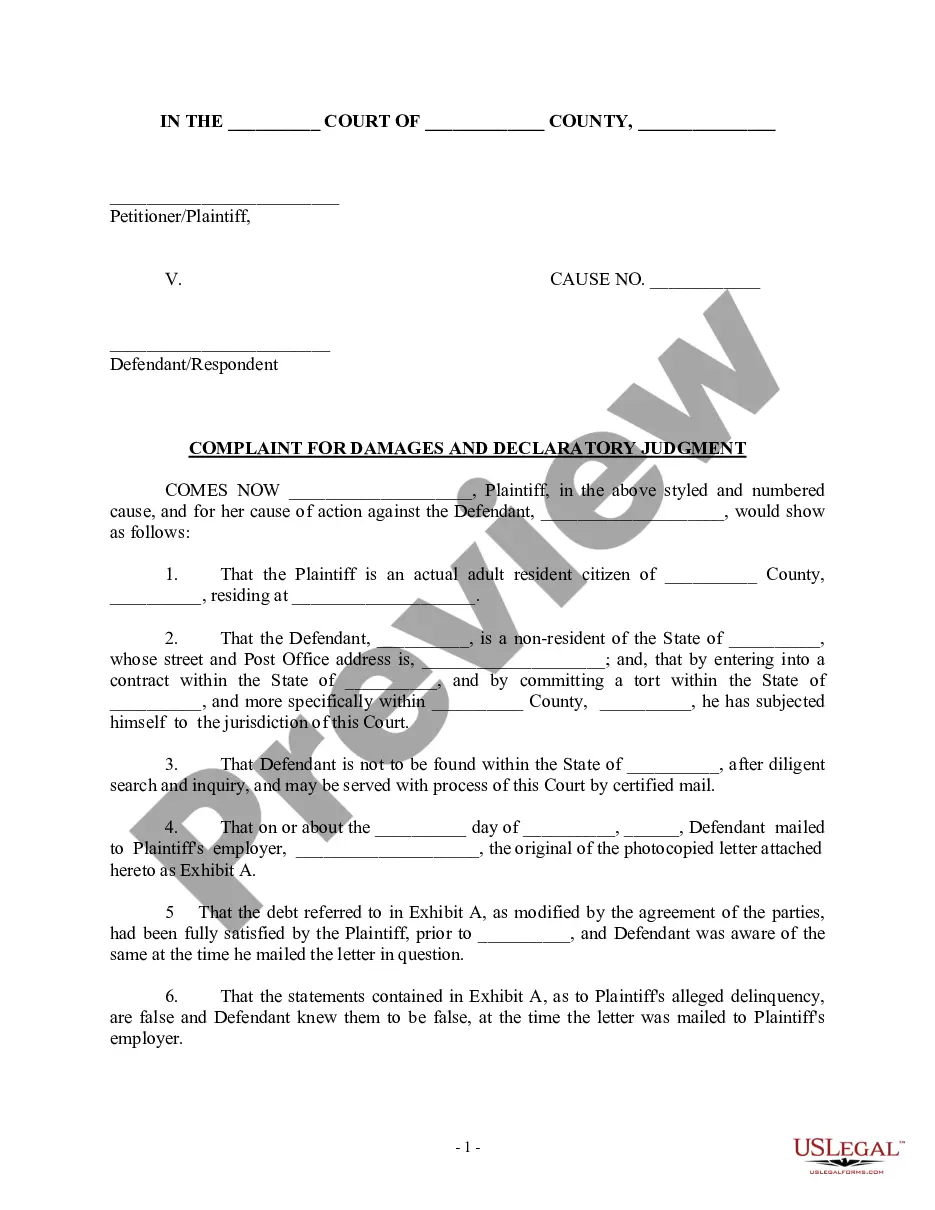
Erisa Complaint Sample With No Experience In Los Angeles
Description
Get your form ready online
Our built-in tools help you complete, sign, share, and store your documents in one place.
Make edits, fill in missing information, and update formatting in US Legal Forms—just like you would in MS Word.
Download a copy, print it, send it by email, or mail it via USPS—whatever works best for your next step.
Sign and collect signatures with our SignNow integration. Send to multiple recipients, set reminders, and more. Go Premium to unlock E-Sign.
If this form requires notarization, complete it online through a secure video call—no need to meet a notary in person or wait for an appointment.
We protect your documents and personal data by following strict security and privacy standards.

Make edits, fill in missing information, and update formatting in US Legal Forms—just like you would in MS Word.

Download a copy, print it, send it by email, or mail it via USPS—whatever works best for your next step.

Sign and collect signatures with our SignNow integration. Send to multiple recipients, set reminders, and more. Go Premium to unlock E-Sign.

If this form requires notarization, complete it online through a secure video call—no need to meet a notary in person or wait for an appointment.

We protect your documents and personal data by following strict security and privacy standards.
Looking for another form?








Form popularity
FAQ
Contact your regional EBSA office to file a complaint or an appeal after exhausting your insurance appeals process. You can also find ERISA information through the U.S. Department of Labor online at .dol/ebsa.
The Employee Retirement Income Security Act of 1974 (ERISA) covers most voluntarily established private sector employee benefit plans. Private-sector employers are responsible for making sure their retirement plans comply with ERISA regulations.
Filing an ERISA Claim: Step-by-Step Guide Step 1: Review Your Plan. The first step in filing an ERISA claim is to review your disability insurance policy thoroughly. Step 2: Gather Evidence. Step 3: File Your Claim. Step 4: Wait for a Decision. Step 5: Appeal if Necessary.
Common ERISA violations include denying benefits improperly, breaching fiduciary duties, and interfering with employee rights under the plan.
All private employers and employee organizations, such as unions, that offer health plans to employees have to follow ERISA. Only churches and government groups are exempt. If you offer your employees health coverage, you'll have to follow certain rules and procedures as a result of ERISA.
Filing an ERISA Claim: Step-by-Step Guide Step 1: Start with Solid Documentation. Step 2: Filing Your Claim and Submission Deadlines. Step 3: Appeals Process If Your Claim Is Denied. Step 4: Filing an ERISA Complaint in Federal Court.
ERISA requires plans to provide participants with plan information including important information about plan features and funding; provides fiduciary responsibilities for those who manage and control plan assets; requires plans to establish a grievance and appeals process for participants to get benefits from their ...
ERISA sets uniform minimum standards to ensure that employee benefit plans are established or maintained in a fair and financially sound manner. In addition, employers have an obligation to provide promised benefits and satisfy ERISA's requirements for managing and administering private retirement and welfare plans.
Under ERISA, each person must be bonded for at least 10% of the $1 million or $100,000. (Note: Bonds covering more than one plan may be required to be over $500,000 to meet the ERISA requirement because persons covered by a bond may handle funds or other property for more than one plan.)