Discrimination Document With Examples In San Diego
Description




Get your form ready online
Our built-in tools help you complete, sign, share, and store your documents in one place.
Make edits, fill in missing information, and update formatting in US Legal Forms—just like you would in MS Word.
Download a copy, print it, send it by email, or mail it via USPS—whatever works best for your next step.
Sign and collect signatures with our SignNow integration. Send to multiple recipients, set reminders, and more. Go Premium to unlock E-Sign.
If this form requires notarization, complete it online through a secure video call—no need to meet a notary in person or wait for an appointment.
We protect your documents and personal data by following strict security and privacy standards.

Make edits, fill in missing information, and update formatting in US Legal Forms—just like you would in MS Word.

Download a copy, print it, send it by email, or mail it via USPS—whatever works best for your next step.

Sign and collect signatures with our SignNow integration. Send to multiple recipients, set reminders, and more. Go Premium to unlock E-Sign.

If this form requires notarization, complete it online through a secure video call—no need to meet a notary in person or wait for an appointment.

We protect your documents and personal data by following strict security and privacy standards.
Looking for another form?









Form popularity
FAQ
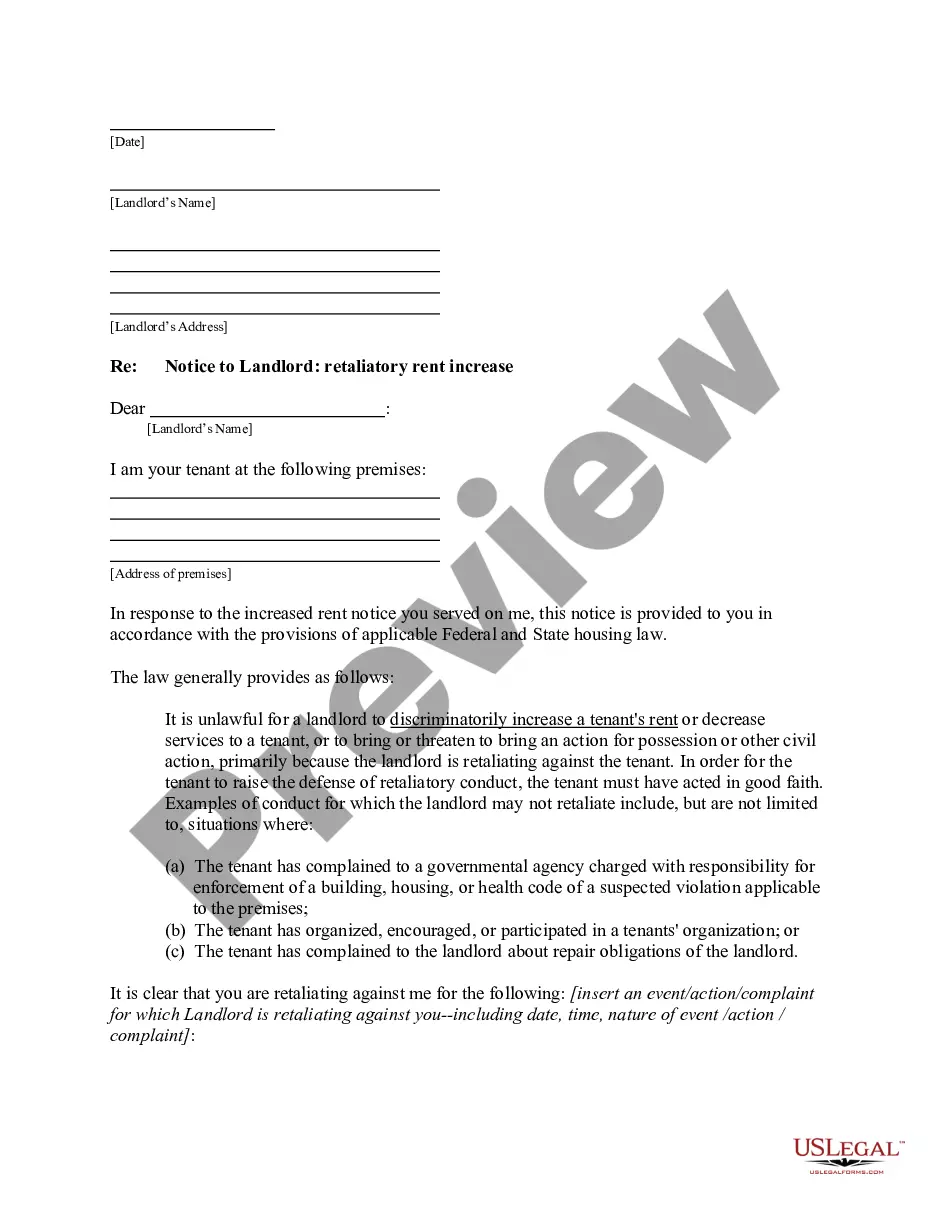
You'll want to address the person by name, include the date at the top of the letter, and your name, address, and phone number at the bottom. After the salutation, state the following: A description of the events or incidents you believed to be discriminatory, and when they occurred.
Explain as clearly as possible what happened, why you believe it happened, and how you were discriminated against. Please include how other persons were treated differently from you, if applicable. If you were denied a benefit or service, please provide a copy of the denial letter.
This includes notes of any incidents, copies of emails, and any relevant documents or recordings. Keeping a journal of the discriminatory or retaliatory behavior is also helpful to help keep track of events and dates and also as evidence of discrimination, retaliation, and the emotional impact on the employee.
Evidence in a discrimination case in California typically includes: emails, text messages, recordings, disciplinary forms, termination documents, or a copy of your employment contract if one exists. If you're like most Californians, you spend an inordinate amount of time at work.
Short answer: The average disability discrimination settlement in California is approximately $40,000 – $150,000 with the median settlement around $75,000. Settlements in less complex cases often settle below approximately $40,000 or lower and complex cases can surpass approximately $1,000,000.
To prove discrimination in the workplace, wrongful termination or workplace retaliation in California, you may need to present evidence that: You have been treated unjustly based on one of your protected characteristics. You are qualified, capable and honest and performed your job satisfactorily.
A written complaint to OSPI must include the following information: A description the conduct or incident—use facts (what, who and when) An explanation of why you believe unlawful discrimination has taken place. Your name and contact information, including a mailing address.