Complaint Repossession Document For Lease In Maryland
Description








Get your form ready online
Our built-in tools help you complete, sign, share, and store your documents in one place.
Make edits, fill in missing information, and update formatting in US Legal Forms—just like you would in MS Word.
Download a copy, print it, send it by email, or mail it via USPS—whatever works best for your next step.
Sign and collect signatures with our SignNow integration. Send to multiple recipients, set reminders, and more. Go Premium to unlock E-Sign.
If this form requires notarization, complete it online through a secure video call—no need to meet a notary in person or wait for an appointment.
We protect your documents and personal data by following strict security and privacy standards.

Make edits, fill in missing information, and update formatting in US Legal Forms—just like you would in MS Word.

Download a copy, print it, send it by email, or mail it via USPS—whatever works best for your next step.

Sign and collect signatures with our SignNow integration. Send to multiple recipients, set reminders, and more. Go Premium to unlock E-Sign.

If this form requires notarization, complete it online through a secure video call—no need to meet a notary in person or wait for an appointment.

We protect your documents and personal data by following strict security and privacy standards.
Looking for another form?
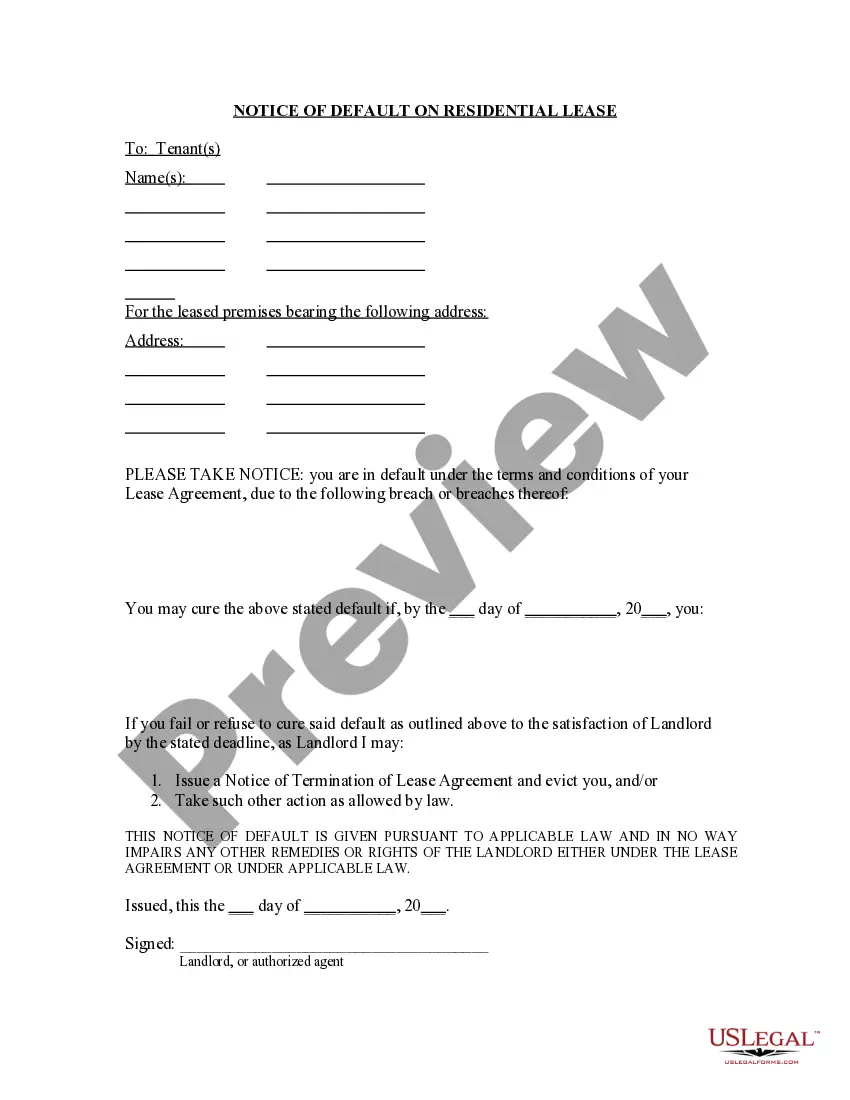







Form popularity
FAQ
Ing to Maryland law, a breach of lease occurs when a tenant commits one or more "substantial" lease violation(s). In response, a landlord may file a Complaint for Repossession of Rental Property against Tenant in Breach of Lease and seek an eviction order from the court based on the lease violations.
When a tenant violates to the terms or conditions of a lease agreement, enforcing the terms of the tenancy may be as simple as sending a letter to the tenant pointing out the lease violation and requesting tenant's compliance.
Whenever the tenant has wrongfully refused to take possession or has vacated a dwelling unit before the end of the term, the landlord may sublet the unit without prior notice to the tenant. In that case, the tenant is liable for (i.e., responsible for) any damages the landlord suffers as a result of the breach.
Not only can you challenge an incorrect alleged lease violation, but you should. Write a letter by certified mail, return receipt requested, to the property manager to set out the facts, and to request that the lease violation be rescinded or withdrawn. Be professional.
§ 22-701. A breach occurs if a party without legal excuse fails to perform an obligation in a timely manner, repudiates a contract, or exceeds a contractual use term, or otherwise is not in compliance with an obligation placed on it by this title or the agreement.
A breach of lease is when the landlord or tenant breaks one of the provisions set out in the lease document. However, even when one person breaches the lease, the other party still has a number of rights.
PLEASE MAIL YOUR COMPLAINT TO THE OFFICE LISTED BELOW THAT IS NEAREST YOU. Baltimore Office. Consumer Protection Division. 200 Saint Paul Place. Baltimore, Maryland 21202. (410) 528-8662. Eastern Shore Office. Consumer Protection Division. 201 Baptist St., Suite 30. Salisbury, Maryland 21801. Print Form. Reset Form.
Are There Options Other Than Suing? Talk to your landlord about the problem. This may seem obvious, but making your landlord aware of issues and following up with them can often resolve matters. Write a demand letter. File a complaint with your municipal agency. Represent yourself in small claims court.
Addressing tenants who are persistently non-compliant involves giving formal written warnings and re-evaluating lease agreements to avoid further breaches. Getting legal counsel could be an option if the internal attempts to settle the issues fail.
PLEASE MAIL YOUR COMPLAINT TO THE OFFICE LISTED BELOW THAT IS NEAREST YOU. Baltimore Office. Consumer Protection Division. 200 Saint Paul Place. Baltimore, Maryland 21202. (410) 528-8662. Eastern Shore Office. Consumer Protection Division. 201 Baptist St., Suite 30. Salisbury, Maryland 21801. Print Form. Reset Form.
