Tort Negligence Liability With Insurance In Wayne
Description

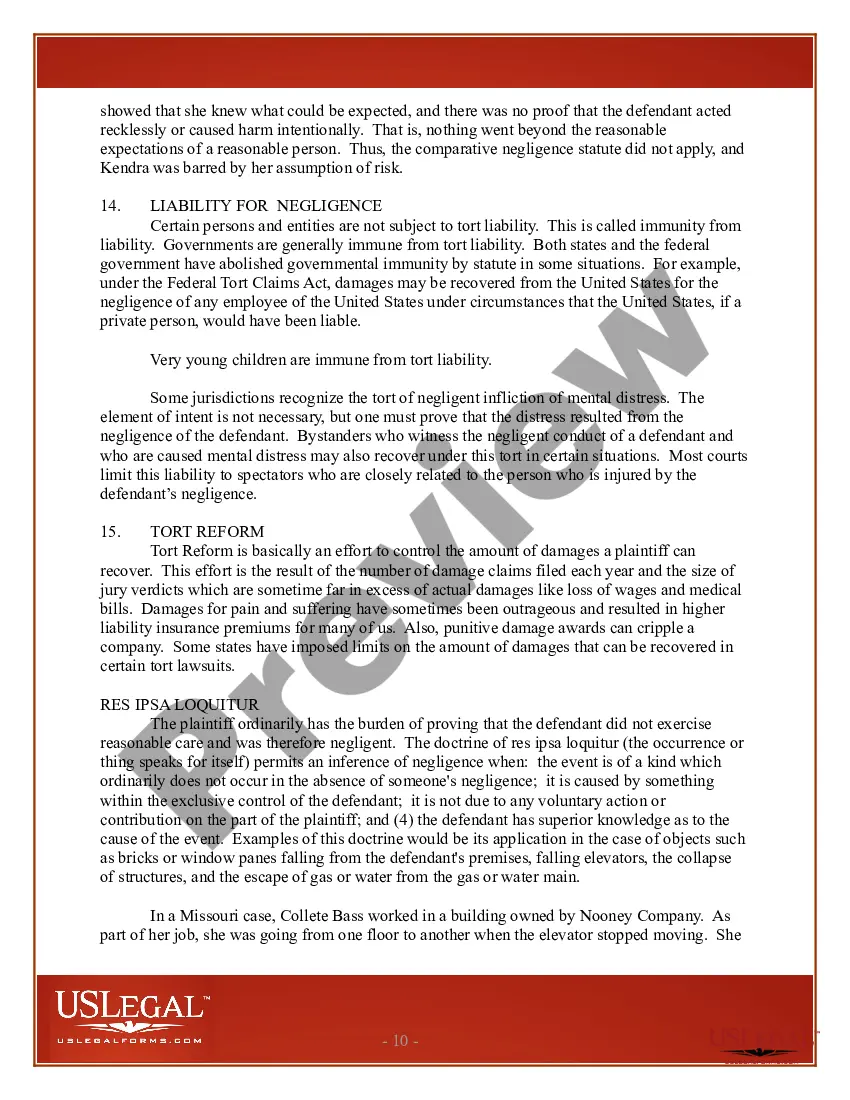



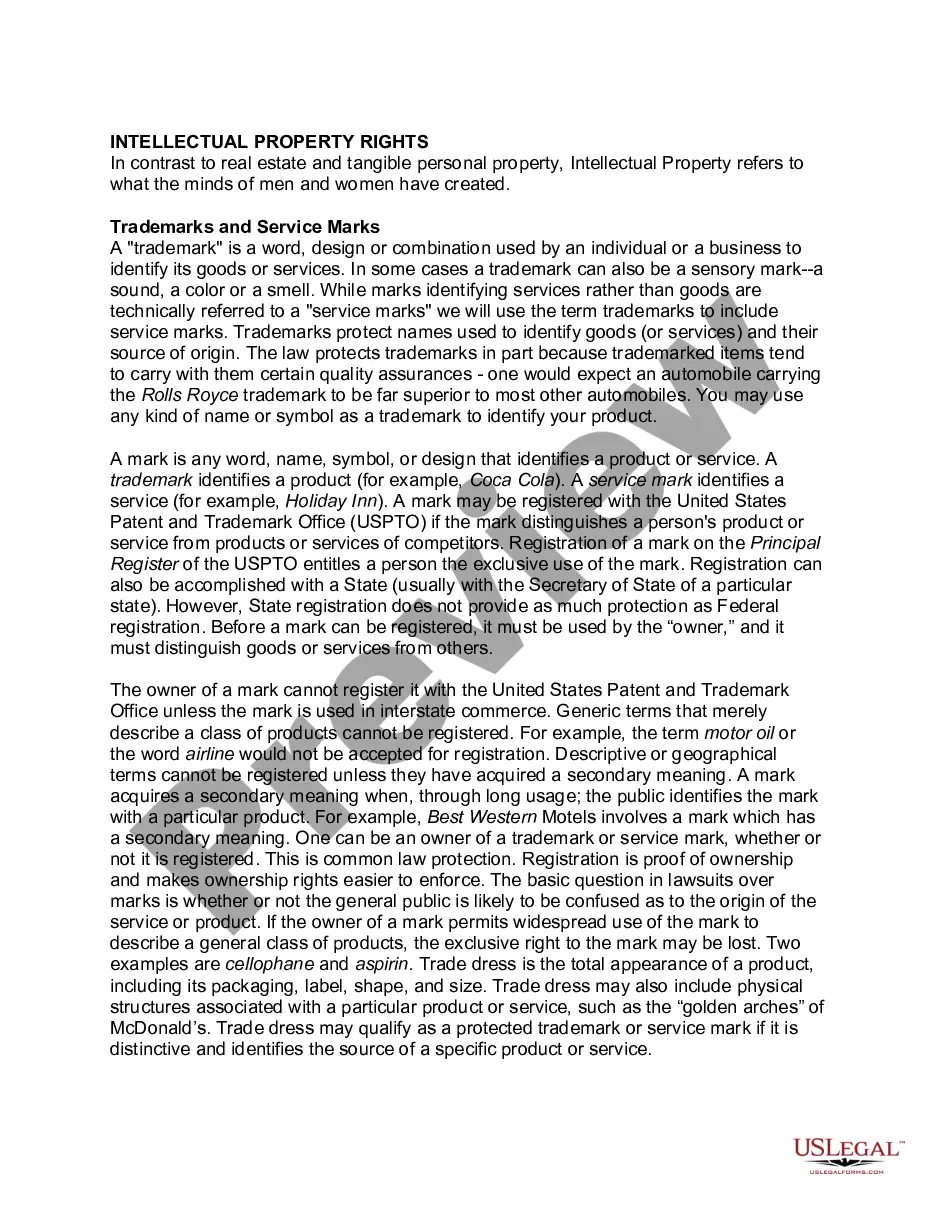
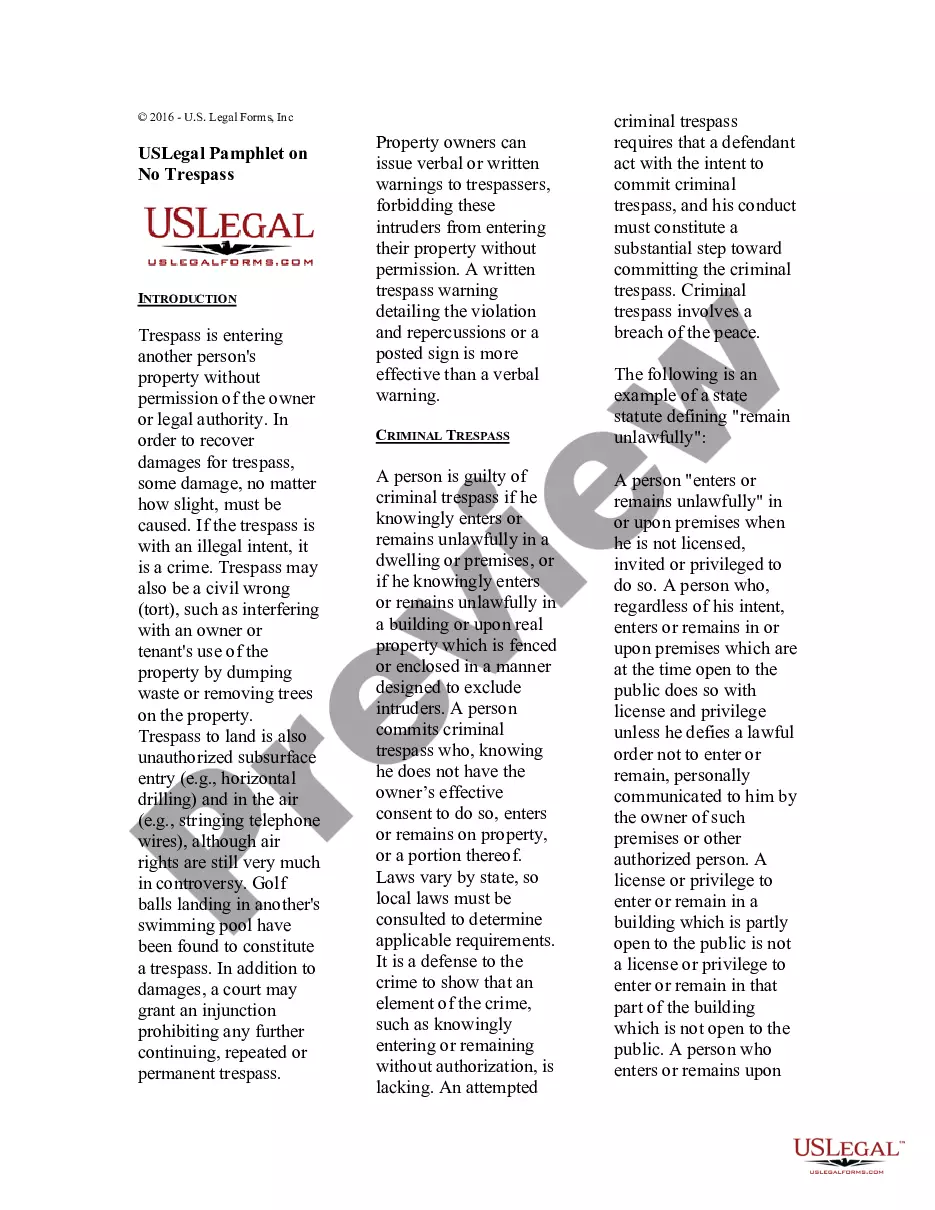
Get your form ready online
Our built-in tools help you complete, sign, share, and store your documents in one place.
Make edits, fill in missing information, and update formatting in US Legal Forms—just like you would in MS Word.
Download a copy, print it, send it by email, or mail it via USPS—whatever works best for your next step.
Sign and collect signatures with our SignNow integration. Send to multiple recipients, set reminders, and more. Go Premium to unlock E-Sign.
If this form requires notarization, complete it online through a secure video call—no need to meet a notary in person or wait for an appointment.
We protect your documents and personal data by following strict security and privacy standards.

Make edits, fill in missing information, and update formatting in US Legal Forms—just like you would in MS Word.

Download a copy, print it, send it by email, or mail it via USPS—whatever works best for your next step.

Sign and collect signatures with our SignNow integration. Send to multiple recipients, set reminders, and more. Go Premium to unlock E-Sign.

If this form requires notarization, complete it online through a secure video call—no need to meet a notary in person or wait for an appointment.

We protect your documents and personal data by following strict security and privacy standards.
Looking for another form?

Form popularity
FAQ
Comprehensive general liability insurance doesn't cover claims related to catastrophic risks. These scenarios include “acts of god” (e.g., earthquakes, floods, and earth movements like mudslides), as well as hostile acts such as damage from wars and riots.
To file a claim, complete these steps: Complete Standard Form 95. Explain in detail what happened, using additional pages if necessary. Attach all documents that support your claim, which may include the following. Submit the completed Standard Form 95 and supporting documents to the OPM Office of the General Counsel.
What is tort liability? Simply put, liability refers to responsibility for an action. Tort liability indicates that someone is held accountable for wrong actions (other than under contract.). Torts are tied to civil court claims.
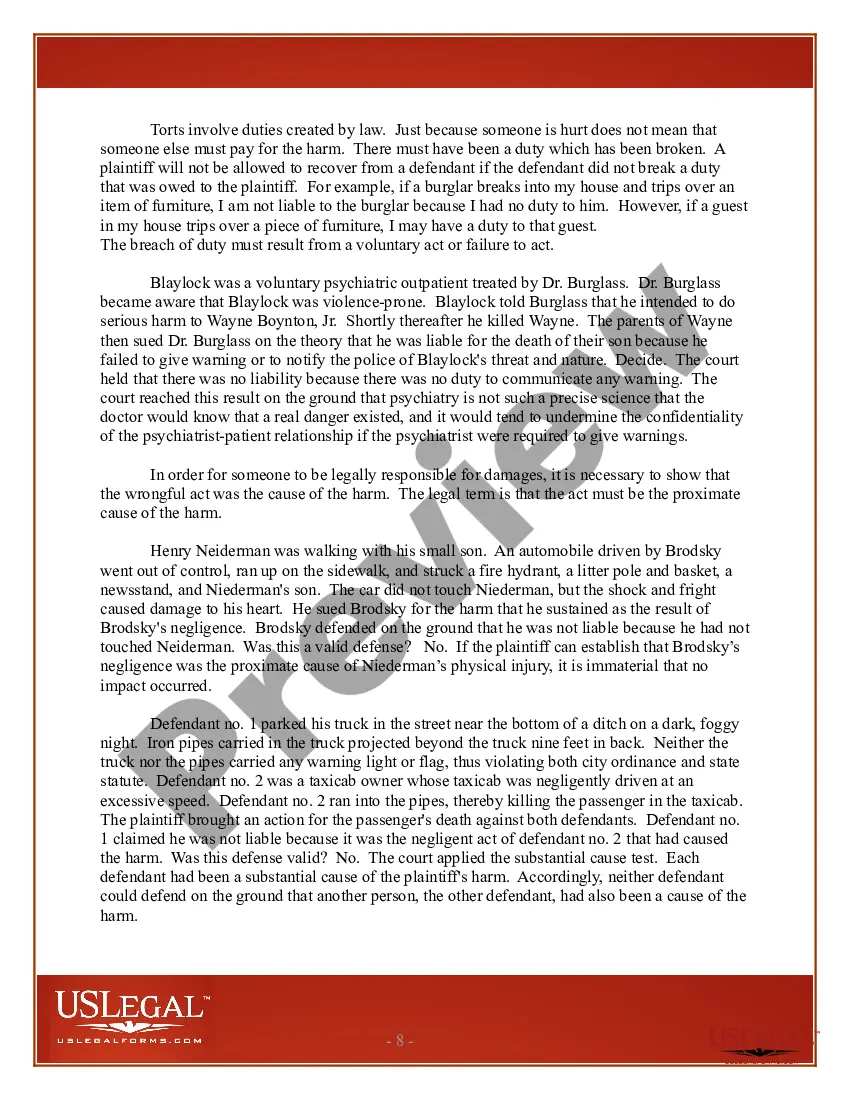
Tort liability is predicated on the existence of proximate cause, which consists of both: (1) causation in fact, and (2) foreseeability. A plaintiff must prove that his or her injuries were the actual or factual result of the defendant's actions.
From this perspective, to make a claim in tort a claimant must show that they have (or had) a right, exercisable against the defendant, that has been infringed. However, the claimant's right is not a right exercisable against the defendant as it is not a property right (which is exercisable against the world).
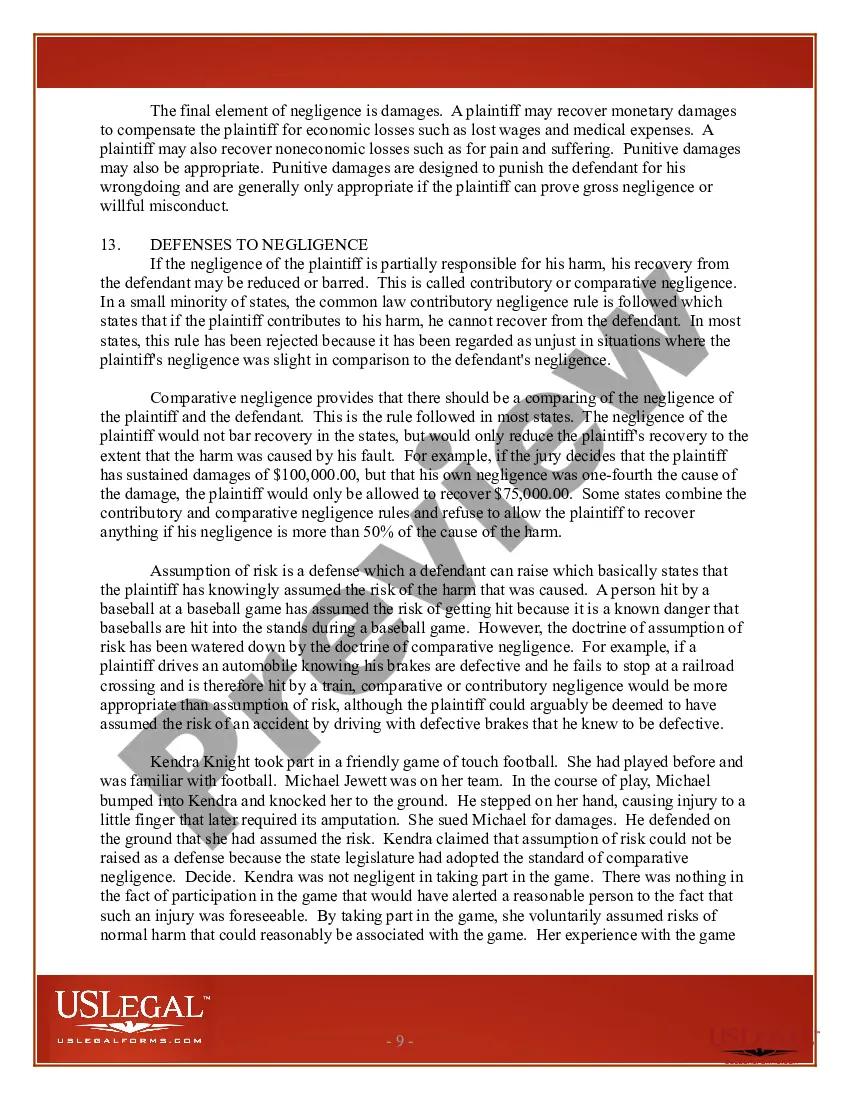
Think of general liability insurance coverage as a potential shield against the financial impact of tort claims. Whether the tort is based on intention, negligence or strict liability, this type of policy can help cover the following: Bodily injury. Property damage.
This coverage protects against financial loss as a result of malpractice, errors, and negligence. This coverage protects your business against loss and damage to company property due to a wide variety of events. These include fire, smoke, wind and hailstorms, civil disobedience and vandalism.
Tort law deals with legal wrongs or injuries caused to individuals or their property. Tort cases provide a way to seek compensation for the harm suffered. Tort law and business law often overlap when business-related incidents become civil cases. Business torts can be big problems for small business owners.
Tort liability is assigned using two basic standards: strict liability and negligence. Under strict liability, injurers are held fully liable for their victims' losses without regard for whether they were actually negligent or intended to harm anyone.
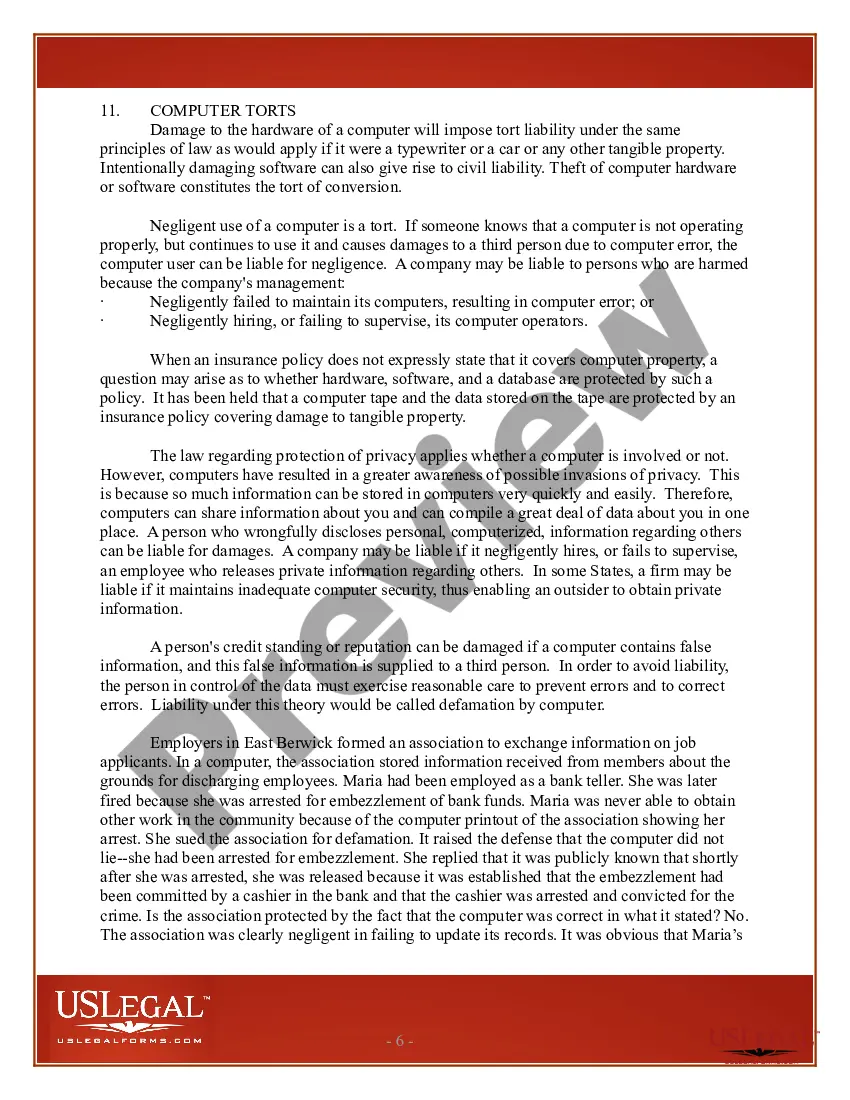
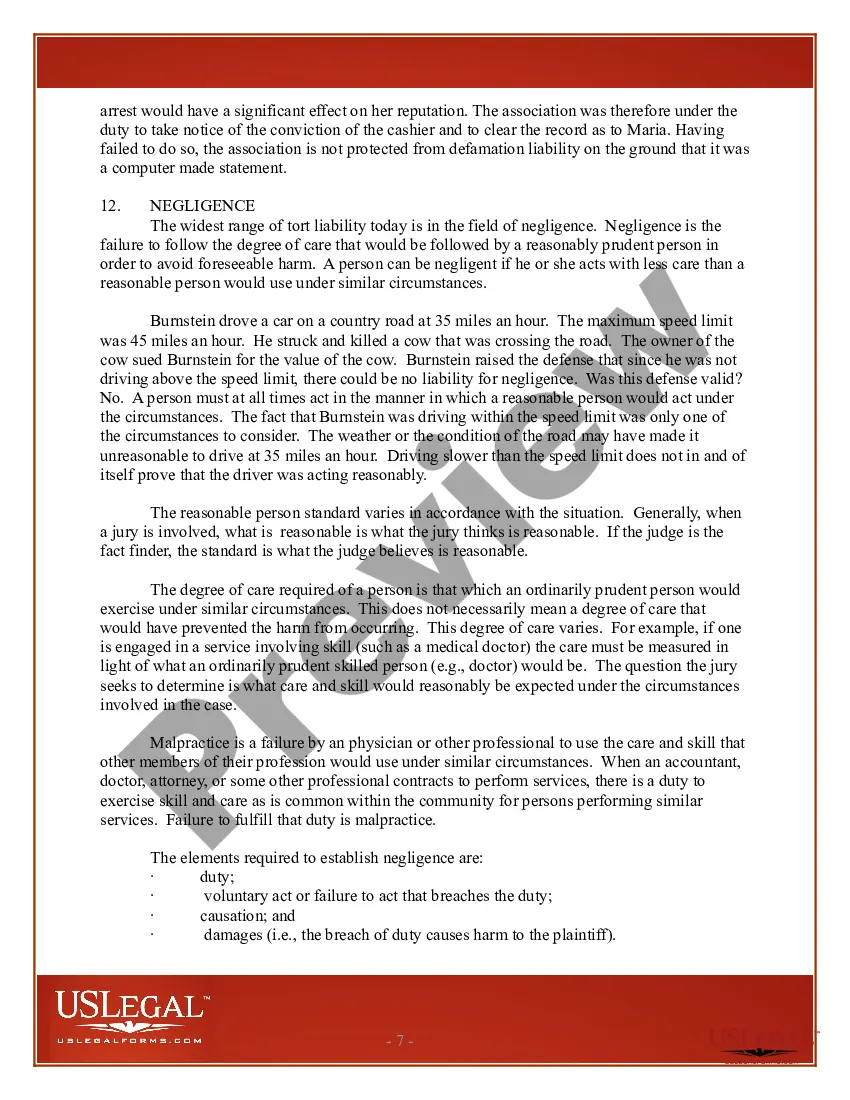
Negligent torts can encompass a wide range of situations, such as car accidents caused by reckless driving, medical malpractice resulting from a doctor's negligent treatment, or slip and fall accidents due to a property owner's failure to maintain safe premises.
