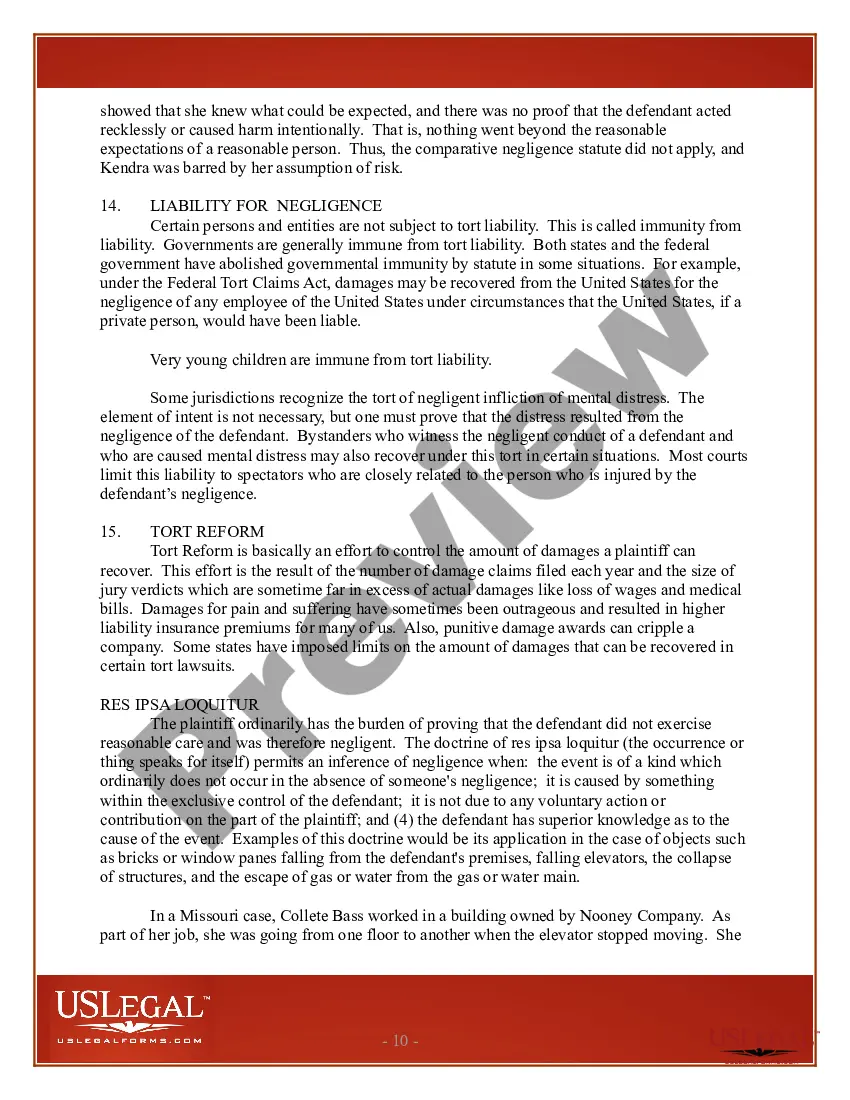
Tort Negligence Liability For Employers In Wake
Description




Get your form ready online
Our built-in tools help you complete, sign, share, and store your documents in one place.
Make edits, fill in missing information, and update formatting in US Legal Forms—just like you would in MS Word.
Download a copy, print it, send it by email, or mail it via USPS—whatever works best for your next step.
Sign and collect signatures with our SignNow integration. Send to multiple recipients, set reminders, and more. Go Premium to unlock E-Sign.
If this form requires notarization, complete it online through a secure video call—no need to meet a notary in person or wait for an appointment.
We protect your documents and personal data by following strict security and privacy standards.

Make edits, fill in missing information, and update formatting in US Legal Forms—just like you would in MS Word.

Download a copy, print it, send it by email, or mail it via USPS—whatever works best for your next step.

Sign and collect signatures with our SignNow integration. Send to multiple recipients, set reminders, and more. Go Premium to unlock E-Sign.

If this form requires notarization, complete it online through a secure video call—no need to meet a notary in person or wait for an appointment.

We protect your documents and personal data by following strict security and privacy standards.
Looking for another form?






Form popularity
FAQ
Cases where employees are typically held personally liable usually involve employee misconduct, such as where an employee acts without the consent or direction of the employer, or in breach of the employment agreement.
Under a legal doctrine sometimes referred to as "respondeat superior" (Latin for "Let the superior answer"), an employer is legally responsible for the actions of its employees. However, this rule applies only if the employee is acting within the course and scope of employment.
Vicarious Liability: When Employers are Responsible for Employee Conduct. Vicarious liability involves placing the liability for one's actions upon another person. Where an employment relationship exists, employers can be held vicariously liable for the actions of their employees.
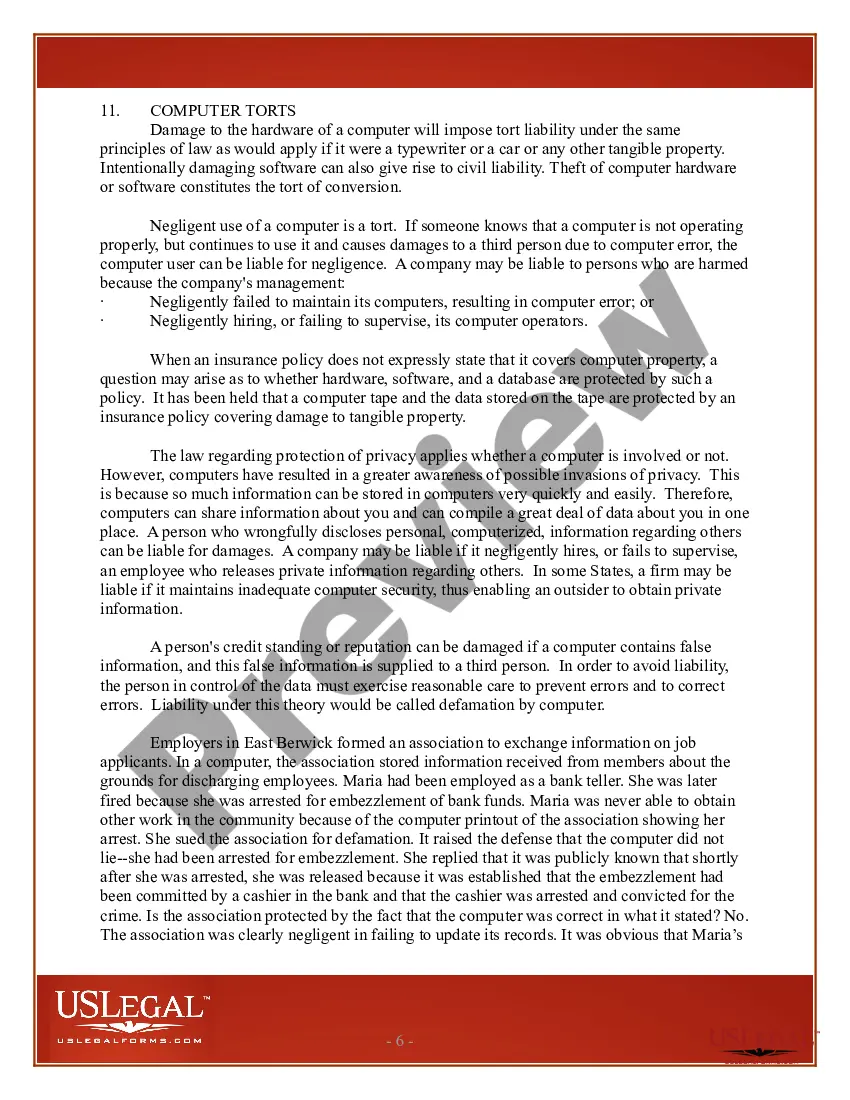
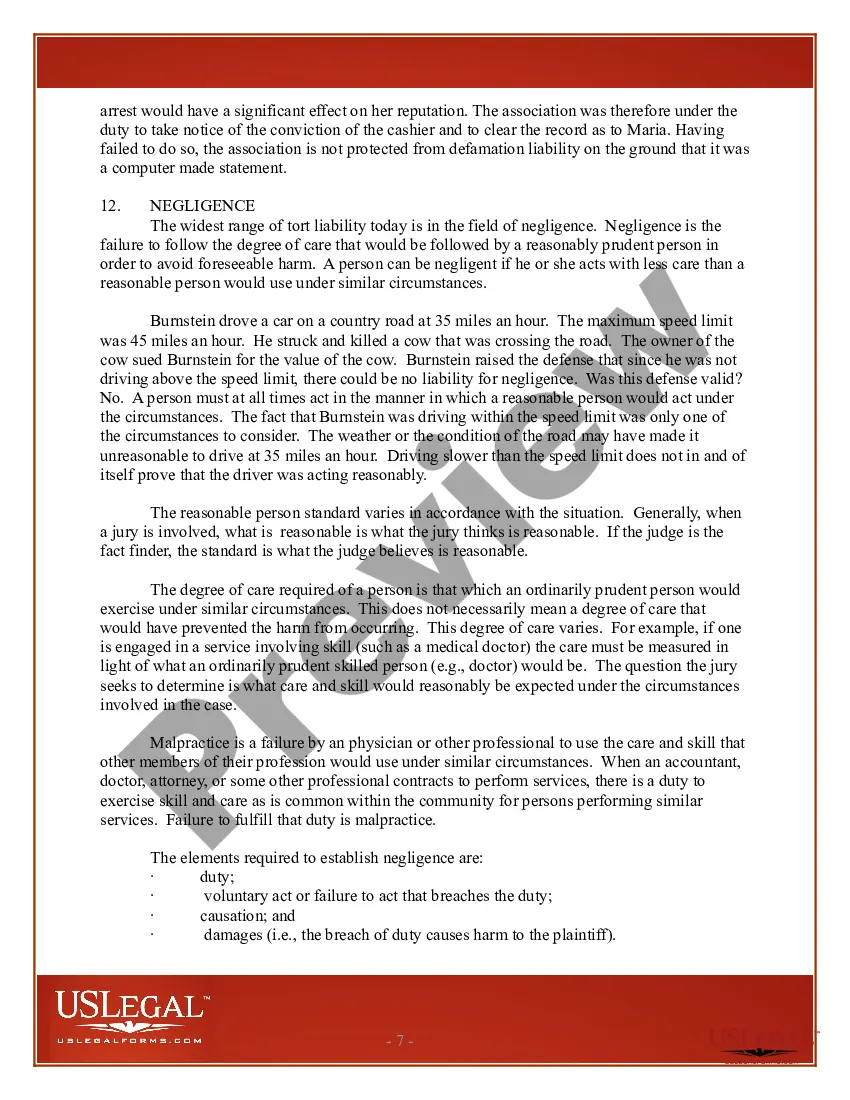
Negligent torts can encompass a wide range of situations, such as car accidents caused by reckless driving, medical malpractice resulting from a doctor's negligent treatment, or slip and fall accidents due to a property owner's failure to maintain safe premises.
The Basic Law: In California, an employer is vicariously liable for the negligent and wrongful acts of his employees that are committed within the scope of employment.
The Basic Law: In California, an employer is vicariously liable for the negligent and wrongful acts of his employees that are committed within the scope of employment.
Respondeat superior refers to the legal doctrine generally used in tort law. Under the doctrine of respondeat superior, the employer or a principal could be held vicariously liable for an unlawful or unjust act of an employee or an agent.
Medical data, eyewitness testimony, accident reports, photographs, expert opinions, and security footage are crucial to proving negligence. This evidence builds a compelling case that someone's carelessness caused your misery. California personal injury claims are difficult, but Haffner Law can help.
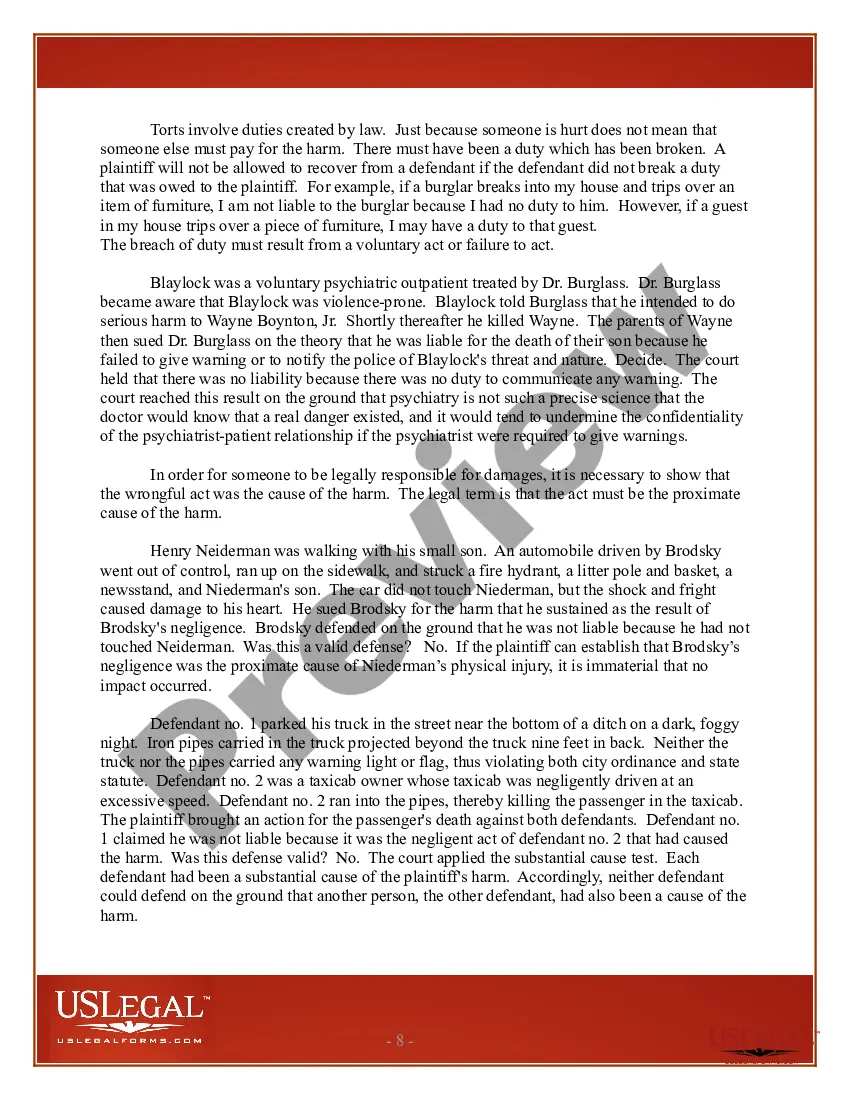
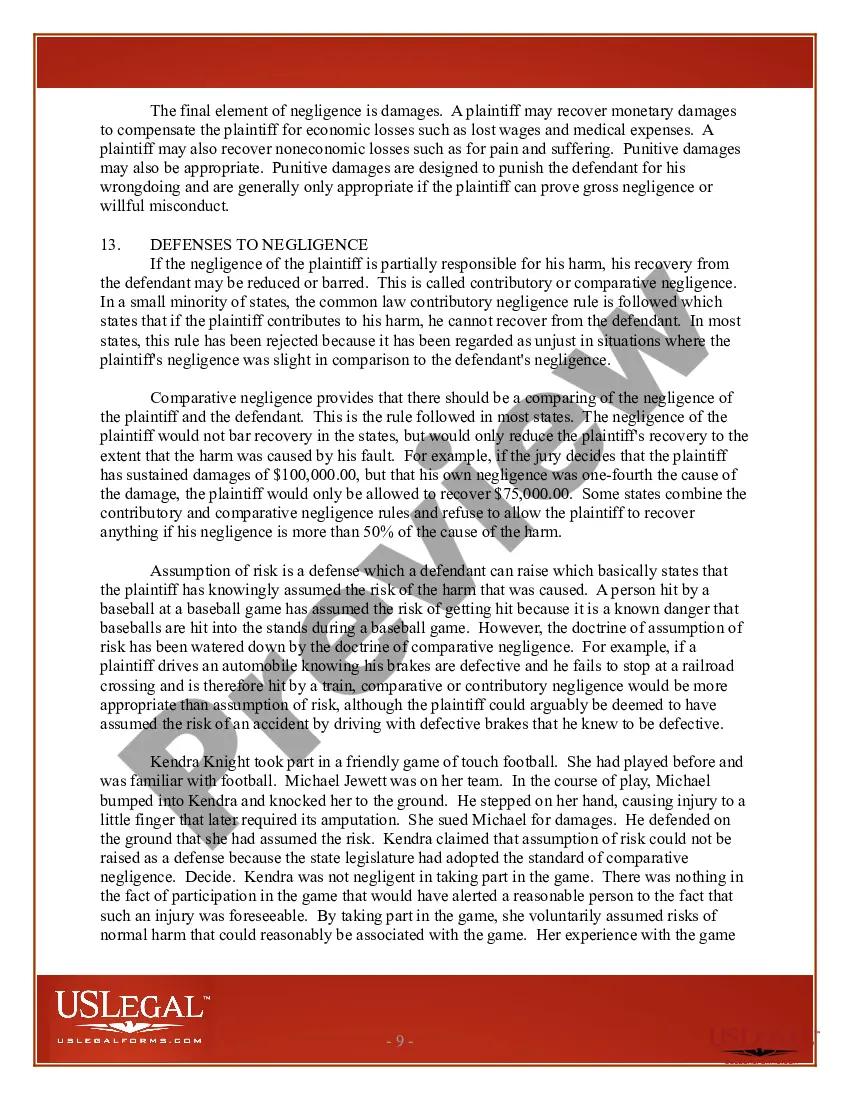
Most civil lawsuits for injuries allege the wrongdoer was negligent. To win in a negligence lawsuit, the victim must establish 4 elements: (1) the wrongdoer owed a duty to the victim, (2) the wrongdoer breached the duty, (3) the breach caused the injury (4) the victim suffered damages.
Doing so means you and your lawyer must prove the five elements of negligence: duty, breach of duty, cause, in fact, proximate cause, and harm. Your lawyer may help you meet the elements necessary to prove your claim, build a successful case, and help you receive the monetary award you deserve.
