Tort Negligence Liability Without Injury In Virginia
Description





Get your form ready online
Our built-in tools help you complete, sign, share, and store your documents in one place.
Make edits, fill in missing information, and update formatting in US Legal Forms—just like you would in MS Word.
Download a copy, print it, send it by email, or mail it via USPS—whatever works best for your next step.
Sign and collect signatures with our SignNow integration. Send to multiple recipients, set reminders, and more. Go Premium to unlock E-Sign.
If this form requires notarization, complete it online through a secure video call—no need to meet a notary in person or wait for an appointment.
We protect your documents and personal data by following strict security and privacy standards.

Make edits, fill in missing information, and update formatting in US Legal Forms—just like you would in MS Word.

Download a copy, print it, send it by email, or mail it via USPS—whatever works best for your next step.

Sign and collect signatures with our SignNow integration. Send to multiple recipients, set reminders, and more. Go Premium to unlock E-Sign.

If this form requires notarization, complete it online through a secure video call—no need to meet a notary in person or wait for an appointment.

We protect your documents and personal data by following strict security and privacy standards.
Looking for another form?



Form popularity
FAQ
Can You Sue for Negligence Without Injury in California? Yes, you can sue for negligence without injury. If someone totaled your car after the accident, you can file a lawsuit to obtain coverage for property damage expenses.
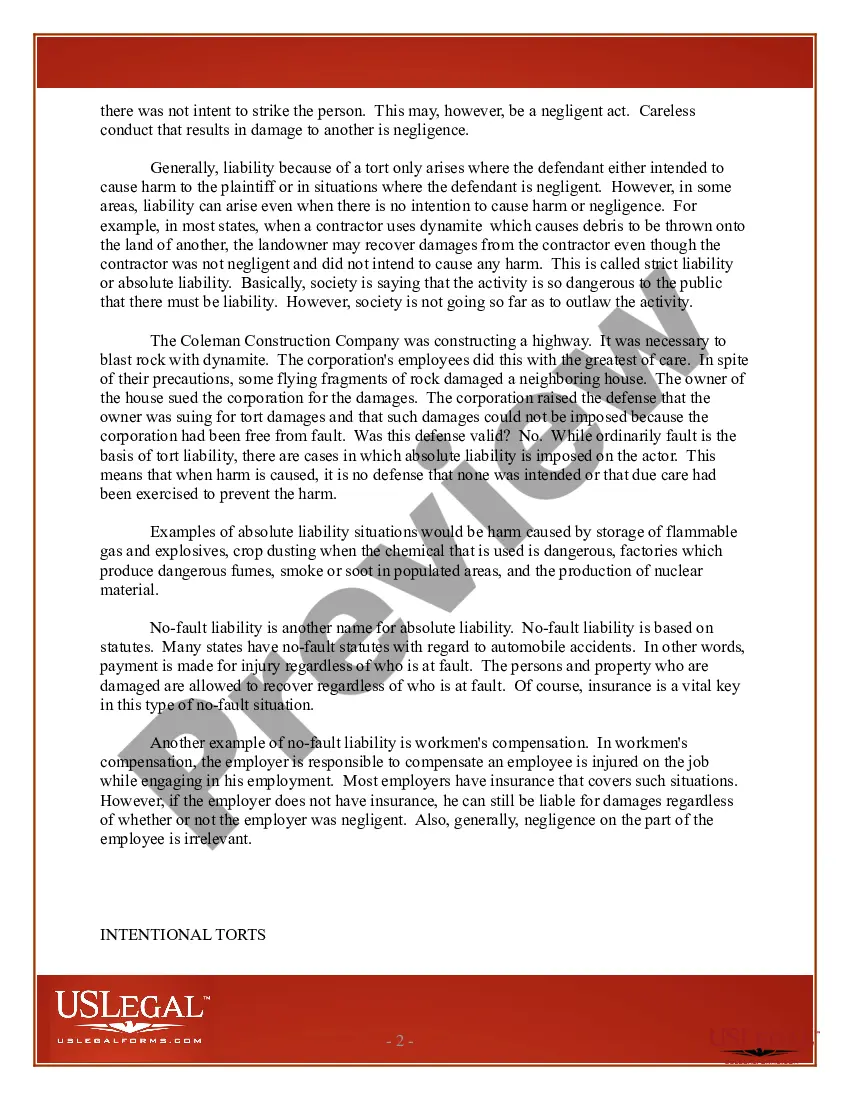
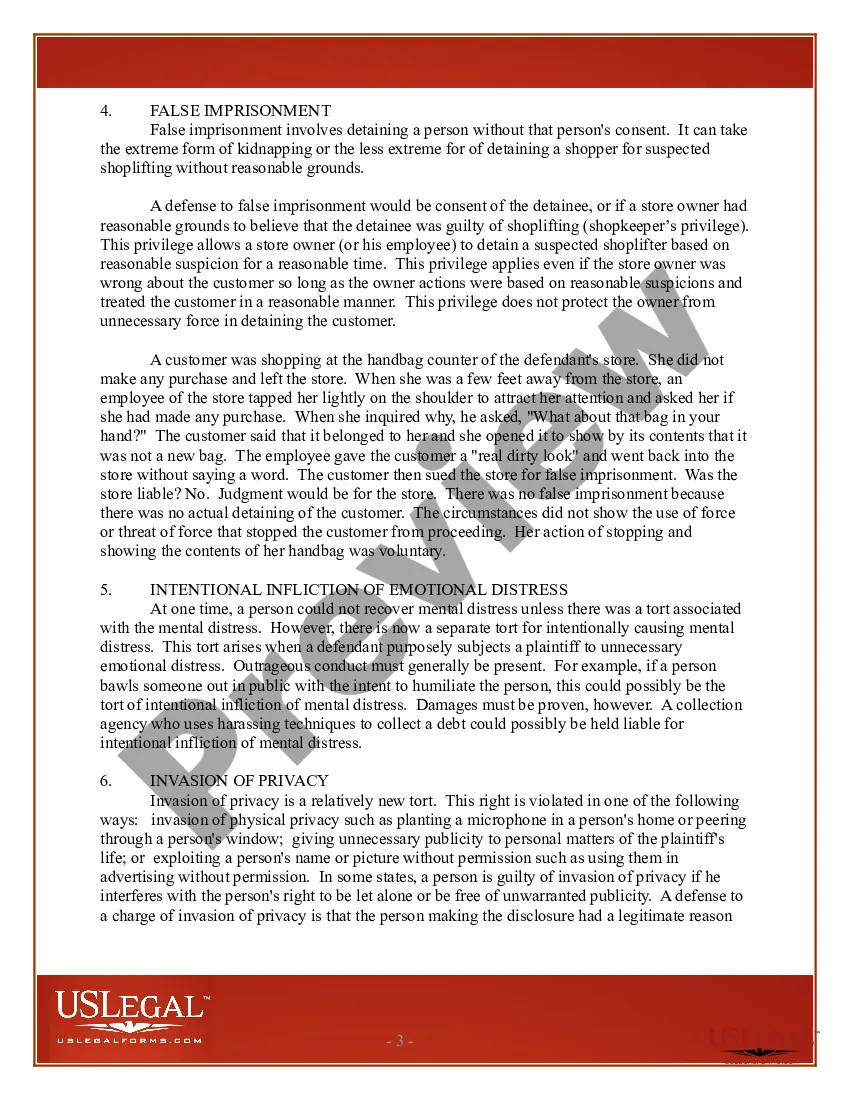
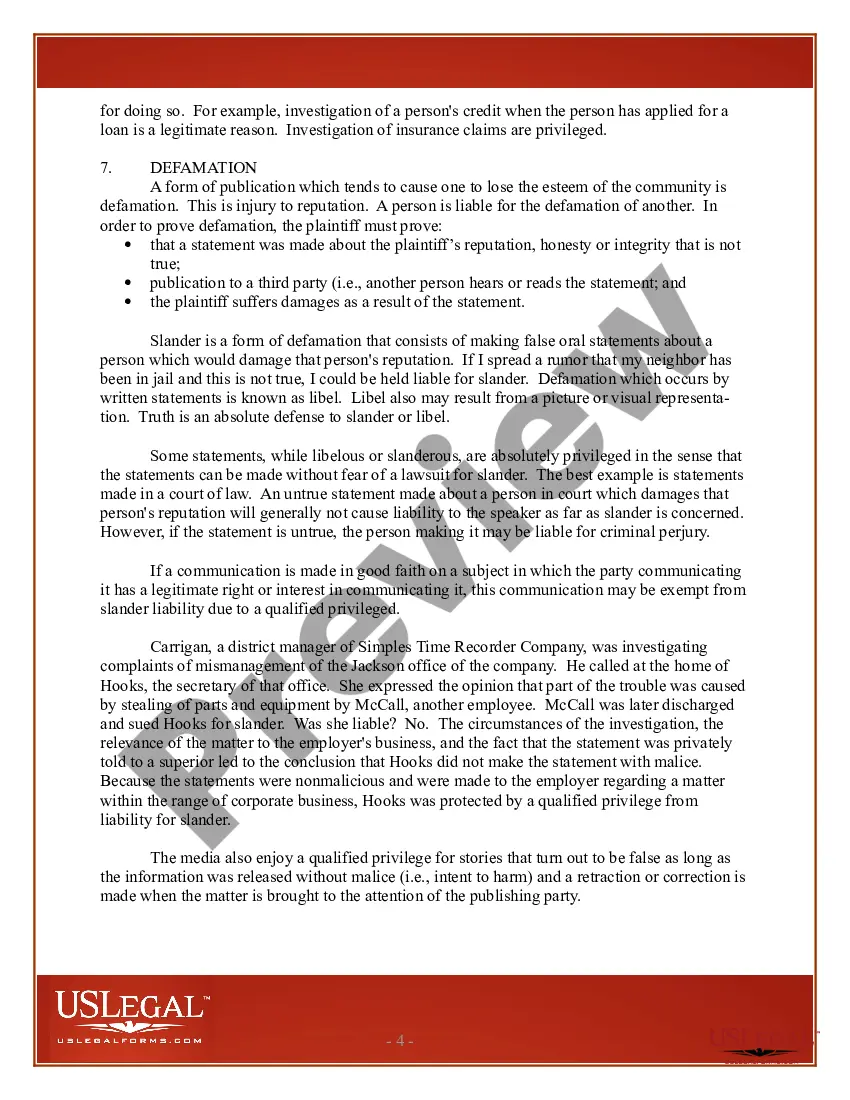
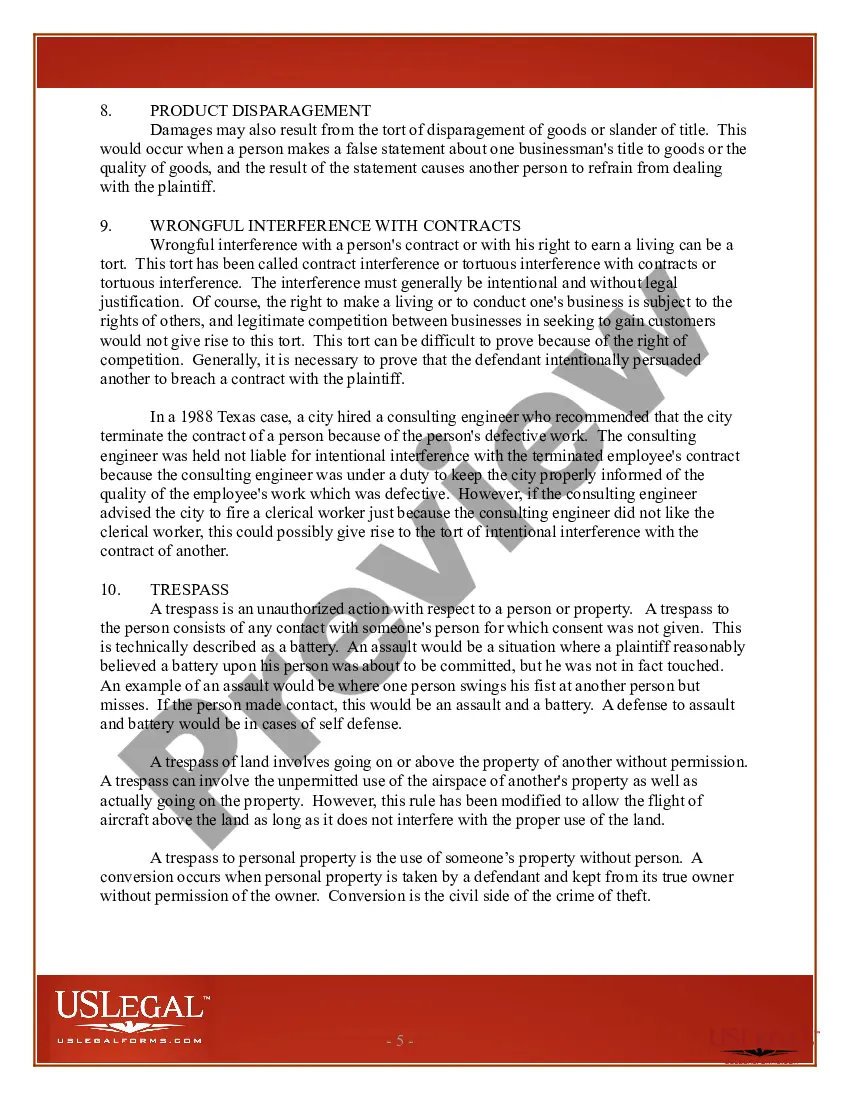
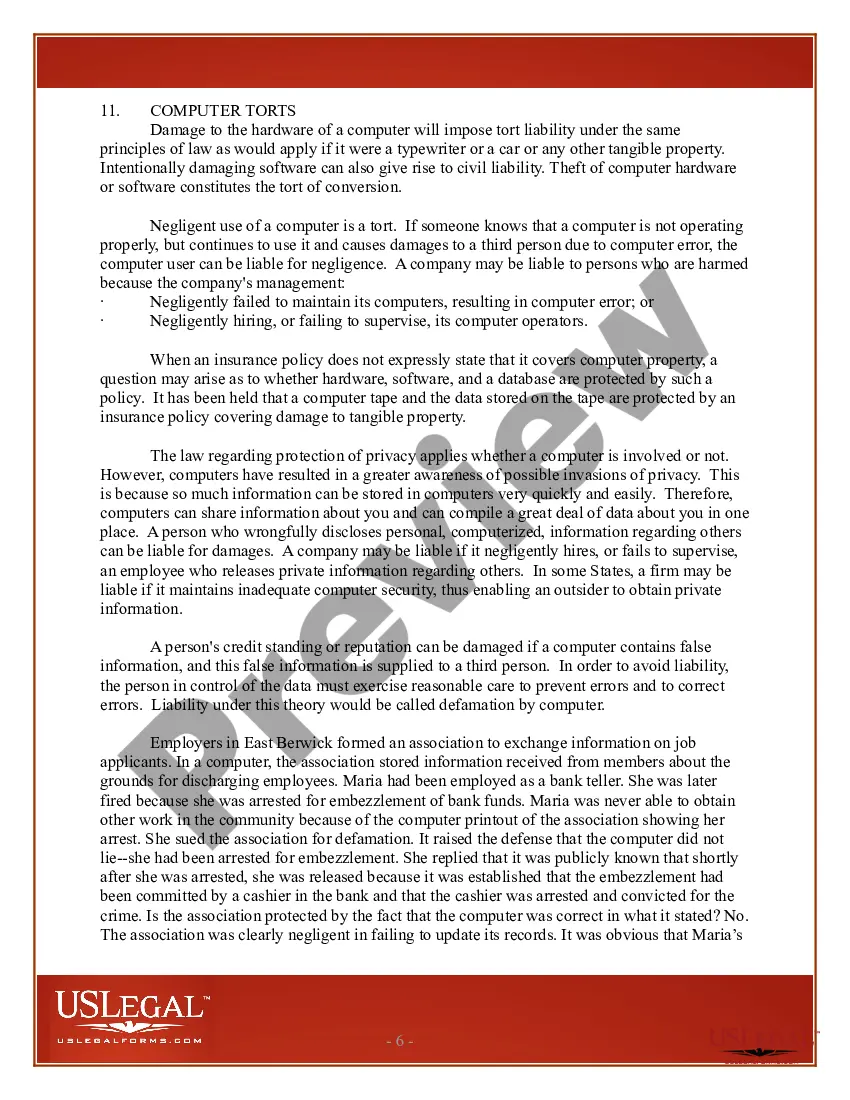
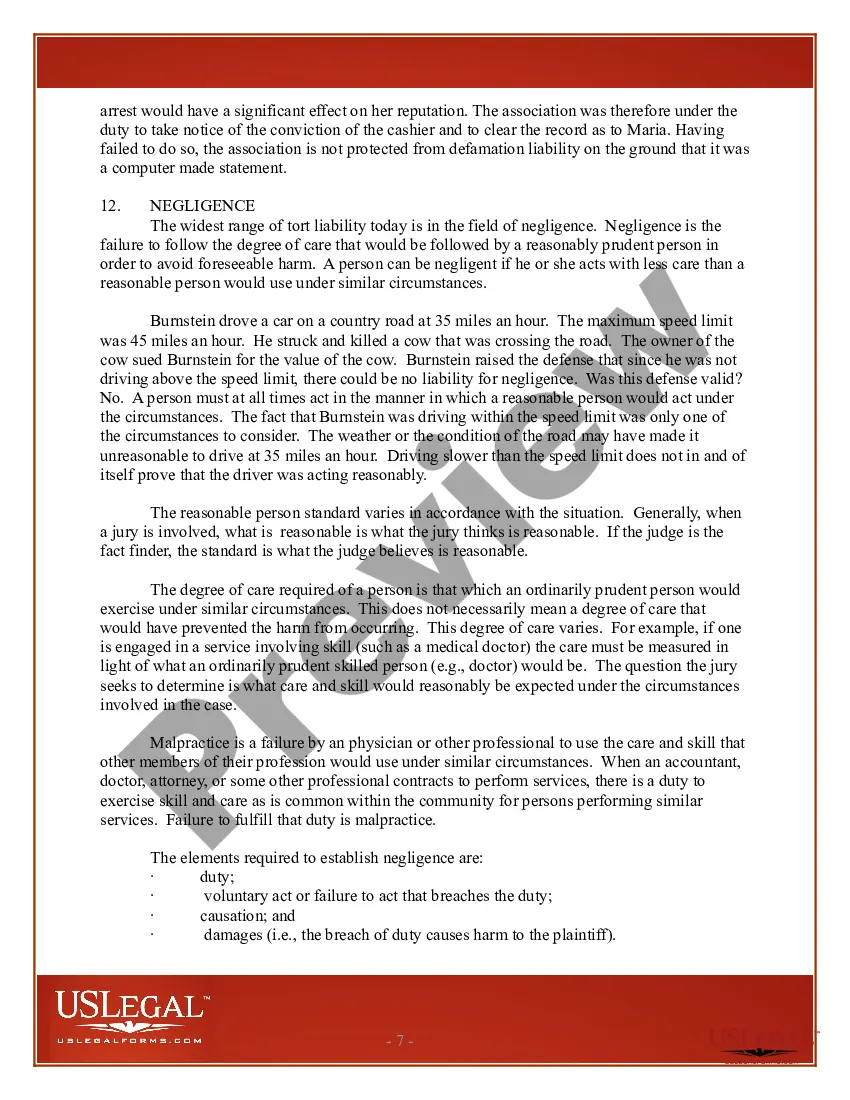
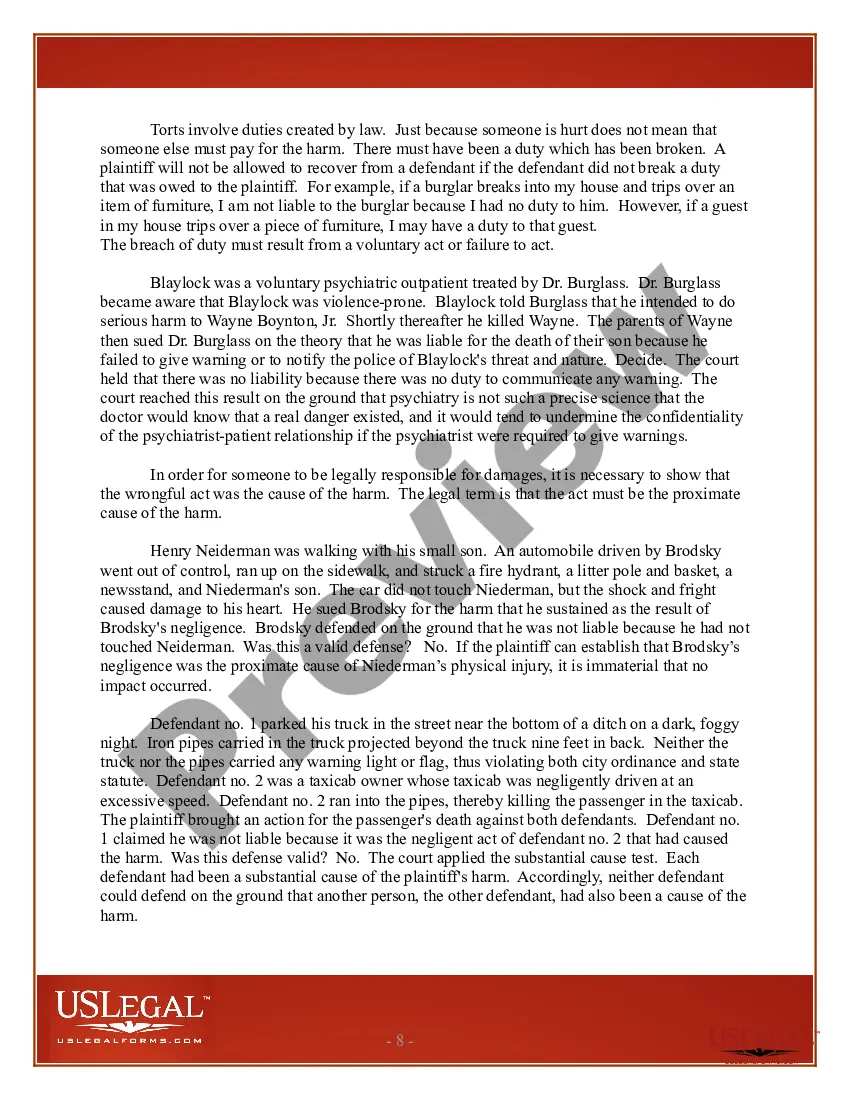
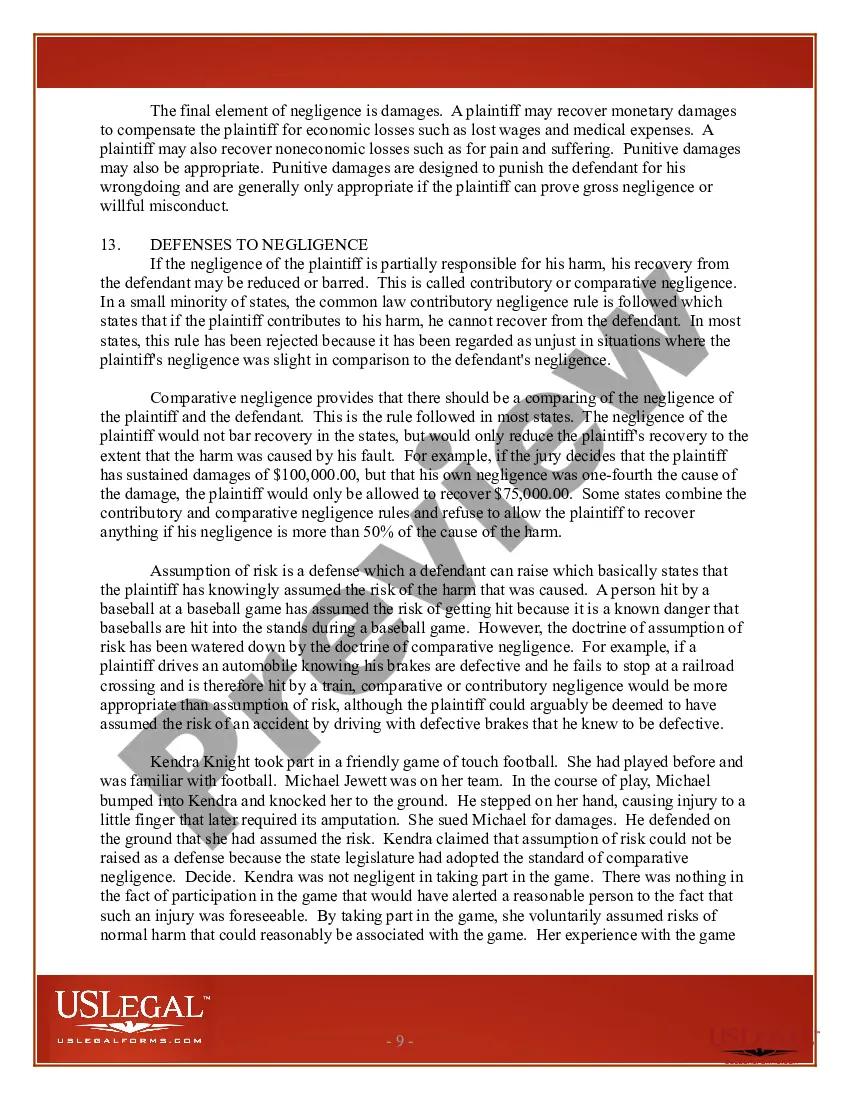
Primary tabs. Negligence is the failure to behave with the level of care that a reasonable person would have exercised under the same circumstances. Either a person's actions or omissions of actions can be found negligent.
To establish negligence, you need to prove four main things: A duty of care was owed to you. They breached their duty of care. The breach of duty caused injury or harm. You have suffered or will suffer, loss because of the injury:
These legal elements include a professional duty owed to a patient, breach of duty, proximate cause or causal con- nection elicited by a breach of duty, and resulting in- juries or damages suffered. 1 These 4 elements apply to all cases of negligence regardless of specialty or clin- ician level.
Virginia uses the pure contributory negligence rule. This is the harshest legal doctrine in personal injury cases involving negligence. The defendant must be 100% at fault for the accident that caused the plaintiff's injuries.
Under California law, there are four legal principles of negligence required for a claim include duty of care, breach of duty of care, causation, and damages.
Tort liability. No pecuniary liability of any kind shall be imposed upon the Commonwealth or the locality, town, or landowner therein because of any act, agreement, contract, tort, malfeasance, misfeasance, or nonfeasance by or on the part of a district or its agents, servants, or employees.
Some states follow a more enlightened version of the fault law called "comparative negligence." Alas, Virginia still chooses what is known as the "pure contributory negligence rule." That means the other person has to be 100 percent at fault or you can't collect any monetary damages.
In order to state a valid claim, the claimant must demonstrate that (1) he was injured or his property was damaged by a federal government employee; (2) the employee was acting within the scope of his official duties; (3) the employee was acting negligently or wrongfully; and (4) the negligent or wrongful act ...
Identifying the Four Tort Elements The accused had a duty, in most personal injury cases, to act in a way that did not cause you to become injured. The accused committed a breach of that duty. An injury occurred to you. The breach of duty was the proximate cause of your injury.
