Types Of Torts With Examples In Phoenix
Description





Get your form ready online
Our built-in tools help you complete, sign, share, and store your documents in one place.
Make edits, fill in missing information, and update formatting in US Legal Forms—just like you would in MS Word.
Download a copy, print it, send it by email, or mail it via USPS—whatever works best for your next step.
Sign and collect signatures with our SignNow integration. Send to multiple recipients, set reminders, and more. Go Premium to unlock E-Sign.
If this form requires notarization, complete it online through a secure video call—no need to meet a notary in person or wait for an appointment.
We protect your documents and personal data by following strict security and privacy standards.

Make edits, fill in missing information, and update formatting in US Legal Forms—just like you would in MS Word.

Download a copy, print it, send it by email, or mail it via USPS—whatever works best for your next step.

Sign and collect signatures with our SignNow integration. Send to multiple recipients, set reminders, and more. Go Premium to unlock E-Sign.

If this form requires notarization, complete it online through a secure video call—no need to meet a notary in person or wait for an appointment.

We protect your documents and personal data by following strict security and privacy standards.
Looking for another form?










Form popularity
FAQ
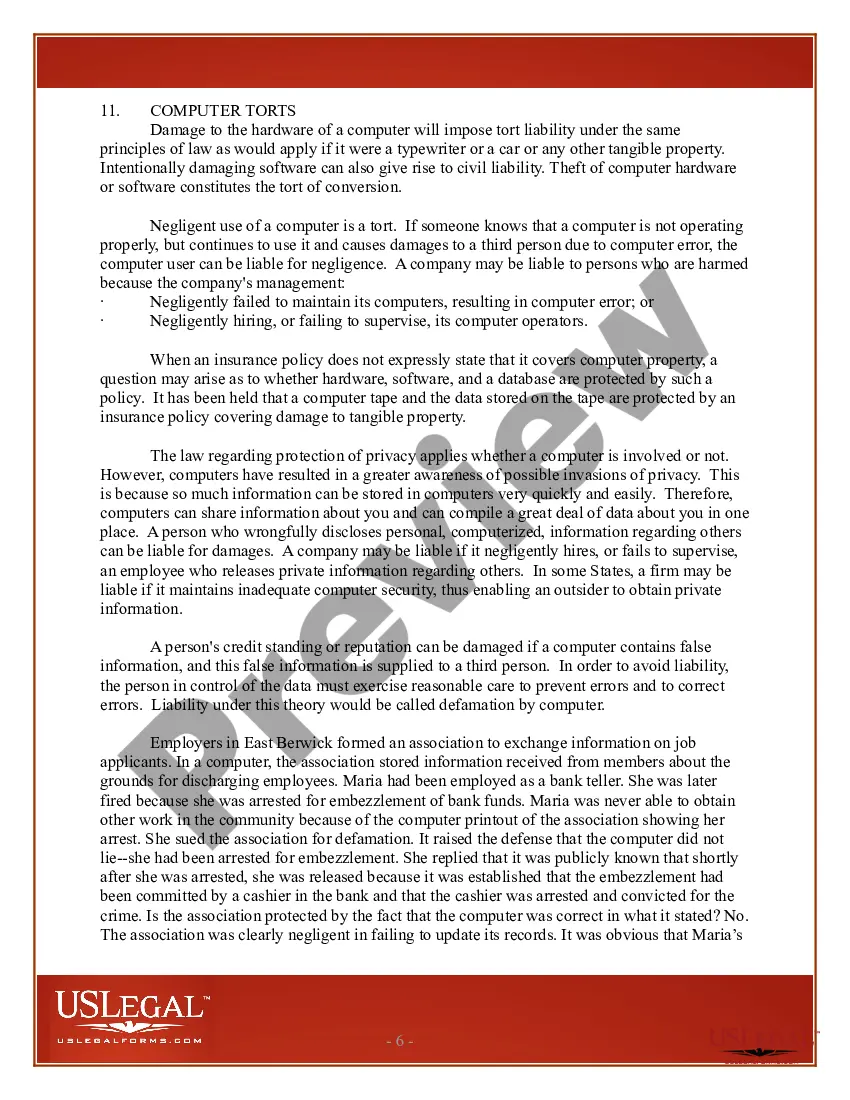
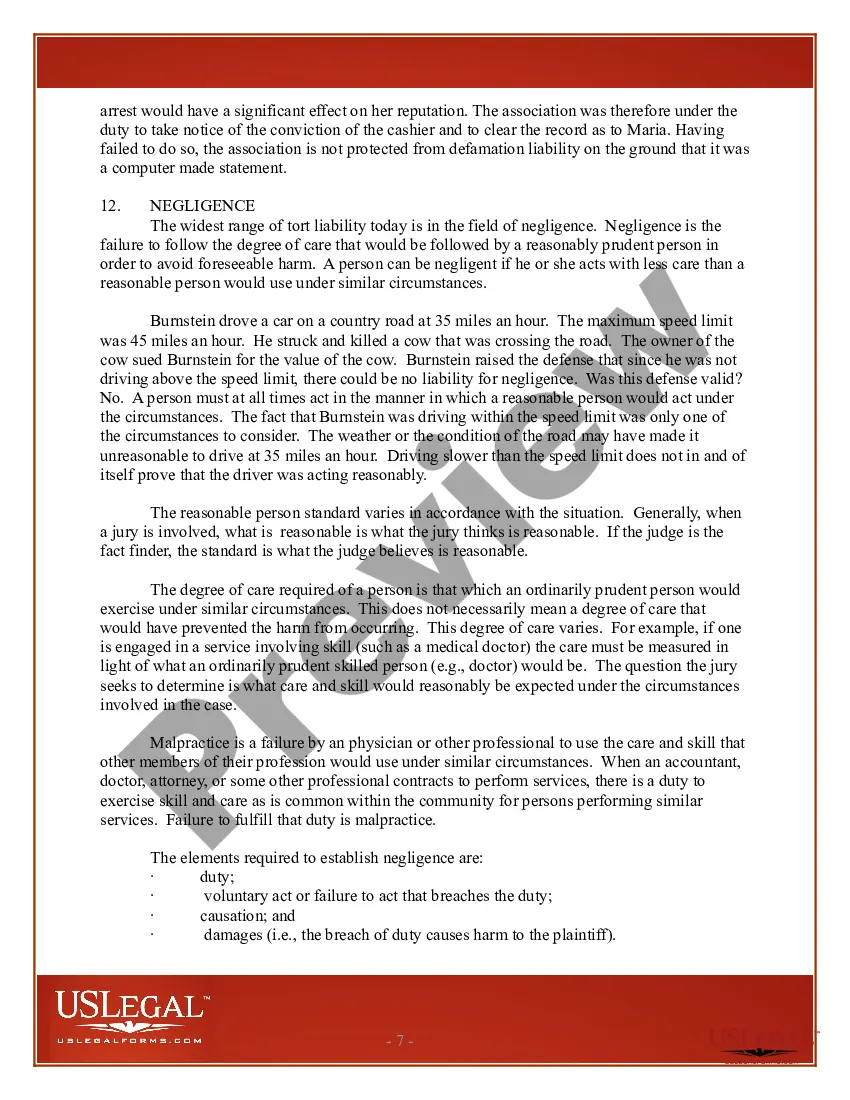
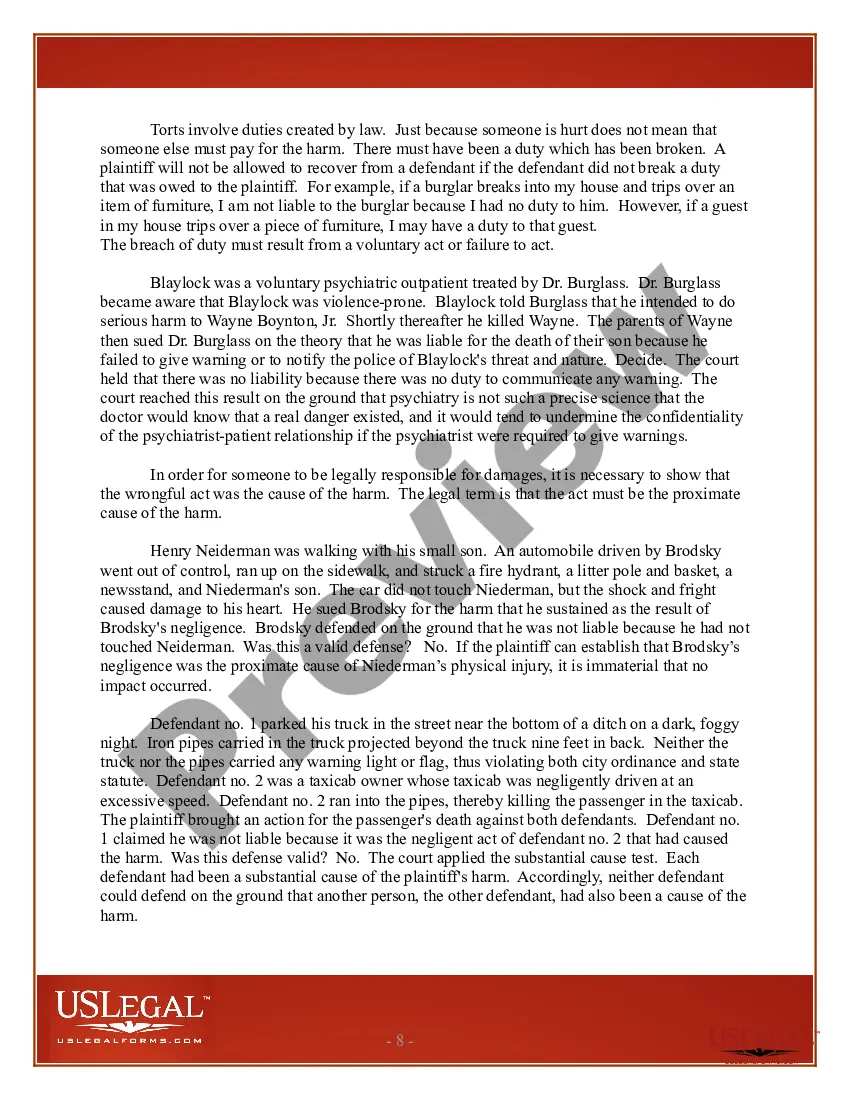
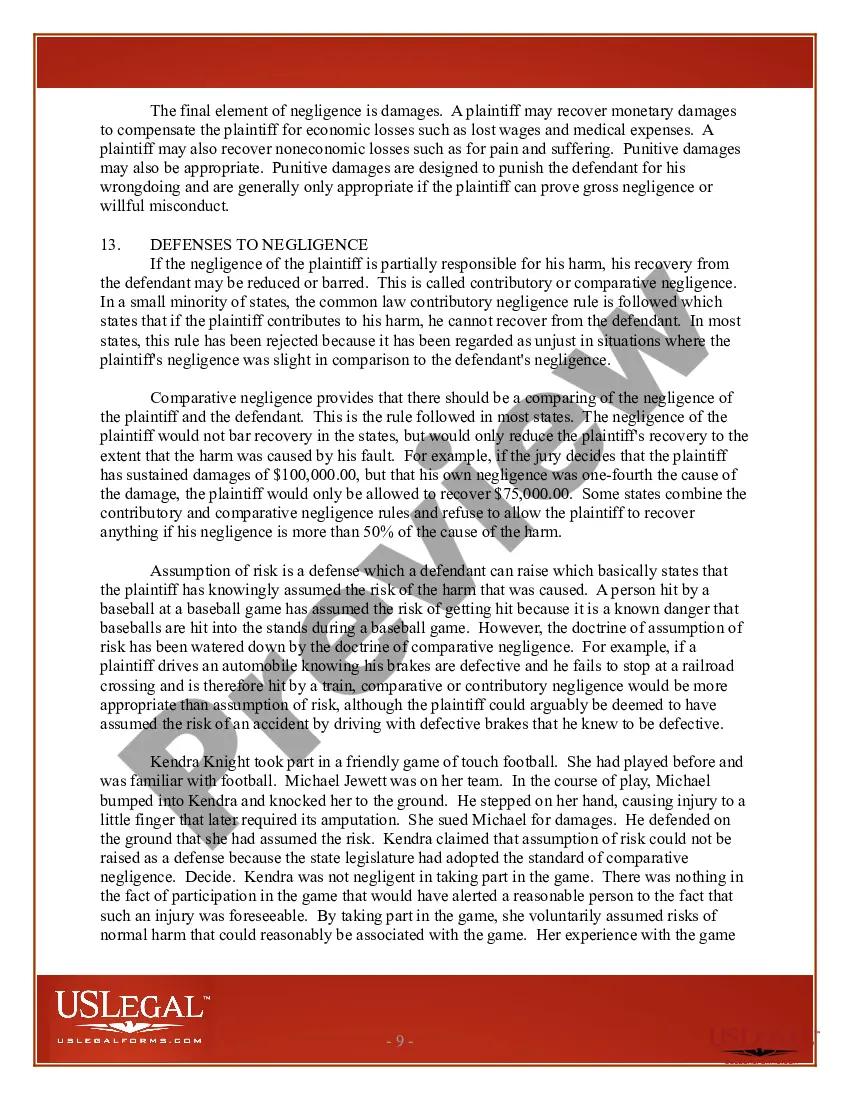
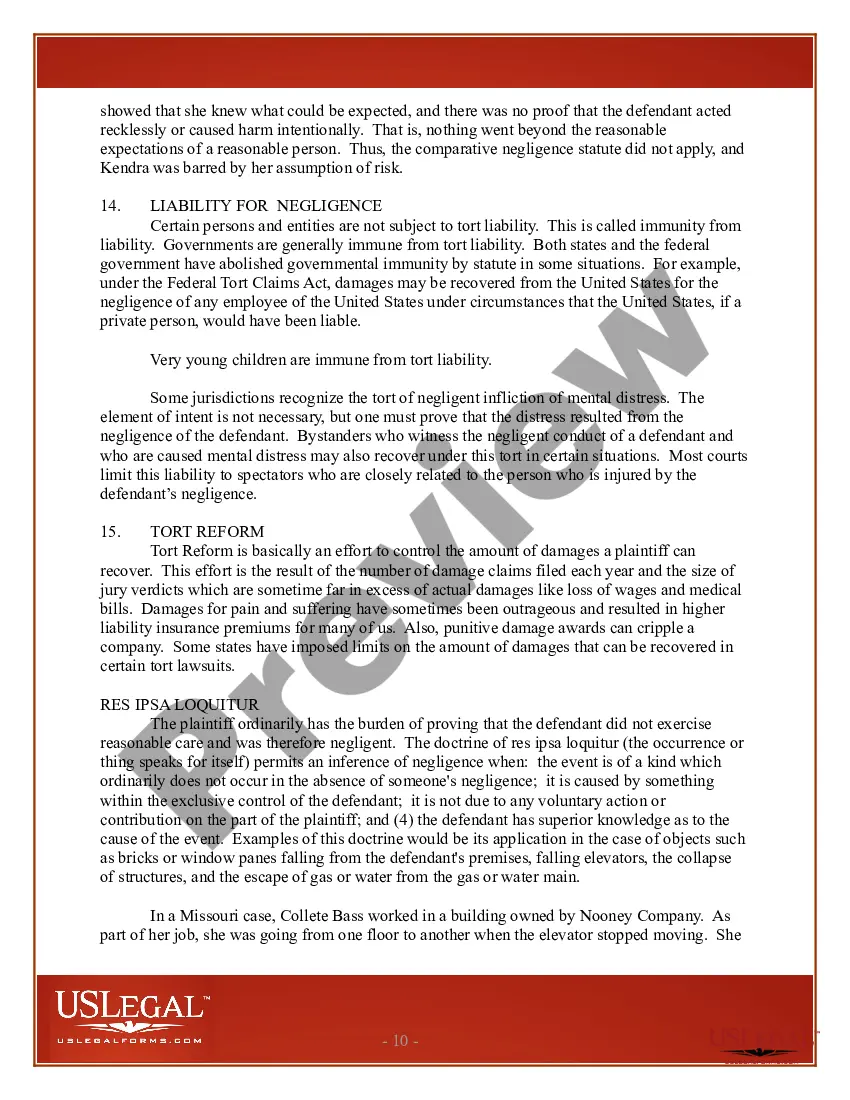
A “tort” is an action (or lack of action) that leads to harm or injury to another person. In Arizona, when a tort causes an injury, the victim can seek financial recovery. One of the most common types of tort law is personal injury law.
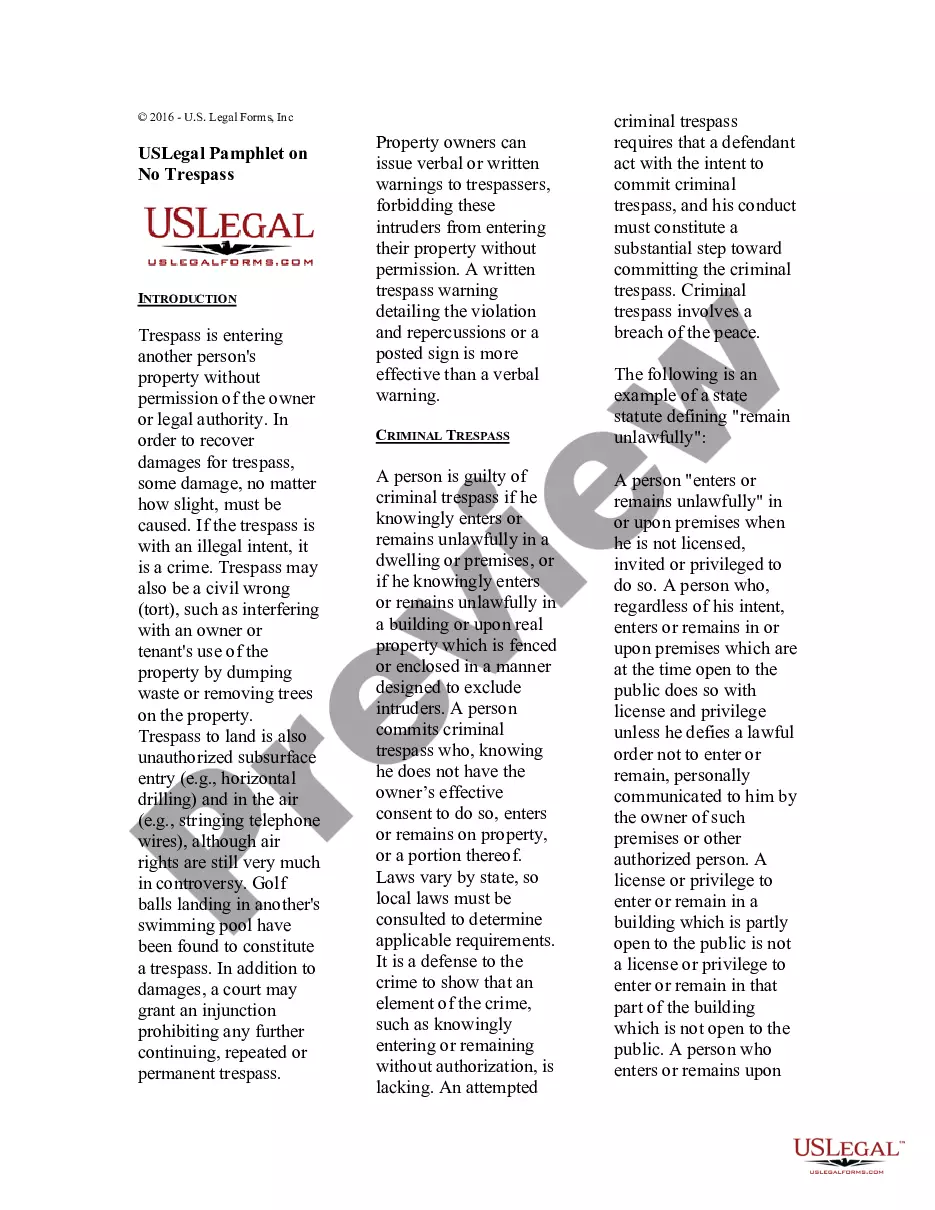
Four of them are personal: assault, battery, intentional infliction of emotional distress, and false imprisonment. The other three are trespass to chattels, trespass to property, and conversion.
In addition, some judges have, on a retroactive basis, created brand new tort claims that have no basis in precedent or state public policy. The courts have, in some instances, acted as legislators.
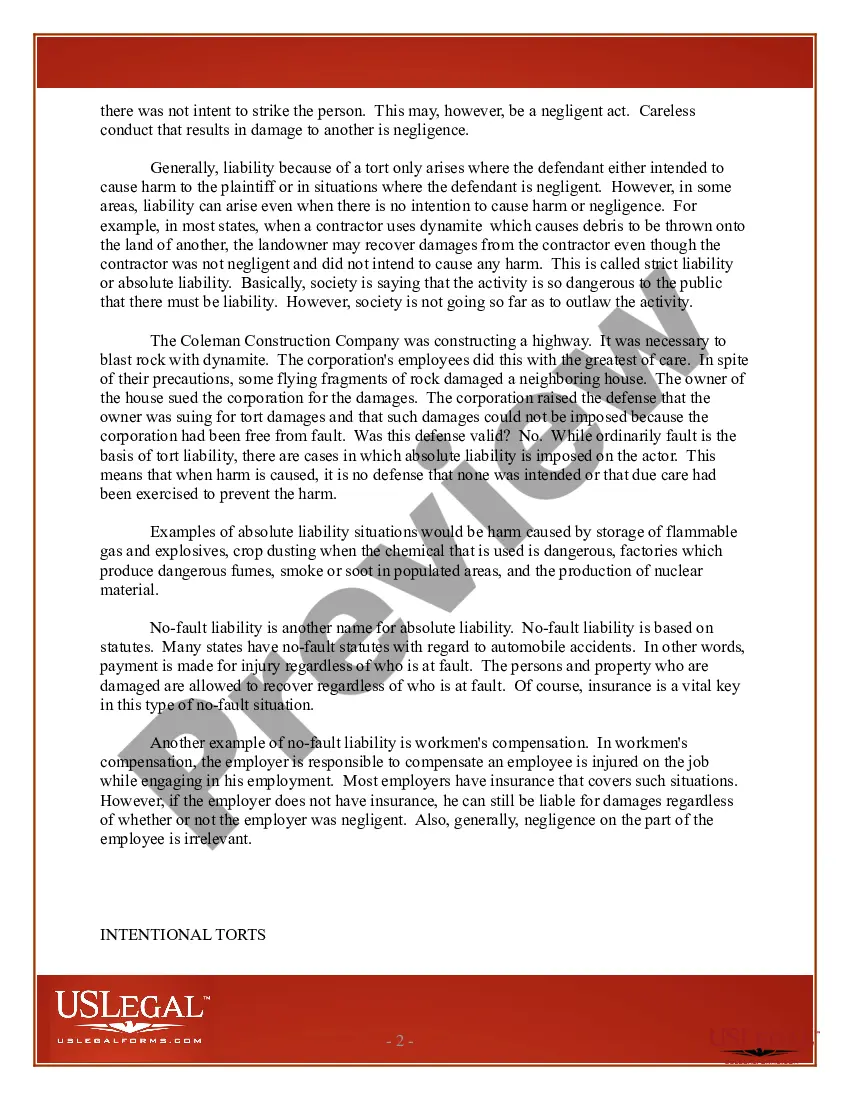
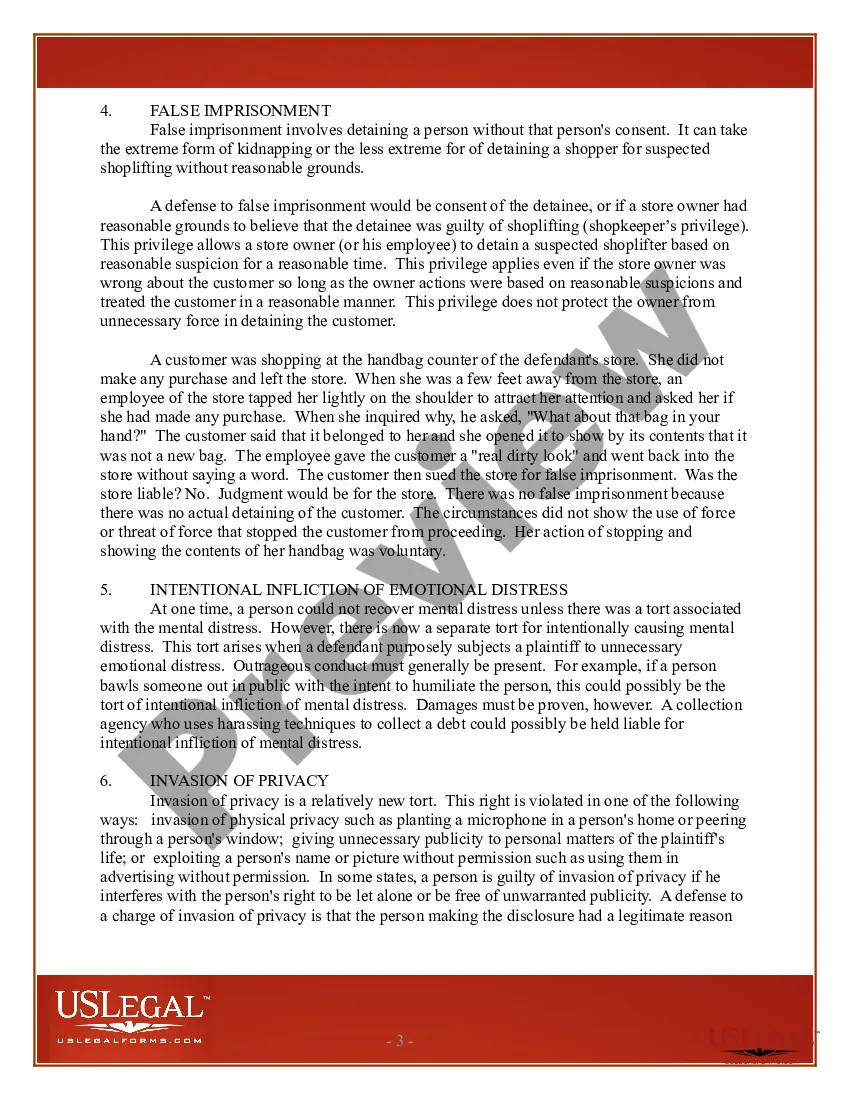
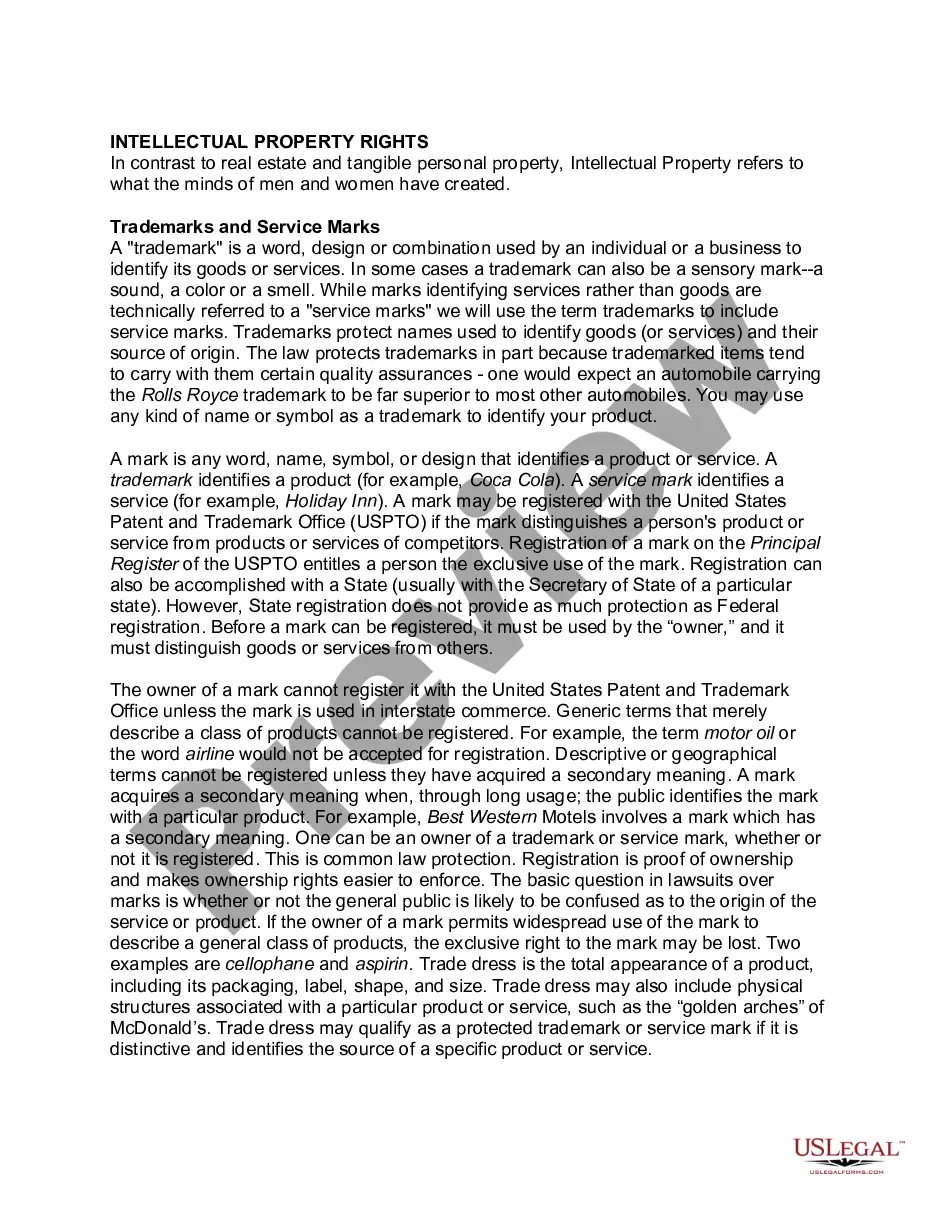
There are three kinds of torts: intentional torts, negligent torts, and strict liability torts. Intentional torts arise from intentional acts, whereas negligence often results from carelessness. Both intentional torts and negligent torts imply some fault on the part of the defendant.
Tort law has also historically been a matter of common law rather than statutory law; that is, judges (not legislatures) developed many of tort law's fundamental principles through case-by- case adjudication.
In addition, some judges have, on a retroactive basis, created brand new tort claims that have no basis in precedent or state public policy. The courts have, in some instances, acted as legislators.
That judges can and do make new law on subjects not covered by previous decisions; but that judges cannot unmake old law, cannot even change an existing rule of "judge-made" law.
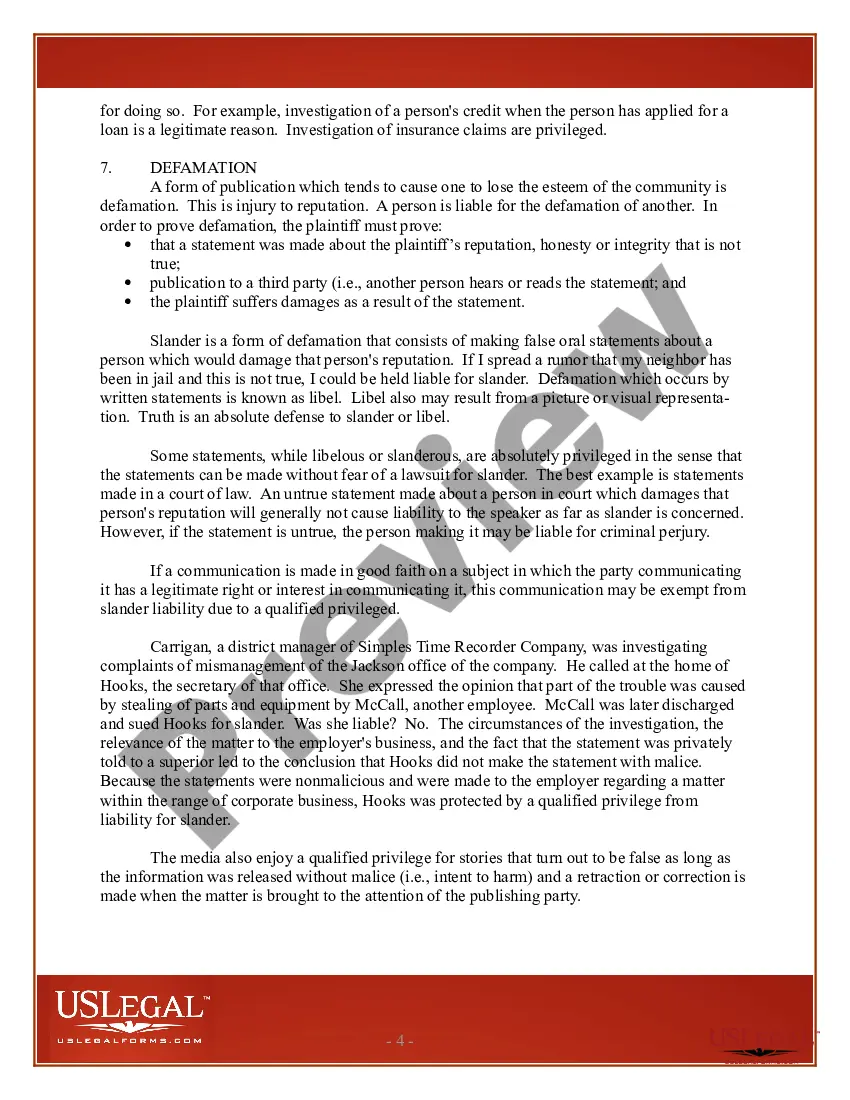
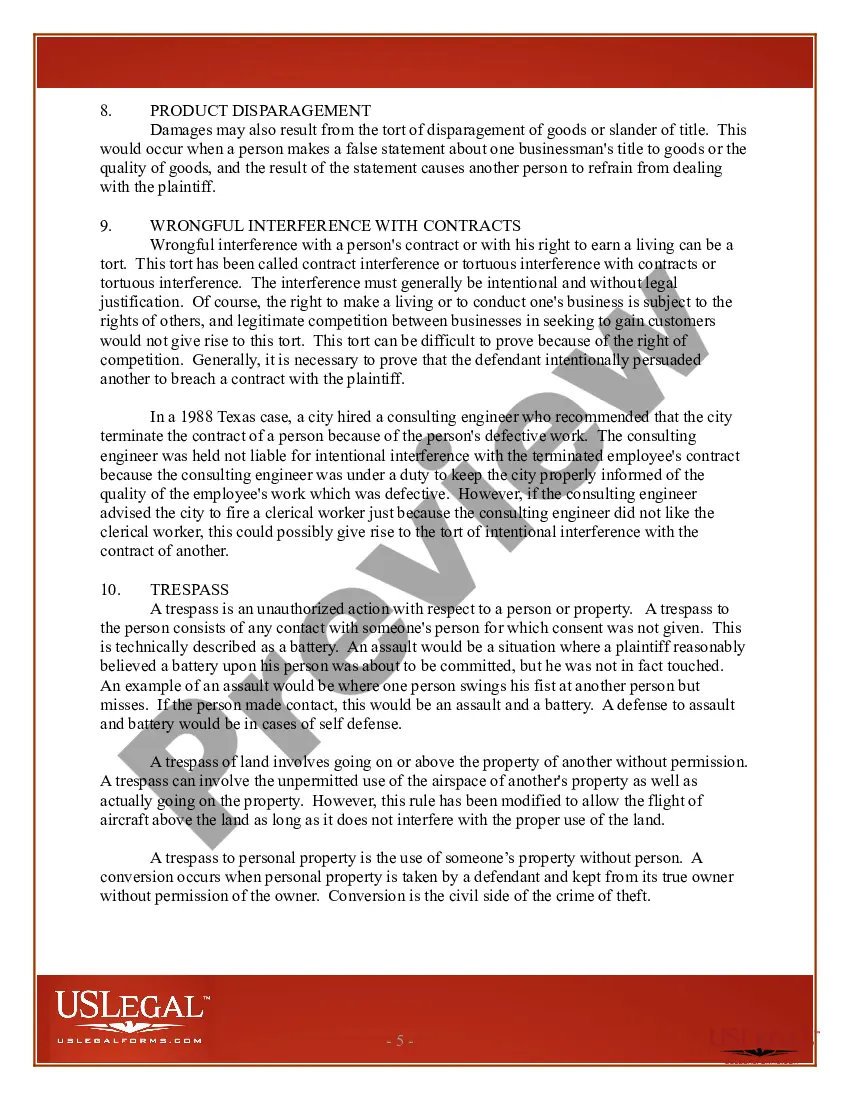
There are numerous specific torts including trespass, assault, battery, negligence, products liability, and intentional infliction of emotional distress. There are also separate areas of tort law including nuisance, defamation, invasion of privacy, and a category of economic torts.
Tort claims in Arizona are legal actions that seek formal or informal resolution for wrongful action or wrongful inaction. This implies that it could be addressed in the appropriate court of law or out of it. Tort claims are legal responses to a party's failure to fulfill a legal duty of care.
The Arizona courts made two decisions in August 2021 affirming the constitutionality of medical professional liability tort reforms that require expert testimony and preclude statements of apology by healthcare providers from being used as evidence of liability.
