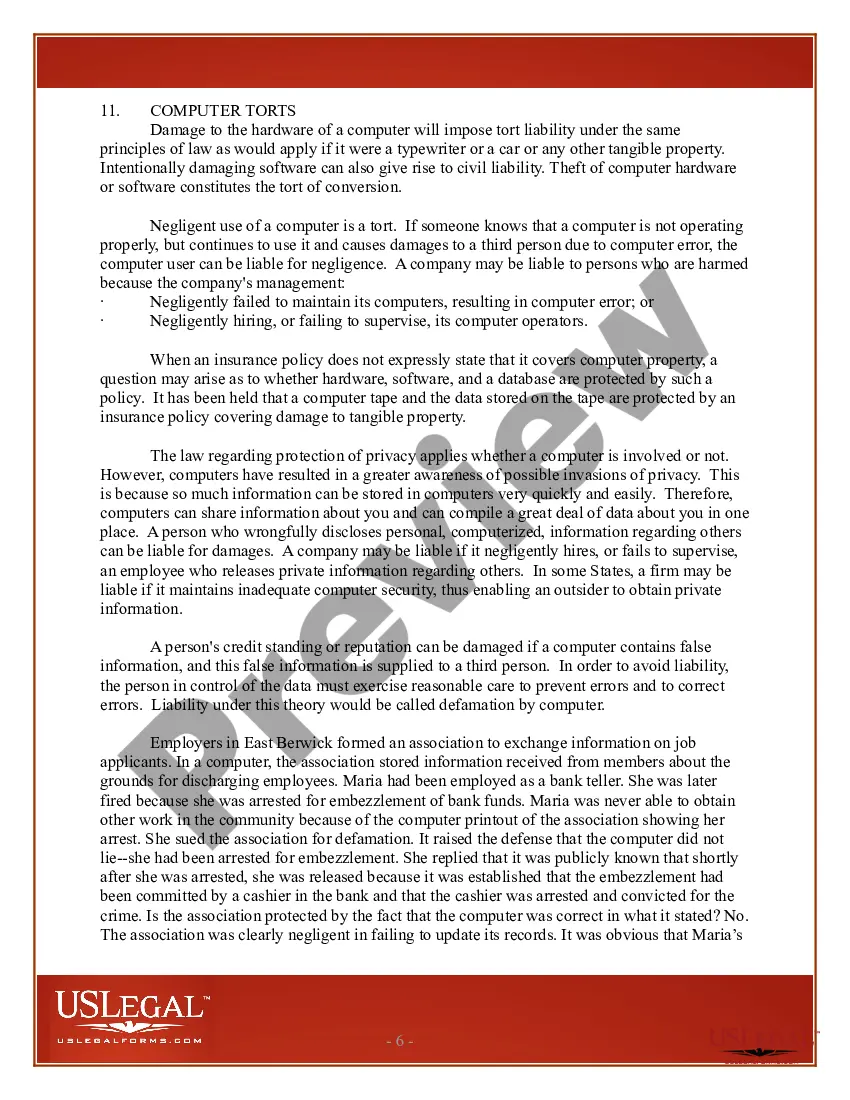
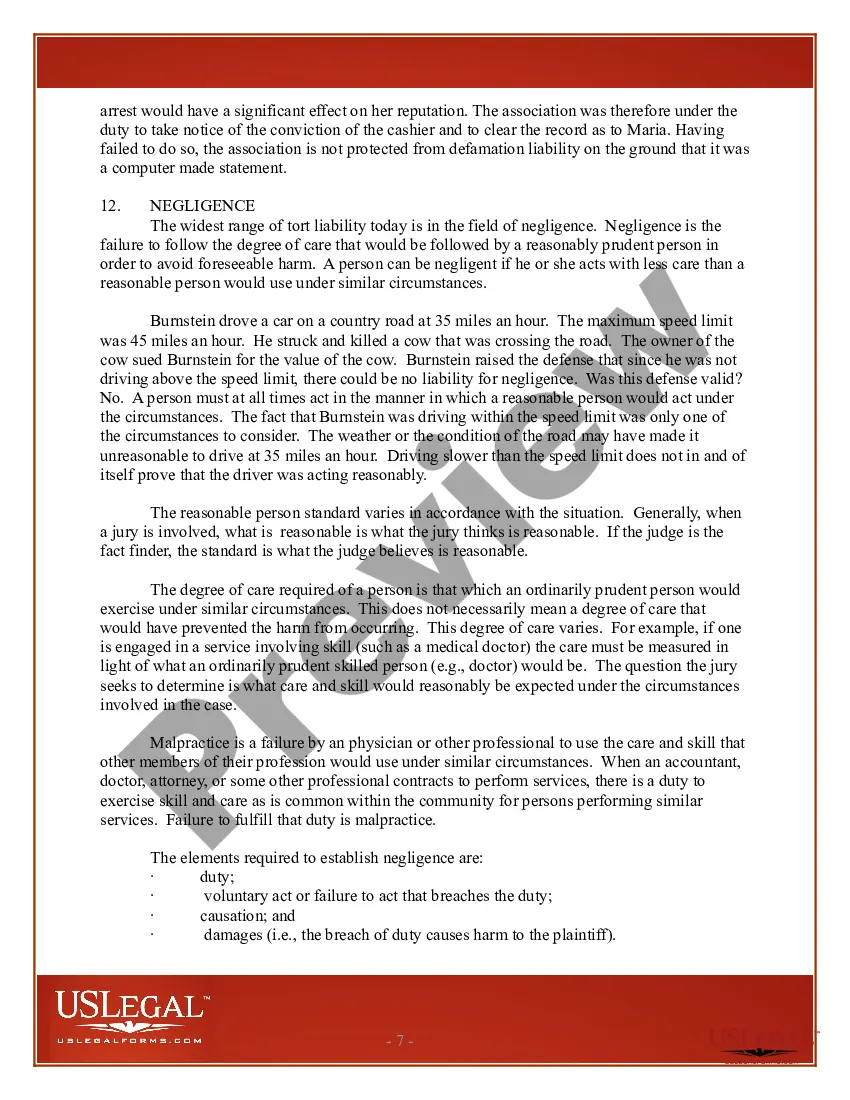
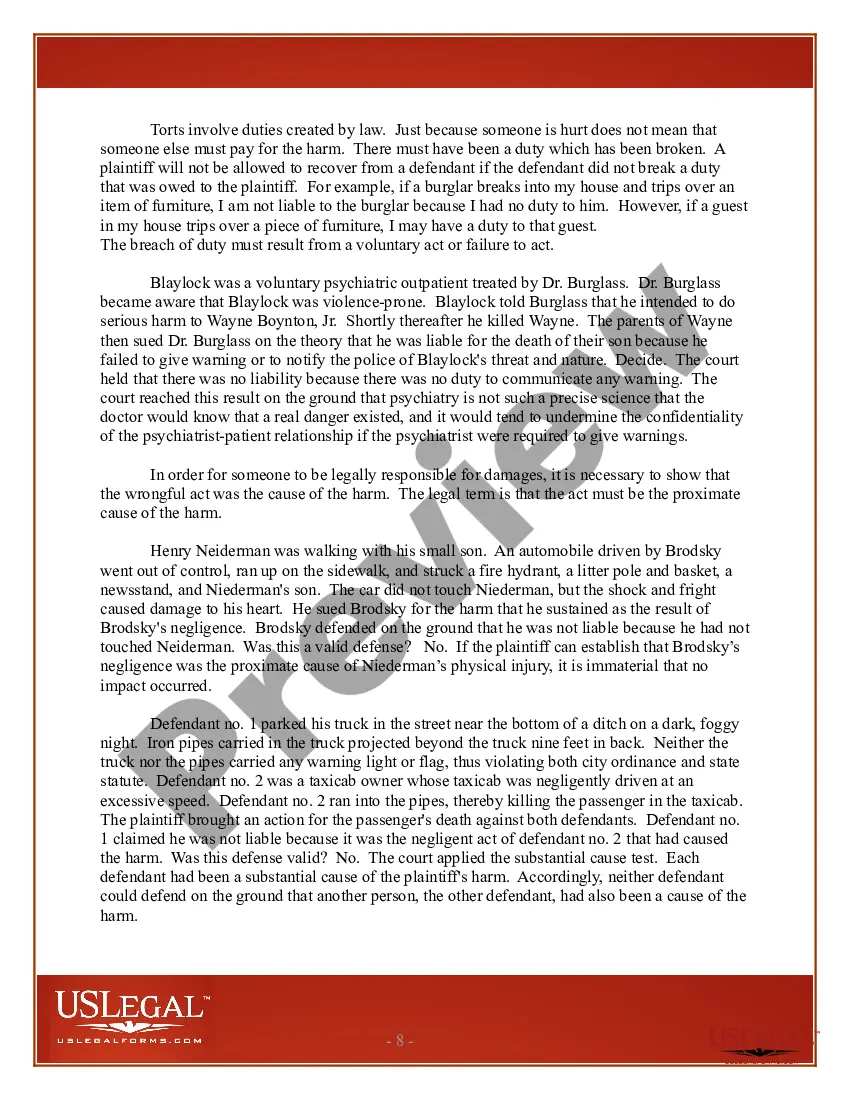
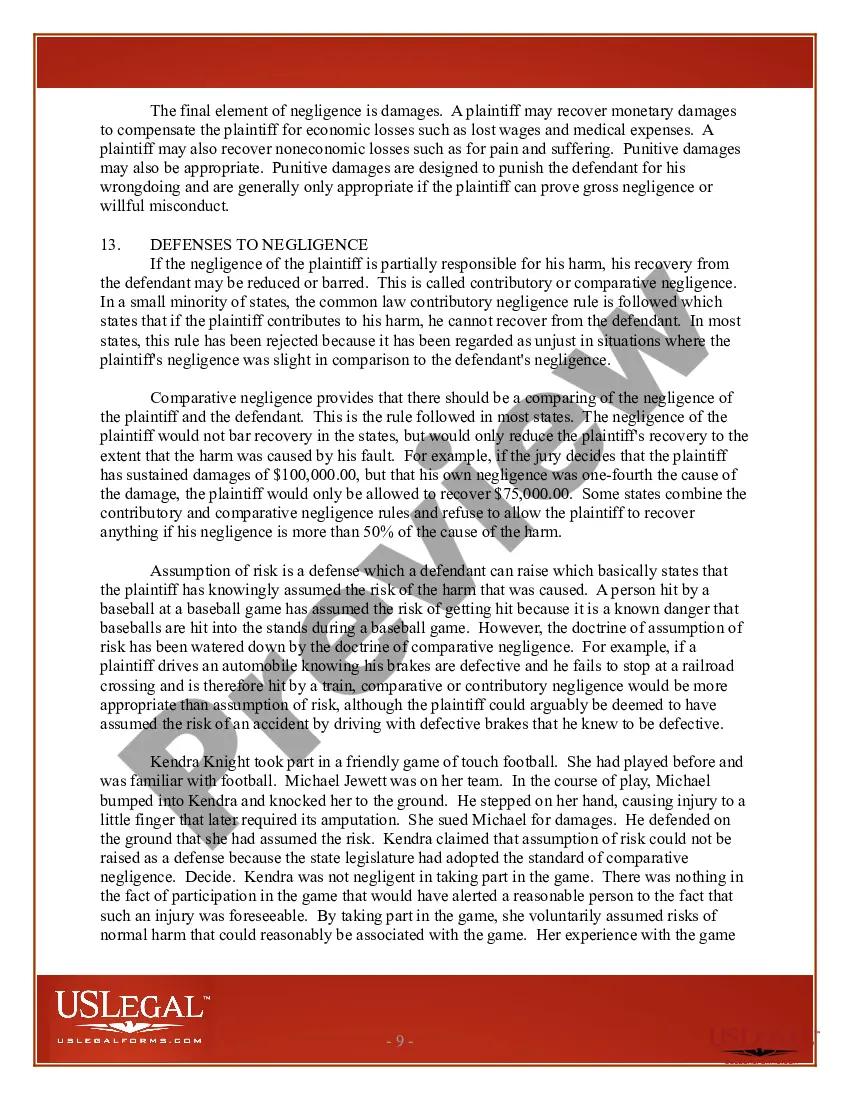
Tort Negligence Liability For Principals And Agents In Orange
Description





Get your form ready online
Our built-in tools help you complete, sign, share, and store your documents in one place.
Make edits, fill in missing information, and update formatting in US Legal Forms—just like you would in MS Word.
Download a copy, print it, send it by email, or mail it via USPS—whatever works best for your next step.
Sign and collect signatures with our SignNow integration. Send to multiple recipients, set reminders, and more. Go Premium to unlock E-Sign.
If this form requires notarization, complete it online through a secure video call—no need to meet a notary in person or wait for an appointment.
We protect your documents and personal data by following strict security and privacy standards.

Make edits, fill in missing information, and update formatting in US Legal Forms—just like you would in MS Word.

Download a copy, print it, send it by email, or mail it via USPS—whatever works best for your next step.

Sign and collect signatures with our SignNow integration. Send to multiple recipients, set reminders, and more. Go Premium to unlock E-Sign.

If this form requires notarization, complete it online through a secure video call—no need to meet a notary in person or wait for an appointment.

We protect your documents and personal data by following strict security and privacy standards.
Looking for another form?







Form popularity
FAQ
This is especially true if the third party is made aware of the agent's authority limitations. In this situation, the third party may still attempt to sue the principal for any damages caused. However, the principal can then turn around and sue the agent to recover any damages caused.
A person is always liable for her own torts, so an agent who commits a tort is liable; if the tort was in the scope of employment the principal is liable too. Unless the principal put the agent up to committing the tort, the agent will have to reimburse the principal.
Thankfully, in order to prove negligence and claim damages, a claimant has to prove a number of elements to the court. These are: the defendant owed them a duty of care. the defendant breached that duty of care, and.
An agent is not generally liable for contracts made; the principal is liable. But the agent will be liable if he is undisclosed or partially disclosed, if the agent lacks authority or exceeds it, or, of course, if the agent entered into the contract in a personal capacity.
Principal's liability for acts of agent A principal is normally liable for all acts of an agent within the agent's authority, whether responsibility arises in contract or in tort. Authority means the agent's actual, apparent (ostensible) or usual (customary) authority.
Additionally, principals can be held liable for the torts of their agents under the doctrine of vicarious liability. A principal is always liable for torts committed while the agent completes their official responsibilities.
However, the principal can then turn around and sue the agent to recover any damages caused. In such a scenario, the principal will only be able to recover for the damages caused outside the scope of authority. There are many benefits to hiring agents to carry out functions for your business.
An agent is liable to a principal when he/she acts without actual authority, but with apparent authority. An agent is liable to indemnify a principal for loss or damage resulting from his/her act. A principal owes certain contractual duties to his/her agent.
If the principal directed the agent to commit a tort or knew that the consequences of the agent's carrying out his instructions would bring harm to someone, the principal is liable. This is an application of the general common-law principle that one cannot escape liability by delegating an unlawful act to another.
