Types Of Torts In Australia In Middlesex
Description




Get your form ready online
Our built-in tools help you complete, sign, share, and store your documents in one place.
Make edits, fill in missing information, and update formatting in US Legal Forms—just like you would in MS Word.
Download a copy, print it, send it by email, or mail it via USPS—whatever works best for your next step.
Sign and collect signatures with our SignNow integration. Send to multiple recipients, set reminders, and more. Go Premium to unlock E-Sign.
If this form requires notarization, complete it online through a secure video call—no need to meet a notary in person or wait for an appointment.
We protect your documents and personal data by following strict security and privacy standards.

Make edits, fill in missing information, and update formatting in US Legal Forms—just like you would in MS Word.

Download a copy, print it, send it by email, or mail it via USPS—whatever works best for your next step.

Sign and collect signatures with our SignNow integration. Send to multiple recipients, set reminders, and more. Go Premium to unlock E-Sign.

If this form requires notarization, complete it online through a secure video call—no need to meet a notary in person or wait for an appointment.

We protect your documents and personal data by following strict security and privacy standards.
Looking for another form?








Form popularity
FAQ
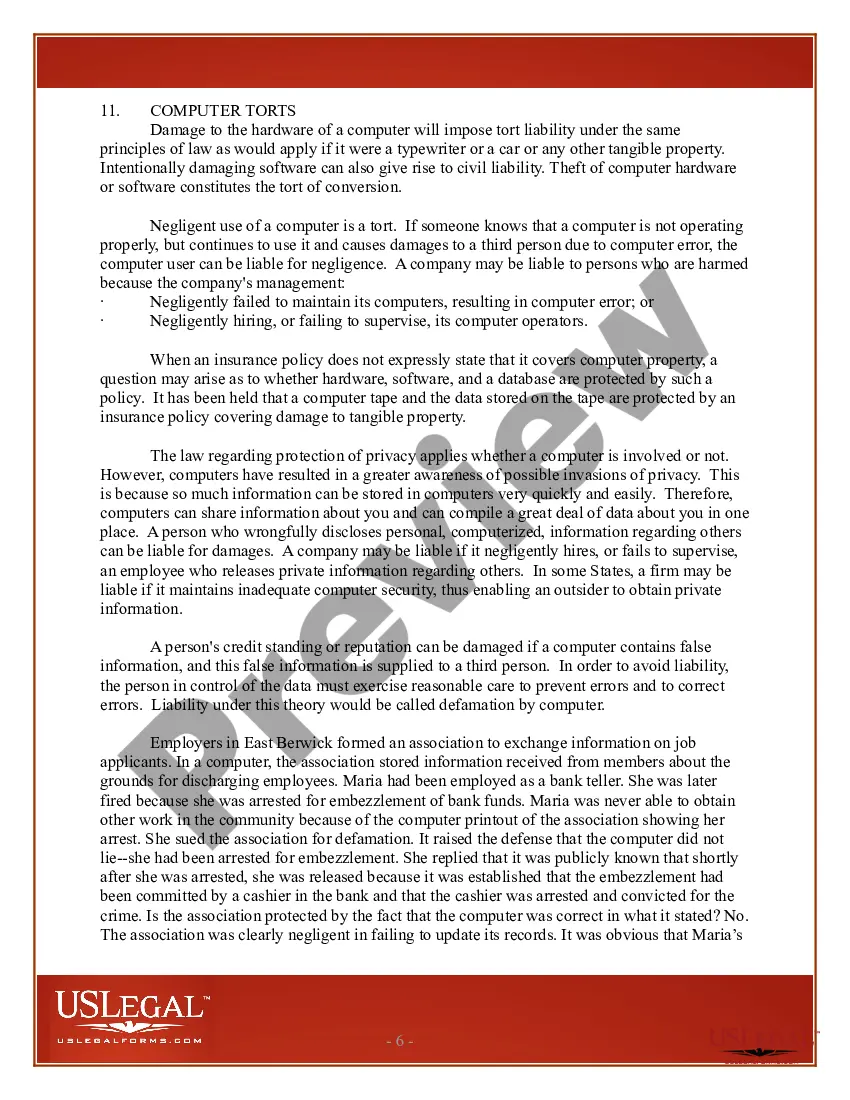
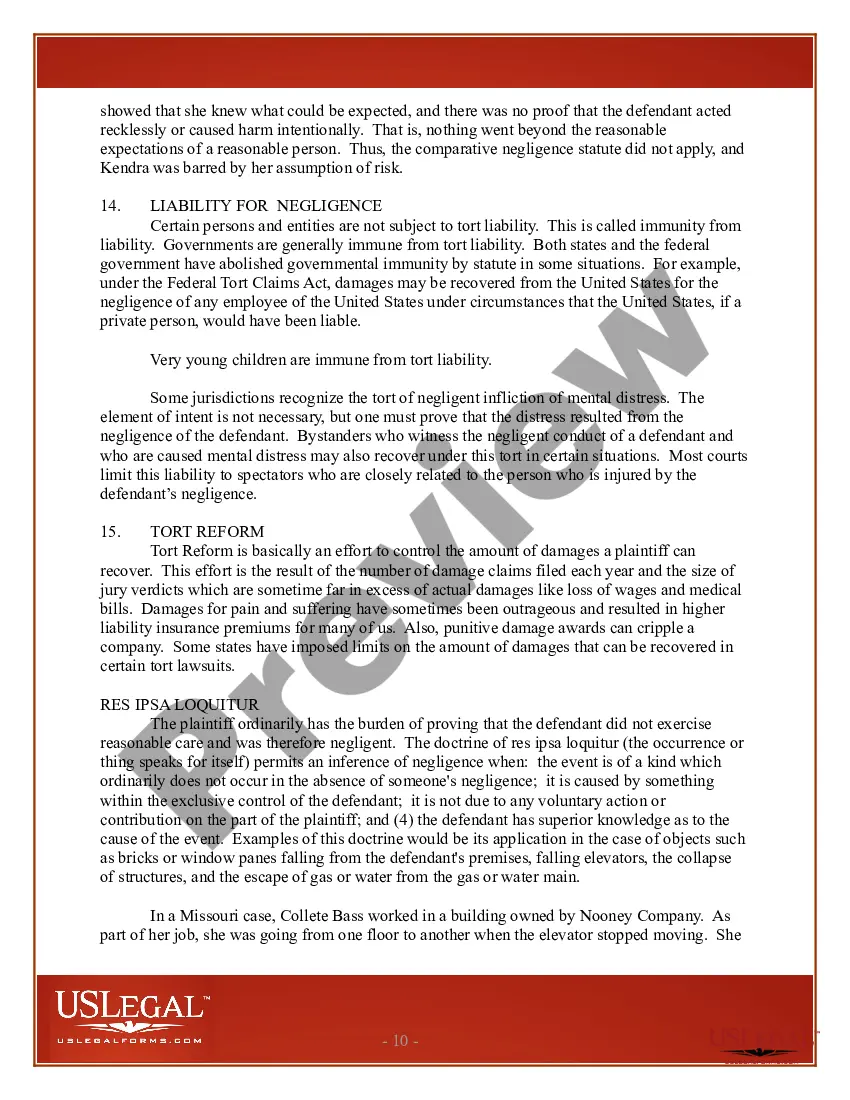
A tort is an act or omission that causes legally cognizable harm to persons or property. Tort law, in turn, is the body of rules concerned with remedying harms caused by a person's wrongful or injurious actions.
Torts fall into three general categories: Intentional torts (e.g., intentionally hitting a person); Negligent torts (e.g., causing an accident by failing to obey traffic rules); and. Strict liability torts (e.g., liability for making and selling defective products - see Products Liability).
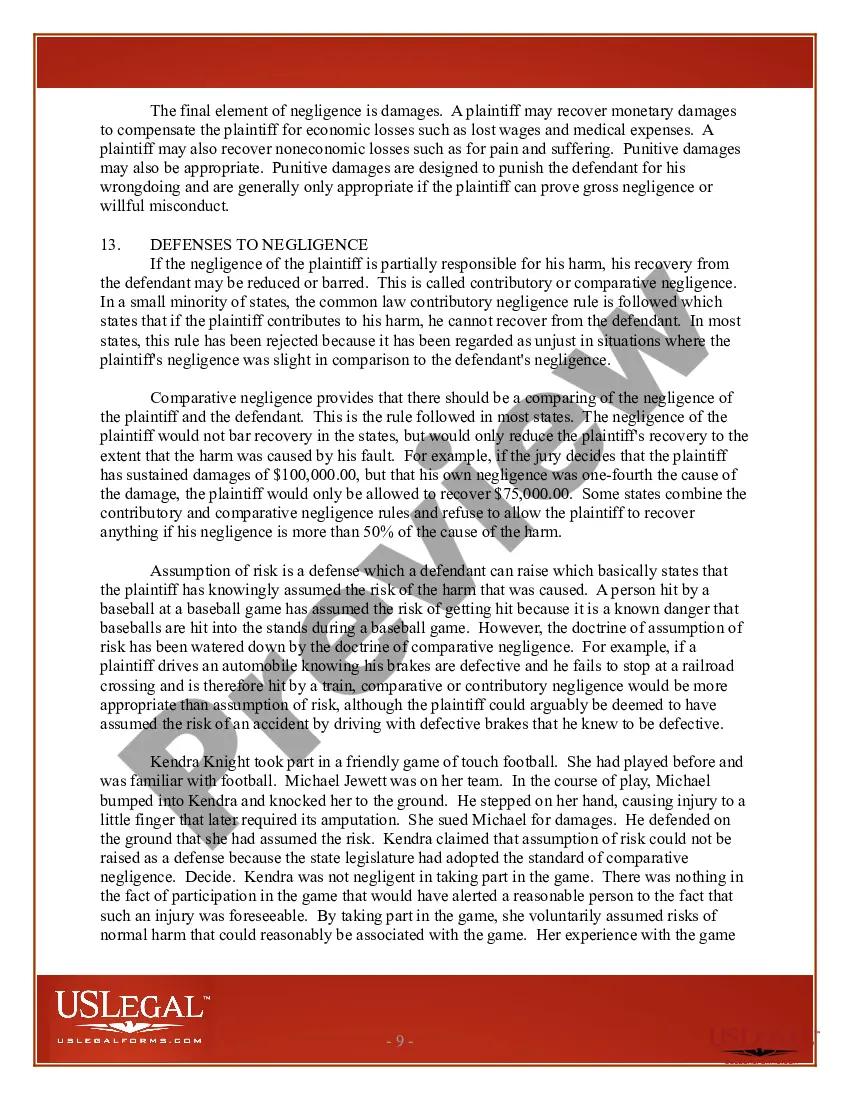
A tort is a civil wrong that is done to one party by another and that causes the victim to suffer harm or loss. The claimant in a tort matter may sue for damages or other forms of relief. Many torts are created under the common law, but there are also statutory wrongs that amount to torts.
Tort, definition. A civil right of action arising independently of contract, restitution, crime or equity. Torts serves to protect a person's interest in his or her bodily security, tangible property, financial resources, or reputation.
Torts: A tort is a wrongful act that injures or interferes with another's person or property. A tort case is a civil court proceeding. The accused is the "defendant" and the victim is a "plaintiff."
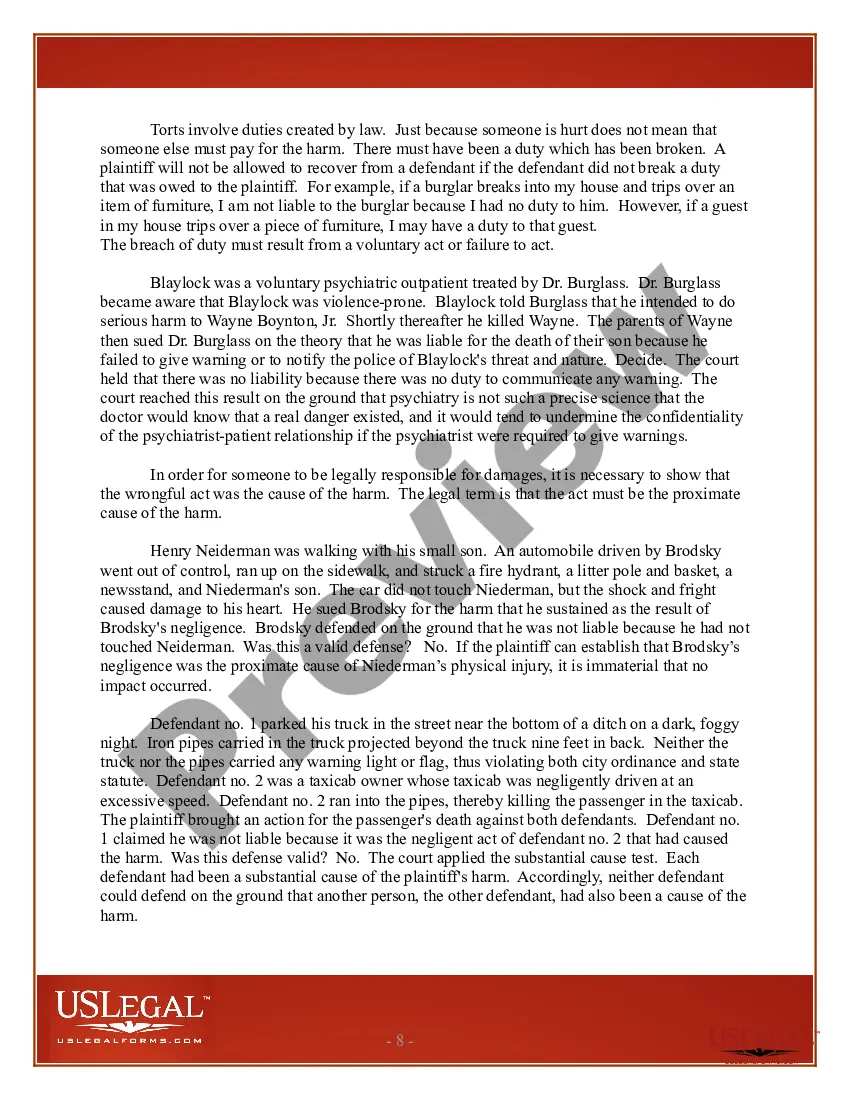
7.2 This Term of Reference has been formulated around the elements of the tort of negligence, namely duty of care, breach of duty (that is, standard of care), causation and remoteness of damage.
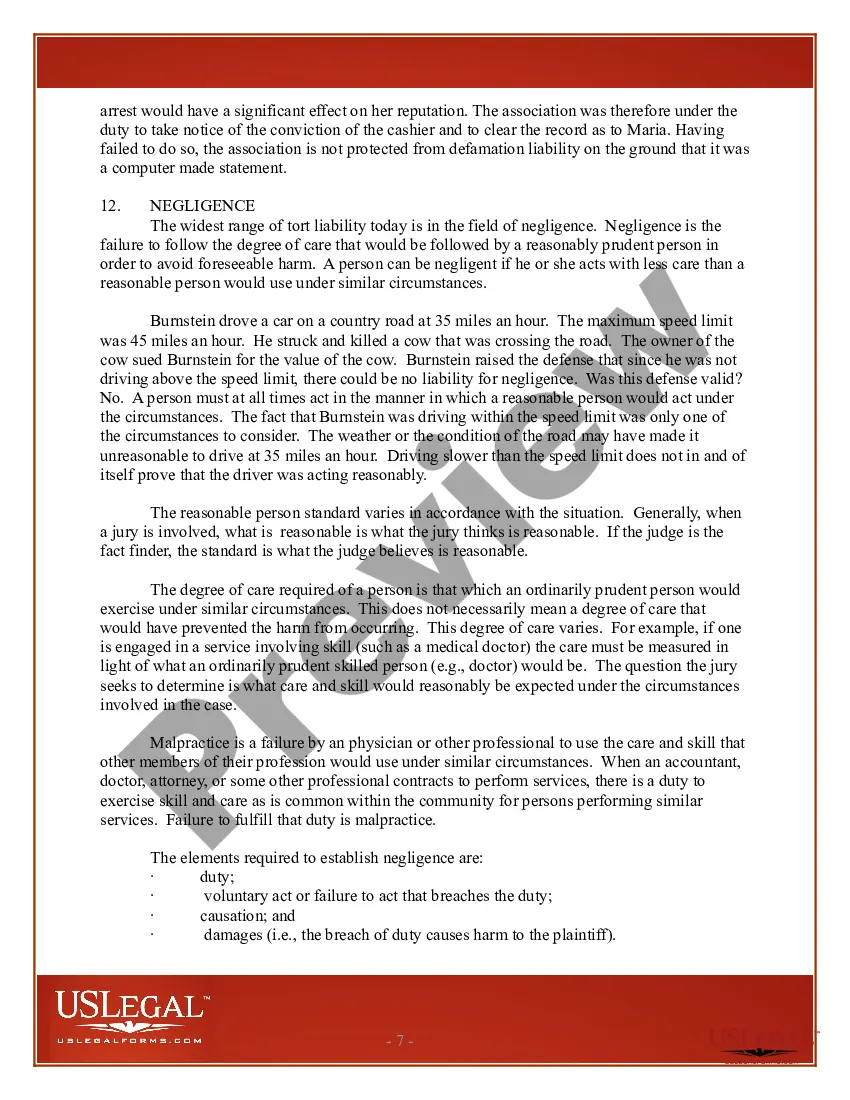
Negligence is by far the most common type of tort. Unlike intentional torts, negligence cases do not involve deliberate actions. Negligence occurs when a person fails to act carefully enough and another person gets hurt as a result. For this type of case, a person must owe a duty to another person.
Four of them are personal: assault, battery, intentional infliction of emotional distress, and false imprisonment. The other three are trespass to chattels, trespass to property, and conversion.
There are three basic types of torts: Intentional torts, where someone intentionally committed a wrong and caused an injury to someone else. Negligent torts, where someone violated a duty they owed to the person harmed, such as running a red light and causing an accident.
Torts fall into three general categories: Intentional torts (e.g., intentionally hitting a person); Negligent torts (e.g., causing an accident by failing to obey traffic rules); and. Strict liability torts (e.g., liability for making and selling defective products - see Products Liability).
