Tort Form Meaning In Maryland
Description

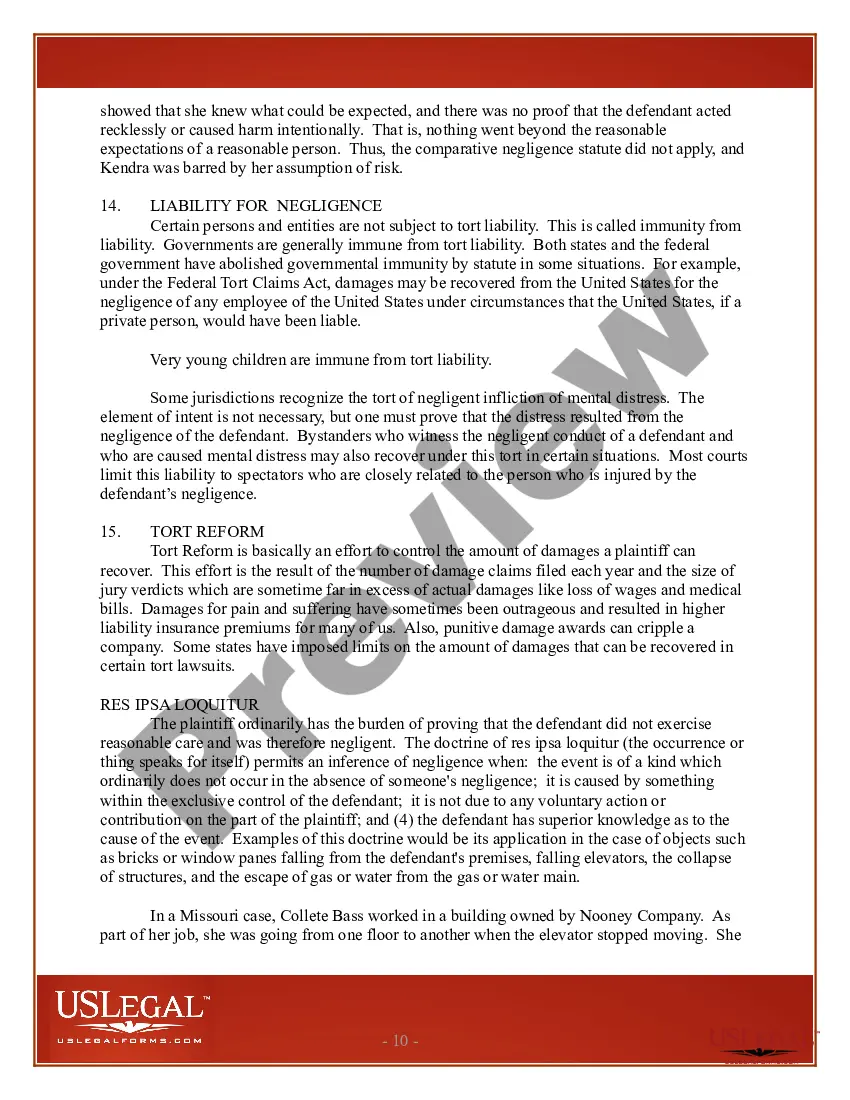




Get your form ready online
Our built-in tools help you complete, sign, share, and store your documents in one place.
Make edits, fill in missing information, and update formatting in US Legal Forms—just like you would in MS Word.
Download a copy, print it, send it by email, or mail it via USPS—whatever works best for your next step.
Sign and collect signatures with our SignNow integration. Send to multiple recipients, set reminders, and more. Go Premium to unlock E-Sign.
If this form requires notarization, complete it online through a secure video call—no need to meet a notary in person or wait for an appointment.
We protect your documents and personal data by following strict security and privacy standards.

Make edits, fill in missing information, and update formatting in US Legal Forms—just like you would in MS Word.

Download a copy, print it, send it by email, or mail it via USPS—whatever works best for your next step.

Sign and collect signatures with our SignNow integration. Send to multiple recipients, set reminders, and more. Go Premium to unlock E-Sign.

If this form requires notarization, complete it online through a secure video call—no need to meet a notary in person or wait for an appointment.

We protect your documents and personal data by following strict security and privacy standards.
Looking for another form?


Form popularity
FAQ
“Contributory Negligence” is a legal doctrine that severely impacts an injured person's right to recover damages if they are partially at fault. Maryland remains one of the few remaining states that use this doctrine in assessing injury claims.
Maryland is an “at-fault” or “tort” state, which means the person who is at fault for a car accident is responsible for paying for other people's injuries and property damage resulting from the accident.
There are two elements to establishing causation in respect of tort claims, with the claimant required to demonstrate that: • the defendant's breach in fact resulted in the damage complained of (factual causation) and. • this damage should, as a matter of law, be recoverable from the defendant (legal causation)
If you or someone you love have been injured due to someone else's actions (or inaction), remember that you may be entitled to seek compensation through a tort claim under Maryland law. An attorney can also advise you whether the state's evidence secured supports your claim or if more evidence is needed.
Generally, intentional torts are harder to prove than negligence, since a plaintiff must show that the defendant did something on purpose.
To file a claim, complete these steps: Complete Standard Form 95. Explain in detail what happened, using additional pages if necessary. Attach all documents that support your claim, which may include the following. Submit the completed Standard Form 95 and supporting documents to the OPM Office of the General Counsel.
The legal definition of a tort is “a civil wrong,” which can also be referred to as a breach of duty. By extension, a Maryland motor tort is a civil wrong arising from the negligent operation of a motor vehicle.
The Federal Tort Claims Act (FTCA) is federal legislation enacted in 1946 that provides a legal means for compensating individuals who have suffered personal injury, death, or property loss or damage caused by the negligent or wrongful act or omission of an employee of the federal government.
California Tort Claims Act Filing a claim gives the agency the opportunity to settle the claim before a lawsuit is filed and to investigate the claim so that it can properly defend itself, or to correct the conditions or practices that led to the claim.
A tort claim is any act that can harm the well-being of a person, by that means violating their rights and making the guilty party liable for their damages and sufferings.