Investor Term Sheet Template For Llc In Pima
Description

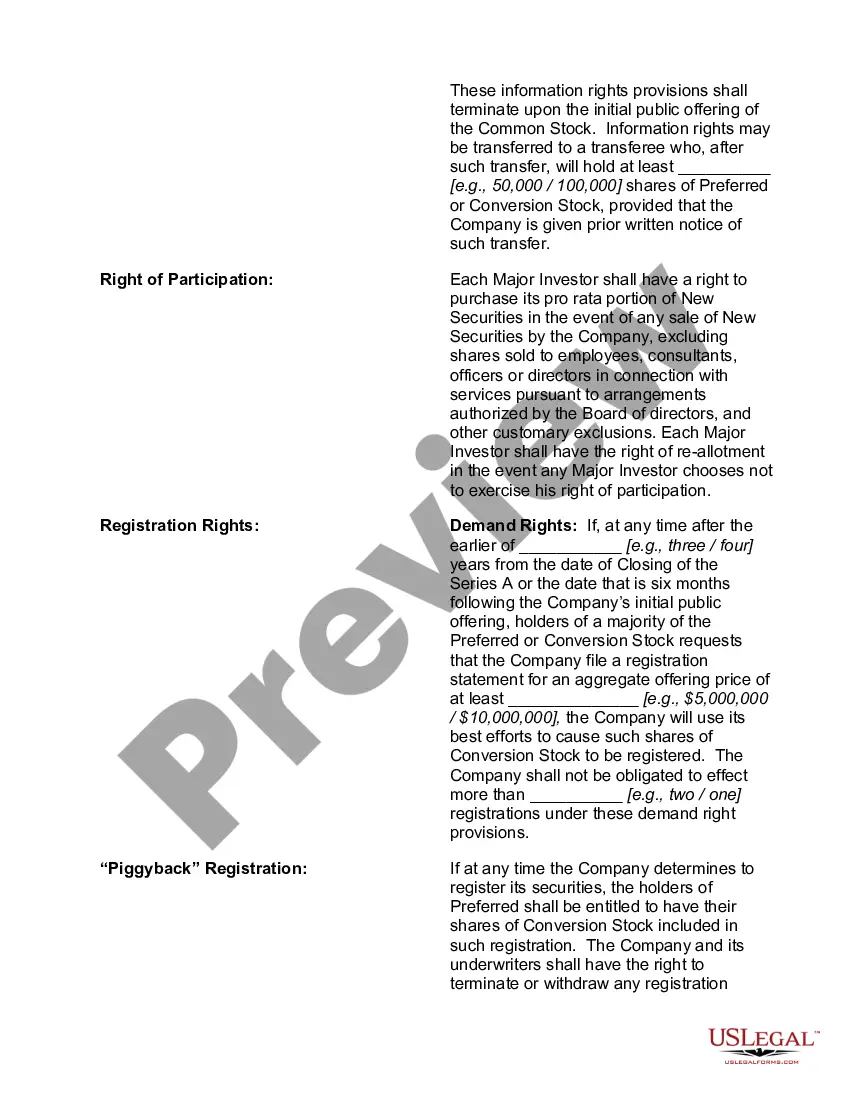
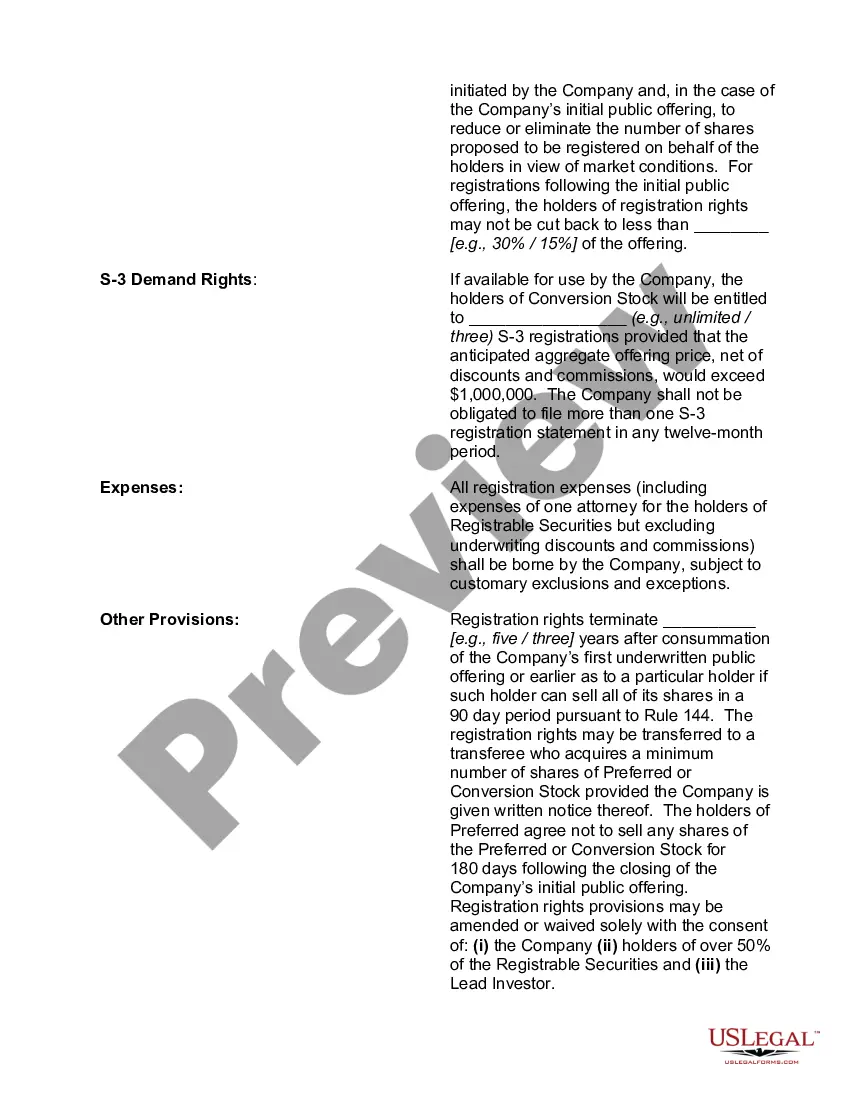
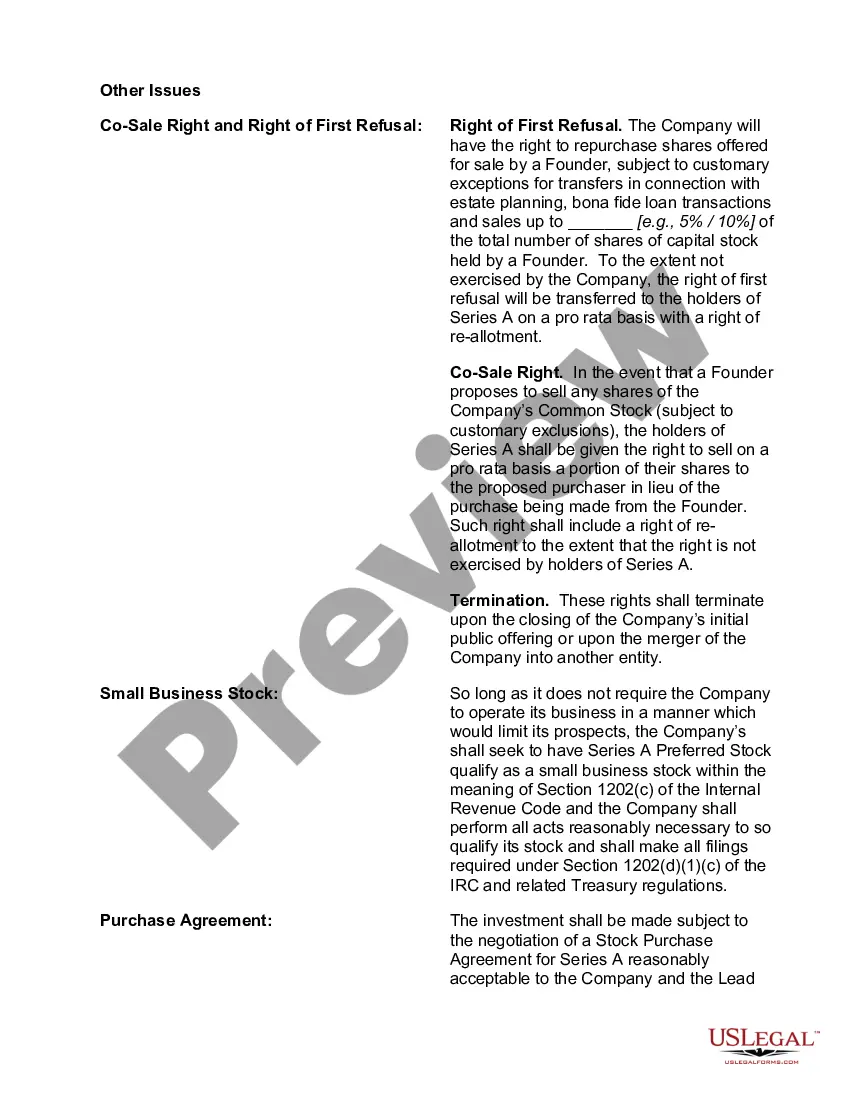
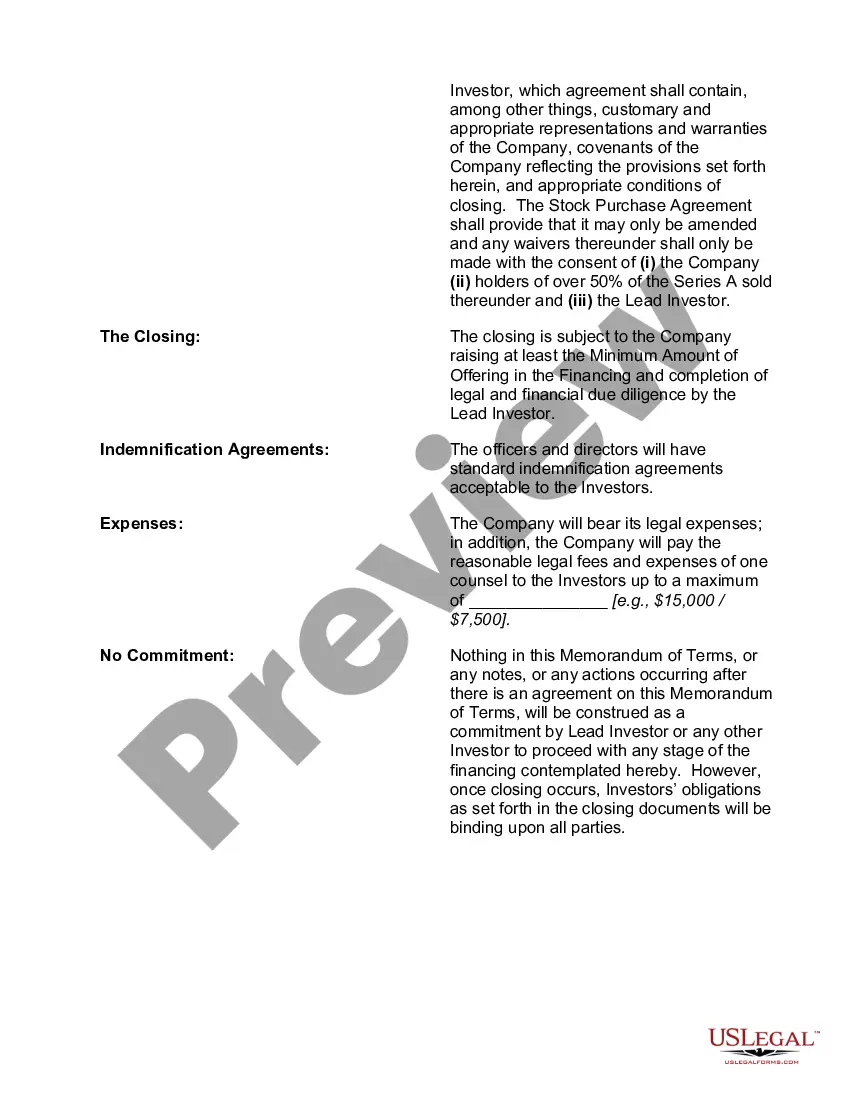
Get your form ready online
Our built-in tools help you complete, sign, share, and store your documents in one place.
Make edits, fill in missing information, and update formatting in US Legal Forms—just like you would in MS Word.
Download a copy, print it, send it by email, or mail it via USPS—whatever works best for your next step.
Sign and collect signatures with our SignNow integration. Send to multiple recipients, set reminders, and more. Go Premium to unlock E-Sign.
If this form requires notarization, complete it online through a secure video call—no need to meet a notary in person or wait for an appointment.
We protect your documents and personal data by following strict security and privacy standards.

Make edits, fill in missing information, and update formatting in US Legal Forms—just like you would in MS Word.

Download a copy, print it, send it by email, or mail it via USPS—whatever works best for your next step.

Sign and collect signatures with our SignNow integration. Send to multiple recipients, set reminders, and more. Go Premium to unlock E-Sign.

If this form requires notarization, complete it online through a secure video call—no need to meet a notary in person or wait for an appointment.

We protect your documents and personal data by following strict security and privacy standards.
Looking for another form?









Form popularity
FAQ
6 Tips for Writing a Term Sheet List the terms. Summarize the terms. Explain the dividends. Include liquidation preference. Include voting agreement and closing items. Read, edit and prepare for signatures.
Legal counsel is essential when creating or reviewing a term sheet to ensure that the terms are clear, fair, and protect your interests. An experienced attorney can help identify potential issues and provide valuable negotiation advice.
What is it? A term sheet is a summary document containing the key terms of a contract. It provides an overview of the most important commercial and other terms of a transaction or relationship. It can be called Key Terms or Heads of Terms, or sometimes a Letter of Intent.
Viewed thus, the negotiation of a term sheet is a matter of adjustment of contractual rights and obligations on the various sides of a proposed investment transaction. The key players are obviously the investors, on the one hand, and the founder or the promoters, on the other.
6 Tips for Writing a Term Sheet List the terms. Summarize the terms. Explain the dividends. Include liquidation preference. Include voting agreement and closing items. Read, edit and prepare for signatures.
A term sheet may be prepared by either party – the investor or the founder. Usually, if a venture capital firm is investing, the VC offers a term sheet.
How to Make a List of Target Investors Decide how much capital you need. You need to assess your immediate, short-term, and long-term growth needs. Research startups in your space. Research potential investors. Get an introduction. Stay organized. Learn from an expert.
How to Prepare a Term Sheet Identify the Purpose of the Term Sheet Agreements. Briefly Summarize the Terms and Conditions. List the Offering Terms. Include Dividends, Liquidation Preference, and Provisions. Identify the Participation Rights. Create a Board of Directors. End with the Voting Agreement and Other Matters.
Carnegie Mellon University describes a term sheet as a short document that states an intended investment in a company and reflects the agreed-on valuation of the company, the investment amount, and the ownership interest the investor will receive for their investment. The term sheet itself is not a binding agreement.
