Investor Term Sheet Template For Llc In Fairfax
Description

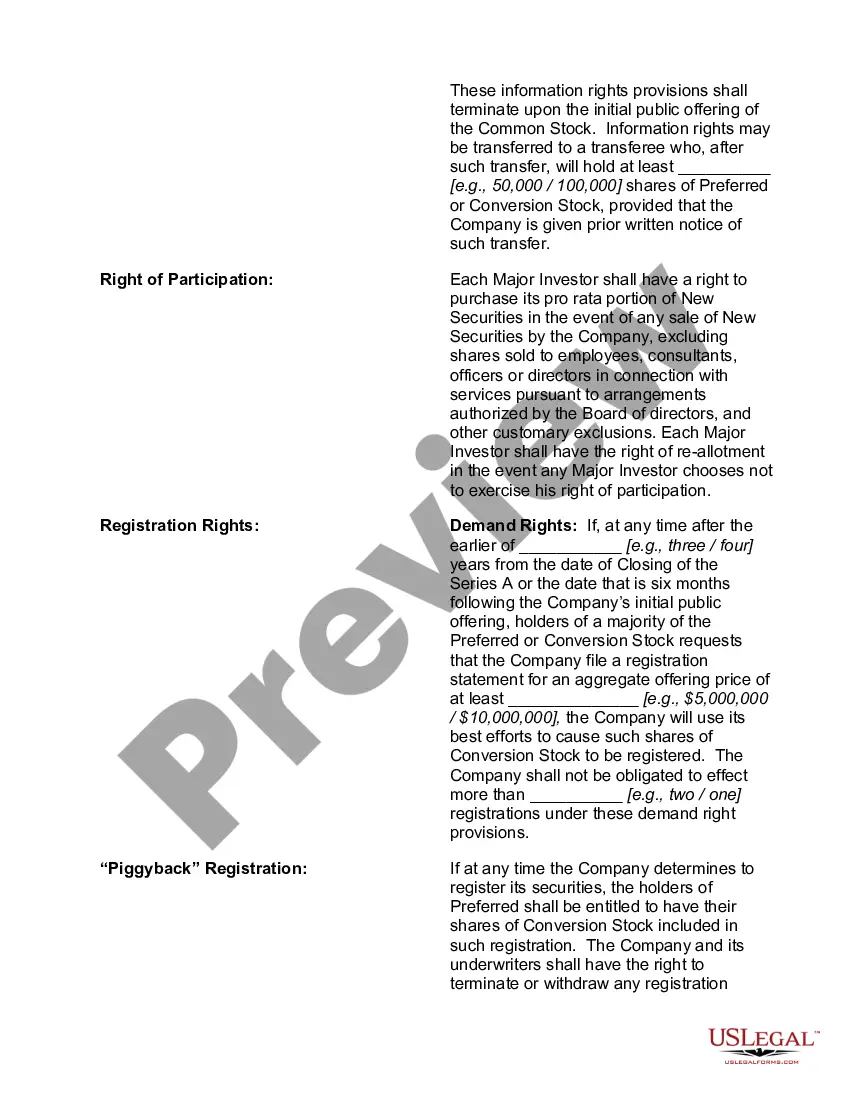
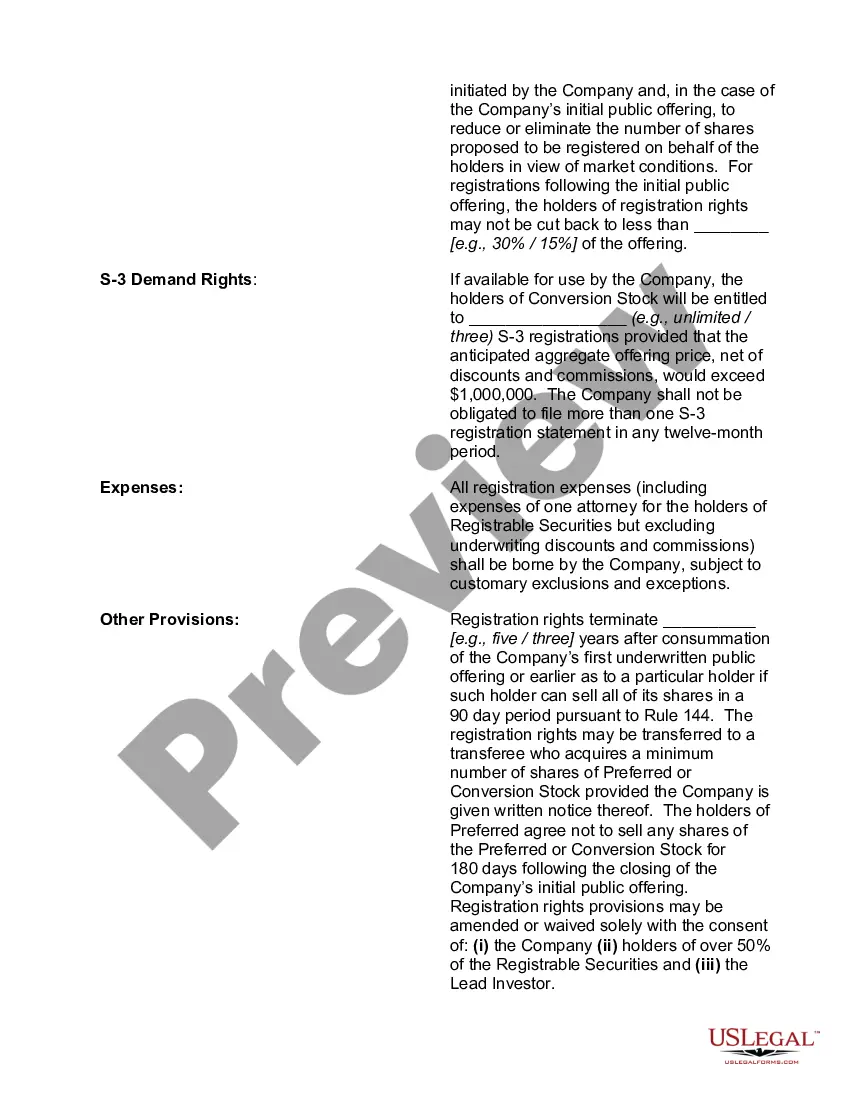
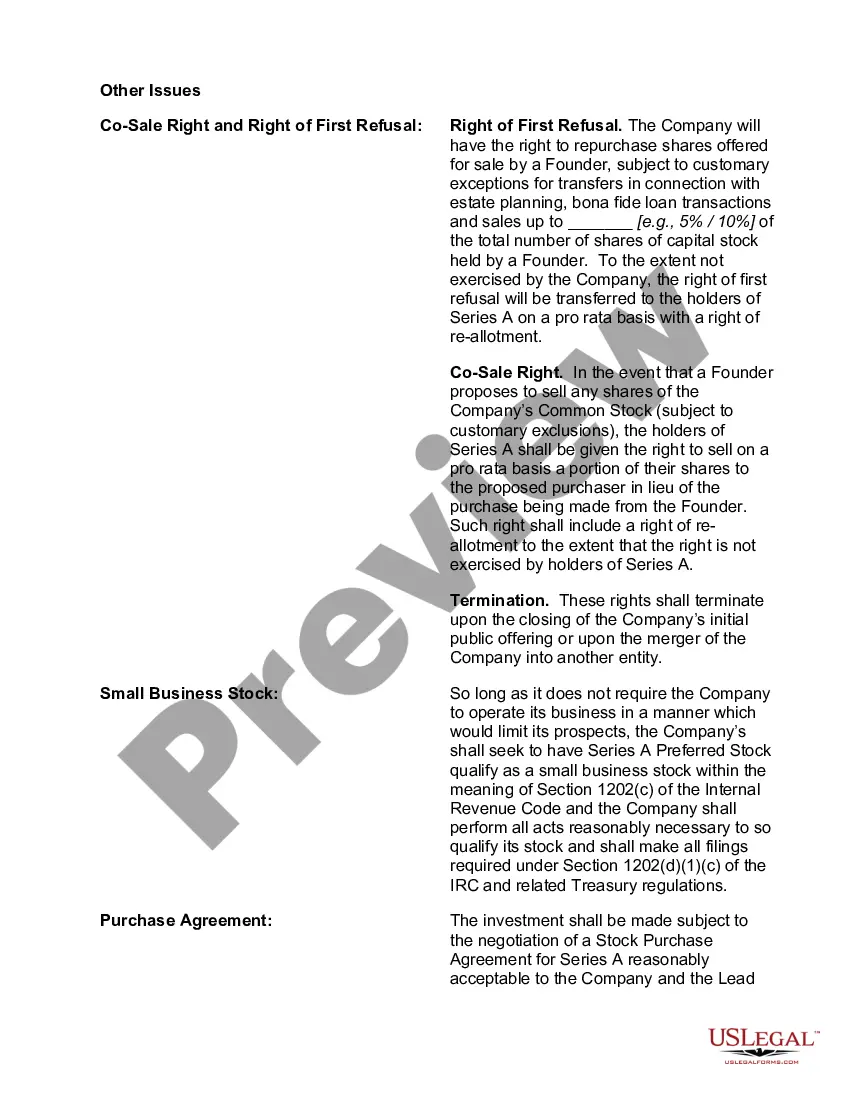
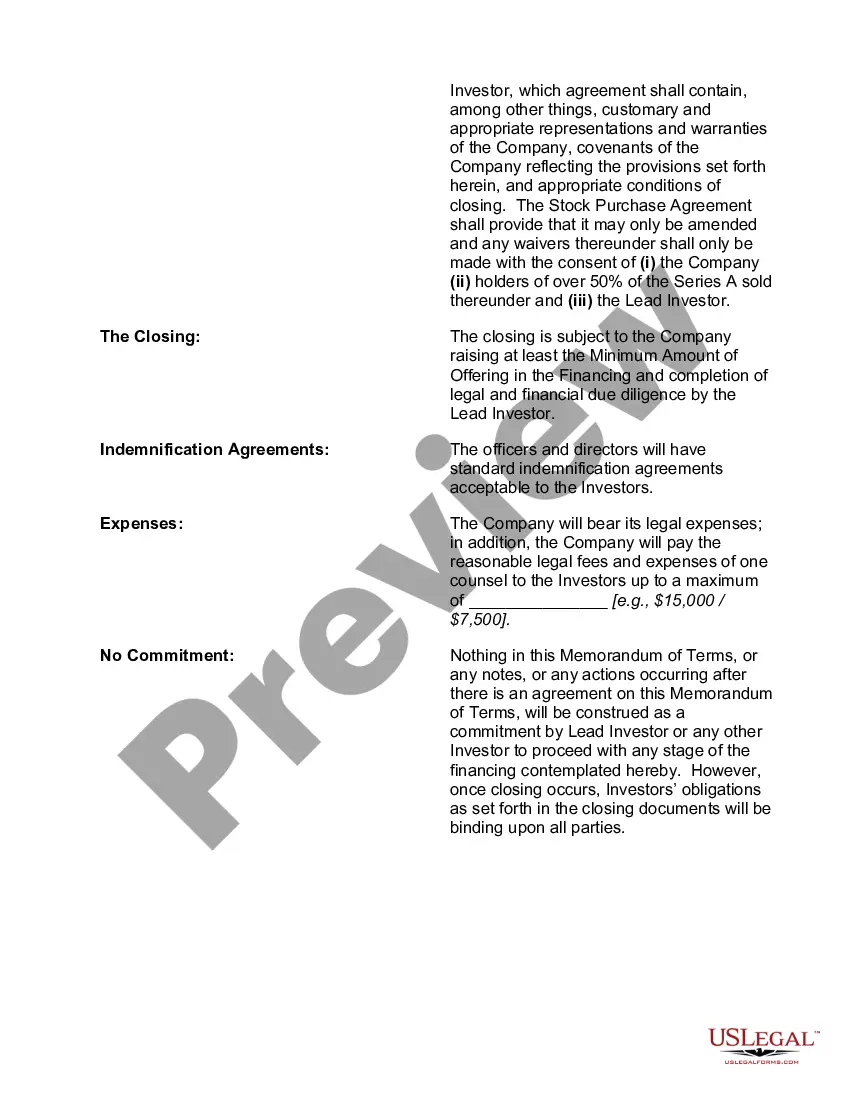
Get your form ready online
Our built-in tools help you complete, sign, share, and store your documents in one place.
Make edits, fill in missing information, and update formatting in US Legal Forms—just like you would in MS Word.
Download a copy, print it, send it by email, or mail it via USPS—whatever works best for your next step.
Sign and collect signatures with our SignNow integration. Send to multiple recipients, set reminders, and more. Go Premium to unlock E-Sign.
If this form requires notarization, complete it online through a secure video call—no need to meet a notary in person or wait for an appointment.
We protect your documents and personal data by following strict security and privacy standards.

Make edits, fill in missing information, and update formatting in US Legal Forms—just like you would in MS Word.

Download a copy, print it, send it by email, or mail it via USPS—whatever works best for your next step.

Sign and collect signatures with our SignNow integration. Send to multiple recipients, set reminders, and more. Go Premium to unlock E-Sign.

If this form requires notarization, complete it online through a secure video call—no need to meet a notary in person or wait for an appointment.

We protect your documents and personal data by following strict security and privacy standards.
Looking for another form?







Form popularity
FAQ
The LOI is also typically used in larger, complex transactions by sophisticated parties. Similar to the Term Sheet, the LOI will specify the terms of the transaction, but in greater detail. Unlike the Term Sheet, portions of the LOI, such as Confidentiality and Exclusivity, may be legally binding.
Viewed thus, the negotiation of a term sheet is a matter of adjustment of contractual rights and obligations on the various sides of a proposed investment transaction. The key players are obviously the investors, on the one hand, and the founder or the promoters, on the other.
A term sheet may be prepared by either party – the investor or the founder. Usually, if a venture capital firm is investing, the VC offers a term sheet.
How to Prepare a Term Sheet Identify the Purpose of the Term Sheet Agreements. Briefly Summarize the Terms and Conditions. List the Offering Terms. Include Dividends, Liquidation Preference, and Provisions. Identify the Participation Rights. Create a Board of Directors. End with the Voting Agreement and Other Matters.
There are a few major steps after the term sheet, and they can be staged differently: agreeing on, getting board/shareholder approval for, and signing the definitive documents; removing the due diligence and other conditions to closing; and finishing any lingering post-closing paperwork and tasks.
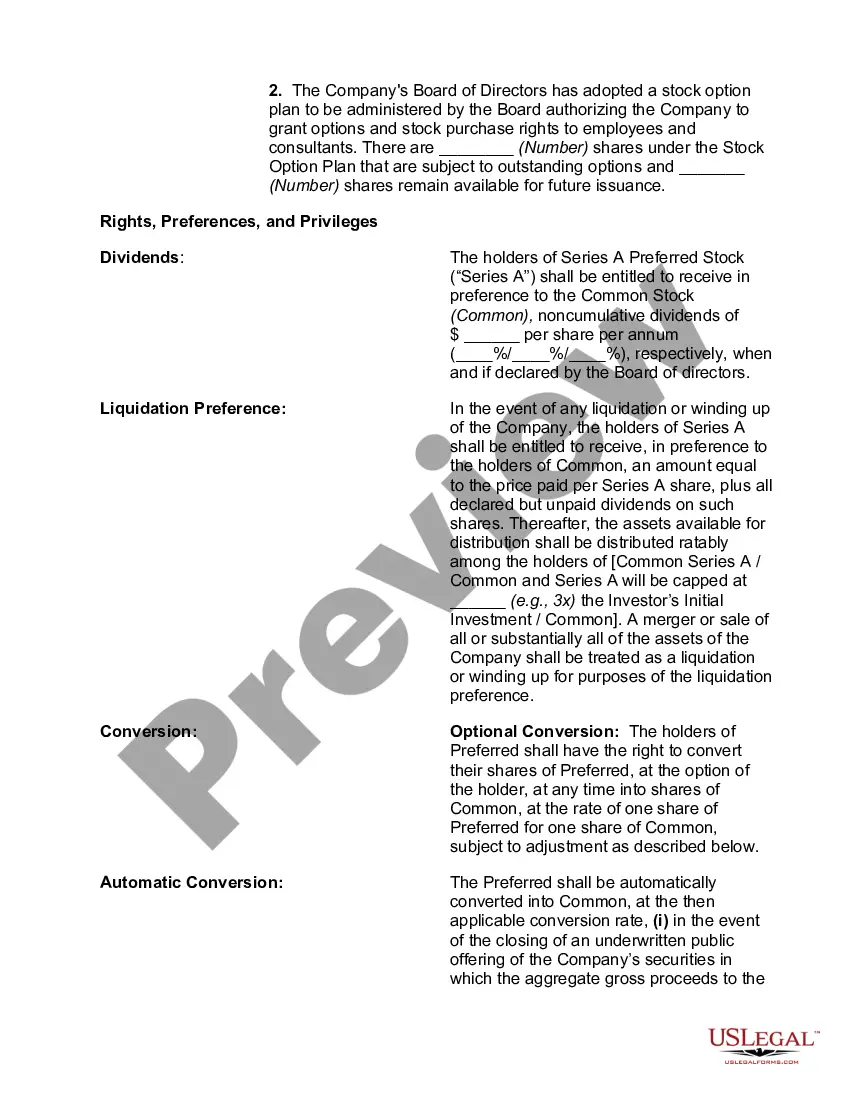
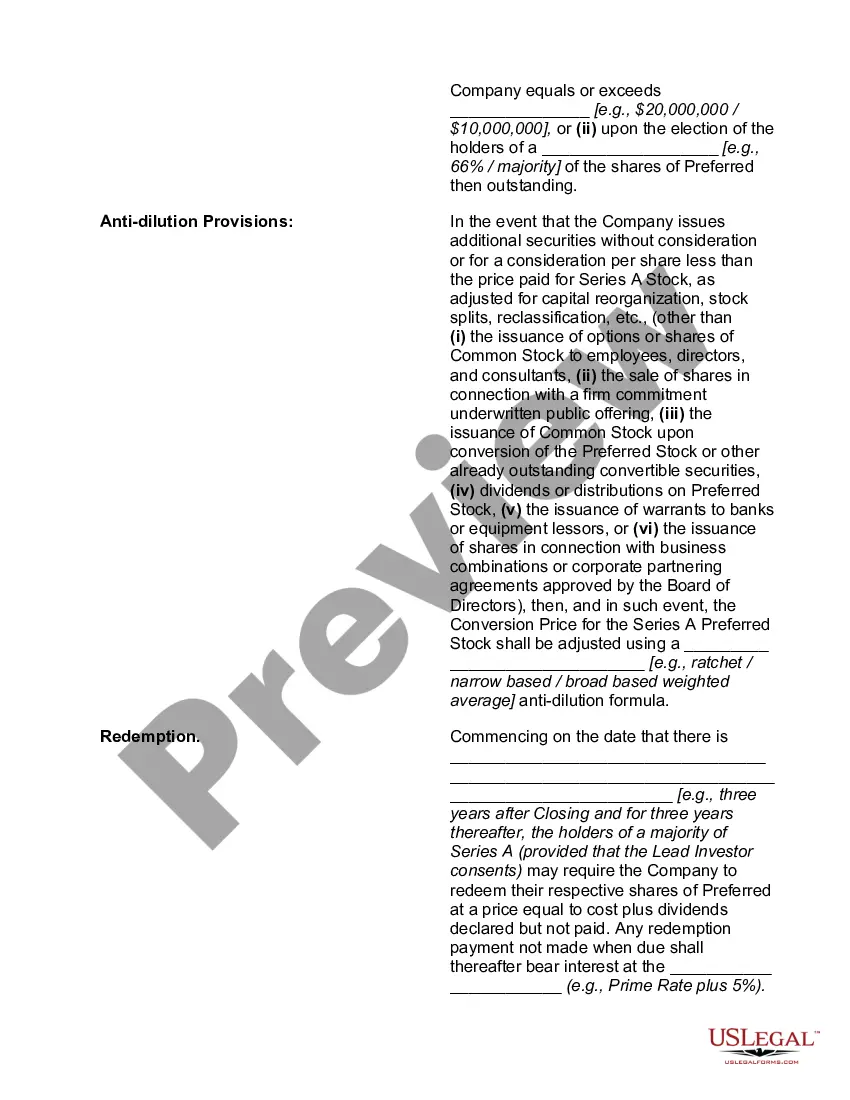
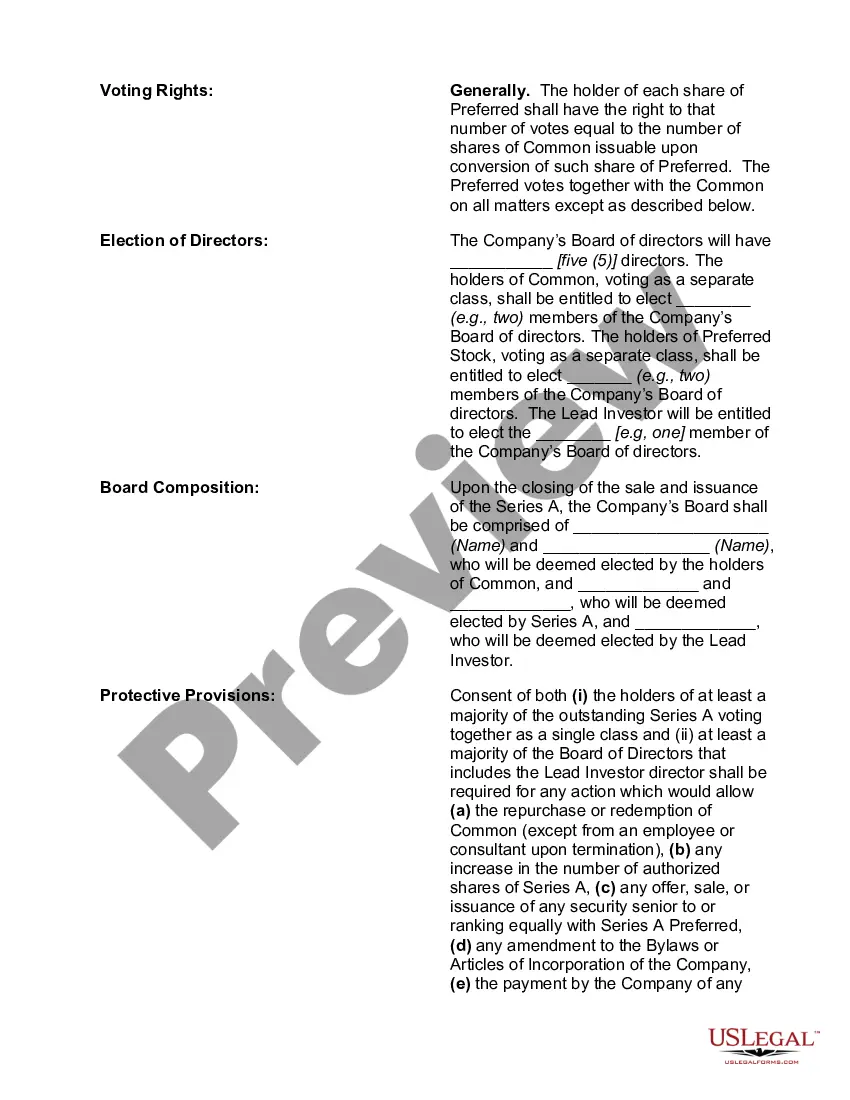
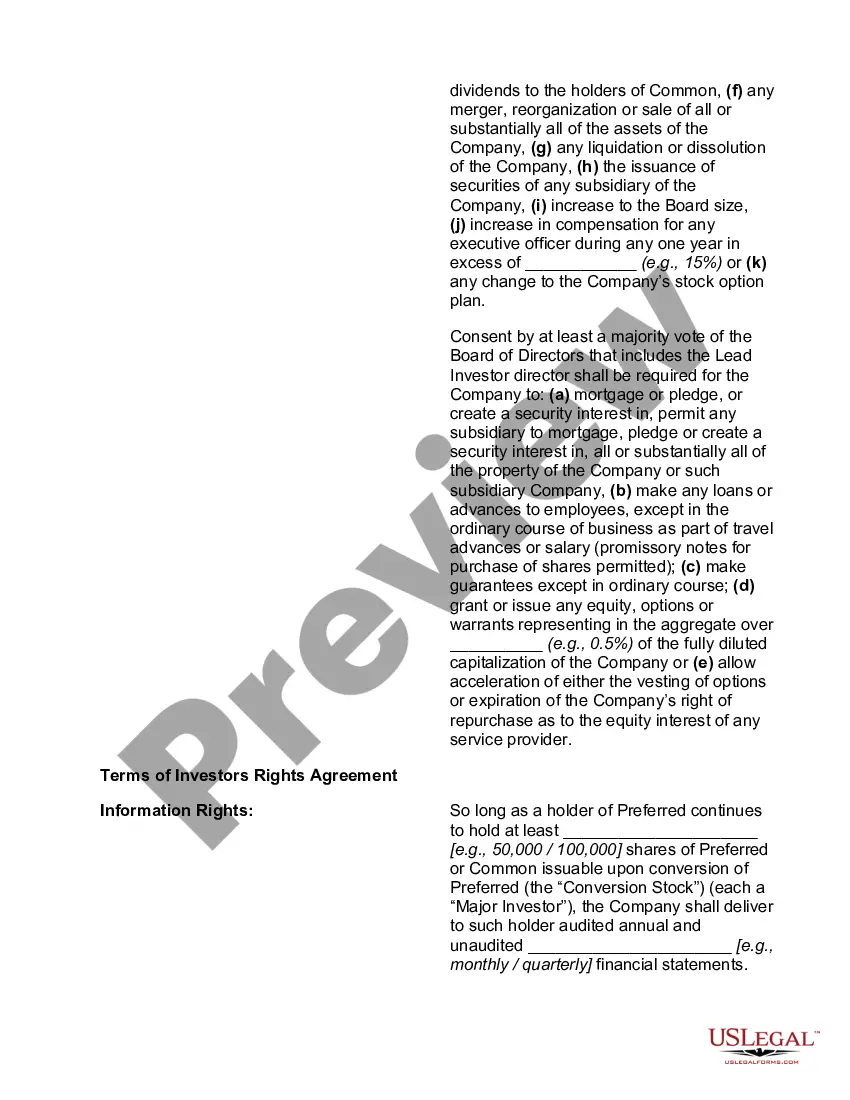
Term sheets outline the economics of a deal and the overall governance structure that investors will have in the business to which they are signaling interest. Economic terms outlined in term sheets include company valuation, investment amount, percentage stake, and liquidation preference.
Legal counsel is essential when creating or reviewing a term sheet to ensure that the terms are clear, fair, and protect your interests. An experienced attorney can help identify potential issues and provide valuable negotiation advice.
How to set up an investment LLC: step-by-step Select an incorporation state. Chose a business name. Appoint a registered agent. Select a management structure. File articles of organization with the Secretary of State. Draft an operating agreement. Register your LLC for tax purposes. Obtain business licenses and permits.
LLCs provide flexibility in ownership and management, allowing for multiple investors and customizable operating agreements. This flexibility enables investors to manage the business as desired, make decisions expeditiously, and easily add partners through modification of the operating agreement.
The owners of an LLC are known as members. Think of members as analogous to partners in a partnership or shareholders in a corporation.