Acceptance For Appointment Letter In Phoenix
Description


Get your form ready online
Our built-in tools help you complete, sign, share, and store your documents in one place.
Make edits, fill in missing information, and update formatting in US Legal Forms—just like you would in MS Word.
Download a copy, print it, send it by email, or mail it via USPS—whatever works best for your next step.
Sign and collect signatures with our SignNow integration. Send to multiple recipients, set reminders, and more. Go Premium to unlock E-Sign.
If this form requires notarization, complete it online through a secure video call—no need to meet a notary in person or wait for an appointment.
We protect your documents and personal data by following strict security and privacy standards.

Make edits, fill in missing information, and update formatting in US Legal Forms—just like you would in MS Word.

Download a copy, print it, send it by email, or mail it via USPS—whatever works best for your next step.

Sign and collect signatures with our SignNow integration. Send to multiple recipients, set reminders, and more. Go Premium to unlock E-Sign.

If this form requires notarization, complete it online through a secure video call—no need to meet a notary in person or wait for an appointment.

We protect your documents and personal data by following strict security and privacy standards.
Looking for another form?






Form popularity
FAQ
A statutory agent is an individual or legal entity appointed to accept service of process on a company's behalf. Most states use the term “registered agent,” but Arizona and Ohio use “statutory agent” to describe this designated representative.
Ing to Arizona State Code § 29-3115, a statutory agent (also known as a registered agent) must: Be able to accept legal documents on behalf of the business. Have a physical registered office address located within the state of Arizona. Must be a state resident or a company that provides registered agent services.
A Statutory Agent may be: An individual who resides in Arizona and is at least 18 years of age. A domestic corporation. A foreign corporation authorized to transact business in Arizona.
Typically, states require business owners to complete and file a form with their Secretary of State's office. Some states require businesses to amend their Articles of Organization (LLC) or Articles of Incorporation (corporation) when changing their statutory agent. Filing fees vary depending on the state.
Who Can Be a Statutory Agent in Arizona? Under Arizona law, a statutory agent must be “an individual resident of this state, a domestic corporation, a limited liability company or a foreign corporation or limited liability company authorized to transact business in this state” (ARS 29-604).
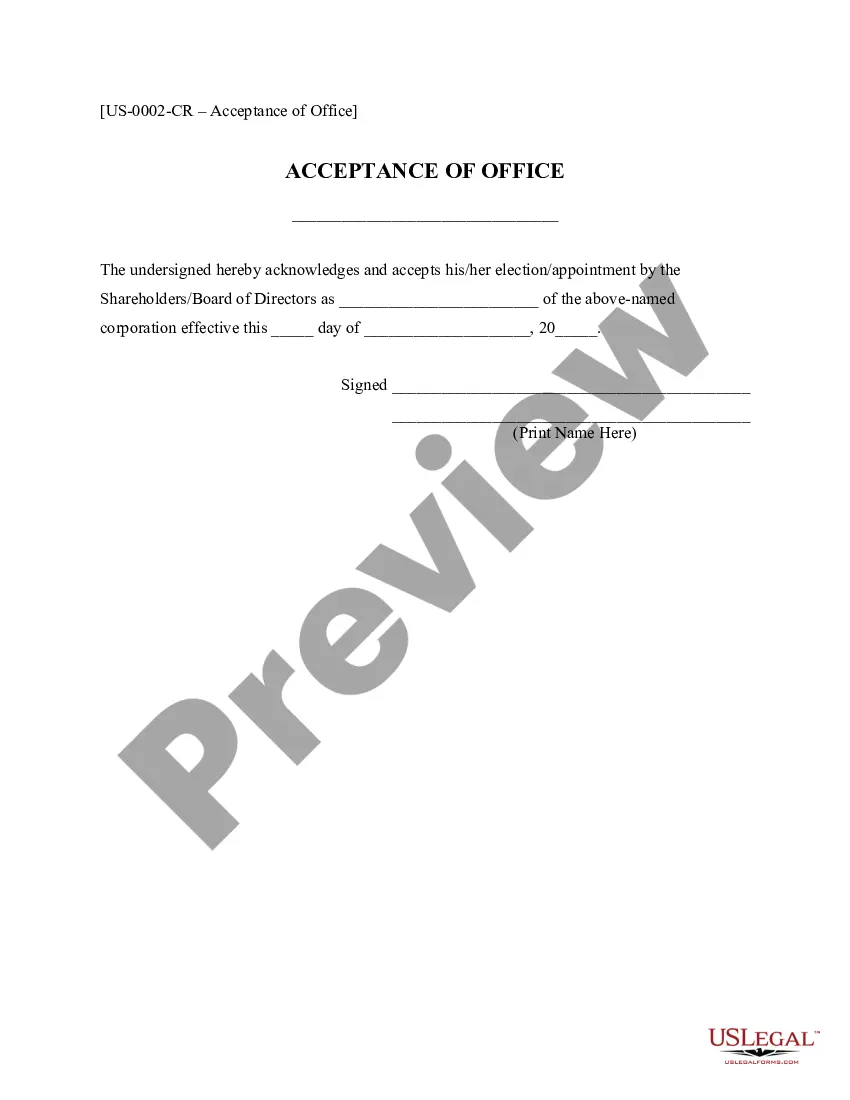
The statutory agent is required to accept the appointment by signing a statement of acceptance. Statutes are available on the Arizona Legislature's website, The Statutory Agent Acceptance form provided by the Arizona Corporation Commission meets the minimum statutory requirements.
If an individual is appointed as the agent, that individual must be a permanent, full-time resident of the State of Arizona and must have a permanent, full-time physical or street address in the State of Arizona. The mailing address, if any, of that individual statutory agent must also be in Arizona.
Statutory Agent means a seller's agent, a buyer's agent, a landlord's agent, a tenant's agent or a designated agent in a real estate transaction.

