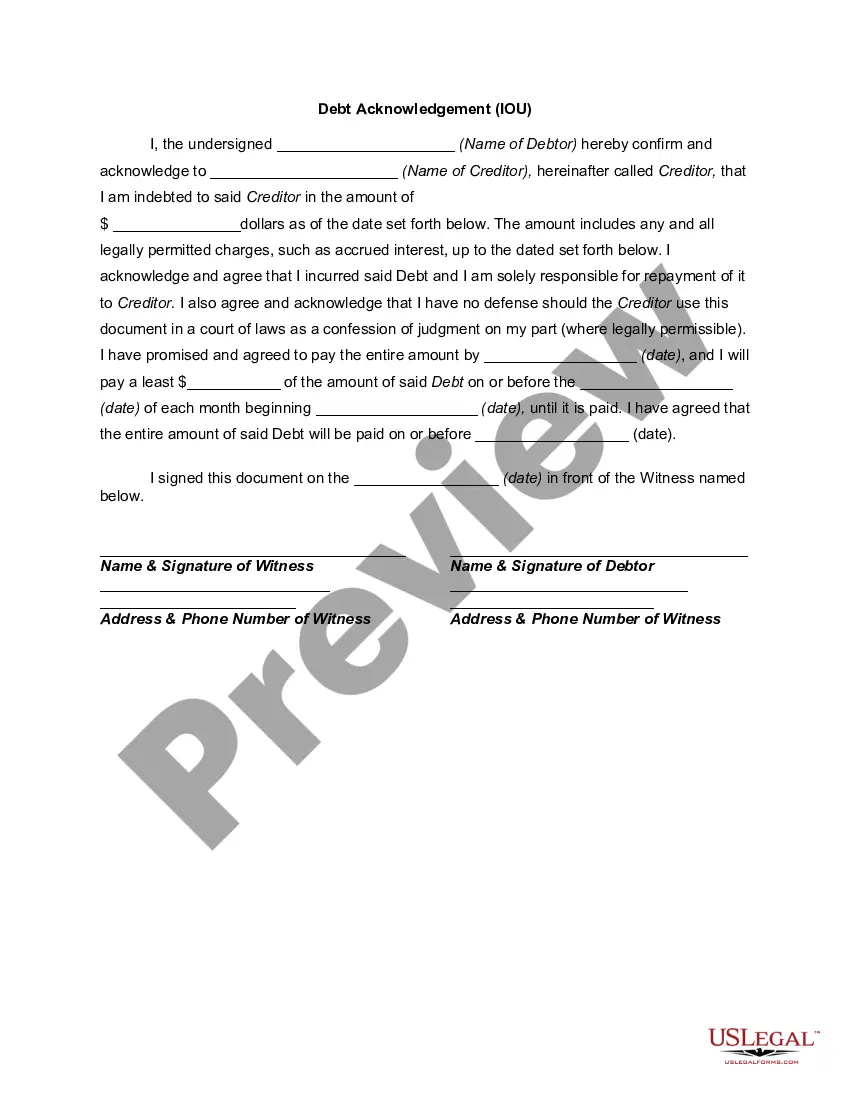
Formulario Reconocimiento Deuda In Los Angeles
Description
Get your form ready online
Our built-in tools help you complete, sign, share, and store your documents in one place.
Make edits, fill in missing information, and update formatting in US Legal Forms—just like you would in MS Word.
Download a copy, print it, send it by email, or mail it via USPS—whatever works best for your next step.
Sign and collect signatures with our SignNow integration. Send to multiple recipients, set reminders, and more. Go Premium to unlock E-Sign.
If this form requires notarization, complete it online through a secure video call—no need to meet a notary in person or wait for an appointment.
We protect your documents and personal data by following strict security and privacy standards.

Make edits, fill in missing information, and update formatting in US Legal Forms—just like you would in MS Word.

Download a copy, print it, send it by email, or mail it via USPS—whatever works best for your next step.

Sign and collect signatures with our SignNow integration. Send to multiple recipients, set reminders, and more. Go Premium to unlock E-Sign.

If this form requires notarization, complete it online through a secure video call—no need to meet a notary in person or wait for an appointment.

We protect your documents and personal data by following strict security and privacy standards.
Looking for another form?







Form popularity
FAQ
Submit a request: Once you have all the necessary documents, submit a written request to the lender for a Deed of Reconveyance. The request should include your name, the property address, the loan number, and any other relevant information.
Here is the rough outline: Select the trust that is best suited to your needs, such as a revocable living trust. Draft a trust deed and have it notarized so that it is legally binding. Record the deed at the county recorder's office. Notify the relevant parties, such as your mortgage lender and insurance provider.
Reconveyance means the return of title to the original owner.
The deed of reconveyance will typically include: The name and address of the homeowner/mortgage borrower. The name of the lender/trustee. A description of the property and parcel number based on the original deed.
The Beneficiary - The lender secured by the trust deed.
You must file an Assessment Appeal Application, form BOE-305-AH, obtained from the clerk of the board of the county where your property is located. Some counties have this form available on the website of either the clerk of the board or the county assessor, or both.
You can obtain a copy of your Grant Deed directly from your County Registrar-Recorder/County Clerk with no third party assistance needed. The County Registrar-Recorder mails the original Grant Deed document to the homeowner after it is recorded. Therefore, you should already have your origi- nal Grant Deed.
How do I get a copy of my property tax bill? Property tax bills are issued by the County of Los Angeles Treasurer and Tax Collector. If you did not receive or misplaced your tax bill, you can request a duplicate online at .
You can obtain a copy of your Grant Deed directly from your County Registrar-Recorder/County Clerk with no third party assistance needed. The County Registrar-Recorder mails the original Grant Deed document to the homeowner after it is recorded. Therefore, you should already have your origi- nal Grant Deed.

