Bond Definition Under Law In Utah
Description




Get your form ready online
Our built-in tools help you complete, sign, share, and store your documents in one place.
Make edits, fill in missing information, and update formatting in US Legal Forms—just like you would in MS Word.
Download a copy, print it, send it by email, or mail it via USPS—whatever works best for your next step.
Sign and collect signatures with our SignNow integration. Send to multiple recipients, set reminders, and more. Go Premium to unlock E-Sign.
If this form requires notarization, complete it online through a secure video call—no need to meet a notary in person or wait for an appointment.
We protect your documents and personal data by following strict security and privacy standards.
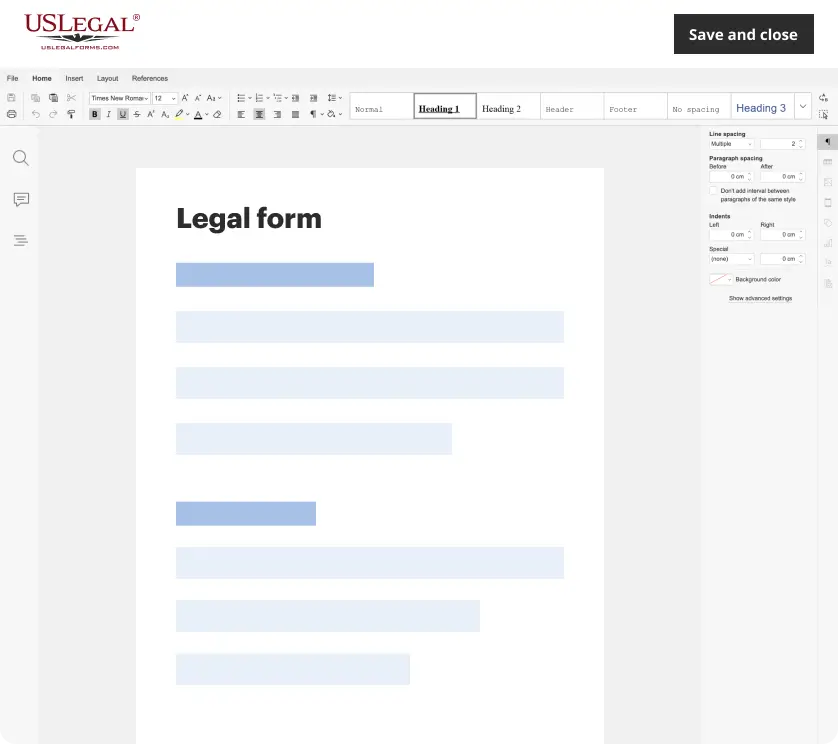
Make edits, fill in missing information, and update formatting in US Legal Forms—just like you would in MS Word.
Download a copy, print it, send it by email, or mail it via USPS—whatever works best for your next step.
Sign and collect signatures with our SignNow integration. Send to multiple recipients, set reminders, and more. Go Premium to unlock E-Sign.

If this form requires notarization, complete it online through a secure video call—no need to meet a notary in person or wait for an appointment.
We protect your documents and personal data by following strict security and privacy standards.
Looking for another form?









Form popularity
FAQ
If a claim is filed against your bond, the surety company expects you to take care of the claim. This is your obligation under the indemnity agreement you signed when you purchased your bond. If you fail to do this, the Surety will usually start an investigation to determine the claim's validity.
A bail bond is a surety bond, which is posted by a bail bond company to the court as a guarantee for an arrestee's appearance at all court dates. The court will release an arrestee from detention upon posting of the bail bond.
Usually, a thorough background check will be run against you and the entity by a bonding company, looking for any criminal record, and checking personal references as well as those supplied by business peers.
A bond's credit quality is usually determined by independent bond rating agencies, such as Moody's Investors Service, Inc., and Standard & Poor's Corporation (S&P). These agencies classify bonds into 2 basic categories—investment-grade and below-investment-grade—and provide detailed ratings within each.
On a scale of 300 to 850 (850 being the highest possible score), surety companies usually seek a credit score of 650 or higher as a good indicator of bondability.
Posting a bond with the court is a method of speeding up the eviction process. If your eviction has merit, posting a bond will get the tenant out quicker. The amount of the bond is up to the judge, but it usually equals approximately two times the monthly rental amount.
Surety bonds provide a guarantee that you or your company will meet certain obligations. They are typically divided into two categories: Commercial and Contract.
The bond form states the terms that the principal must adhere to. A commercial bond form will usually state the general terms of the bond and may also reference corresponding legal statutes. Contract bond forms reference the corresponding contract. Judicial bonds reference the corresponding case or court order.
