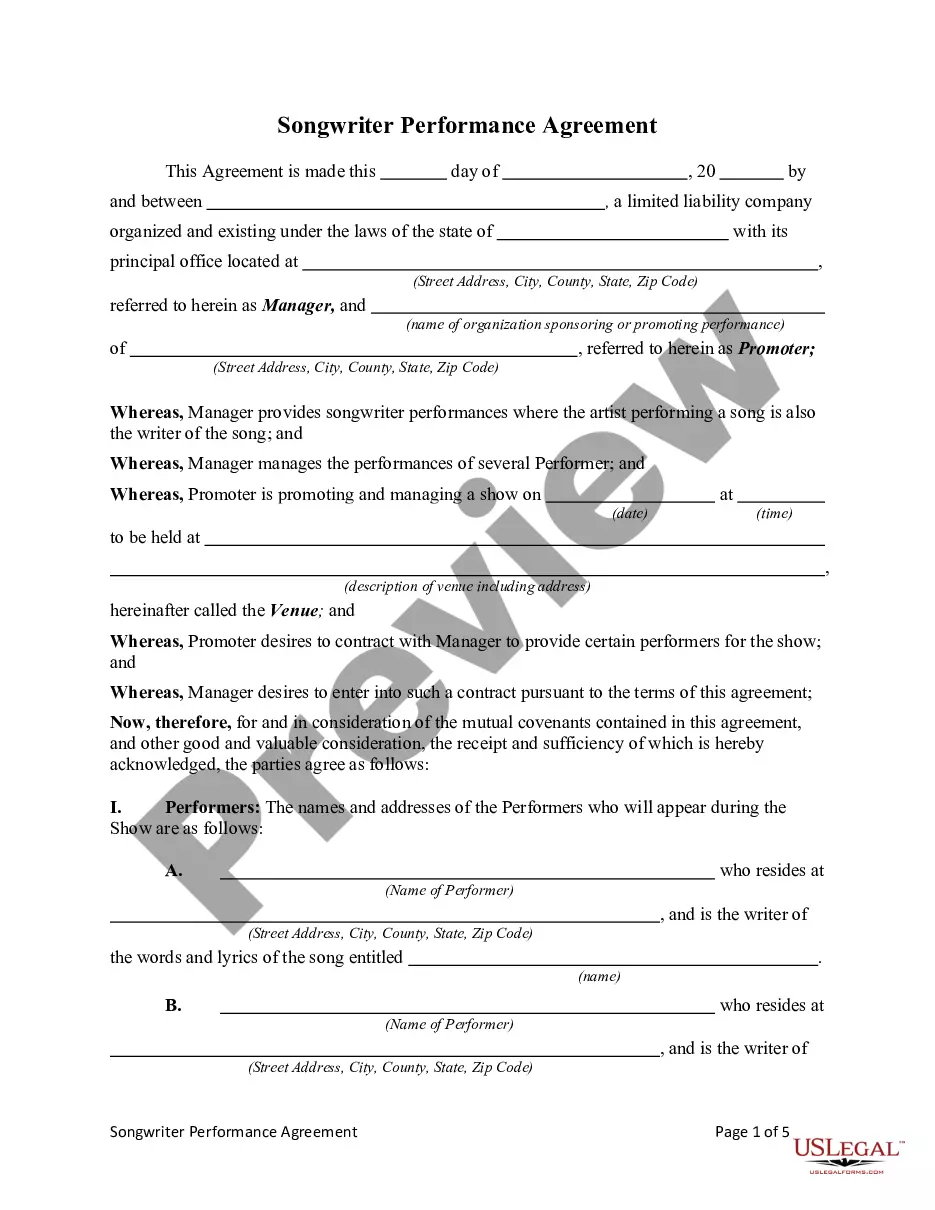
Bond Definition For Law In Chicago
Description




Get your form ready online
Our built-in tools help you complete, sign, share, and store your documents in one place.
Make edits, fill in missing information, and update formatting in US Legal Forms—just like you would in MS Word.
Download a copy, print it, send it by email, or mail it via USPS—whatever works best for your next step.
Sign and collect signatures with our SignNow integration. Send to multiple recipients, set reminders, and more. Go Premium to unlock E-Sign.
If this form requires notarization, complete it online through a secure video call—no need to meet a notary in person or wait for an appointment.
We protect your documents and personal data by following strict security and privacy standards.

Make edits, fill in missing information, and update formatting in US Legal Forms—just like you would in MS Word.

Download a copy, print it, send it by email, or mail it via USPS—whatever works best for your next step.

Sign and collect signatures with our SignNow integration. Send to multiple recipients, set reminders, and more. Go Premium to unlock E-Sign.

If this form requires notarization, complete it online through a secure video call—no need to meet a notary in person or wait for an appointment.

We protect your documents and personal data by following strict security and privacy standards.
Looking for another form?



Form popularity
FAQ
For example, if the judge sets a $5,000.00 standard bail bond, you will remit to the court $500.00. If you plea to any of the charges, you will receive 90% of that deposit back, or $450.00.
By securing a bond from a surety, you are demonstrating your willingness to assume responsibility for any legal/financial issues that might arise as a result of wrongdoing on your part. Another major difference between being insured and being bonded involves reimbursement.
Bond's Law: The work required to form particles from very large feed is proportional to the square root of the surface-to-volume ratio.
There are three requirements for obtaining a Judicial Court Bond: Submit an application and signed indemnity agreement supplied by the surety broker/agent; Provide a copy of the court papers for the applicable action being filed; and. Provide collateral, usually in the form of an Irrevocable Letter of Credit.
Most bond agreements include travel restrictions, confining you to a specific geographic area such as your county or state. These limitations are designed to ensure your availability for court dates. If travel is necessary, you must seek prior approval from the court or your bail bondsman.
You must complete either Form REG-4-A or Form REG-4-D to obtain a bond. You will not be issued a certificate of registration and cannot be legally registered to do business in Illinois until we receive your bond. How do I obtain a bond using Form REG-4-A?
A Bond Claim Must be filed within 180 days from the last date of furnishing work or materials on the job. Must be served in writing on the Secretary of Transportation, with copies to the prime contractor, subcontractor and the bonding company. May need to be followed up by a lawsuit.