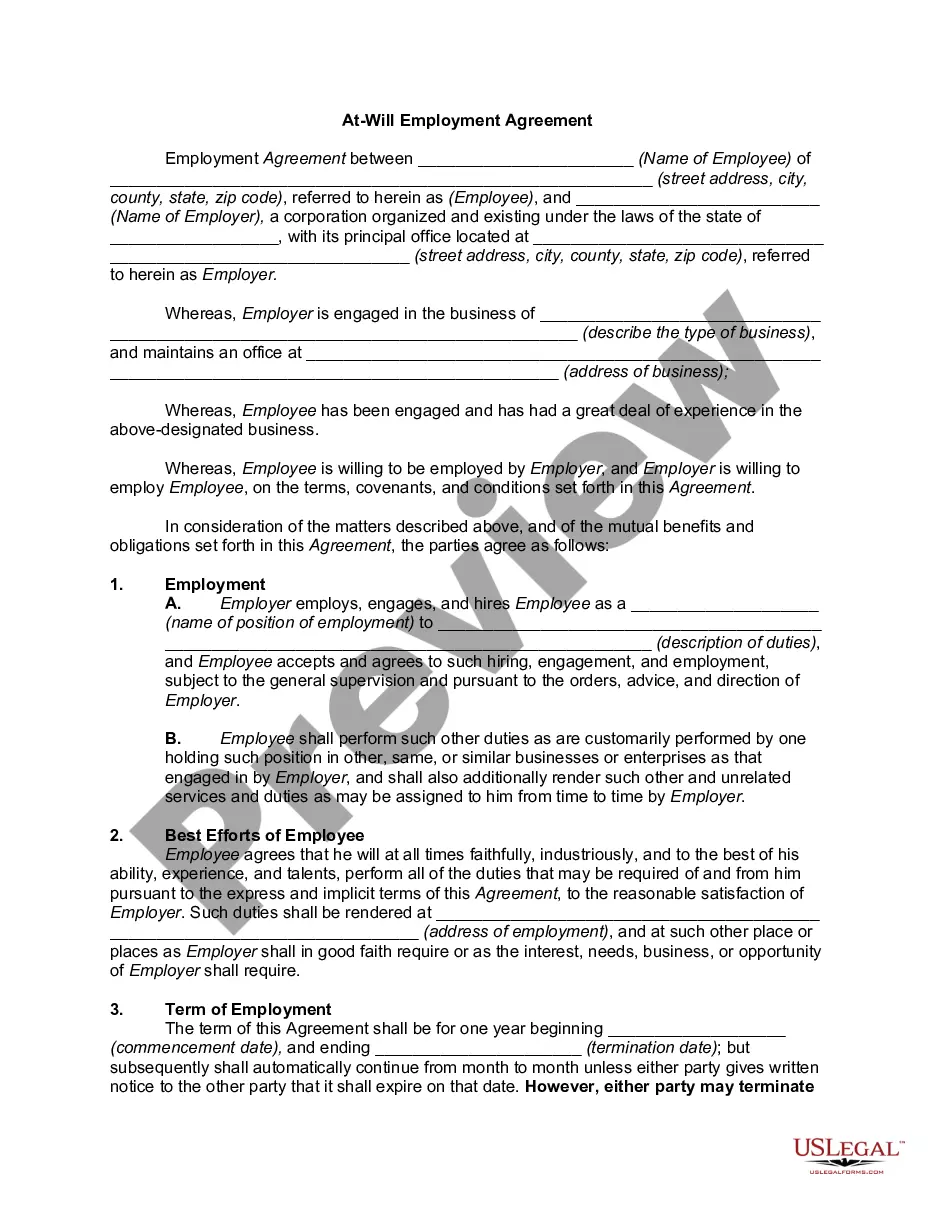
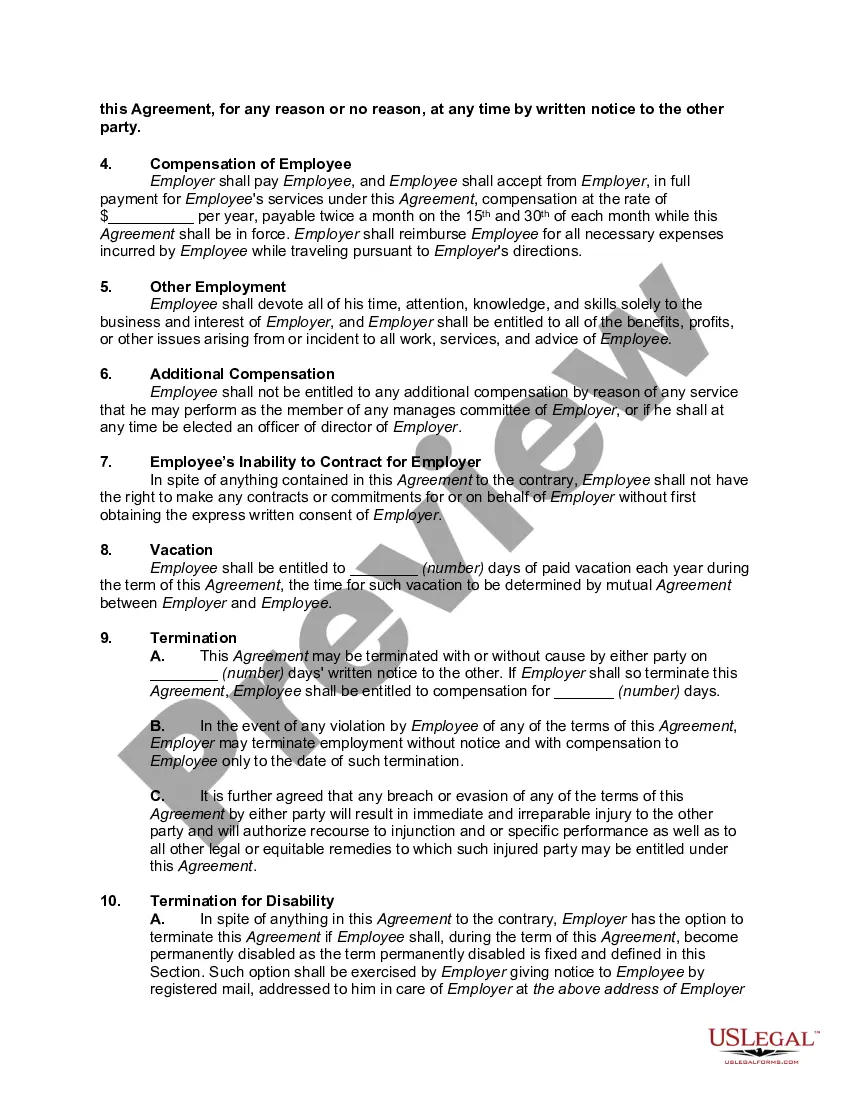
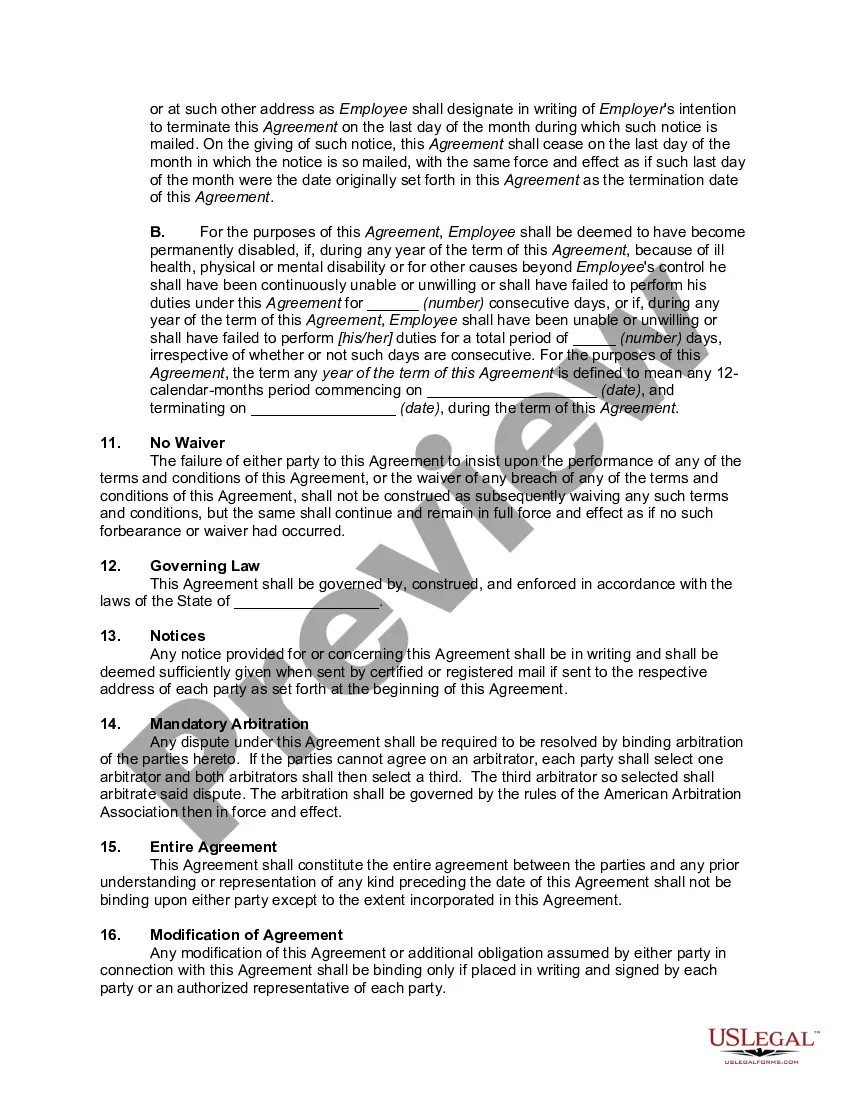
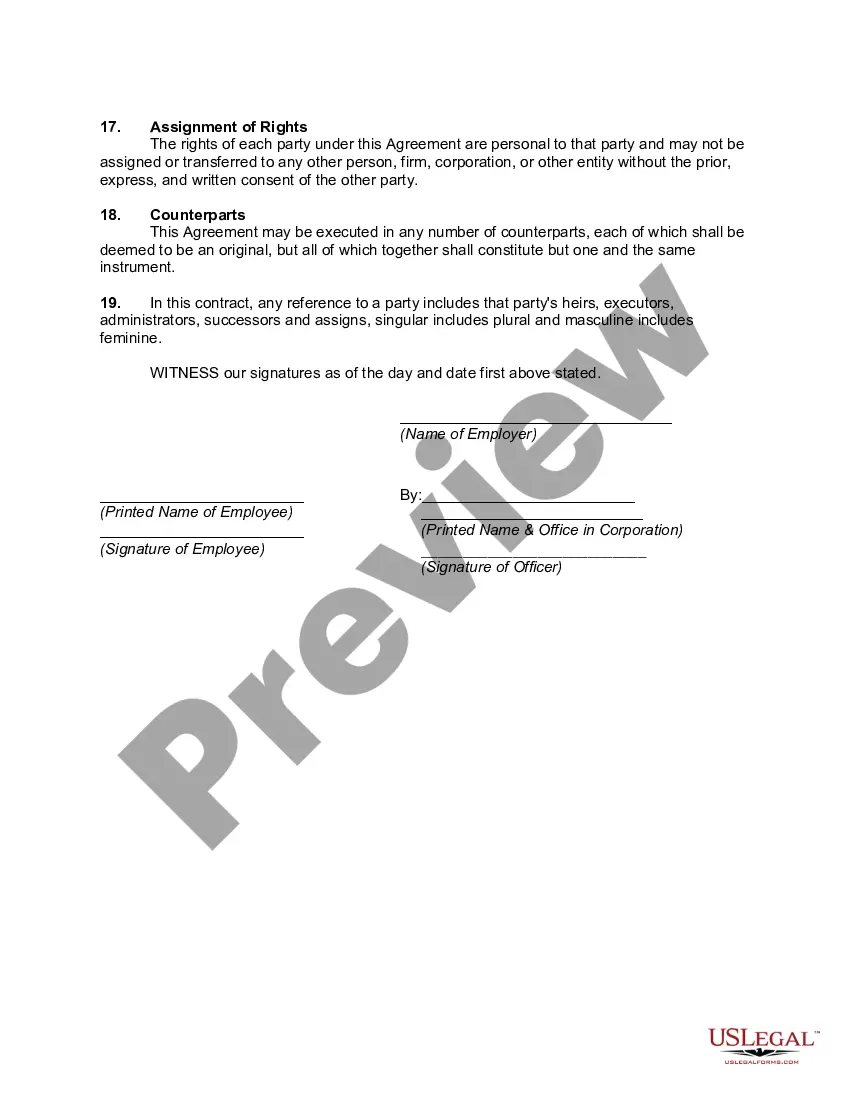
At-will Employment Example In Ohio
Description
Get your form ready online
Our built-in tools help you complete, sign, share, and store your documents in one place.
Make edits, fill in missing information, and update formatting in US Legal Forms—just like you would in MS Word.
Download a copy, print it, send it by email, or mail it via USPS—whatever works best for your next step.
Sign and collect signatures with our SignNow integration. Send to multiple recipients, set reminders, and more. Go Premium to unlock E-Sign.
If this form requires notarization, complete it online through a secure video call—no need to meet a notary in person or wait for an appointment.
We protect your documents and personal data by following strict security and privacy standards.

Make edits, fill in missing information, and update formatting in US Legal Forms—just like you would in MS Word.

Download a copy, print it, send it by email, or mail it via USPS—whatever works best for your next step.

Sign and collect signatures with our SignNow integration. Send to multiple recipients, set reminders, and more. Go Premium to unlock E-Sign.

If this form requires notarization, complete it online through a secure video call—no need to meet a notary in person or wait for an appointment.

We protect your documents and personal data by following strict security and privacy standards.
Looking for another form?






Form popularity
FAQ
Less job security While employment at-will-allows for people to leave their jobs with little notice and relative ease, the inverse is also true. In this situation, employers don't have to provide notice for ending an employment agreement, which results in little job security.
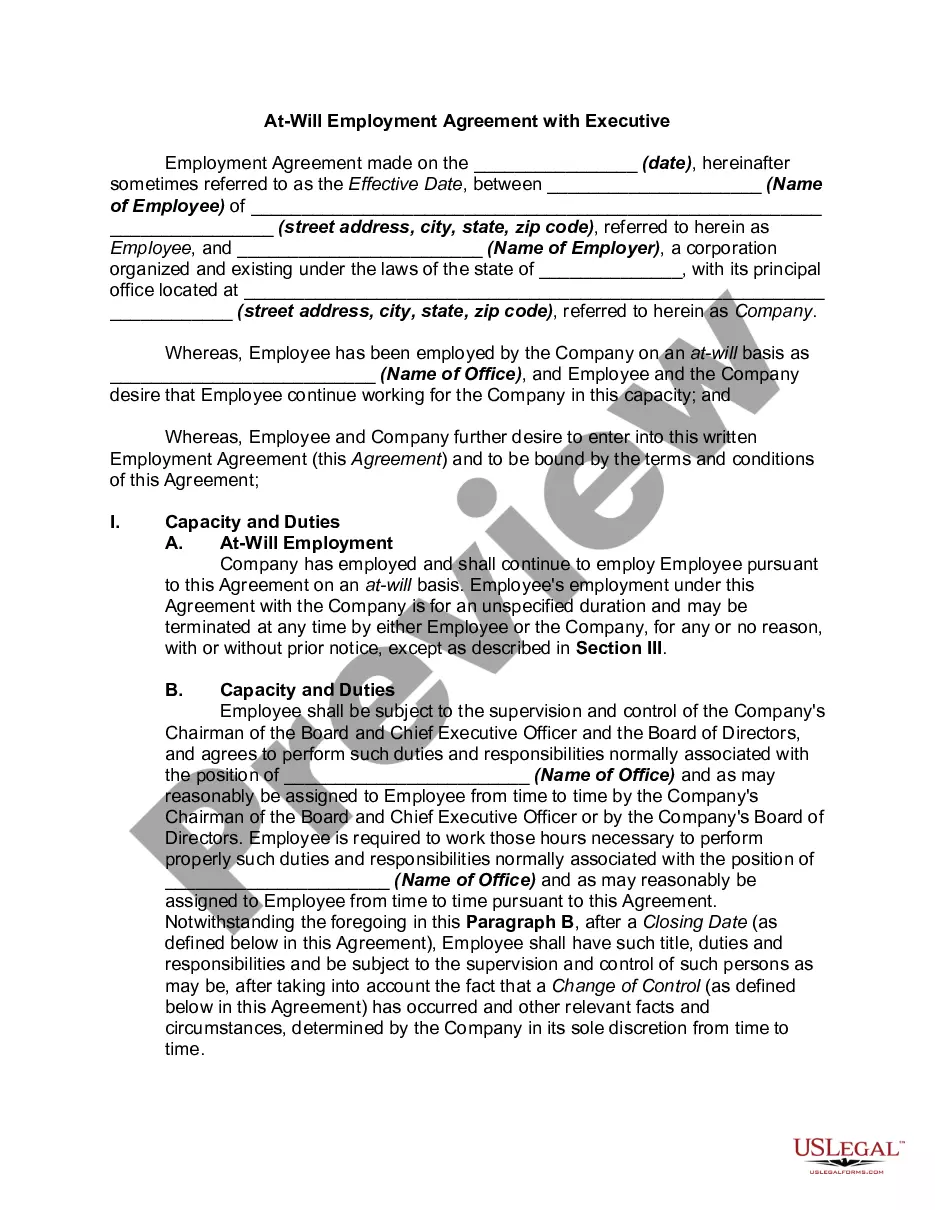
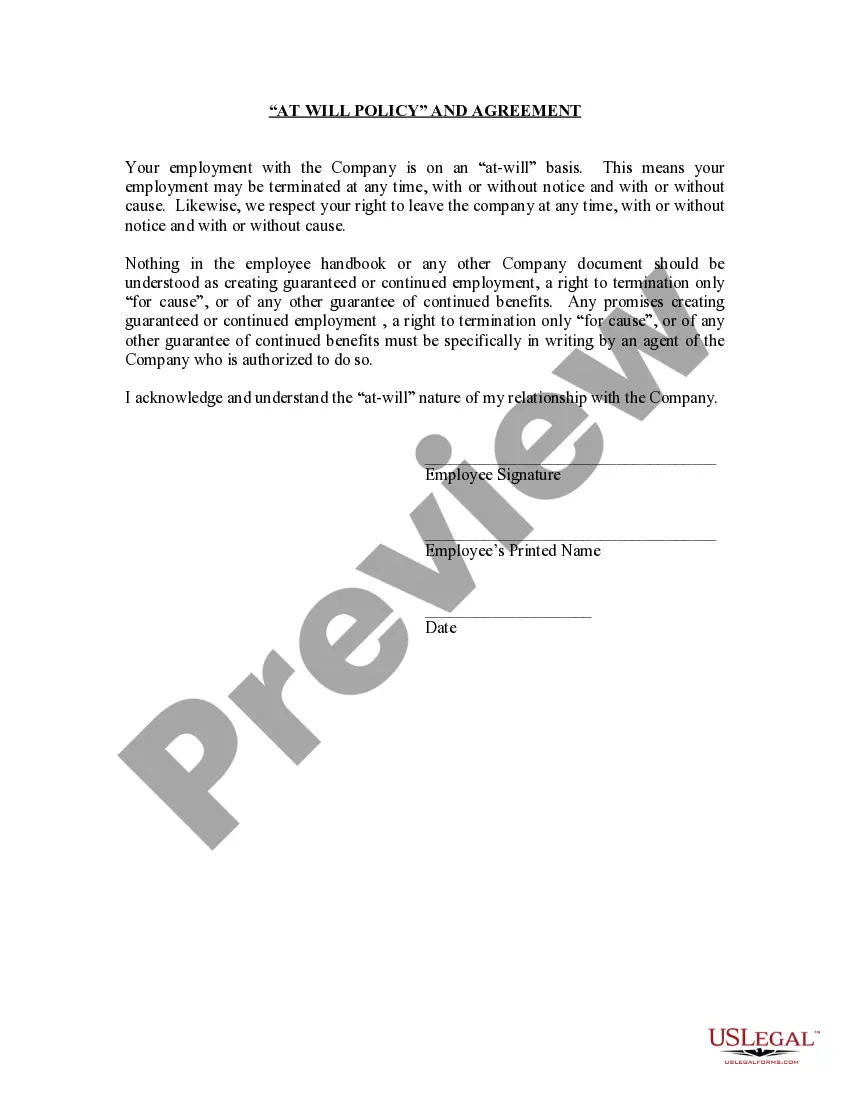
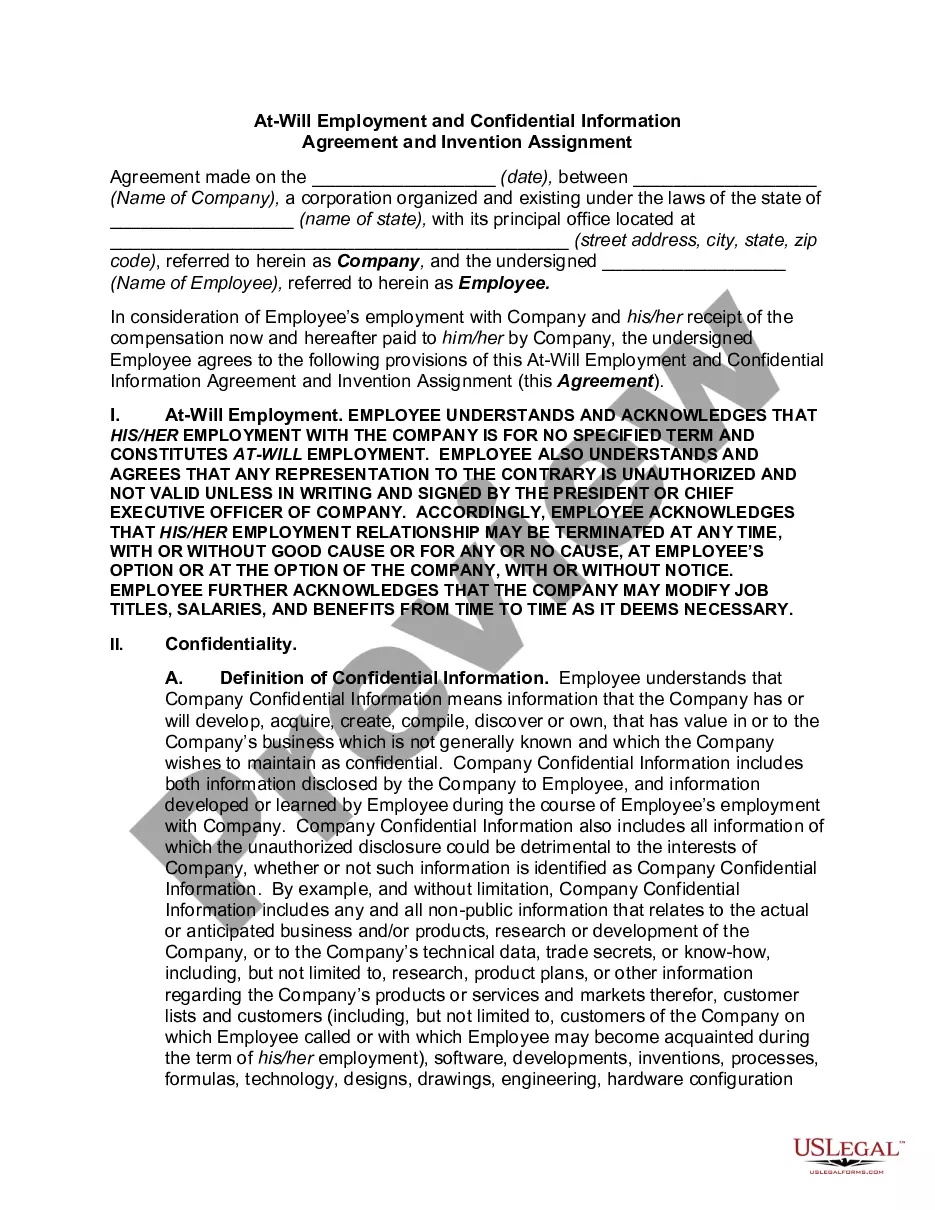
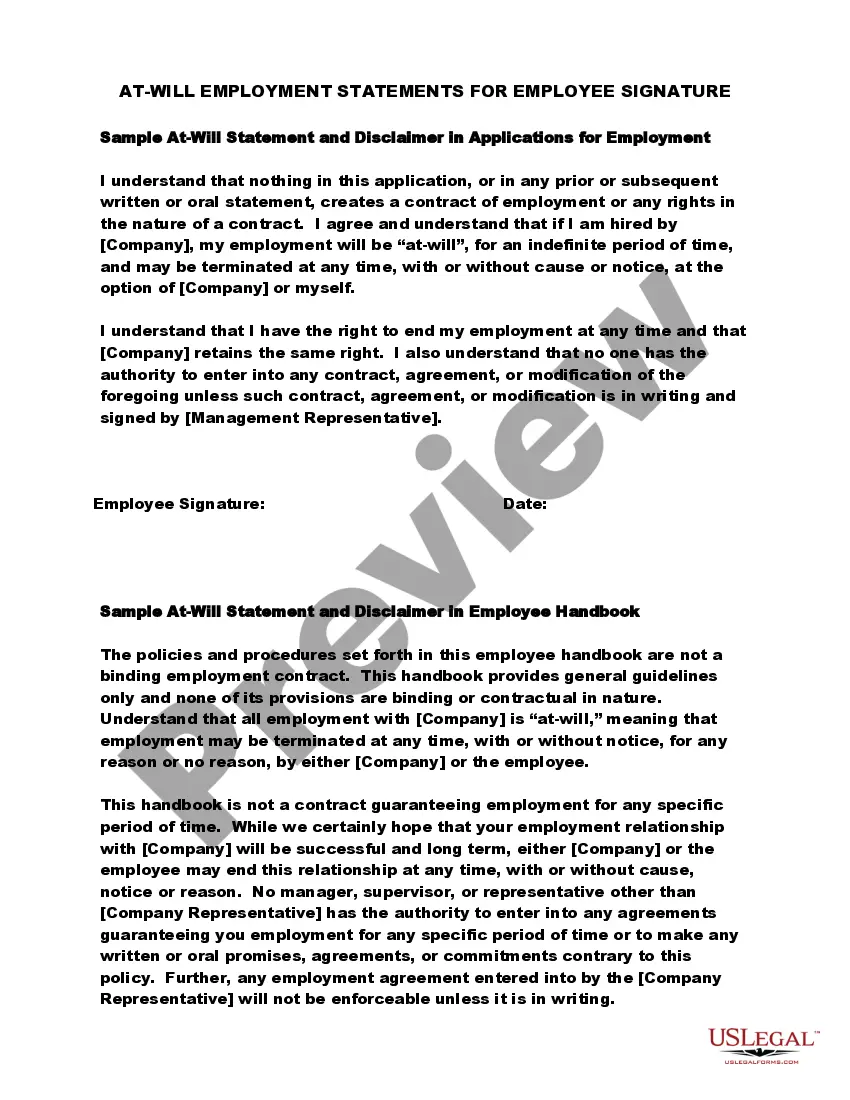
Here's one we've put together for you: “Your employment with employer name is at-will. This means your employment is for an indefinite period of time and it is subject to termination by you or employer name, with or without cause, with or without notice, and at any time.”
At-will employment means an employer can fire an employee at any time for almost any reason without incurring legal liability. Likewise, an employee has the freedom to quit at any time.
Unless there is a contract or a collective bargaining agreement that expressly states employment terms, you are an employee “at will.”
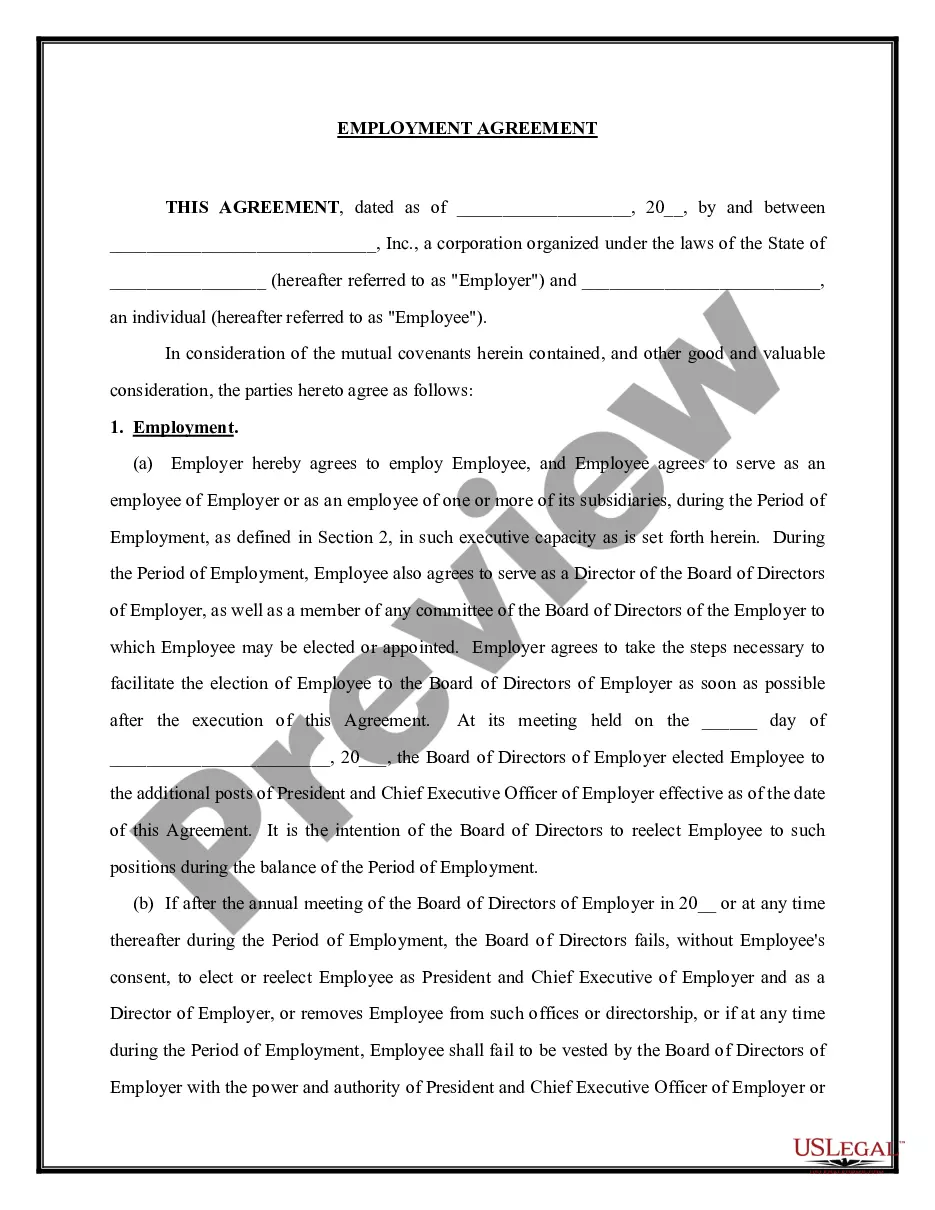
Ohio is an at-will employment state, which means that in the absence of a written employment agreement or a collective bargaining agreement providing otherwise, either the employer or the employee may terminate employment for any reason that is not contrary to law. Wiles v.
Your employment with us is at-will, and may be terminated by you or us at any time, for any reason (with or without cause), and without advance notice.
Prospective employees are similarly drawn to this arrangement as it provides flexibility to quit at any time for any reason. For example, an employee who is unhappy at work or has been offered a better job can simply quit — no questions asked.
There are five main exceptions to at-will employment in California: public policy, implied contracts, discrimination and/or retaliation, and fraud and/or misrepresentation.
Your employment with employer name is at will. This means your employment is for an indefinite period of time and it is subject to termination by you or employer name, with or without cause, with or without notice, and at any time.
Exceptions to Employment at Will Courts have established three basic exceptions to the at will doctrine: public policy, implied contract, and implied covenant of good faith.