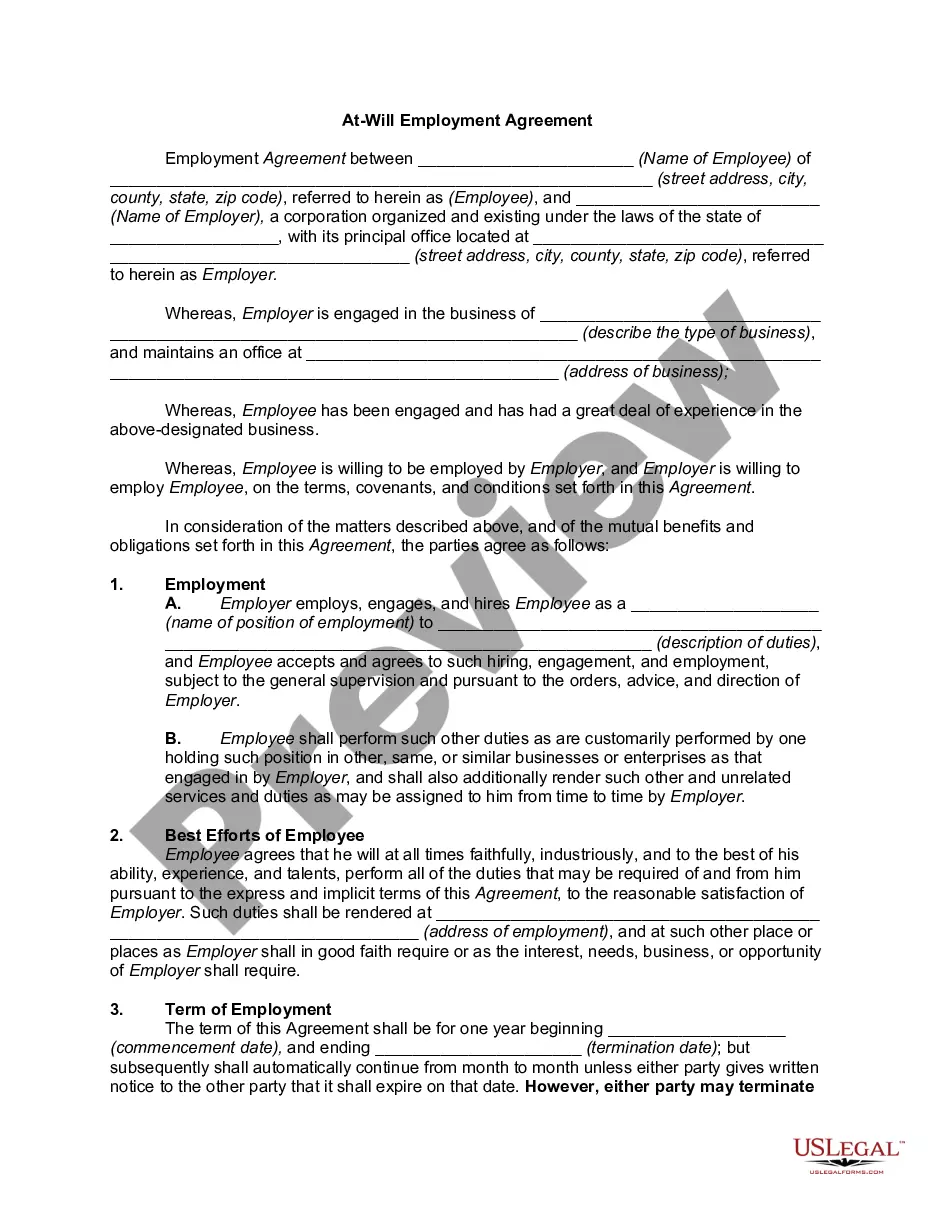
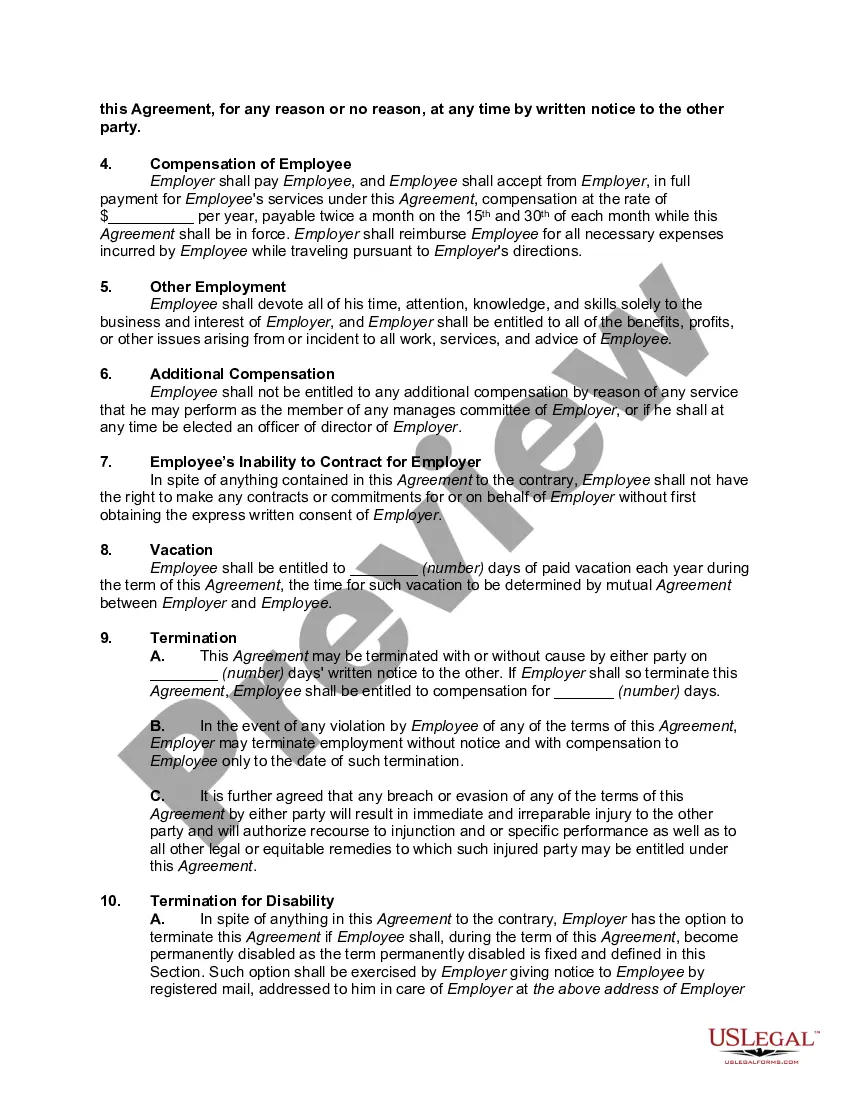
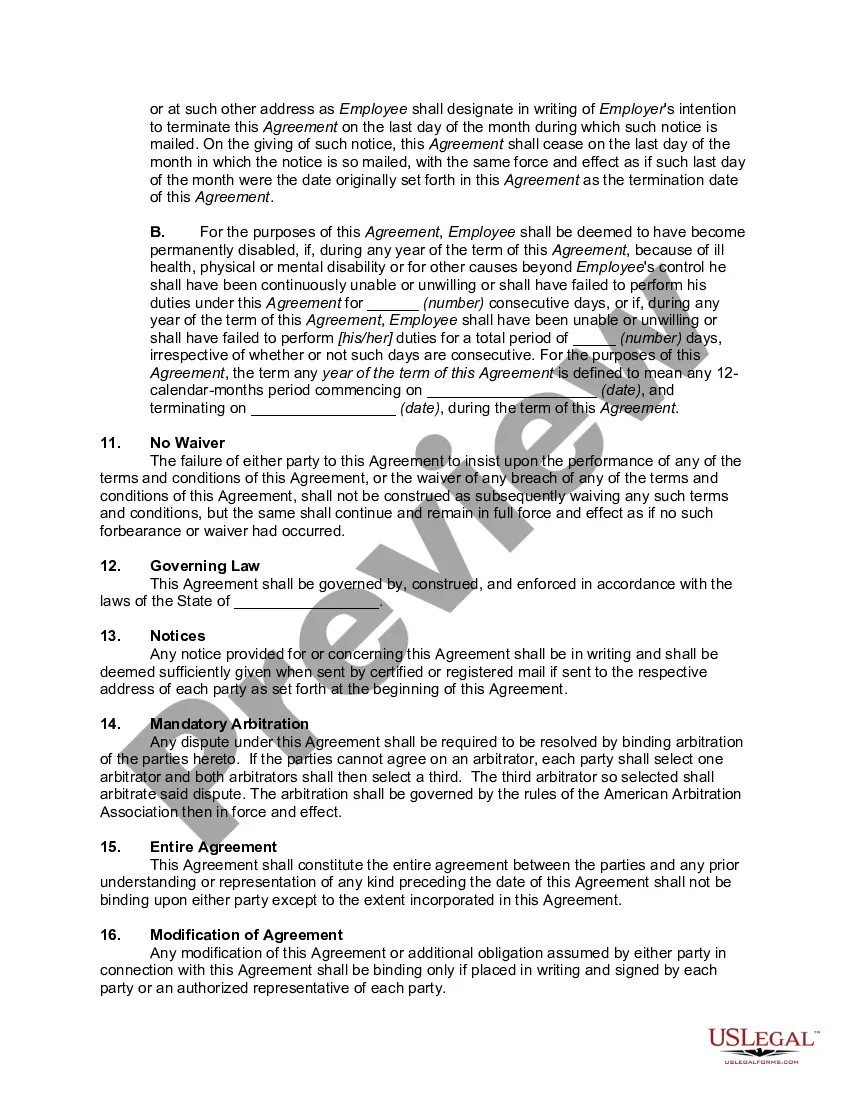
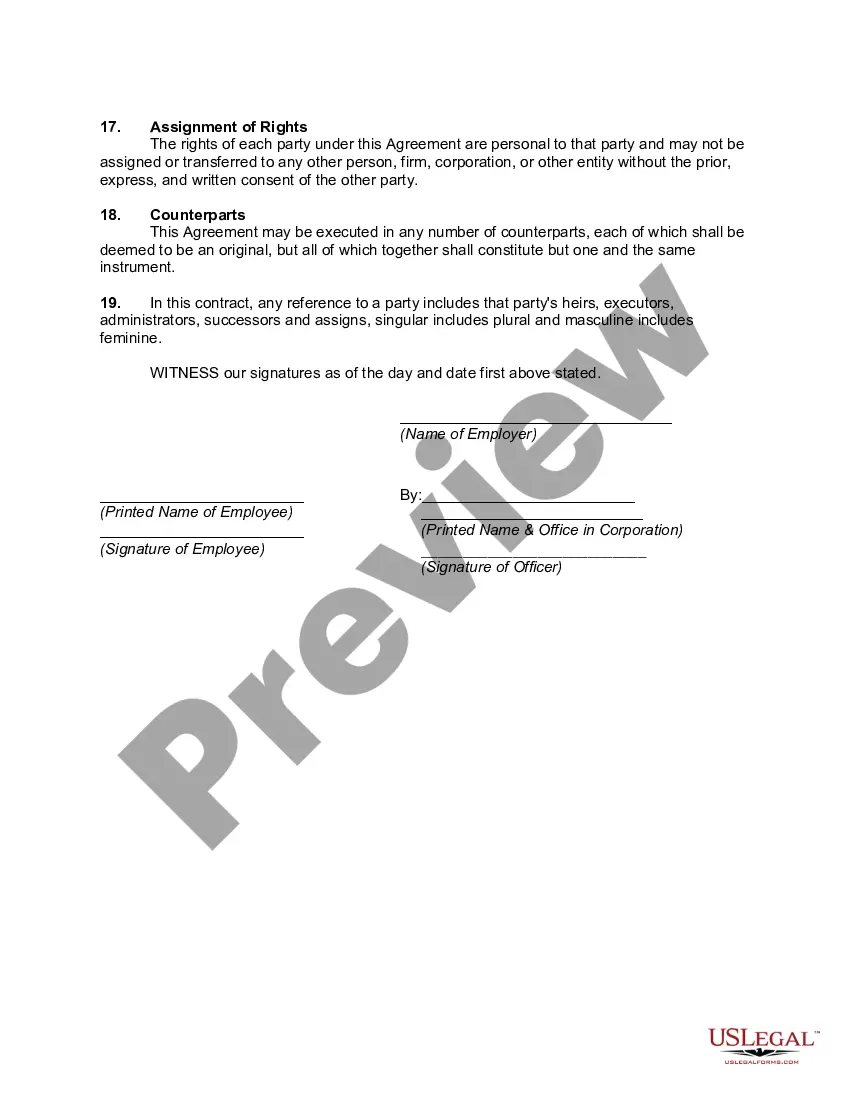
At-will Employment Example In North Carolina
Description
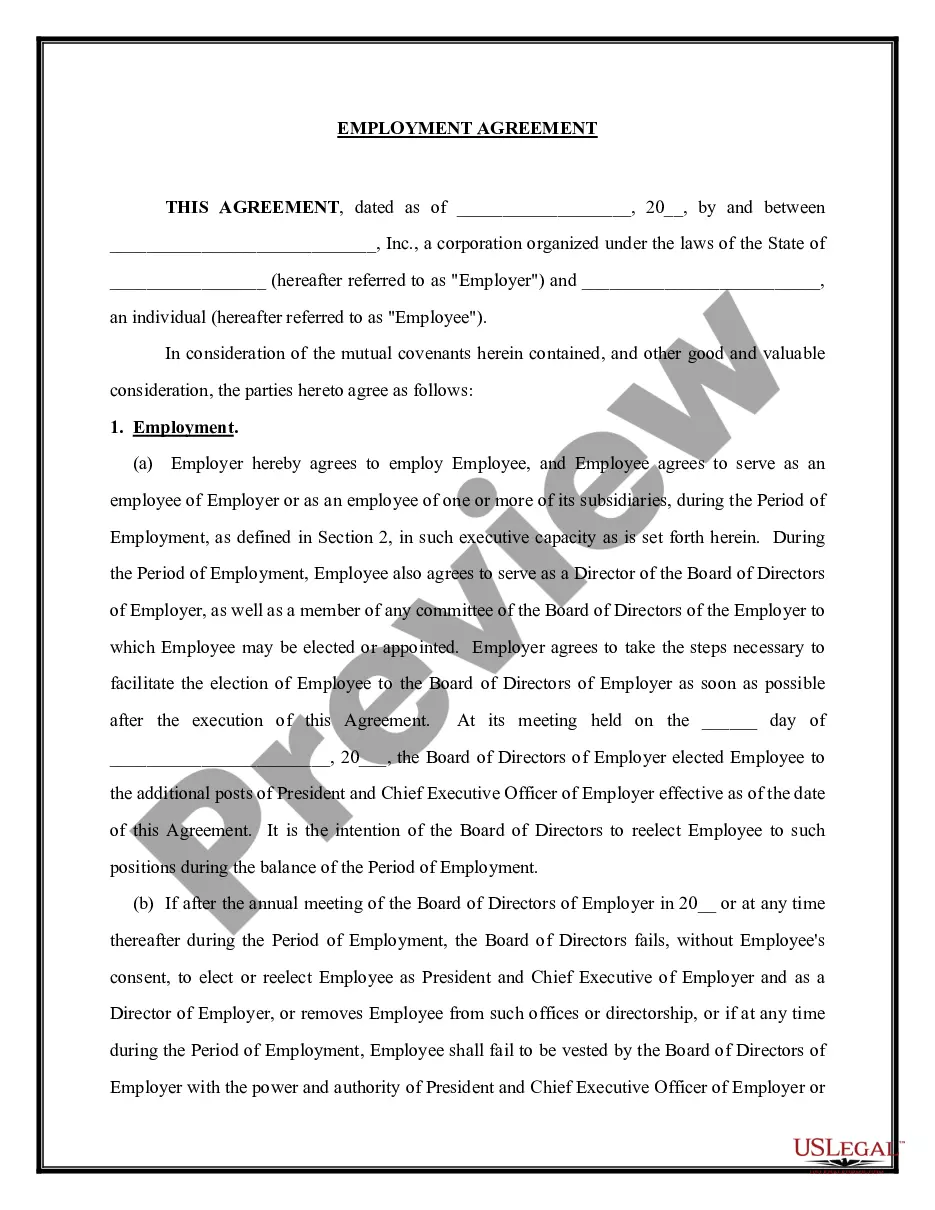
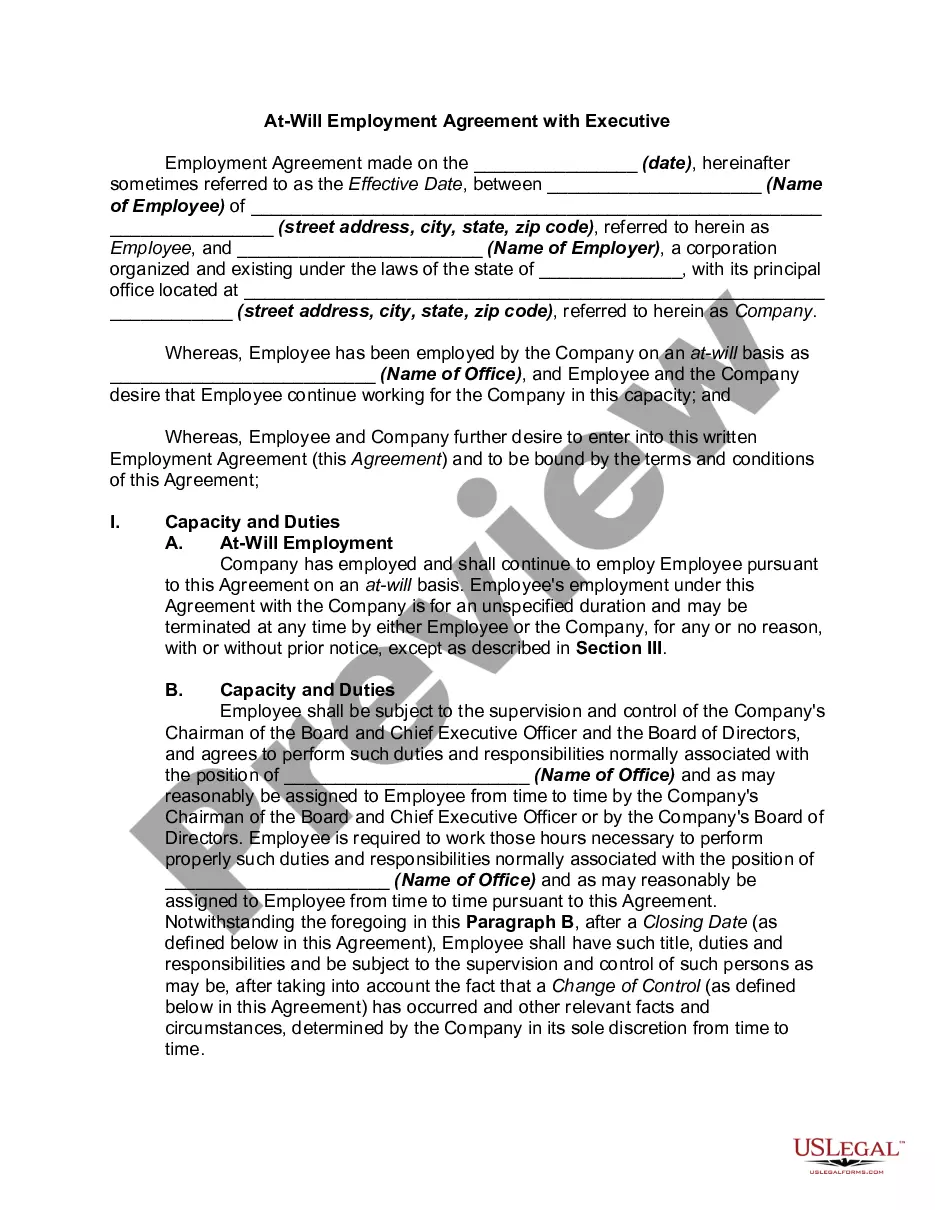
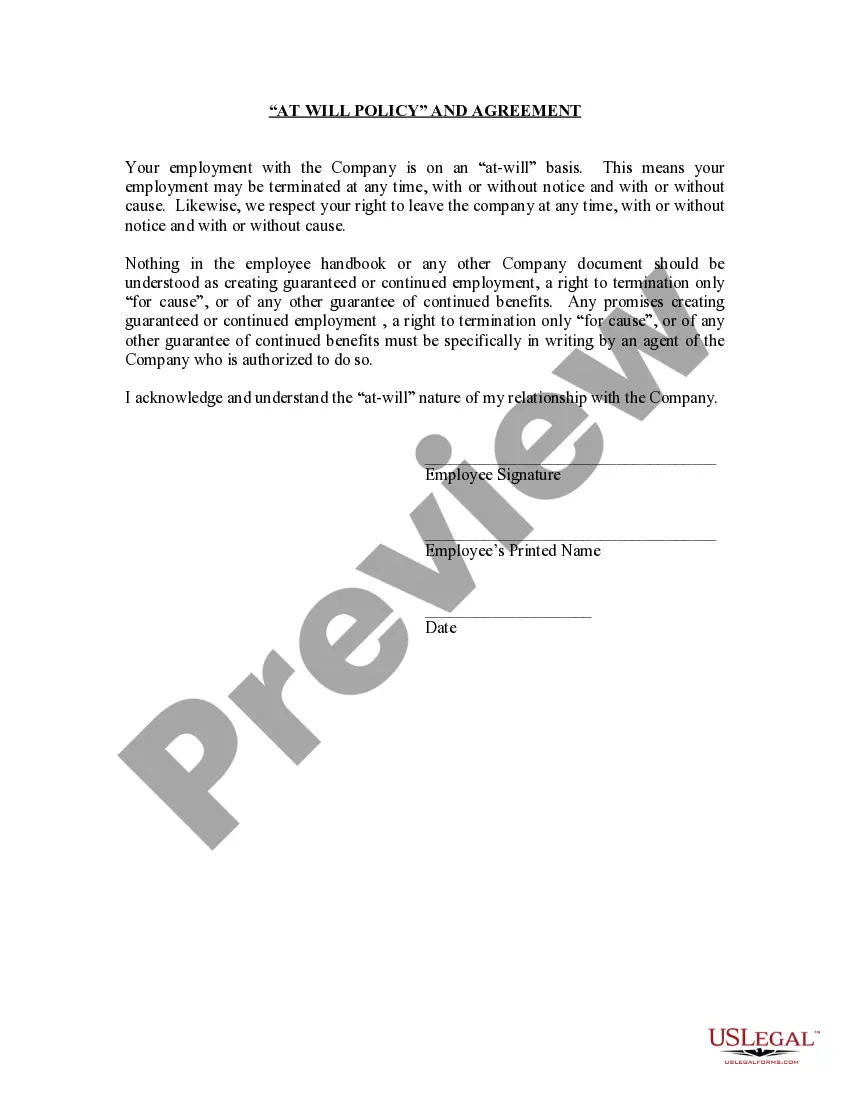
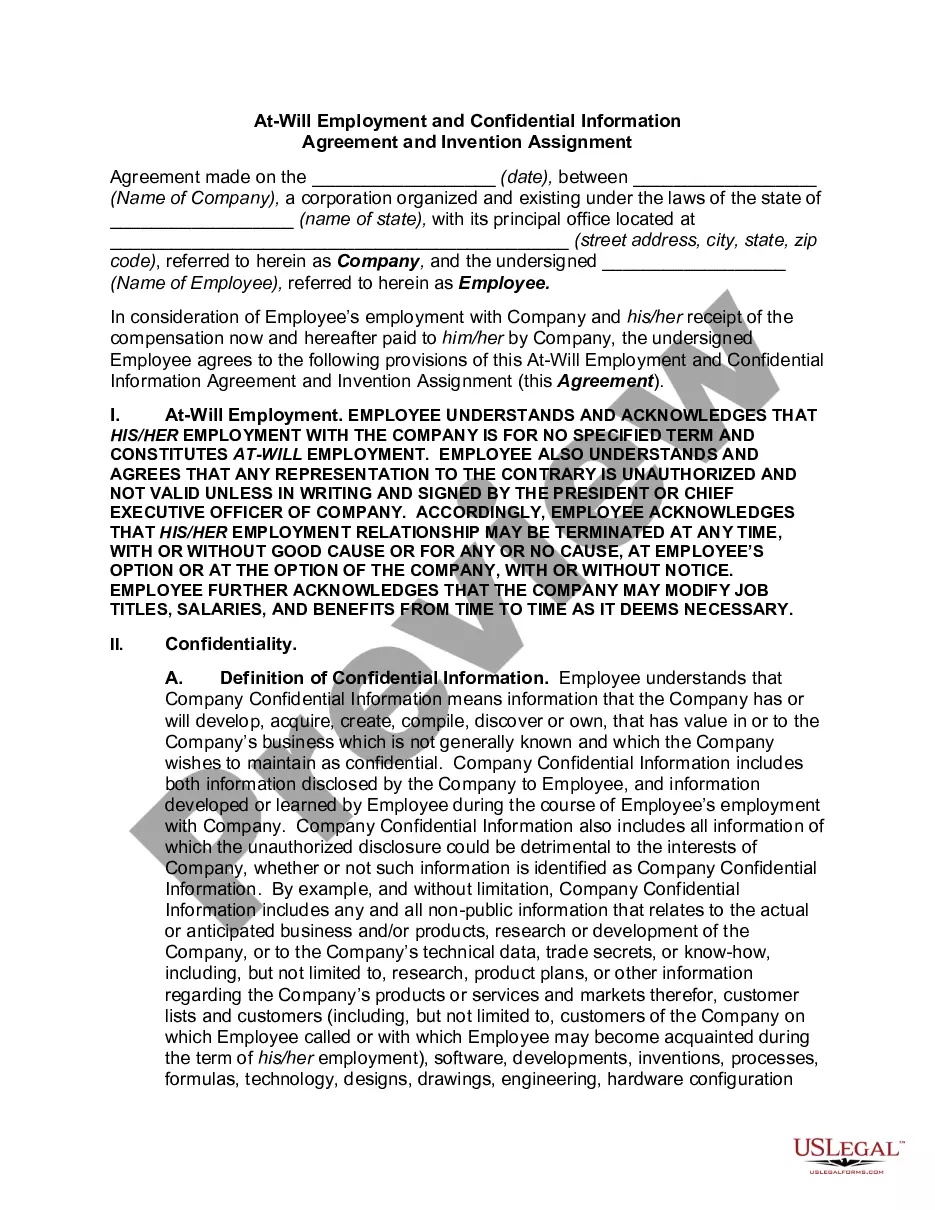
Get your form ready online
Our built-in tools help you complete, sign, share, and store your documents in one place.
Make edits, fill in missing information, and update formatting in US Legal Forms—just like you would in MS Word.
Download a copy, print it, send it by email, or mail it via USPS—whatever works best for your next step.
Sign and collect signatures with our SignNow integration. Send to multiple recipients, set reminders, and more. Go Premium to unlock E-Sign.
If this form requires notarization, complete it online through a secure video call—no need to meet a notary in person or wait for an appointment.
We protect your documents and personal data by following strict security and privacy standards.

Make edits, fill in missing information, and update formatting in US Legal Forms—just like you would in MS Word.

Download a copy, print it, send it by email, or mail it via USPS—whatever works best for your next step.

Sign and collect signatures with our SignNow integration. Send to multiple recipients, set reminders, and more. Go Premium to unlock E-Sign.

If this form requires notarization, complete it online through a secure video call—no need to meet a notary in person or wait for an appointment.

We protect your documents and personal data by following strict security and privacy standards.
Looking for another form?




Form popularity
FAQ
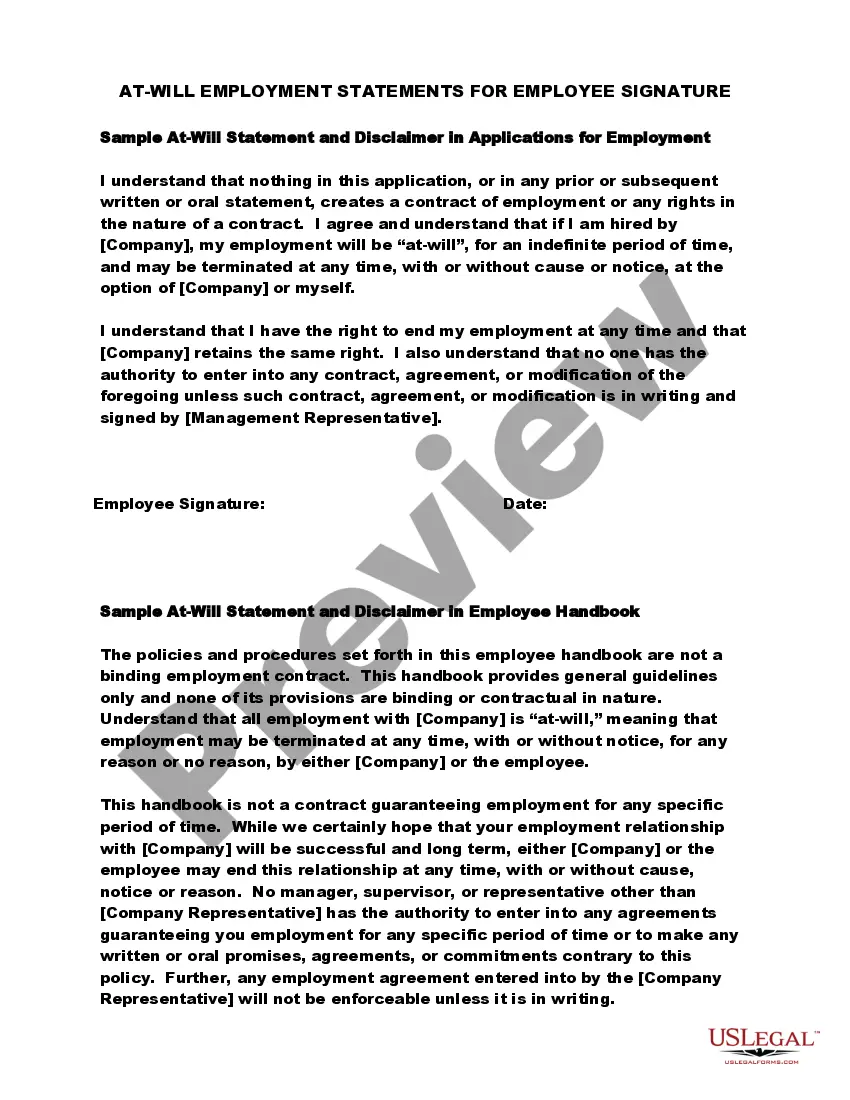
THIS HANDBOOK IS NOT A CONTRACT OF EMPLOYMENT. Employment at __________________ (the Company) is at–will, meaning that either you or the Company may terminate the employment relationship at any time, with or without cause, and with or without advance notice.
In North Carolina, at-will employment means that you or your employer can end your employment at any time. And neither you nor your employer has to have a good reason—or any reason—to terminate your employment relationship. Also, your employer can change your job duties and benefits without reason.
The clause should clearly state the at-will nature of the employment relationship: “This employment relationship is 'at-will,' which means that either the employee or the employer may terminate the employment at any time, with or without cause or prior notice.
Your employment with employer name is at will. This means your employment is for an indefinite period of time and it is subject to termination by you or employer name, with or without cause, with or without notice, and at any time.
Final answer: The true statement about at-will employment is that both the employer and the employee can terminate the employment for any reason that is not illegal. This means either party can end the employment relationship without cause unless it is for a discriminatory or otherwise illegal reason.
Prospective employees are similarly drawn to this arrangement as it provides flexibility to quit at any time for any reason. For example, an employee who is unhappy at work or has been offered a better job can simply quit — no questions asked.
Your employment with us is at-will, and may be terminated by you or us at any time, for any reason (with or without cause), and without advance notice.
North Carolina is both an at-will state and a Right to Work state. The two phrases are sometimes conflated and confused. Each refers to a distinct and separate legal doctrine.
North Carolina does not require employees to give notice before resignation. However, providing a two-week notice period is considered a professional courtesy and can help ensure a smoother transition.
Usually, illegal reasons include termination decisions that involve the employee's race, sex, disability, pregnancy, age, national origin, or religion. Employees who utilize the protections of the Family and Medical Leave Act (FMLA) are victims of wrongful termination.
