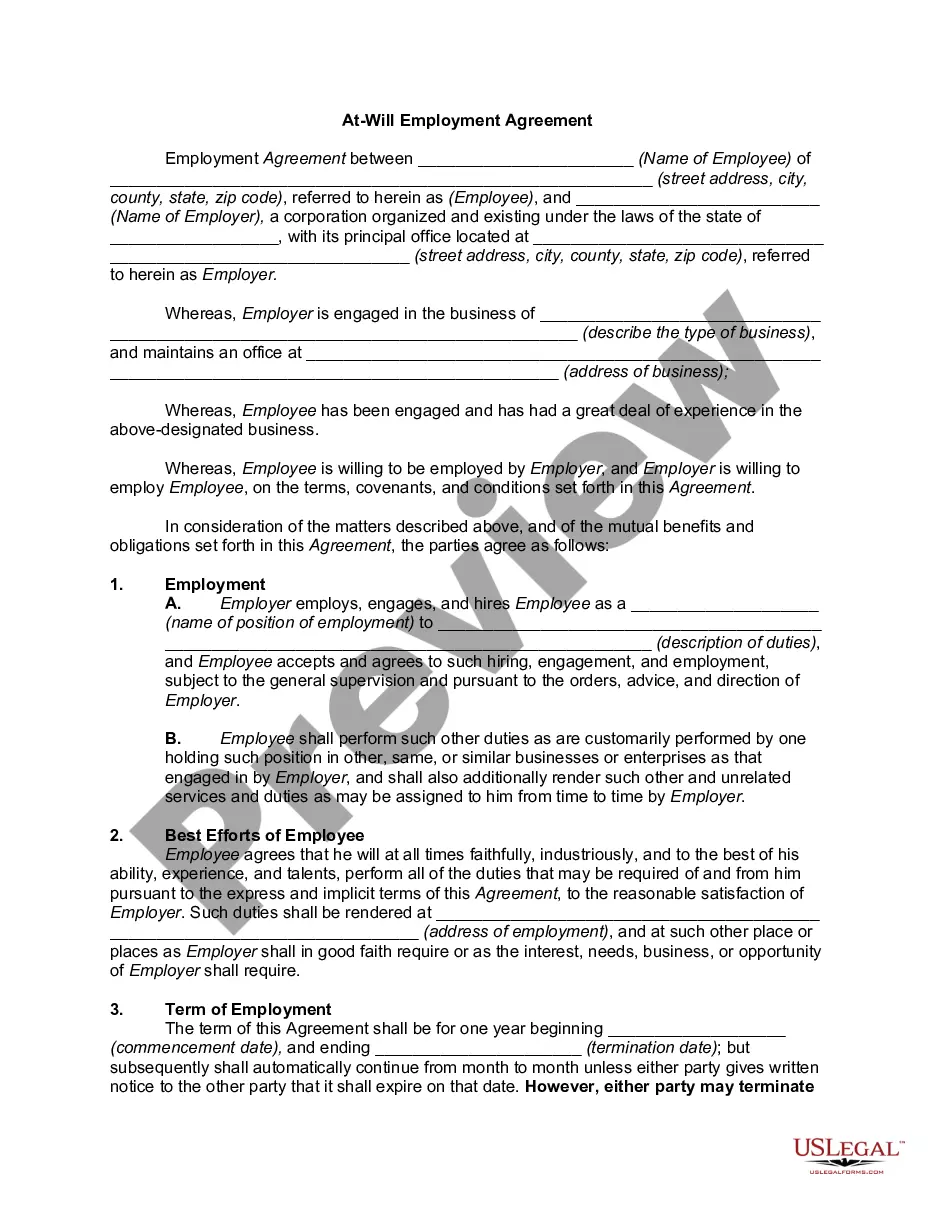
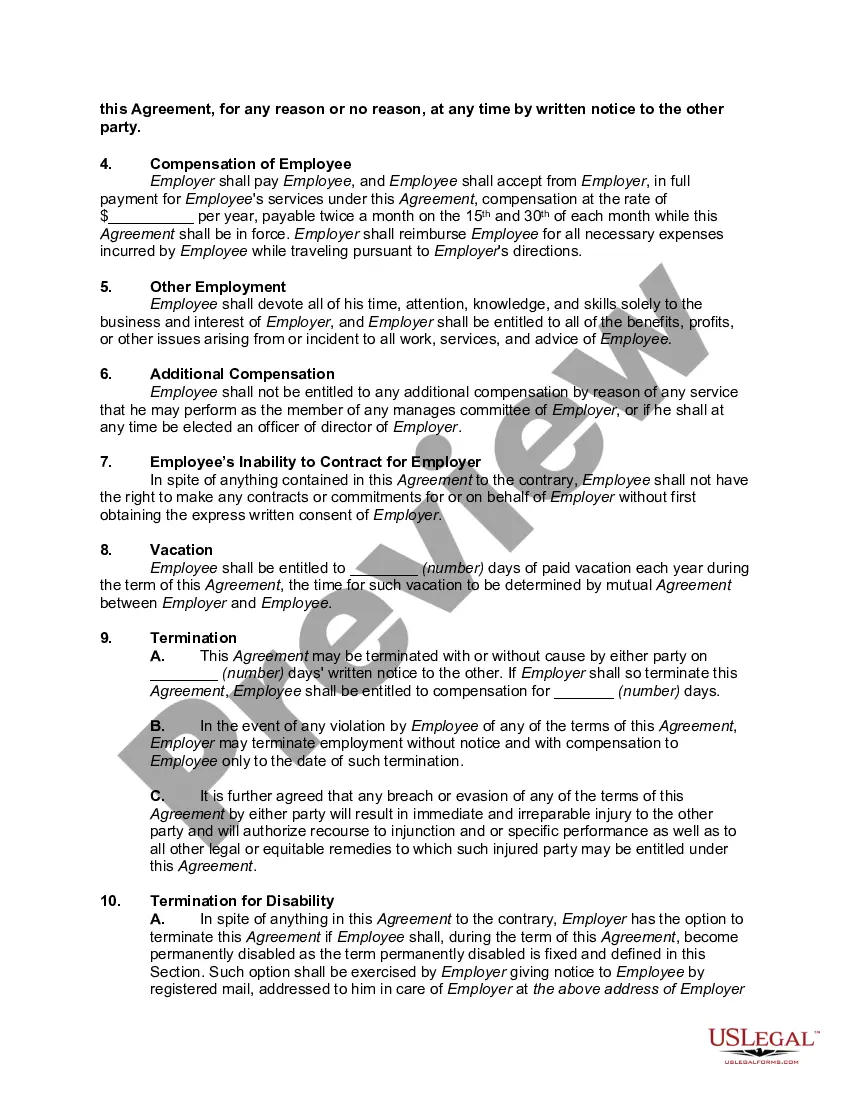
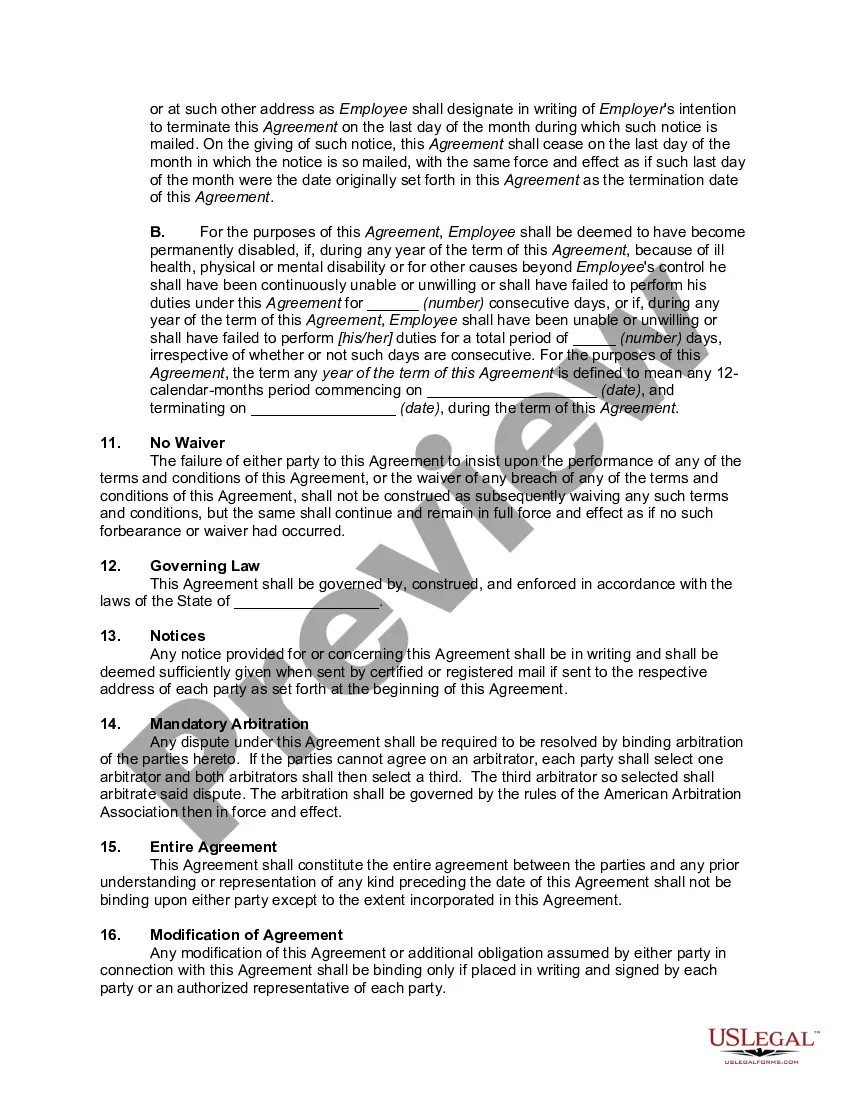
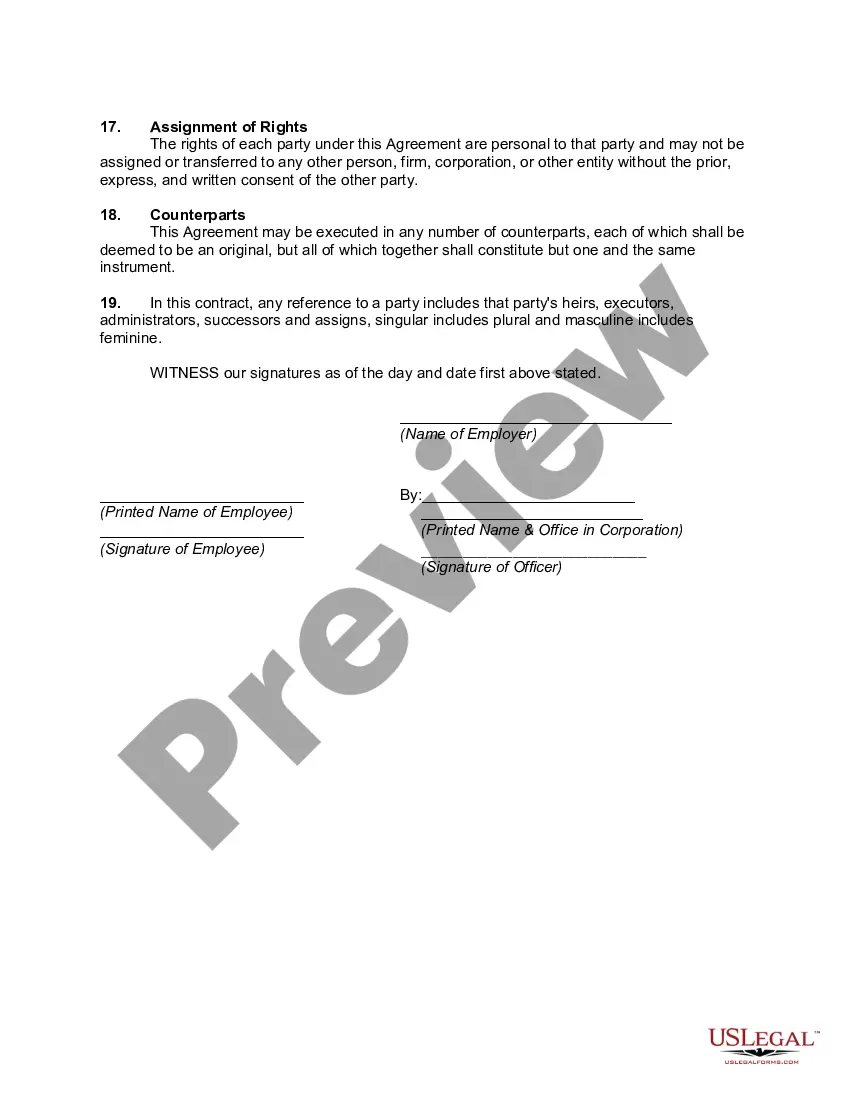
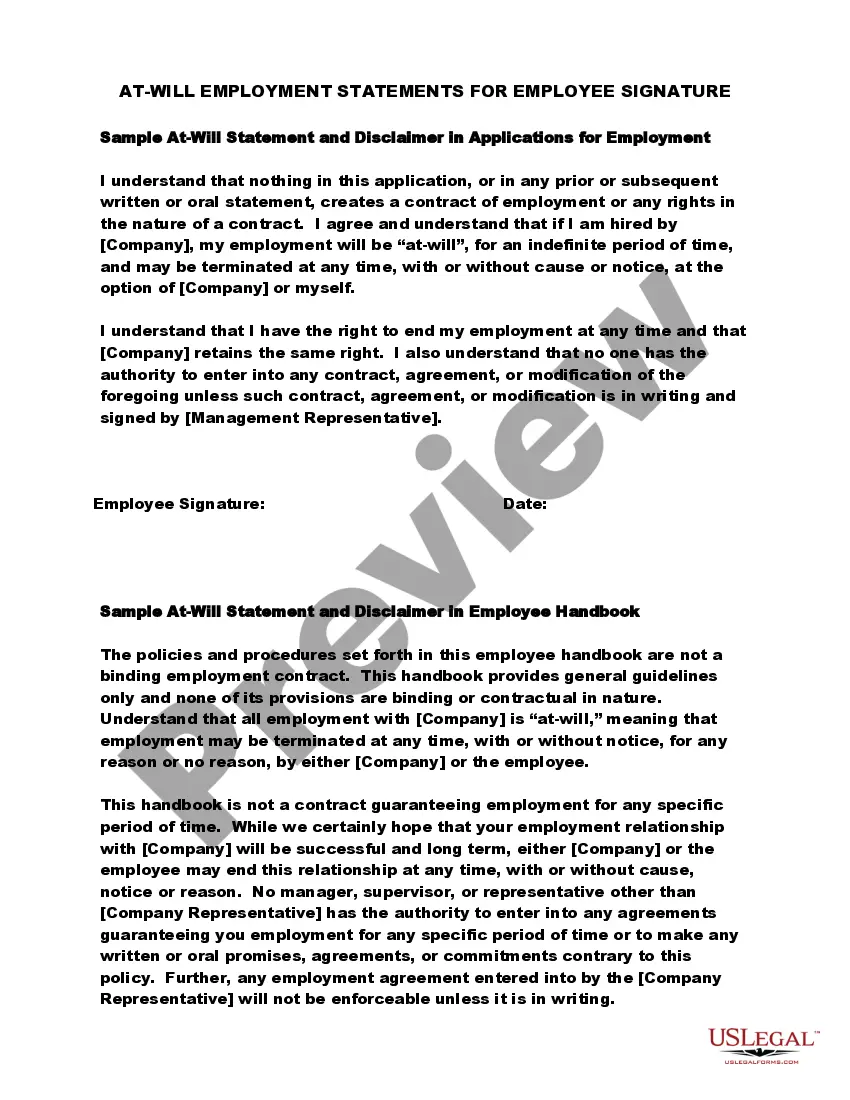
At-will Employment Example In Kings
Description
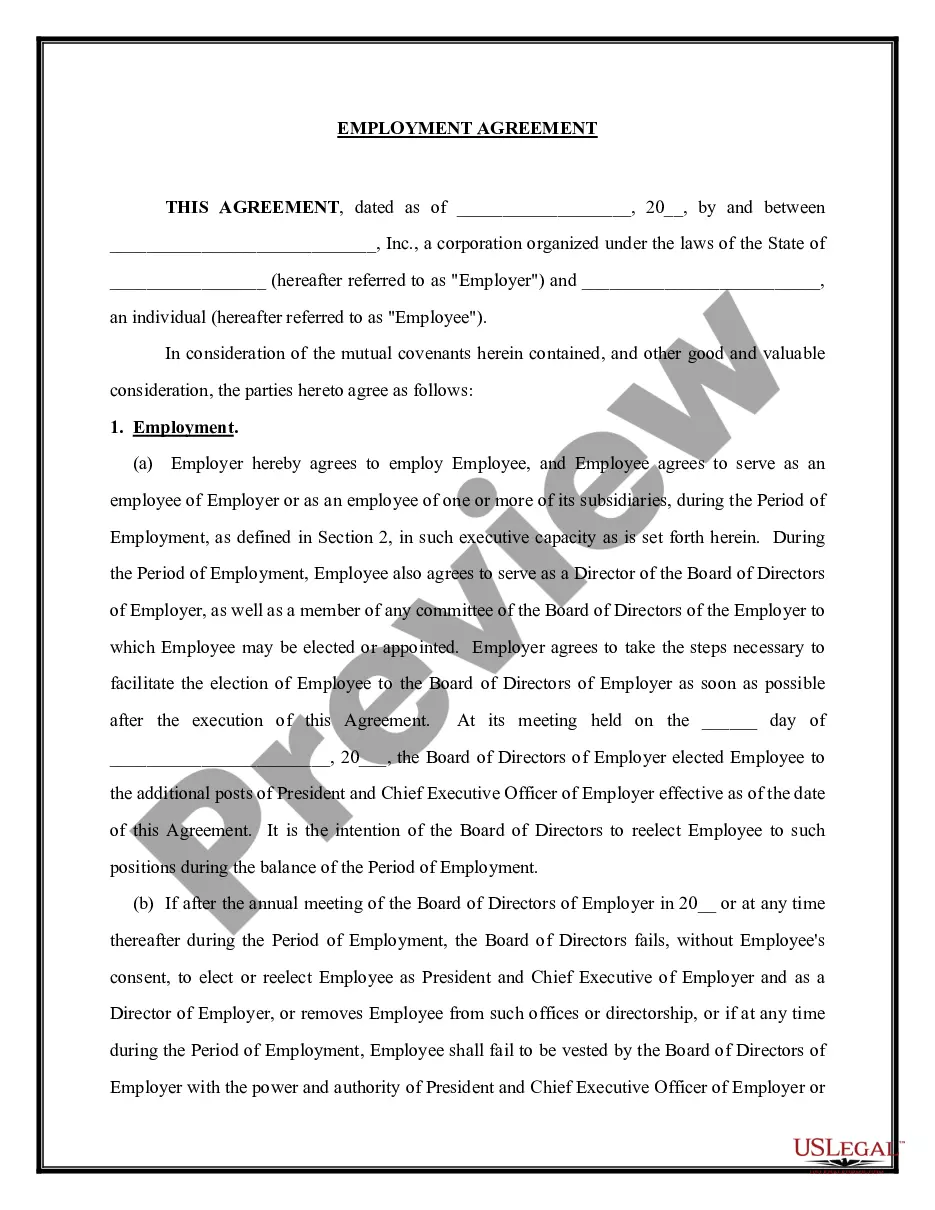
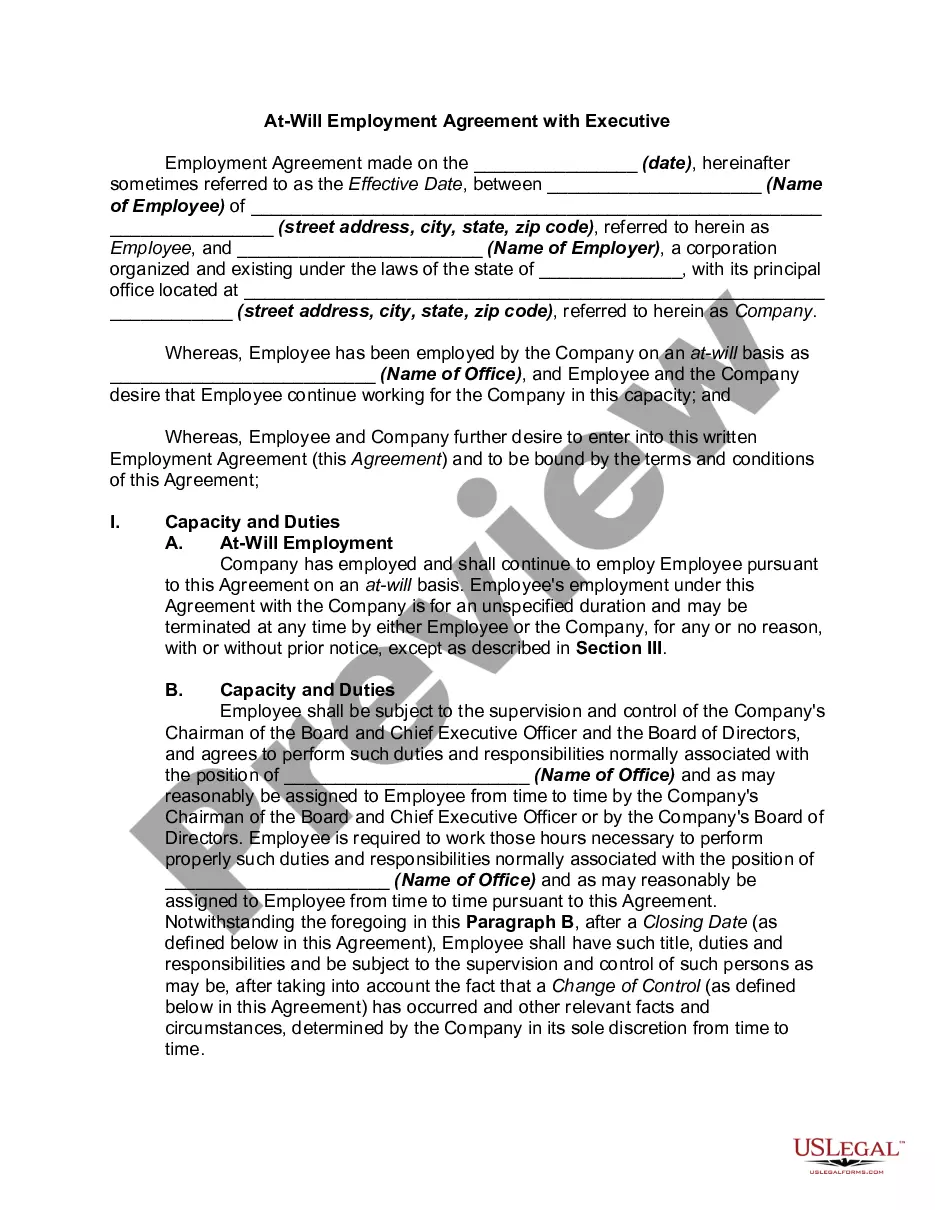
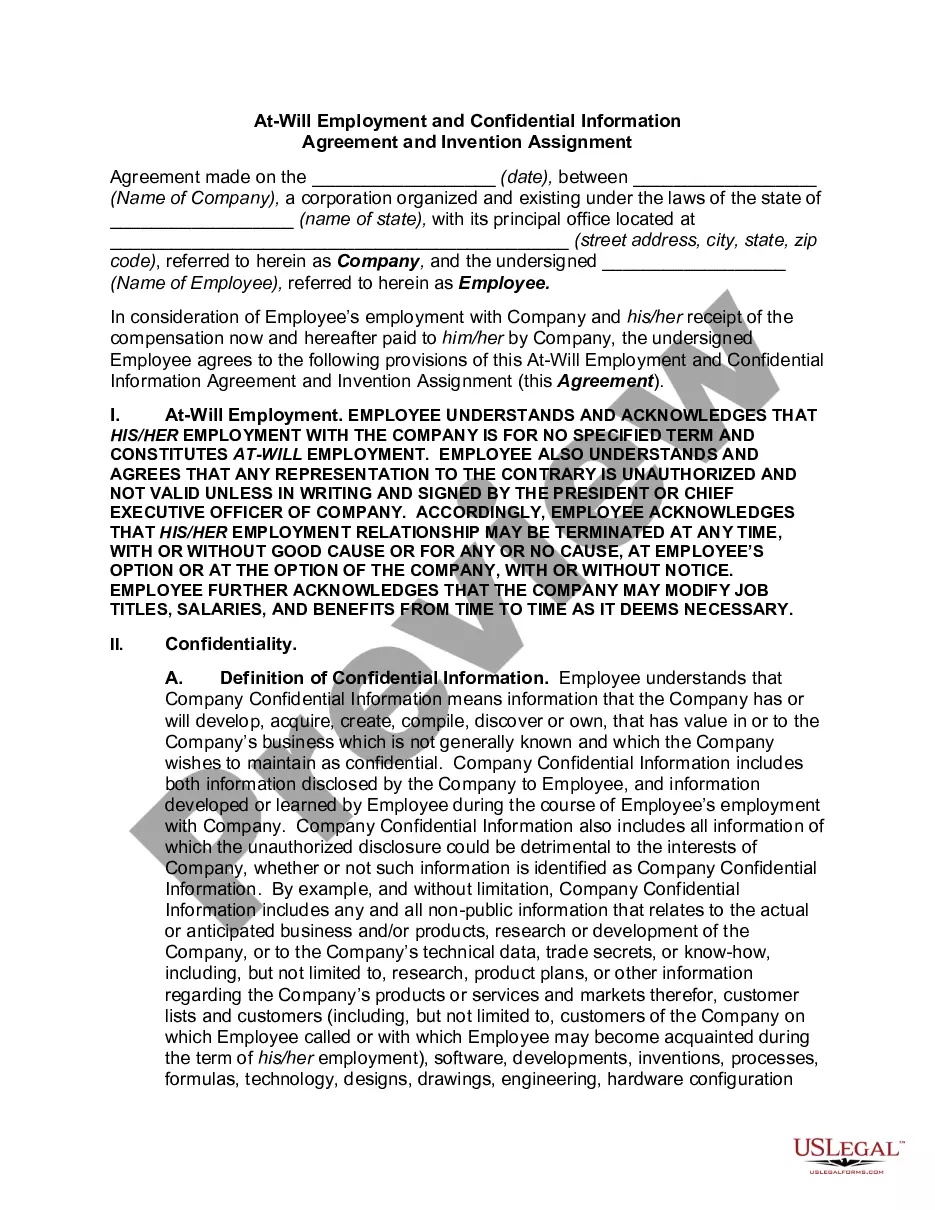
Get your form ready online
Our built-in tools help you complete, sign, share, and store your documents in one place.
Make edits, fill in missing information, and update formatting in US Legal Forms—just like you would in MS Word.
Download a copy, print it, send it by email, or mail it via USPS—whatever works best for your next step.
Sign and collect signatures with our SignNow integration. Send to multiple recipients, set reminders, and more. Go Premium to unlock E-Sign.
If this form requires notarization, complete it online through a secure video call—no need to meet a notary in person or wait for an appointment.
We protect your documents and personal data by following strict security and privacy standards.

Make edits, fill in missing information, and update formatting in US Legal Forms—just like you would in MS Word.

Download a copy, print it, send it by email, or mail it via USPS—whatever works best for your next step.

Sign and collect signatures with our SignNow integration. Send to multiple recipients, set reminders, and more. Go Premium to unlock E-Sign.

If this form requires notarization, complete it online through a secure video call—no need to meet a notary in person or wait for an appointment.

We protect your documents and personal data by following strict security and privacy standards.
Looking for another form?







Form popularity
FAQ
One way to answer is to offer a brief and factual description of the events that lead to the termination without pointing fingers or complaining. It is best to avoid blaming others as well. Indicate what went wrong and show that you have learnt from your mistakes and this won't happen again.
The basic ones should be: The date of termination. The employee needs to know when the termination will take place. The detailed reason for termination. Compensation and benefits. Returning company property.
Employee Acknowledgment Include a space for acknowledgment: "I acknowledge receipt of this termination letter on date". This can be signed by the employee, with their signature and date.
Ask Questions: If appropriate, ask for feedback on your performance or the specific reasons for your termination. This can help you learn and grow from the experience. Express Gratitude: Thank your employer for the opportunities you had while working there. Acknowledge any positive experiences or skills you gained.
You need to respond to the termination letter in writing. Be professional in your response and focus on resolving any issues. If there are any disputes, try to resolve them in a constructive way. If you're unclear about anything mentioned in the letter, seek clarification before responding.
You need to make it very clear that you no longer need their services and they won't be coming back. 'Let you go', 'lay you off', 'you are fired' are all acceptable phrases. The first two are generally used when business conditions mandate fewer people are necessary. The last one is generally used for cause.
Thank you for your email. Please note that Employee's first name no longer works at company name. Your message has not been forwarded. For assistance with briefly explain the former employee's responsibility, please contact our team at alternative email address or phone number.
Either party may terminate this Agreement at any time after insert time period after which agreement can be terminated, e.g., one (1) year, with or without cause, by written notice to the other, such termination to become effective number, e.g., sixty (60) days after receipt of such notice.
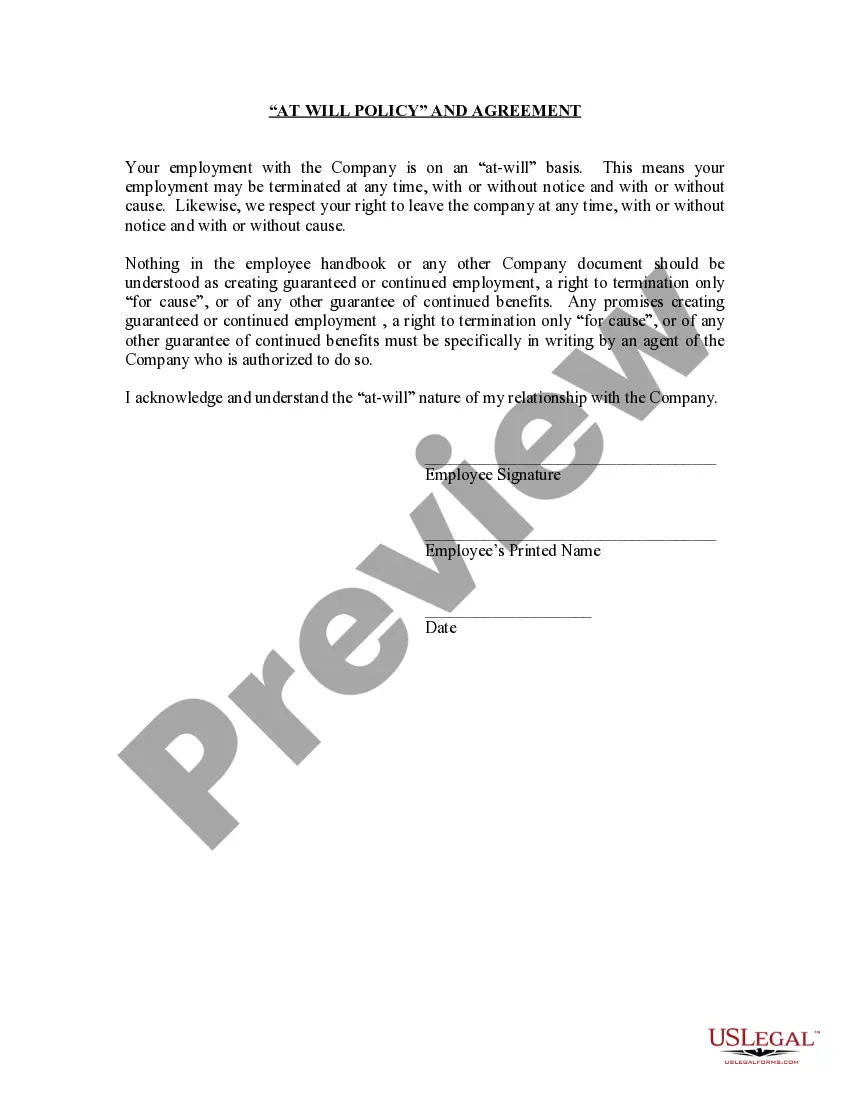
At-will employment means an employer can fire an employee at any time for almost any reason without incurring legal liability. Likewise, an employee has the freedom to quit at any time.
Exceptions to Employment at Will Courts have established three basic exceptions to the at will doctrine: public policy, implied contract, and implied covenant of good faith.
