Attorney Shall Vehicle Forfeiture
Description
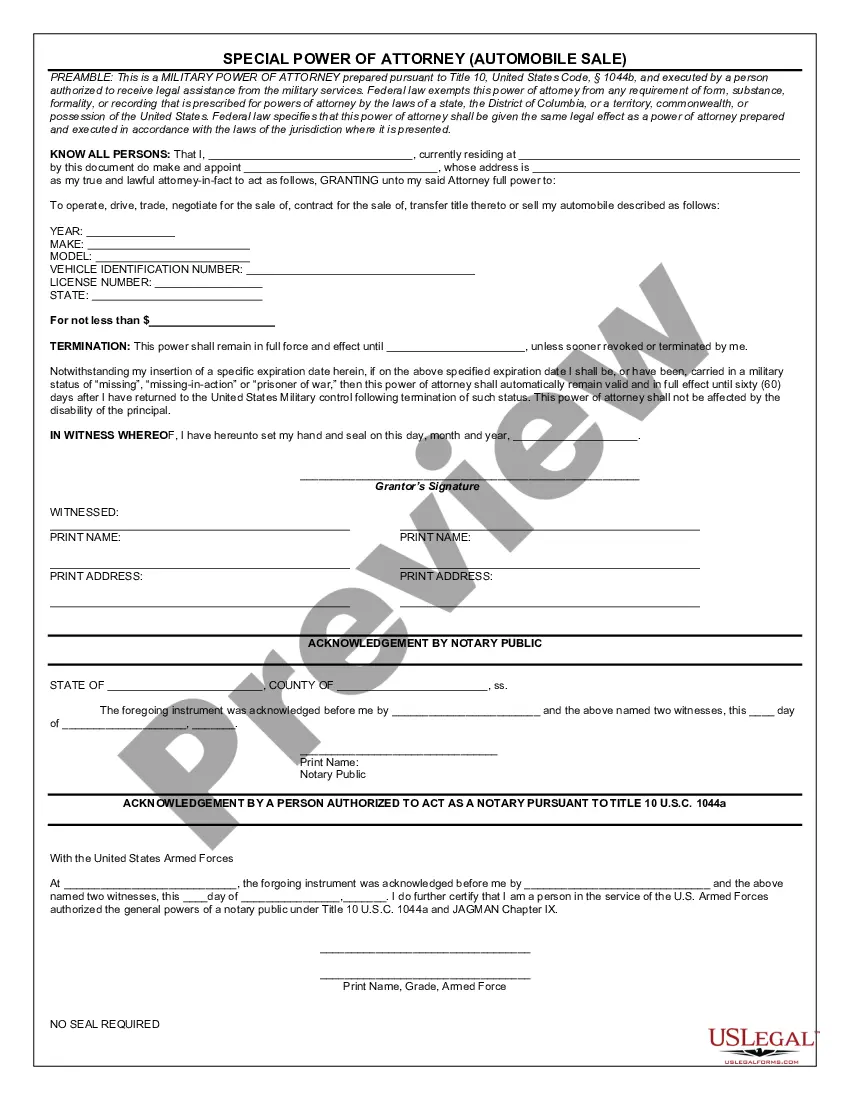
Get your form ready online
Our built-in tools help you complete, sign, share, and store your documents in one place.
Make edits, fill in missing information, and update formatting in US Legal Forms—just like you would in MS Word.
Download a copy, print it, send it by email, or mail it via USPS—whatever works best for your next step.
Sign and collect signatures with our SignNow integration. Send to multiple recipients, set reminders, and more. Go Premium to unlock E-Sign.
If this form requires notarization, complete it online through a secure video call—no need to meet a notary in person or wait for an appointment.
We protect your documents and personal data by following strict security and privacy standards.

Make edits, fill in missing information, and update formatting in US Legal Forms—just like you would in MS Word.

Download a copy, print it, send it by email, or mail it via USPS—whatever works best for your next step.

Sign and collect signatures with our SignNow integration. Send to multiple recipients, set reminders, and more. Go Premium to unlock E-Sign.

If this form requires notarization, complete it online through a secure video call—no need to meet a notary in person or wait for an appointment.

We protect your documents and personal data by following strict security and privacy standards.
Looking for another form?








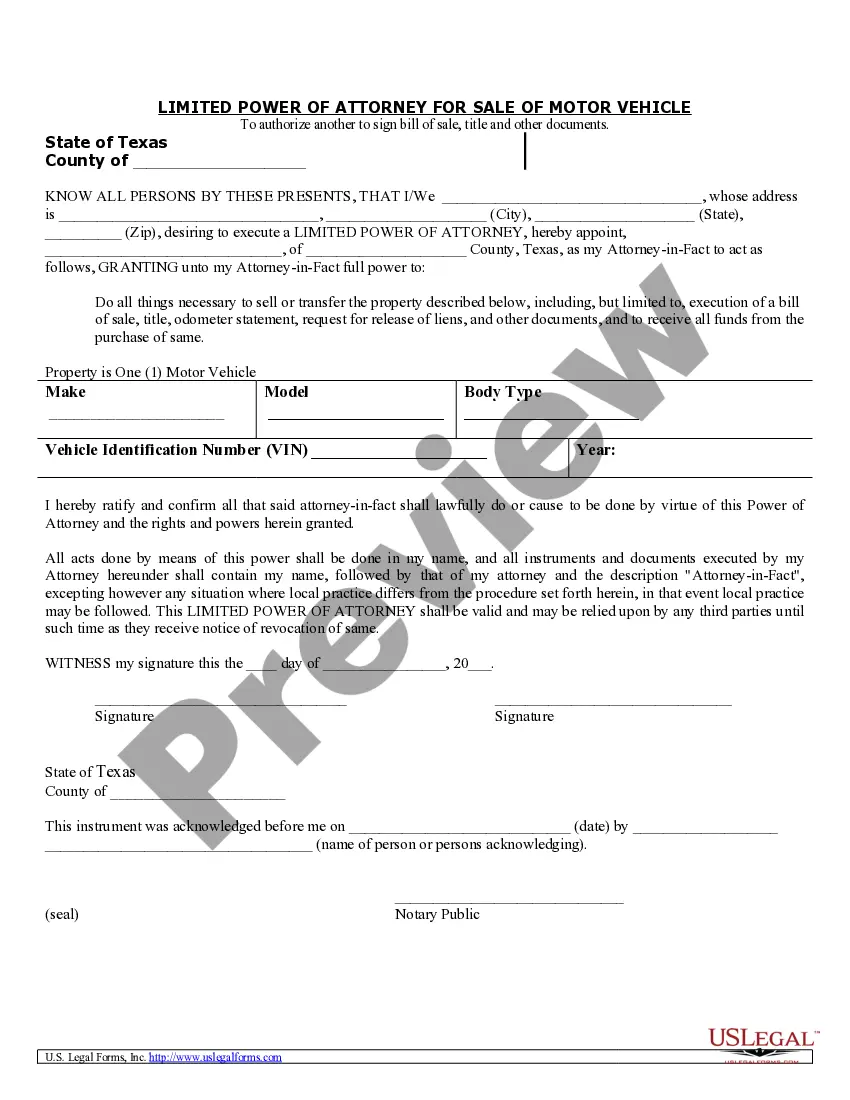
How to fill out Texas Power Of Attorney For Sale Of Motor Vehicle?
The Lawyer Shall Vehicle Seizure you observe on this page is a versatile official template drafted by experienced attorneys in accordance with national and local laws and guidelines.
For over 25 years, US Legal Forms has supplied individuals, organizations, and legal practitioners with more than 85,000 authenticated, state-specific forms for any commercial and personal situation. It's the quickest, easiest, and most trustworthy method to acquire the necessary paperwork, as the service ensures bank-level data security and anti-malware safeguards.
Select the format you prefer for your Lawyer Shall Vehicle Seizure (PDF, DOCX, RTF) and store the sample on your device.
- Search for the document you require and examine it.
- Browse through the file you looked for and preview it or review the form description to confirm it meets your requirements. If it doesn't, utilize the search bar to find the suitable one. Click Buy Now once you have identified the template you need.
- Subscribe and Log In.
- Choose the pricing plan that suits you and create an account. Use PayPal or a credit card to make a swift payment. If you already possess an account, Log In and verify your subscription to proceed.
- Acquire the editable template.
Form popularity
FAQ
In asset forfeiture proceedings, the burden of proof typically falls on the government. When an attorney shall vehicle forfeiture cases arise, the government must demonstrate that the property is connected to illegal activity. This often requires clear and convincing evidence, establishing a strong link between the seized vehicle and criminal behavior. Hiring an attorney experienced in vehicle forfeiture can significantly enhance your chances of contesting these claims effectively.
Forfeiture proceedings generally fall into two categories: civil and criminal. Civil forfeiture occurs when law enforcement seizes property without necessarily charging the owner with a crime, while criminal forfeiture follows a criminal conviction. Understanding the differences between these types can be crucial, and consulting with an Attorney can aid in effectively navigating either type of vehicle forfeiture.
The US government can file a civil forfeiture complaint when it believes that property has been used or acquired through illegal means. This complaint typically follows an investigation that provides the necessary evidence linking the vehicle to criminal activity. An Attorney can help individuals understand their rights and options when a civil forfeiture complaint is filed against their vehicle.
In Minnesota, forfeiture law allows law enforcement to seize property linked to illegal activities, including vehicles. The law mandates a civil process to address these seizures, ensuring property owners have the right to contest the forfeiture in court. Engaging an Attorney experienced in vehicle forfeiture can help those affected navigate Minnesota's specific regulations and protect their rights effectively.
Various parties can file a petition under forfeiture proceedings. Typically, individuals with a legal interest in the seized property, such as the owner or lienholder, may submit a petition. Additionally, an Attorney specializing in vehicle forfeiture can also file on behalf of clients, advocating for the rightful return or compensation related to the forfeited vehicle.
A motion for an order of forfeiture is a legal request submitted to a court, aiming to formally transfer ownership of seized property to the government. This motion arises after the conclusion of a forfeiture proceeding when the government demonstrates that the property is tied to criminal activity. If approved, this motion solidifies the government's claim over the forfeited vehicle, often necessitating an Attorney to navigate the complexities of vehicle forfeiture law.
In a civil forfeiture lawsuit, various steps unfold sequentially. Initially, law enforcement seizes the property in question, claiming it is tied to illegal activity. Following this, the government files a forfeiture complaint, detailing the basis for the seizure. Afterward, the property owner is notified and can contest the forfeiture, potentially involving an Attorney to guide them through challenging their vehicle forfeiture.
Certain assets cannot be seized under the law, including necessary personal items like clothing and specific types of essential property. Additionally, assets protected by law, such as retirement accounts or certain types of income, generally remain safe from forfeiture. Understanding what can and cannot be taken is vital when facing forfeiture. An attorney shall vehicle forfeiture can provide crucial insights and help you protect your rights.
The hardest cases to win typically involve circumstantial evidence with no clear link to criminal activity. This is especially true for forfeiture cases, where the burden of proof may lean heavily against the vehicle owner. An attorney shall vehicle forfeiture can assess the details of your case and develop strategies to present the strongest possible argument. Collaboration with legal experts increases your chances of a favorable outcome.
In court, the hardest thing to prove often involves intent or knowledge of wrongdoing. This can be particularly challenging in forfeiture cases where the owner may not have been aware of illegal activity involving their vehicle. Your attorney shall vehicle forfeiture will work to establish your lack of connection to any alleged crime. With strong evidence and representation, it becomes more manageable to contest such claims.