Legal Things In Texas
Description
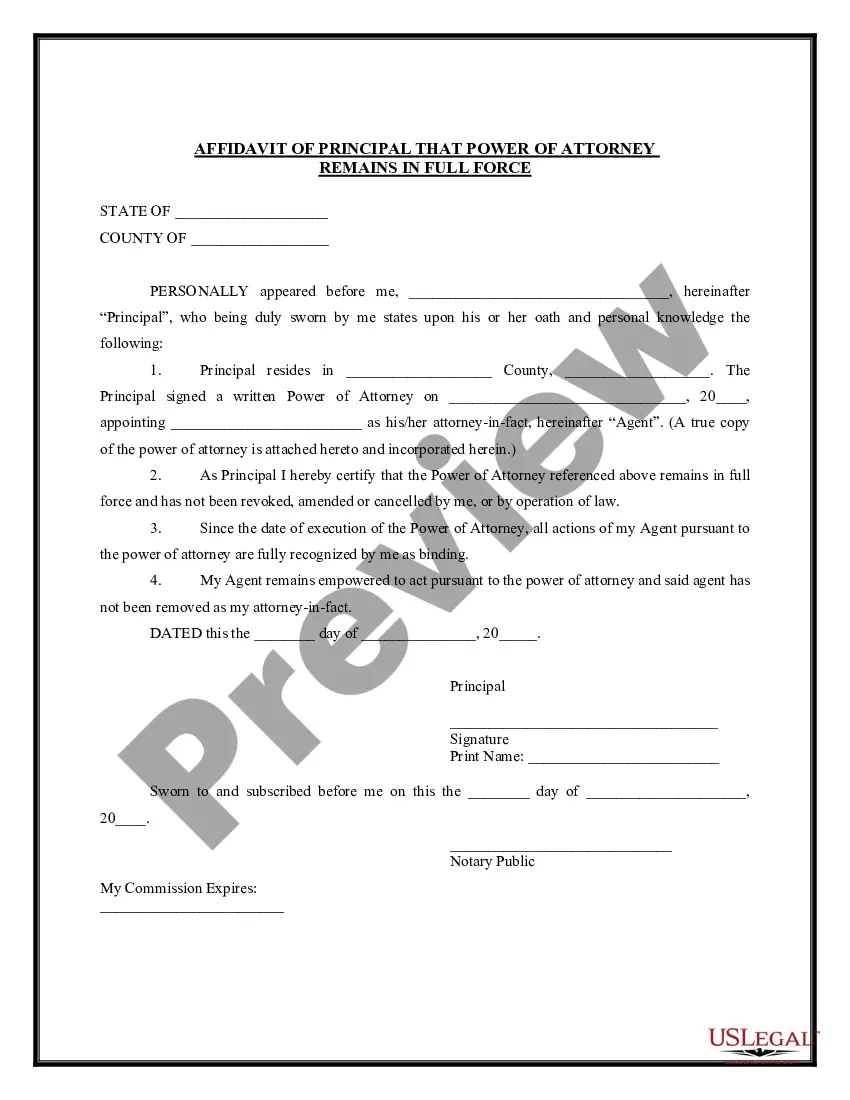
Get your form ready online
Our built-in tools help you complete, sign, share, and store your documents in one place.
Make edits, fill in missing information, and update formatting in US Legal Forms—just like you would in MS Word.
Download a copy, print it, send it by email, or mail it via USPS—whatever works best for your next step.
Sign and collect signatures with our SignNow integration. Send to multiple recipients, set reminders, and more. Go Premium to unlock E-Sign.
If this form requires notarization, complete it online through a secure video call—no need to meet a notary in person or wait for an appointment.
We protect your documents and personal data by following strict security and privacy standards.

Make edits, fill in missing information, and update formatting in US Legal Forms—just like you would in MS Word.

Download a copy, print it, send it by email, or mail it via USPS—whatever works best for your next step.

Sign and collect signatures with our SignNow integration. Send to multiple recipients, set reminders, and more. Go Premium to unlock E-Sign.

If this form requires notarization, complete it online through a secure video call—no need to meet a notary in person or wait for an appointment.

We protect your documents and personal data by following strict security and privacy standards.
Looking for another form?








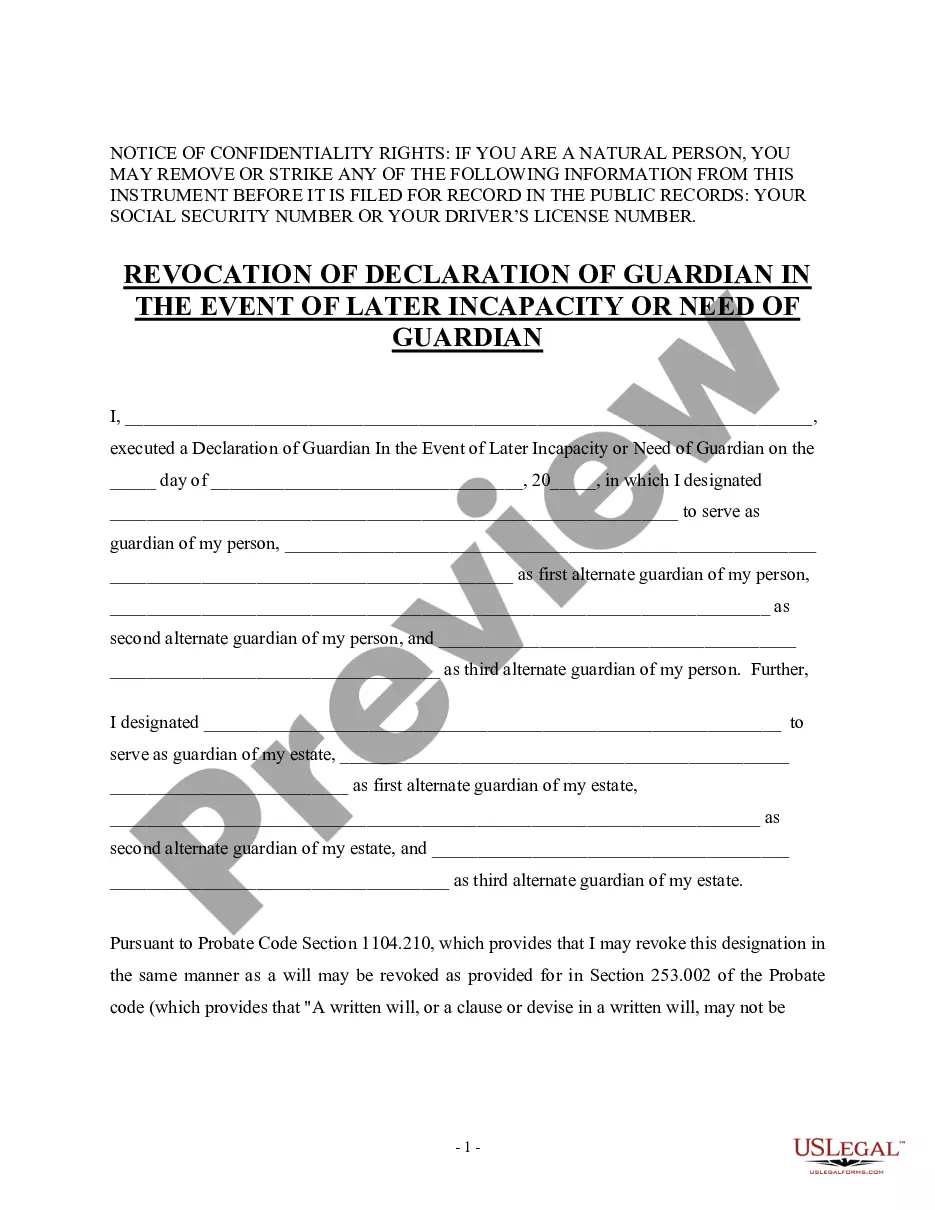
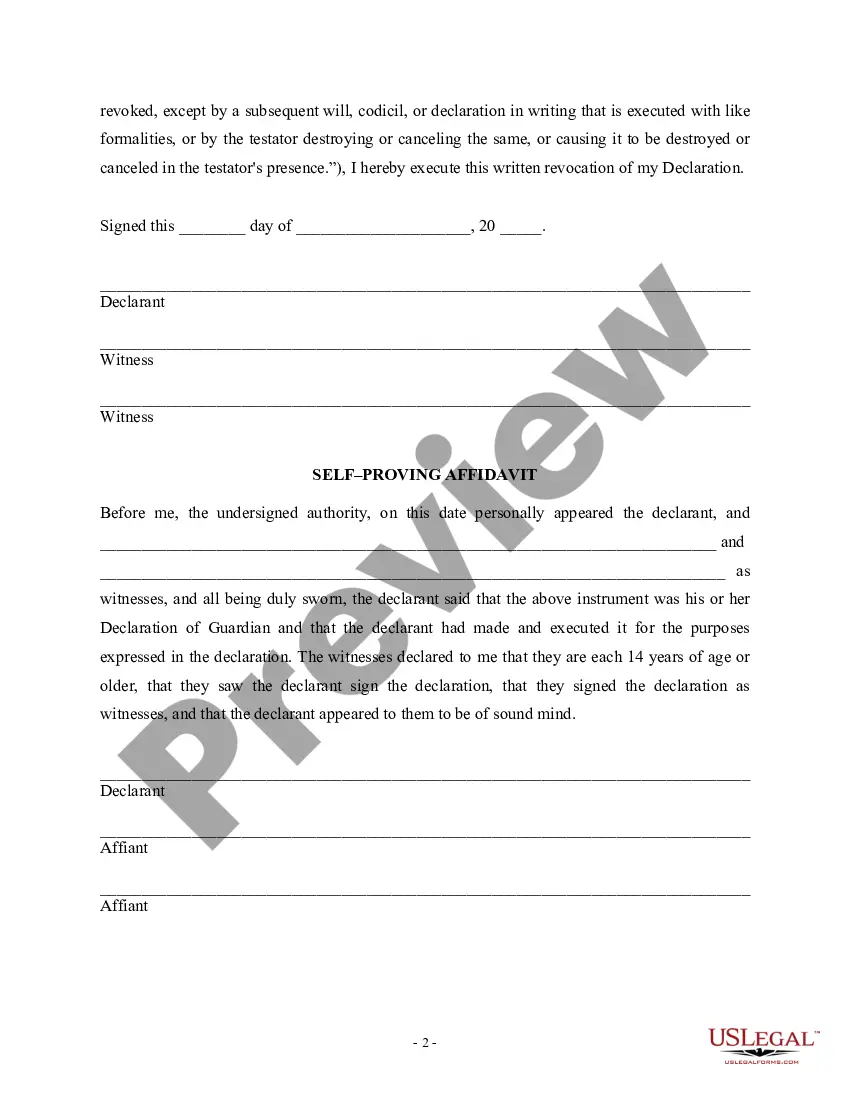
How to fill out Texas Revocation Of Statutory Declaration Of Guardian In The Event Of Later Incapacity Or Need Of Guardian?
Handling legal paperwork and tasks can be a laborious addition to your schedule.
Legal Documents in Texas and similar forms generally necessitate that you locate them and comprehend how to fill them out correctly.
Consequently, whether you are managing financial, legal, or personal affairs, utilizing a thorough and user-friendly online directory of forms at your disposal will be extremely beneficial.
US Legal Forms is the premier online platform for legal templates, featuring over 85,000 state-specific documents and various tools to assist you in completing your forms expeditiously.
Is this your first experience with US Legal Forms? Create and set up your account in just a few minutes, granting you access to the forms library and Legal Documents in Texas. Then, follow these steps to fill out your form.
- Browse the collection of relevant documents available to you with just a single click.
- US Legal Forms provides state- and county-specific forms available for download at any time.
- Protect your document management procedures with a top-tier service that enables you to prepare any form in minutes without extra or undisclosed fees.
- Simply Log In to your account, find Legal Documents in Texas, and obtain it instantly in the My documents section.
- You can also access previously downloaded documents.
Form popularity
FAQ
In order to become a process server in the state of Texas, you must: Complete a civil process service educational course. The course must be approved by the Judicial Branch Certification Commission (JBCC). Upon completion of the course, the course director will supply you with a certificate of completion.
Texas Rule of Civil Procedure 106 requires that the process server first try to deliver the papers in person or by certified mail. You can ask the court to serve them in another way if trying to serve them in person or by certified mail didn't work. Texas rules now let you serve people by e-mail or even social media.
Examples of Legal Information include: Reading the legal definition of words. E.g.: Community property actions are civil claims that divide the property obtained during a marriage between divorcing spouses. Identifying procedural definitions such as who the people are in court and what steps take place.
A holographic will is a will that is entirely in your own handwriting. If done correctly, it is valid and can be legally enforced. To make a valid handwritten will in Texas, the entire document must be in your own handwriting. No one can write any part of it except for you and no part of it can be typed.
Only attorneys can give legal advice. Paralegals, legal assistants , and notary publics are all nonlawyers. They cannot prepare documents on your behalf. Paralegals and other legal staff in a law office may be able to assist with legal work, but it must be under the supervision of a licensed attorney.