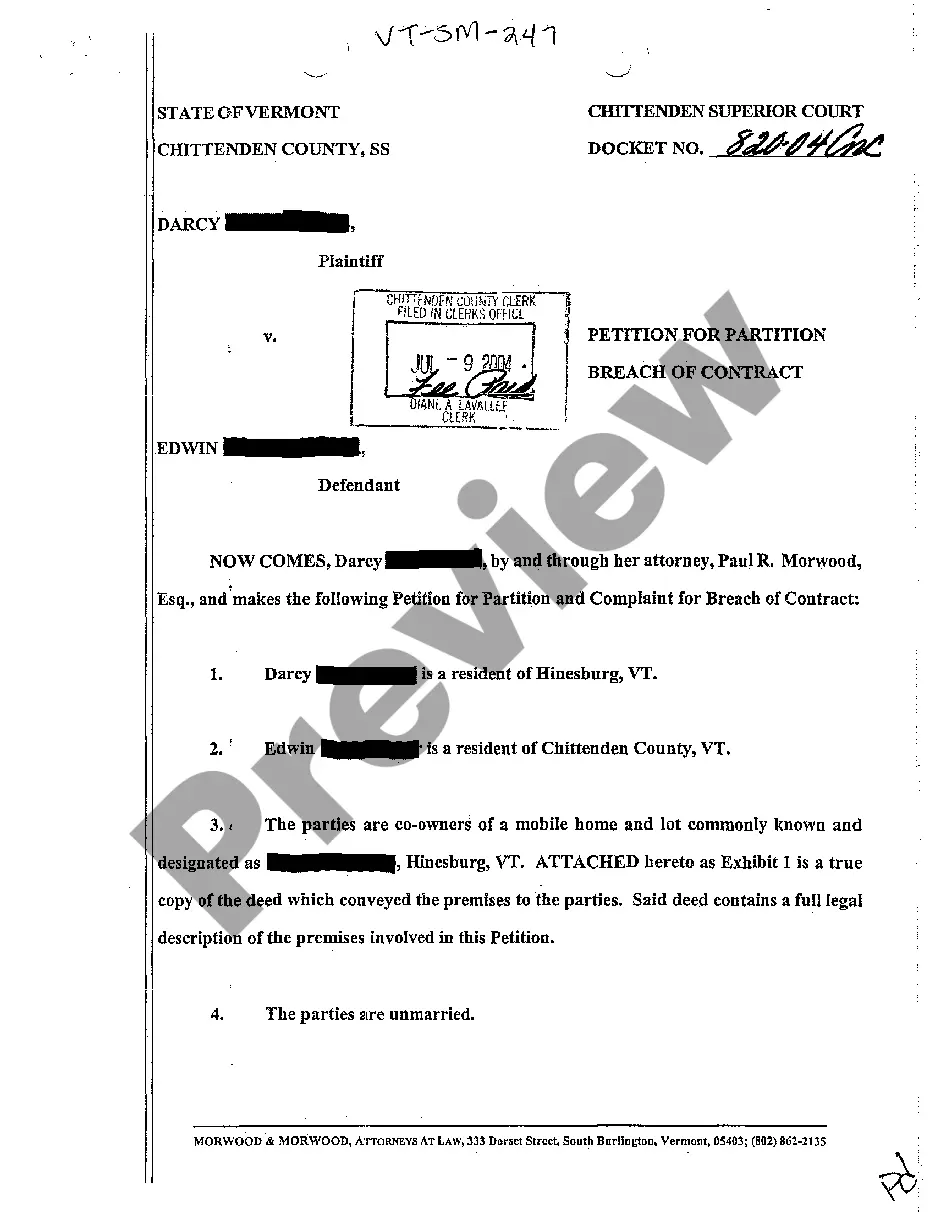
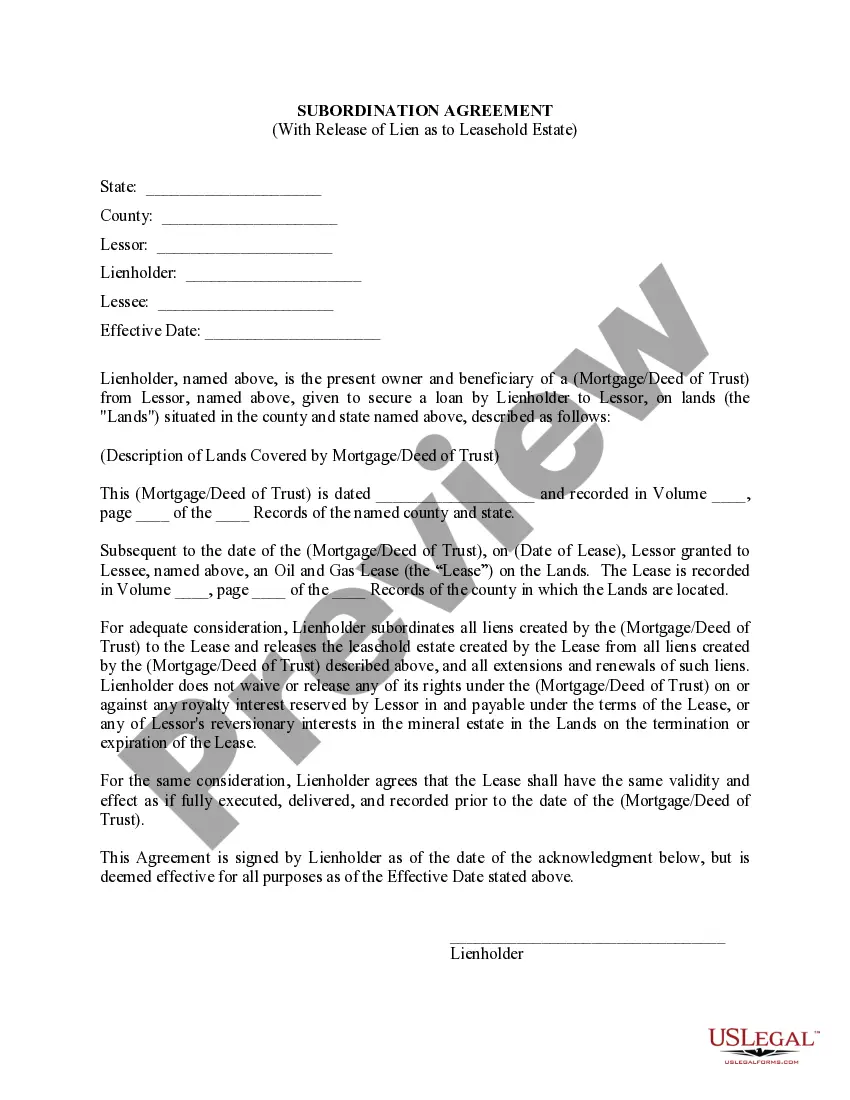
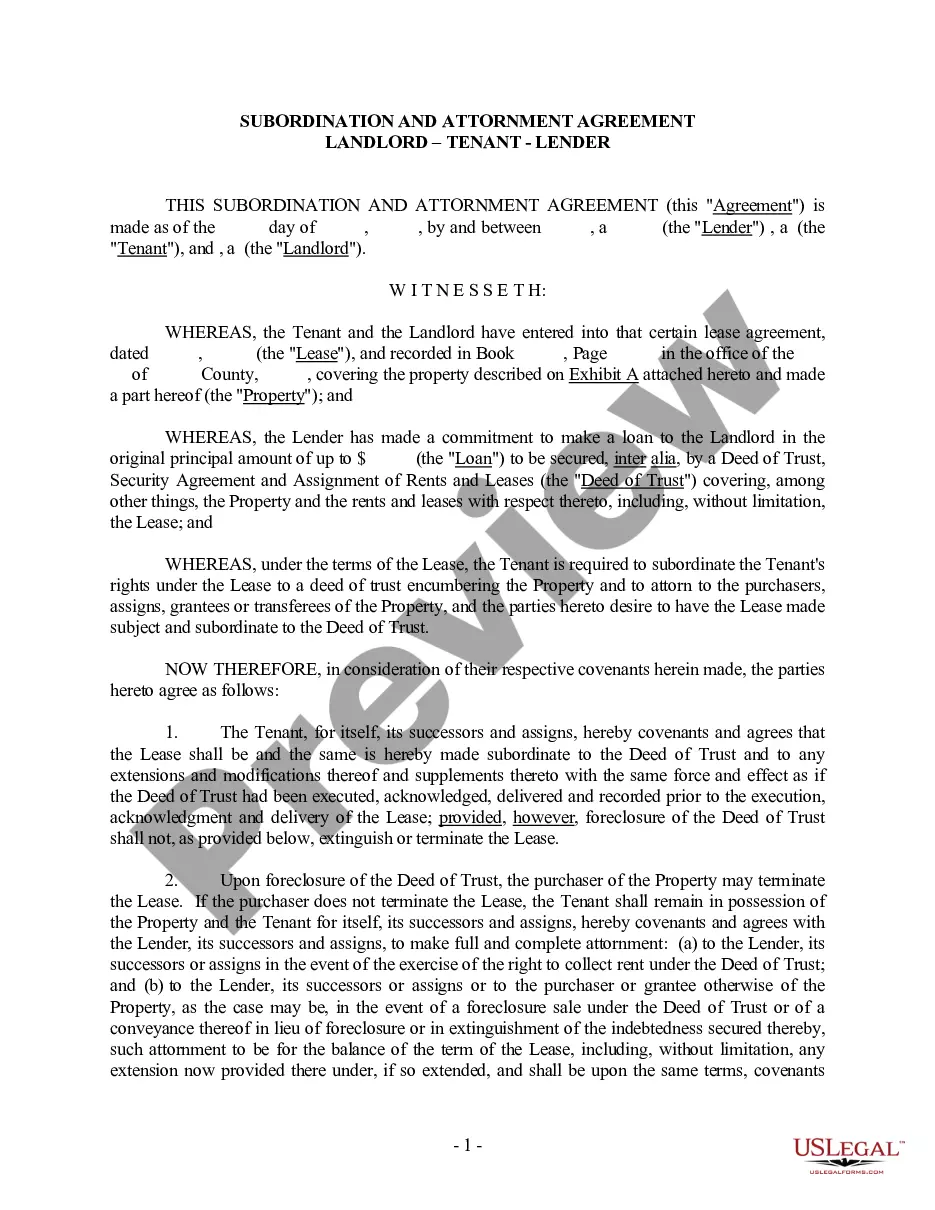
Landlord Subordination Agreement With Bank
Description
Get your form ready online
Our built-in tools help you complete, sign, share, and store your documents in one place.
Make edits, fill in missing information, and update formatting in US Legal Forms—just like you would in MS Word.
Download a copy, print it, send it by email, or mail it via USPS—whatever works best for your next step.
Sign and collect signatures with our SignNow integration. Send to multiple recipients, set reminders, and more. Go Premium to unlock E-Sign.
If this form requires notarization, complete it online through a secure video call—no need to meet a notary in person or wait for an appointment.
We protect your documents and personal data by following strict security and privacy standards.

Make edits, fill in missing information, and update formatting in US Legal Forms—just like you would in MS Word.

Download a copy, print it, send it by email, or mail it via USPS—whatever works best for your next step.

Sign and collect signatures with our SignNow integration. Send to multiple recipients, set reminders, and more. Go Premium to unlock E-Sign.

If this form requires notarization, complete it online through a secure video call—no need to meet a notary in person or wait for an appointment.

We protect your documents and personal data by following strict security and privacy standards.
Looking for another form?
How to fill out Texas Lease Subordination Agreement?
Regardless of whether you handle documents frequently or need to submit a legal document from time to time, it is essential to obtain a valuable resource where all the templates are interconnected and current.
One task you must complete with a Landlord Subordination Agreement With Bank is to ensure that it is the latest version, as this determines its eligibility for submission.
If you want to simplify your hunt for the most recent document samples, look for them on US Legal Forms.
To procure a form without an account, follow these guidelines: Use the search feature to locate the required form. Review the Landlord Subordination Agreement With Bank preview and details to confirm it’s exactly what you need. After verifying the form, click Buy Now. Choose a subscription plan that suits you. Create an account or Log In to your existing one. Provide your credit card details or PayPal account to finalize the purchase. Choose the download file format and confirm it. No more confusion with legal documents; all your templates will be organized and validated with a US Legal Forms account.
- US Legal Forms is a repository of legal documents featuring almost any document example you can think of.
- Search for the templates you need, review their relevance instantly, and learn more about their application.
- With US Legal Forms, you gain access to around 85,000 document templates across various sectors.
- Obtain the Landlord Subordination Agreement With Bank samples with just a few clicks and save them in your account anytime.
- Having a US Legal Forms account allows you to access all the documents you need with greater ease and minimal hassle.
- Simply click Log In in the website header and navigate to the My documents section containing all the forms you require at your fingertips, eliminating the need to waste time searching for the correct template or verifying its relevance.
Form popularity
FAQ
Subordination itself is the act of placing something in a lower-ranking position. Mortgage subordination boils down to a ranking system on the liens secured by your home. A lien is a legal agreement that grants the lender a right to repossess the property if you default on the loan.
The subordination clause gives the third-party lender the option to terminate the lease in the event of commercial foreclosure. A non-disturbance clause or agreement provides the tenant the right to continue occupying the leased premises as long as they do not default.
A subordination agreement is a legal document that establishes one debt as ranking behind another in priority for collecting repayment from a debtor. The priority of debts can become extremely important when a debtor defaults on payments or declares bankruptcy.
Subordination agreements are prepared by your lender. The process occurs internally if you only have one lender. When your mortgage and home equity line or loan have different lenders, both financial institutions work together to draft the necessary paperwork.
Despite its technical-sounding name, the subordination agreement has one simple purpose. It assigns your new mortgage to first lien position, making it possible to refinance with a home equity loan or line of credit. Signing your agreement is a positive step forward in your refinancing journey.