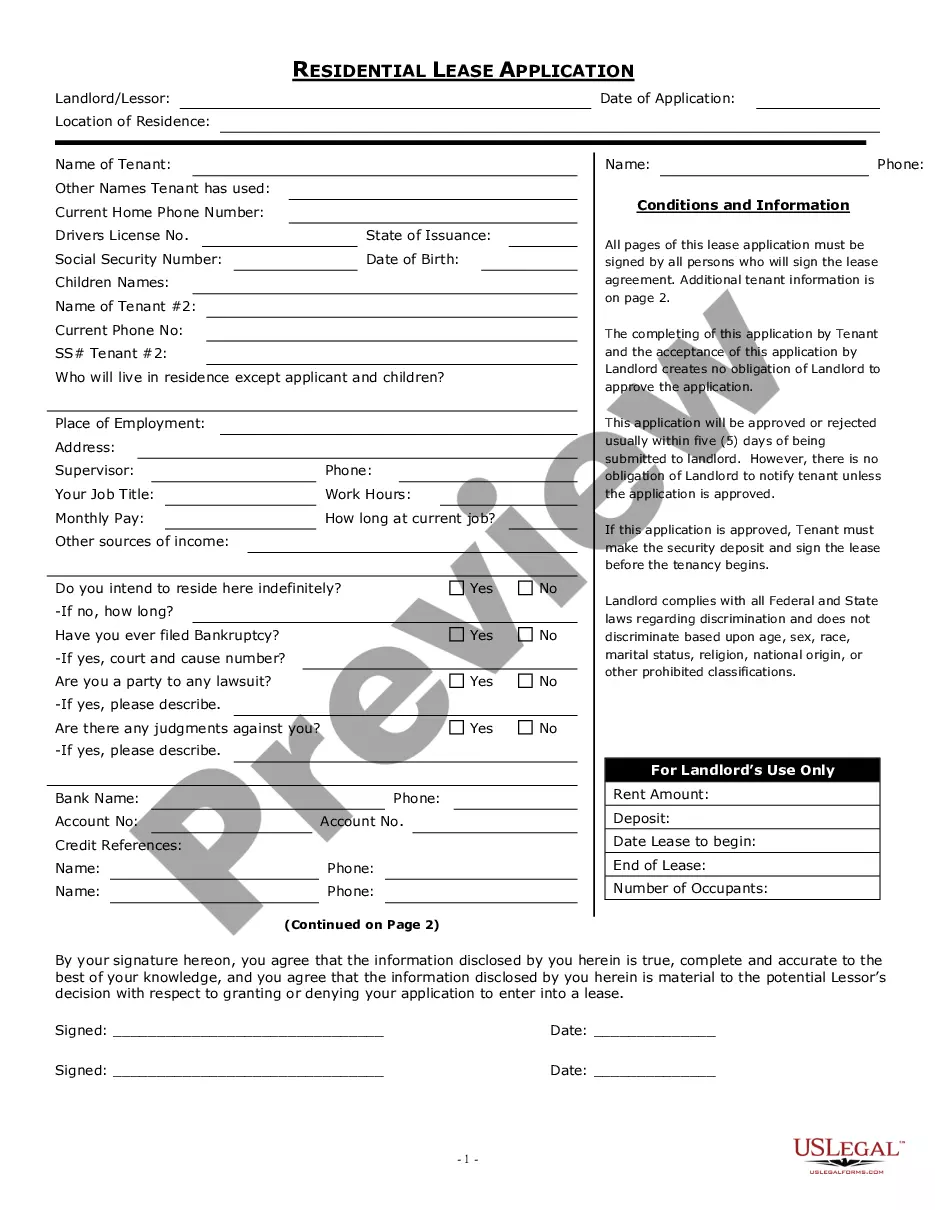
Texas Rental Application For Residents And Occupants
Description

Get your form ready online
Our built-in tools help you complete, sign, share, and store your documents in one place.
Make edits, fill in missing information, and update formatting in US Legal Forms—just like you would in MS Word.
Download a copy, print it, send it by email, or mail it via USPS—whatever works best for your next step.
Sign and collect signatures with our SignNow integration. Send to multiple recipients, set reminders, and more. Go Premium to unlock E-Sign.
If this form requires notarization, complete it online through a secure video call—no need to meet a notary in person or wait for an appointment.
We protect your documents and personal data by following strict security and privacy standards.

Make edits, fill in missing information, and update formatting in US Legal Forms—just like you would in MS Word.

Download a copy, print it, send it by email, or mail it via USPS—whatever works best for your next step.

Sign and collect signatures with our SignNow integration. Send to multiple recipients, set reminders, and more. Go Premium to unlock E-Sign.

If this form requires notarization, complete it online through a secure video call—no need to meet a notary in person or wait for an appointment.

We protect your documents and personal data by following strict security and privacy standards.
Looking for another form?








How to fill out Texas Residential Rental Lease Application?
Regardless of whether it is for professional reasons or personal matters, everyone must confront legal scenarios at some point in their lives. Filling out legal documents requires meticulous attention, starting with choosing the correct form template.
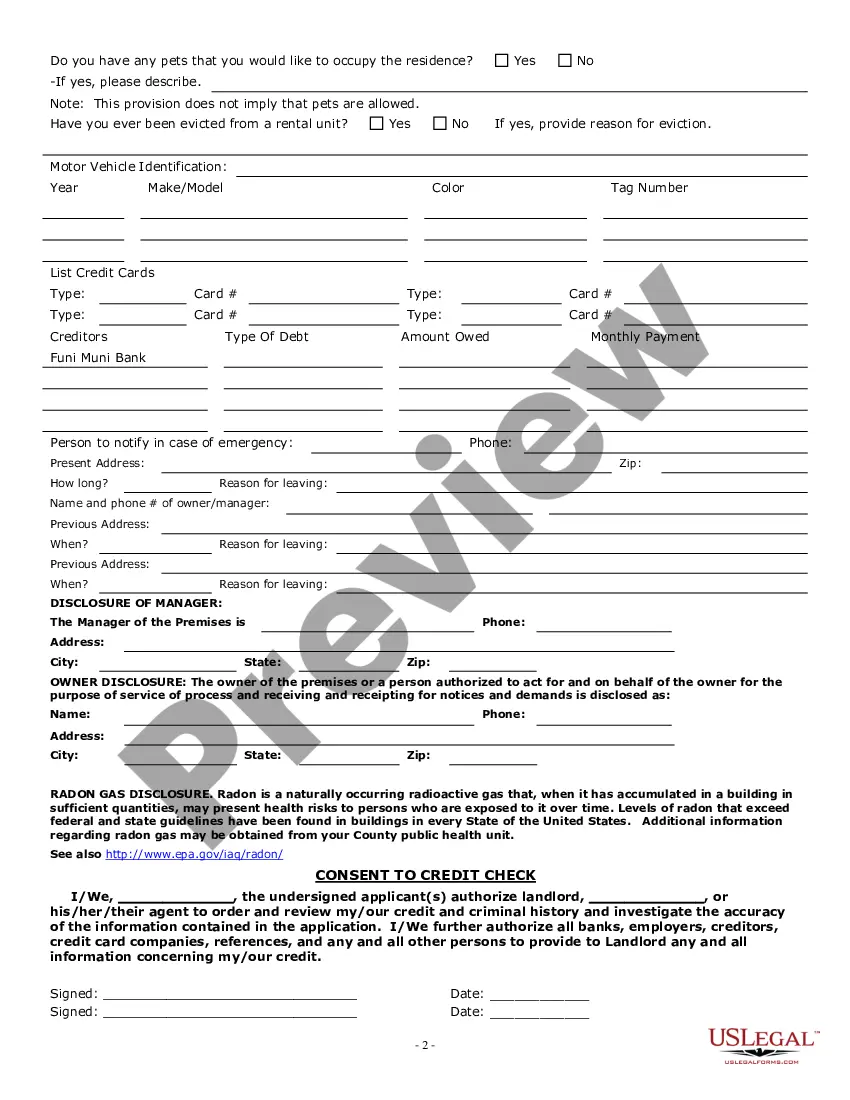
For example, if you select an incorrect version of a Texas Rental Application For Residents And Occupants, it will be rejected upon submission. Thus, it is crucial to have a reliable source for legal documents like US Legal Forms.
With an extensive catalog from US Legal Forms available, you do not need to waste time searching for the correct template online. Utilize the library’s straightforward navigation to find the suitable form for any circumstance.
- Locate the template you require using the search bar or catalog navigation.
- Examine the form’s description to ensure it aligns with your situation, state, and county.
- Click on the form’s preview to review it.
- If it is the incorrect document, return to the search tool to find the Texas Rental Application For Residents And Occupants template you need.
- Download the template if it meets your specifications.
- If you already possess a US Legal Forms account, just click Log in to access previously saved documents in My documents.
- If you haven't created an account yet, you can acquire the form by clicking Buy now.
- Select the appropriate pricing option.
- Complete the account registration form.
- Choose your payment method: utilize a credit card or PayPal account.
- Select the document format you prefer and download the Texas Rental Application For Residents And Occupants.
- Once it is downloaded, you can fill out the form using editing software or print it and complete it manually.
Form popularity
FAQ
An occupier is not the same as a tenant in Texas. An occupier lives in the property but does not have a formal lease agreement, which means they lack legal rights as a tenant. This distinction is important when filling out a Texas rental application for residents and occupants. Understanding these terms helps you clarify your housing situation and responsibilities.
In Texas, there is no specific duration you must live in your primary residence before renting it out. However, it's essential to check local laws and any mortgage or homeowner association rules. If you decide to rent, using a Texas rental application for residents and occupants will help you follow legal requirements and protect your rights as a landlord.
Yes, someone can live with you without being on the lease in Texas, but this can lead to potential issues. The lease may specify rules about additional occupants, and landlords usually require written consent for anyone living on the property. When completing a Texas rental application for residents and occupants, it is wise to disclose all individuals living in the unit to avoid conflicts later.
No, an occupant is not the same as a tenant in Texas. While tenants have a formal lease and legal rights to the property, occupants do not have these rights. Understanding this difference can help you navigate your housing situation better. When using a Texas rental application for residents and occupants, clearly differentiate between tenants and occupants to ensure proper documentation.
A tenant in Texas is someone who has a lease agreement with the landlord, giving them the right to occupy the dwelling. This agreement typically includes terms such as duration, rent amount, and responsibilities. Completing a Texas rental application for residents and occupants is a crucial step in becoming a tenant. Make sure to provide accurate information to establish your tenancy.
In Texas, a tenant is someone who has signed a lease and has legal rights to the property. An occupant, on the other hand, is a person living in the property but not necessarily named on the lease. Understanding this distinction is important when completing a Texas rental application for residents and occupants. This knowledge helps you identify your rights and responsibilities.
Yes, a landlord can limit the number of occupants in Texas. This limitation is often included in the lease agreement. In general, landlords establish these limits to ensure safety and compliance with local occupancy laws. When filling out a Texas rental application for residents and occupants, be sure to clarify these limits to avoid any misunderstandings.
In Texas, someone can live with you without being on the lease, but this arrangement is risky. Your landlord may not approve of additional occupants, leading to possible eviction or fines. To protect yourself and your new housemate, you should look into a Texas rental application for residents and occupants to ensure everyone is documented and compliant with your lease.
If someone moves in with you who isn’t on your lease, you may be violating your rental agreement. This can lead to potential issues with your landlord, including fines or even eviction. It's essential to review your lease terms carefully. To avoid complications, consider submitting a Texas rental application for residents and occupants to include them officially.