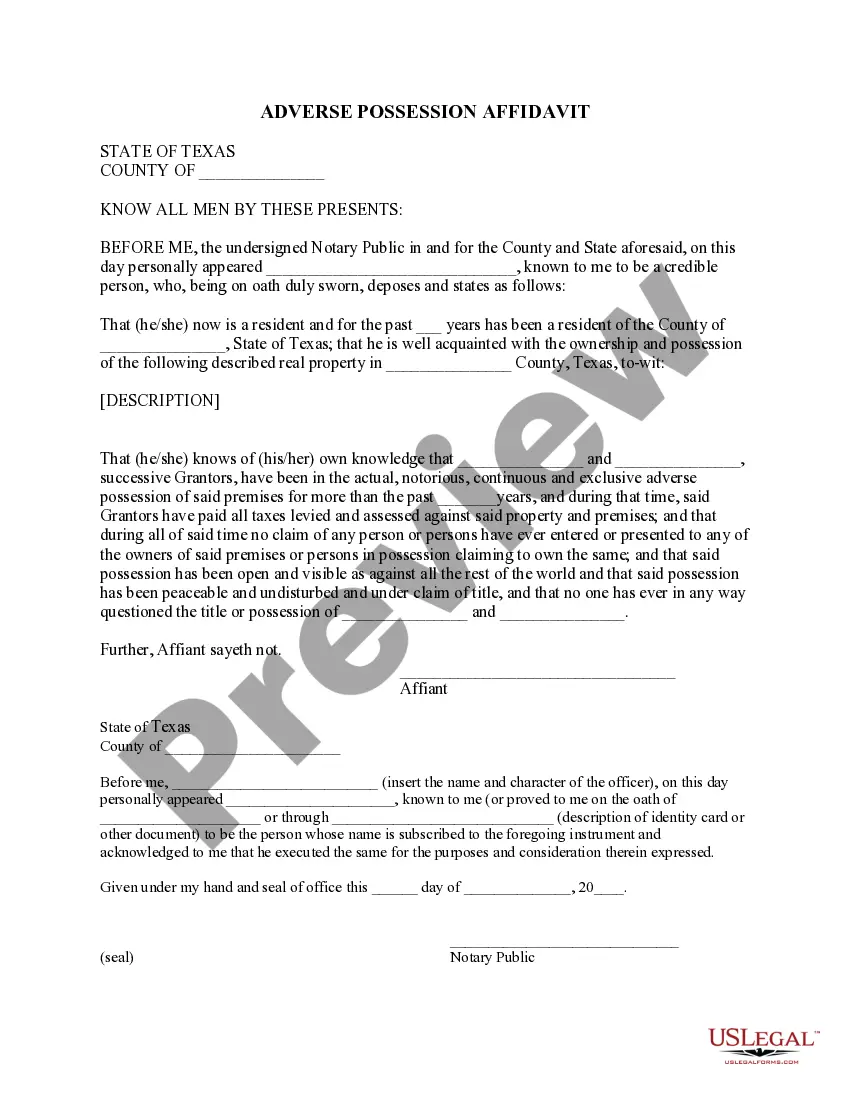
Texas Laws For Squatters
Description
Get your form ready online
Our built-in tools help you complete, sign, share, and store your documents in one place.
Make edits, fill in missing information, and update formatting in US Legal Forms—just like you would in MS Word.
Download a copy, print it, send it by email, or mail it via USPS—whatever works best for your next step.
Sign and collect signatures with our SignNow integration. Send to multiple recipients, set reminders, and more. Go Premium to unlock E-Sign.
If this form requires notarization, complete it online through a secure video call—no need to meet a notary in person or wait for an appointment.
We protect your documents and personal data by following strict security and privacy standards.

Make edits, fill in missing information, and update formatting in US Legal Forms—just like you would in MS Word.

Download a copy, print it, send it by email, or mail it via USPS—whatever works best for your next step.

Sign and collect signatures with our SignNow integration. Send to multiple recipients, set reminders, and more. Go Premium to unlock E-Sign.

If this form requires notarization, complete it online through a secure video call—no need to meet a notary in person or wait for an appointment.

We protect your documents and personal data by following strict security and privacy standards.
Looking for another form?
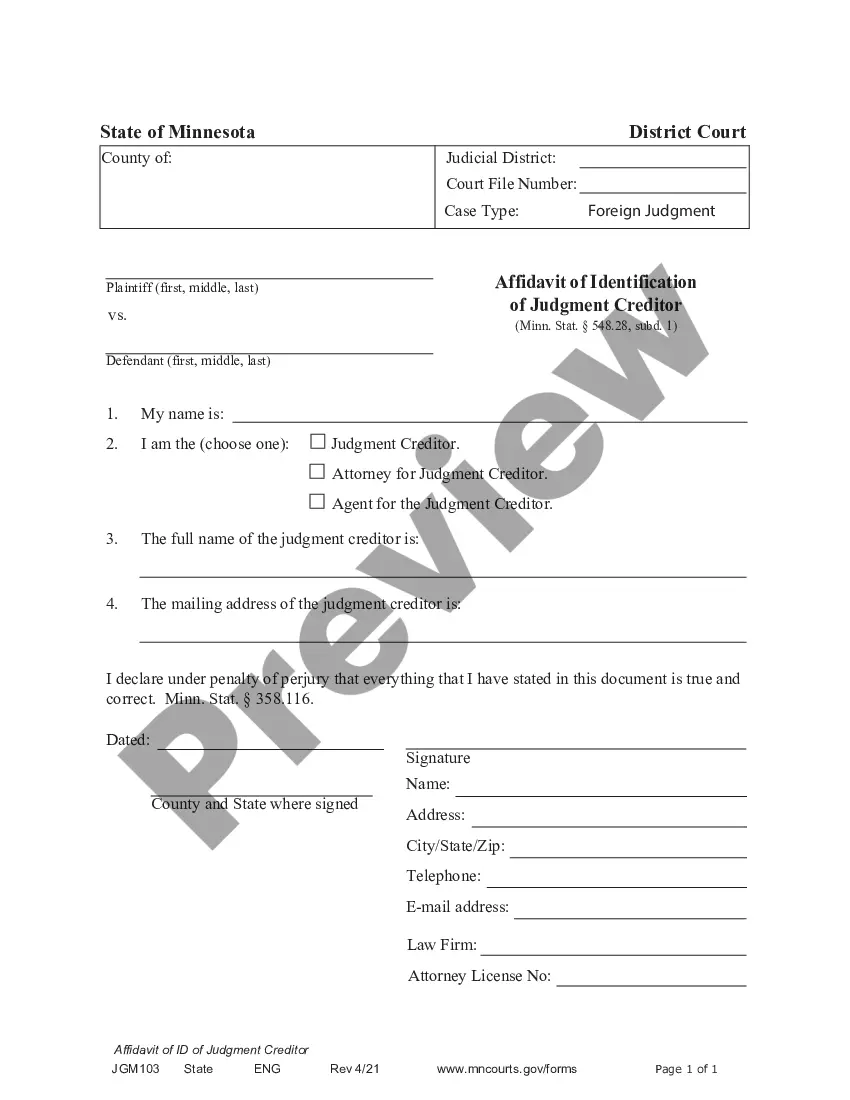


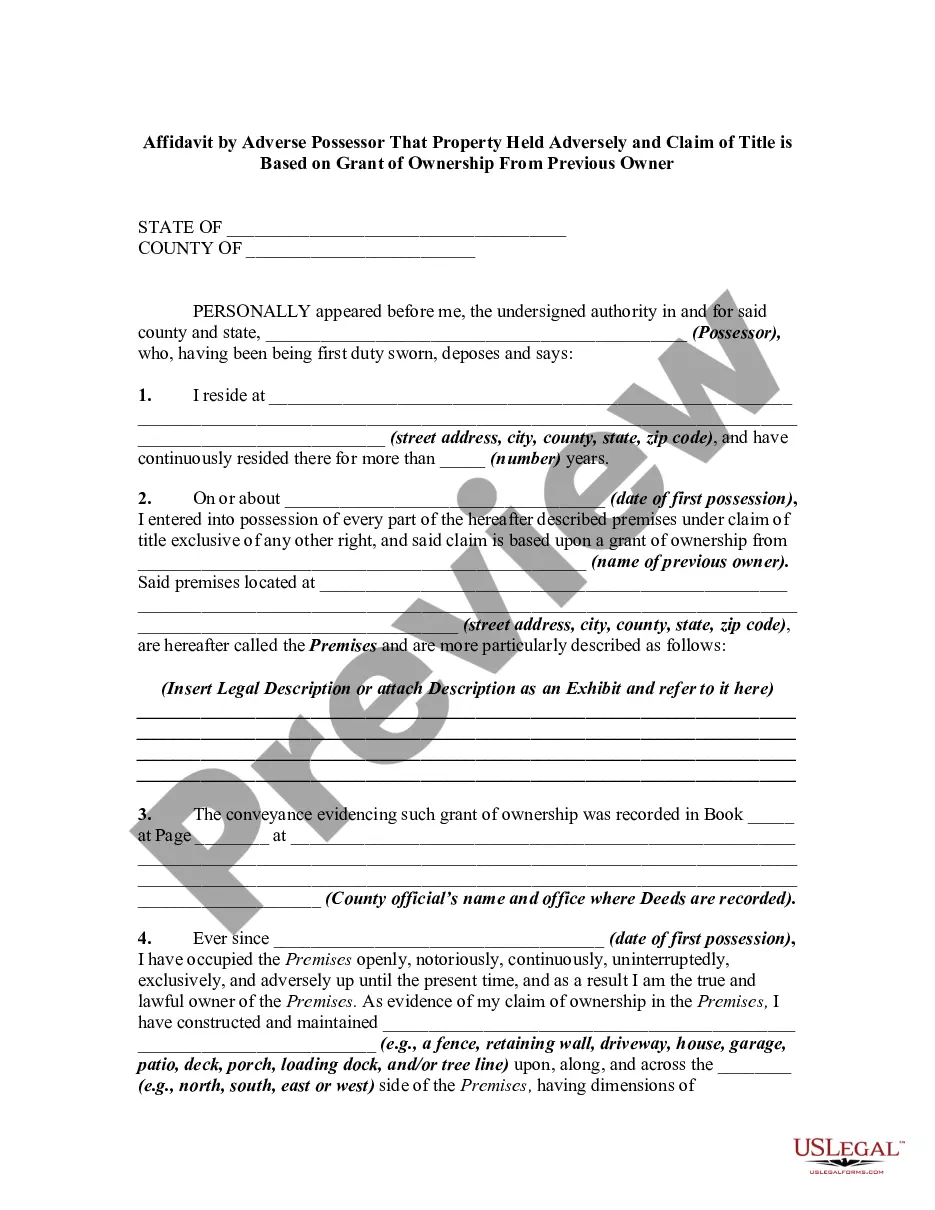
How to fill out Texas Adverse Possession Affidavit - Squatters Rights?
- If you're an existing user, log in to your account and locate the necessary form template. Ensure your subscription is active; otherwise, renew it based on your plan.
- For first-time users, begin by reviewing the Preview mode and description of the forms available. Confirm that the form meets your needs and complies with local jurisdiction requirements.
- If you need another template, utilize the Search option to find the appropriate document. Once you identify a suitable form, proceed to the next step.
- Select the document you need by clicking the Buy Now button and choose a subscription plan that fits your requirements. You will need to create an account to gain access to the resources.
- Complete your purchase by entering your credit card information or through PayPal. Once payment is confirmed, you'll be ready to download.
- Finally, download your form and save it on your device. You'll also have access to the document anytime through the My Forms section in your profile.
Accessing the correct legal documents can significantly streamline your efforts to understand and address squatter situations in Texas. US Legal Forms stands out with its extensive library and ease-of-use, ensuring you can find the forms you need quickly.
Don't navigate Texas laws for squatters alone; take advantage of US Legal Forms' resources today and secure the help you need!
Form popularity
FAQ
In Texas, squatters can gain rights to a property if they have lived there continuously for at least 10 years, according to the laws governing adverse possession. Understanding this time frame is key to protecting yourself against unauthorized occupants. To better understand your options, consider resources available through platforms like USLegalForms.
The best way to remove a squatter from your home is by following the legal eviction process outlined in Texas laws for squatters. This process typically involves filing a lawsuit and obtaining a court order to evict the squatters. Having a thorough understanding of your rights will help you navigate this situation effectively.
Turning off utilities to a property occupied by squatters is generally not advisable in Texas. Doing so could be seen as harassment under Texas laws for squatters, which can complicate your situation. Instead, it is wise to seek legal advice on how to proceed with eviction in a more lawful manner.
Under Texas law, a person can claim squatter rights after continuous and open possession of a property for at least 10 years. This time frame is part of the adverse possession principle within Texas laws for squatters. If you are concerned about squatters, you should monitor your property regularly to protect your rights.
In Texas, you can initiate legal actions to remove squatters from your property, but you must follow the proper procedures. Trespassing laws are applicable, and you may need to file an eviction lawsuit to formally remove squatters under Texas laws for squatters. It's crucial to understand your rights and responsibilities before taking any action.
While it may seem tempting to kick a squatter out directly, Texas laws for squatters require a more lawful approach. You must follow the proper legal process, which includes providing notice and possibly going to court. By educating yourself about the eviction laws in Texas, you can effectively and legally remove a squatter without complications.
Evicting a squatter in Texas involves several steps outlined in Texas laws for squatters. First, you should provide them with a written notice to vacate your property. If they do not leave, you may need to file an eviction lawsuit in your local court. Utilizing legal resources, like US Legal Forms, can help you navigate the eviction process smoothly.
Under Texas laws for squatters, using force, including shooting, is not a legal option for dealing with trespassers. Property owners must follow lawful procedures to address trespassing issues. Instead of resorting to violence, you should seek legal advice to understand your rights and the appropriate steps to remove a squatter from your property.
In Texas, to qualify for squatters rights, you must occupy a property continuously for a certain period, typically ten years, without the property owner's permission. Additionally, your occupation must be open and notorious, meaning it’s visible and obvious. Engaging with resources such as USLegalForms can clarify specific requirements and paperwork involved, ensuring you comply with Texas laws for squatters. Understanding these requirements will help you secure your rights.
To file for squatters rights in Texas, begin by gathering evidence of your residency, such as utility bills or rental agreements. Next, visit your local courthouse to file an application or complaint to assert your rights. You may also want to check out resources available on platforms like USLegalForms, which provide guidance on the necessary legal processes and paperwork. Following these steps helps you navigate Texas laws for squatters effectively.