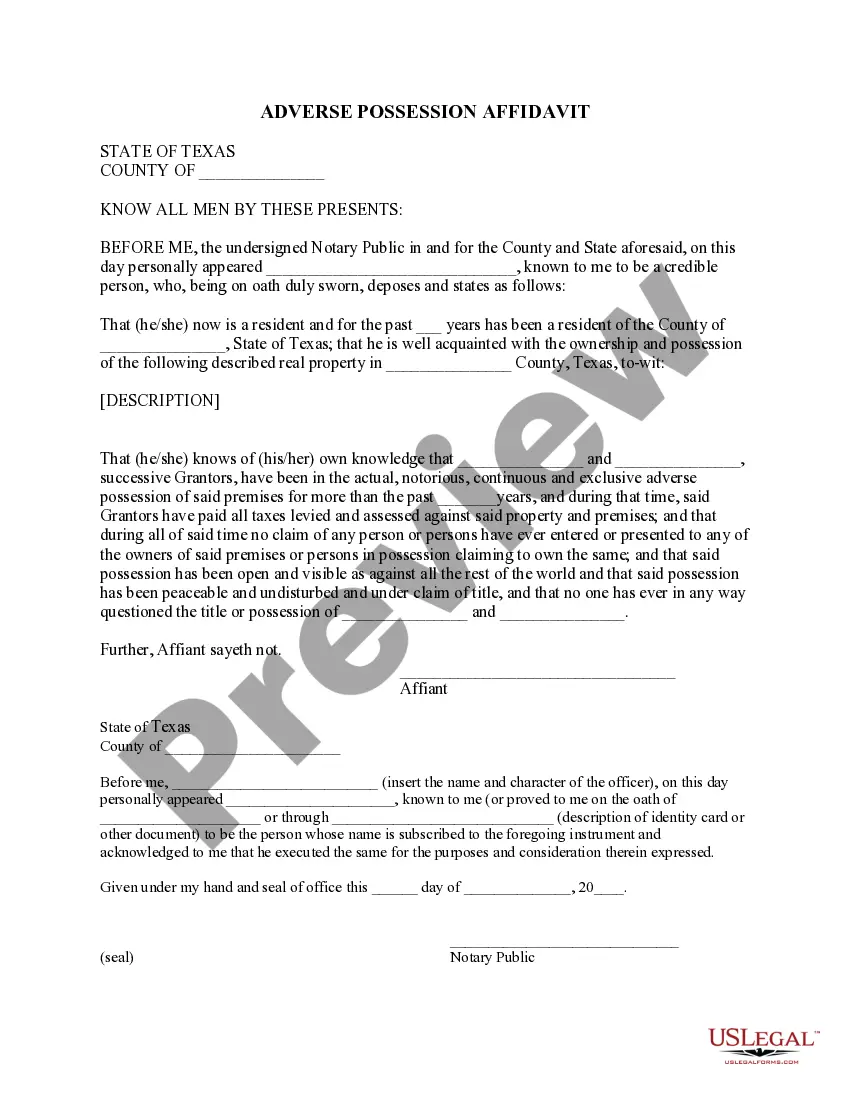
Real Estate Adverse Possession With Texas
Description
Get your form ready online
Our built-in tools help you complete, sign, share, and store your documents in one place.
Make edits, fill in missing information, and update formatting in US Legal Forms—just like you would in MS Word.
Download a copy, print it, send it by email, or mail it via USPS—whatever works best for your next step.
Sign and collect signatures with our SignNow integration. Send to multiple recipients, set reminders, and more. Go Premium to unlock E-Sign.
If this form requires notarization, complete it online through a secure video call—no need to meet a notary in person or wait for an appointment.
We protect your documents and personal data by following strict security and privacy standards.

Make edits, fill in missing information, and update formatting in US Legal Forms—just like you would in MS Word.

Download a copy, print it, send it by email, or mail it via USPS—whatever works best for your next step.

Sign and collect signatures with our SignNow integration. Send to multiple recipients, set reminders, and more. Go Premium to unlock E-Sign.

If this form requires notarization, complete it online through a secure video call—no need to meet a notary in person or wait for an appointment.

We protect your documents and personal data by following strict security and privacy standards.
Looking for another form?







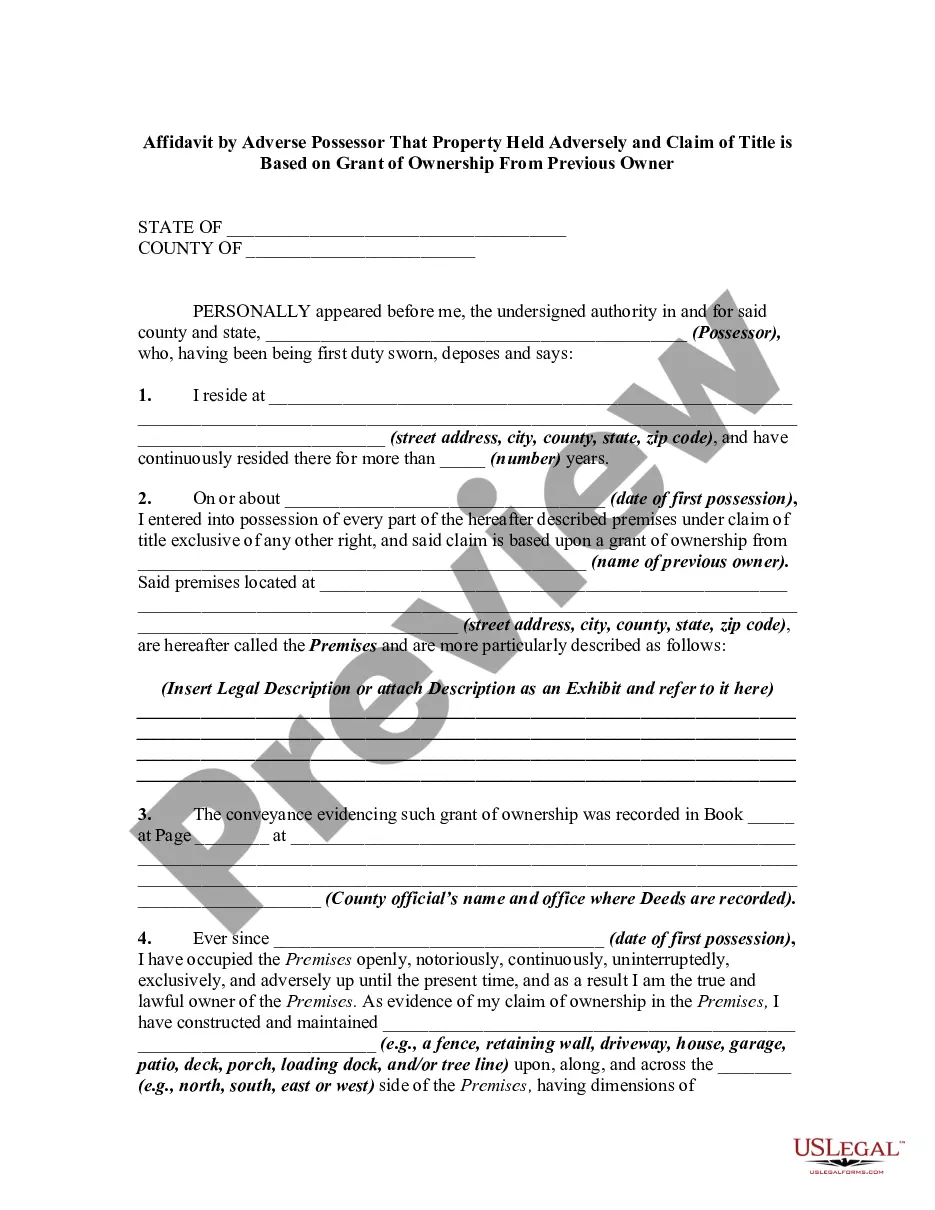
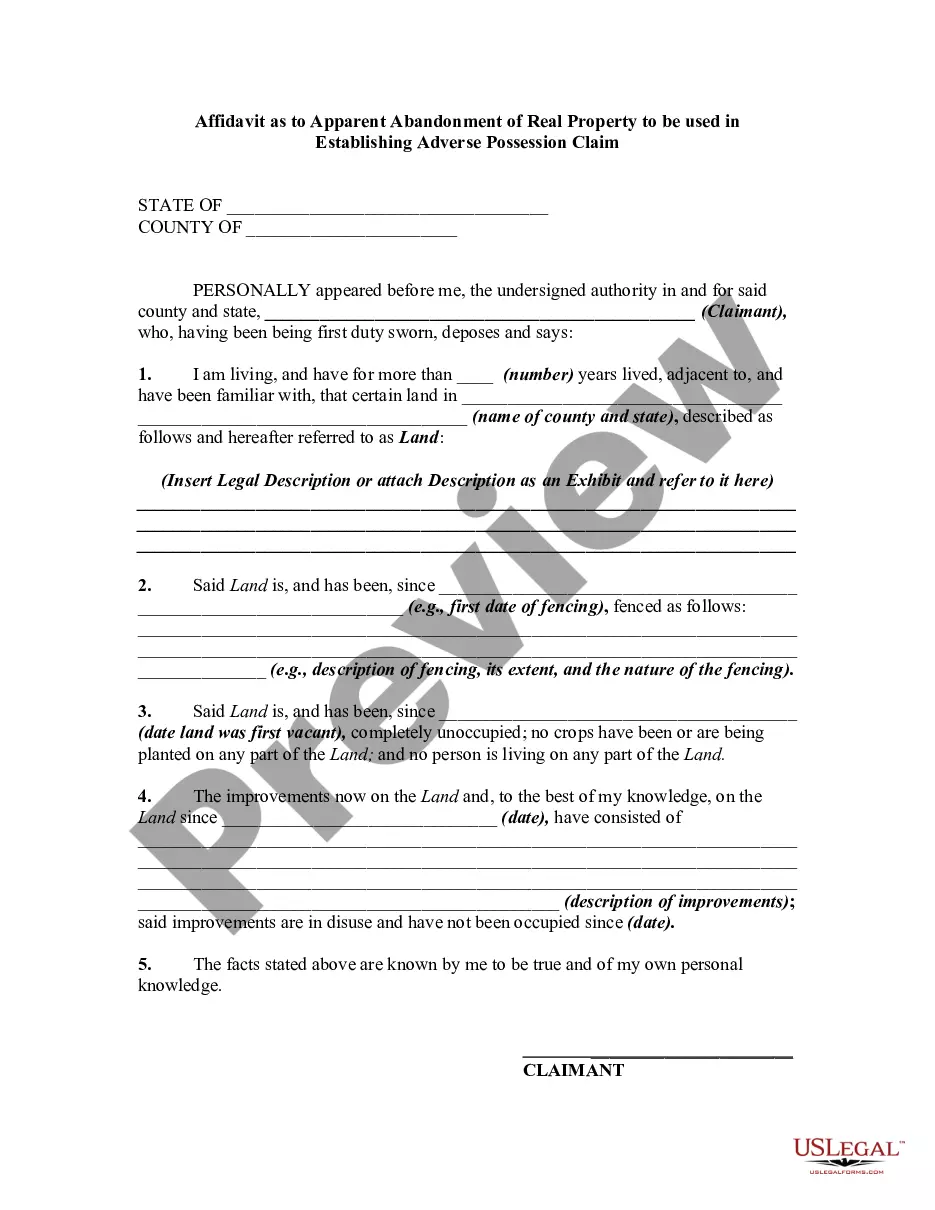
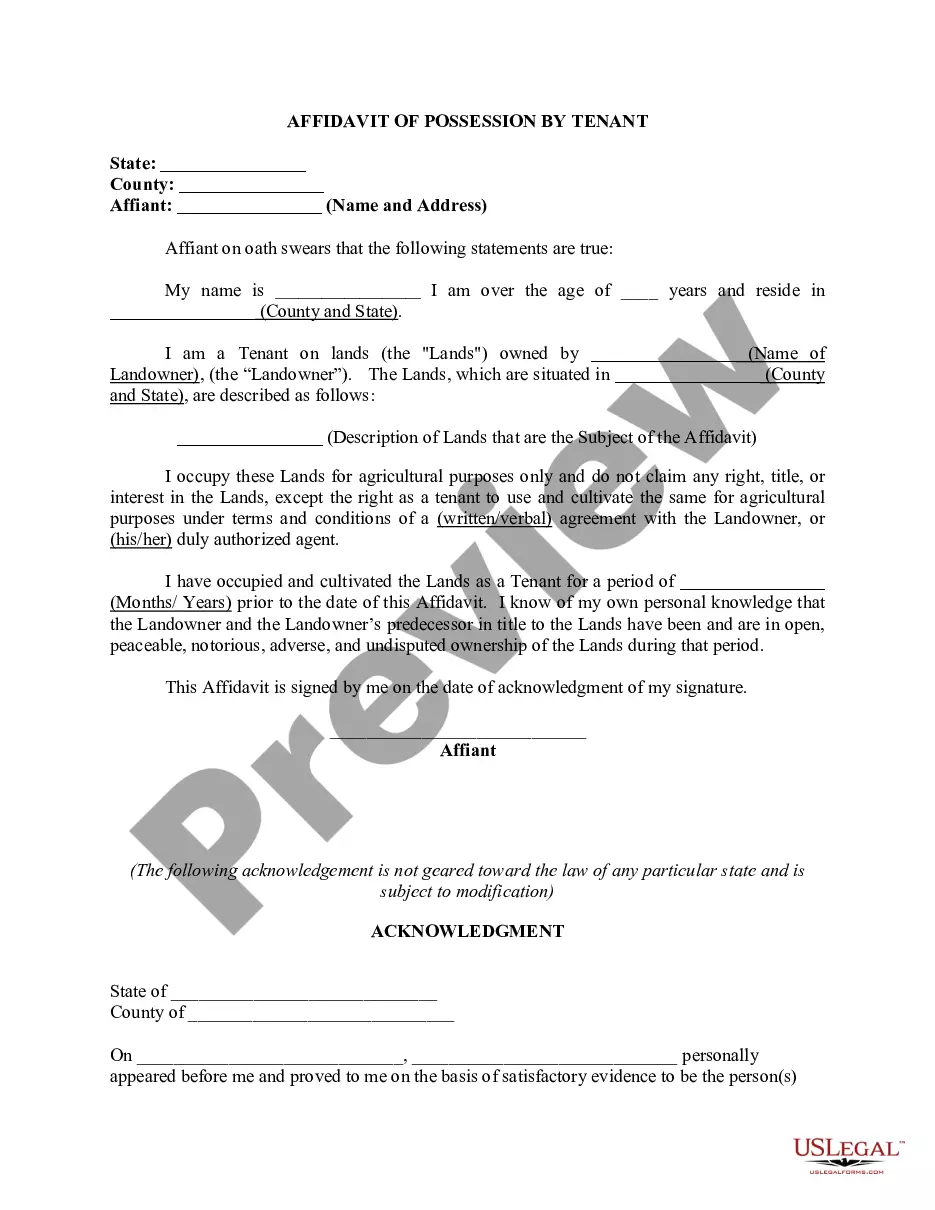
How to fill out Texas Adverse Possession Affidavit - Squatters Rights?
The Real Estate Adverse Possession With Texas presented on this page is a reusable formal model created by qualified attorneys in compliance with federal and local statutes.
For over 25 years, US Legal Forms has supplied individuals, corporations, and lawyers with more than 85,000 validated, state-specific documents for any business and personal situation. It’s the fastest, easiest, and most trustworthy method to acquire the necessary paperwork, as the service promises bank-level data security and anti-malware safeguards.
Register with US Legal Forms to access verified legal templates for all of life's circumstances at your fingertips.
- Search for the document you require and review it.
- Browse the file you searched and preview it or verify the form description to ensure it meets your needs. If it doesn't, utilize the search bar to locate the appropriate one. Click Buy Now once you have found the template you need.
- Subscribe and Log In.
- Select the pricing option that fits you and create an account. Use PayPal or a credit card for a swift payment. If you already possess an account, Log In and verify your subscription to continue.
- Obtain the editable template.
- Choose the format you desire for your Real Estate Adverse Possession With Texas (PDF, Word, RTF) and save the document on your device.
- Complete and sign the documents.
- Print the template to fill it out manually. Alternatively, utilize an online multi-functional PDF editor to swiftly and accurately complete and sign your form with an electronic signature.
- Download your documents again.
- Use the same document again whenever necessary. Access the My documents tab in your profile to redownload any previously saved documents.
Form popularity
FAQ
Steps for Making a Financial Power of Attorney in South Carolina Create the POA Using Software or an Attorney. ... Sign the POA in the Presence of Two Witnesses and Get It Notarized. ... File a Copy With the Land Records Office. ... Store the Original POA in a Safe Place. ... Give a Copy to Your Agent or Attorney-in-Fact.
You can write a POA in two forms: general or limited. A general power of attorney allows the agent to make a wide range of decisions. This is your best option if you want to maximize the person's freedom to handle your assets and manage your care.
Durable Power of Attorney This is the most common type of POA?it gives your agent the power to make decisions relative to some issues if you are incapacitated. It also empowers your agent to act on your behalf in legal matters and other vital matters during a time when you can't be present.
The specific requirements and restrictions for PoA forms will vary in each state; however, in South Carolina, your Power of Attorney will require notarization and the signatures of two witnesses. If your agent will manage real estate transactions, the Power of Attorney must be notarized and recorded with your county.
The POA cannot transfer the responsibility to another Agent at any time. The POA cannot make any legal or financial decisions after the death of the Principal, at which point the Executor of the Estate would take over. The POA cannot distribute inheritances or transfer assets after the death of the Principal.
One major downfall of a POA is the agent may act in ways or do things that the principal had not intended. There is no direct oversight of the agent's activities by anyone other than you, the principal. This can lend a hand to situations such as elder financial abuse and/or fraud.
This person is called your "agent" or "attorney-in-fact." In order to make sure that this person can act on your behalf if you become incapacitated, you need to make sure that the power of attorney is a "durable" power of attorney. Otherwise, a power of attorney ends if you become incapacitated.
New York's new POA law requires that the principal's signature be notarized in addition to the POA being signed with two witnesses present (note that the notary can be one of your witnesses). New York's old power of attorney law also required POAs to be notarized, but didn't require them to be witnessed.