Texas Warranty Deed Transfer
Description

Get your form ready online
Our built-in tools help you complete, sign, share, and store your documents in one place.
Make edits, fill in missing information, and update formatting in US Legal Forms—just like you would in MS Word.
Download a copy, print it, send it by email, or mail it via USPS—whatever works best for your next step.
Sign and collect signatures with our SignNow integration. Send to multiple recipients, set reminders, and more. Go Premium to unlock E-Sign.
If this form requires notarization, complete it online through a secure video call—no need to meet a notary in person or wait for an appointment.
We protect your documents and personal data by following strict security and privacy standards.

Make edits, fill in missing information, and update formatting in US Legal Forms—just like you would in MS Word.

Download a copy, print it, send it by email, or mail it via USPS—whatever works best for your next step.

Sign and collect signatures with our SignNow integration. Send to multiple recipients, set reminders, and more. Go Premium to unlock E-Sign.

If this form requires notarization, complete it online through a secure video call—no need to meet a notary in person or wait for an appointment.

We protect your documents and personal data by following strict security and privacy standards.
Looking for another form?






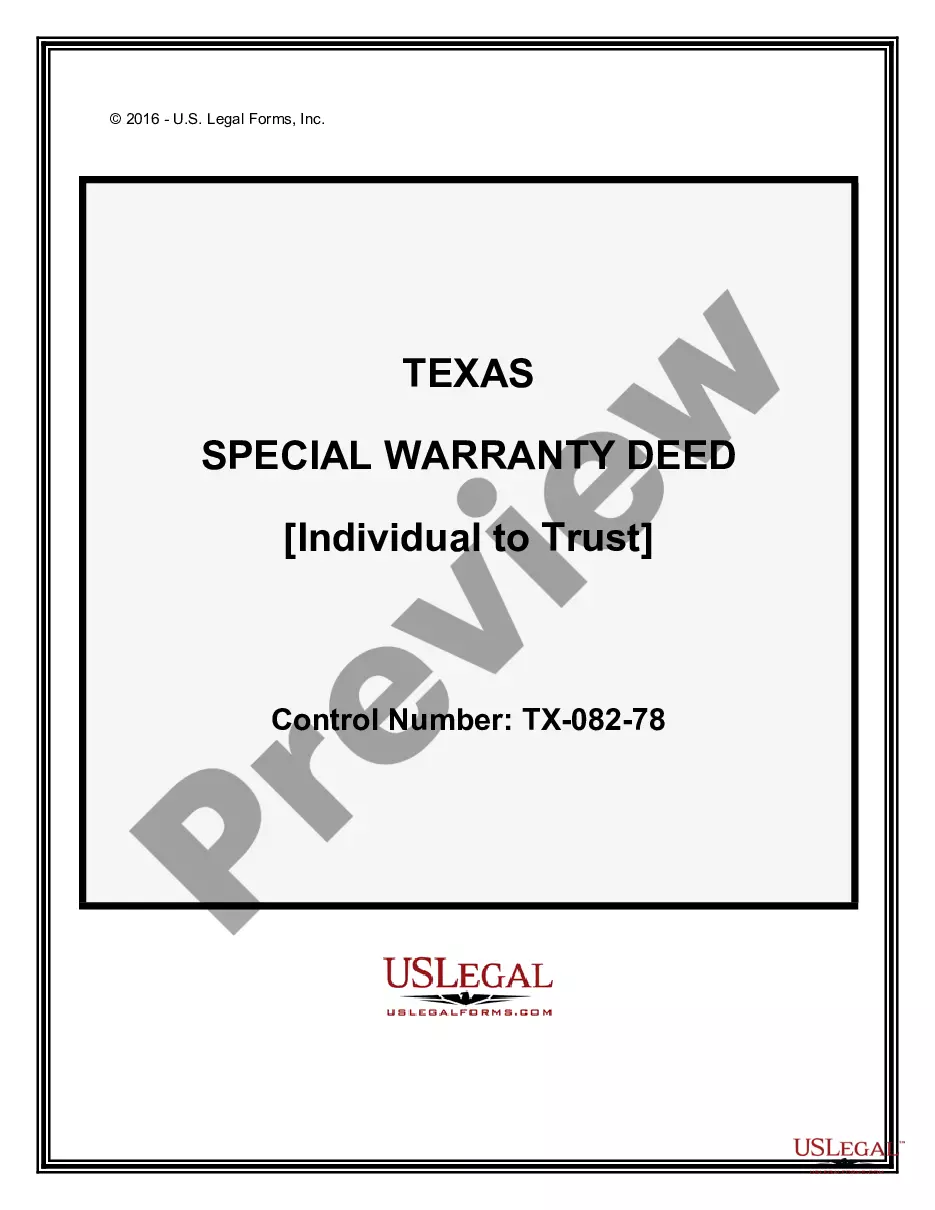
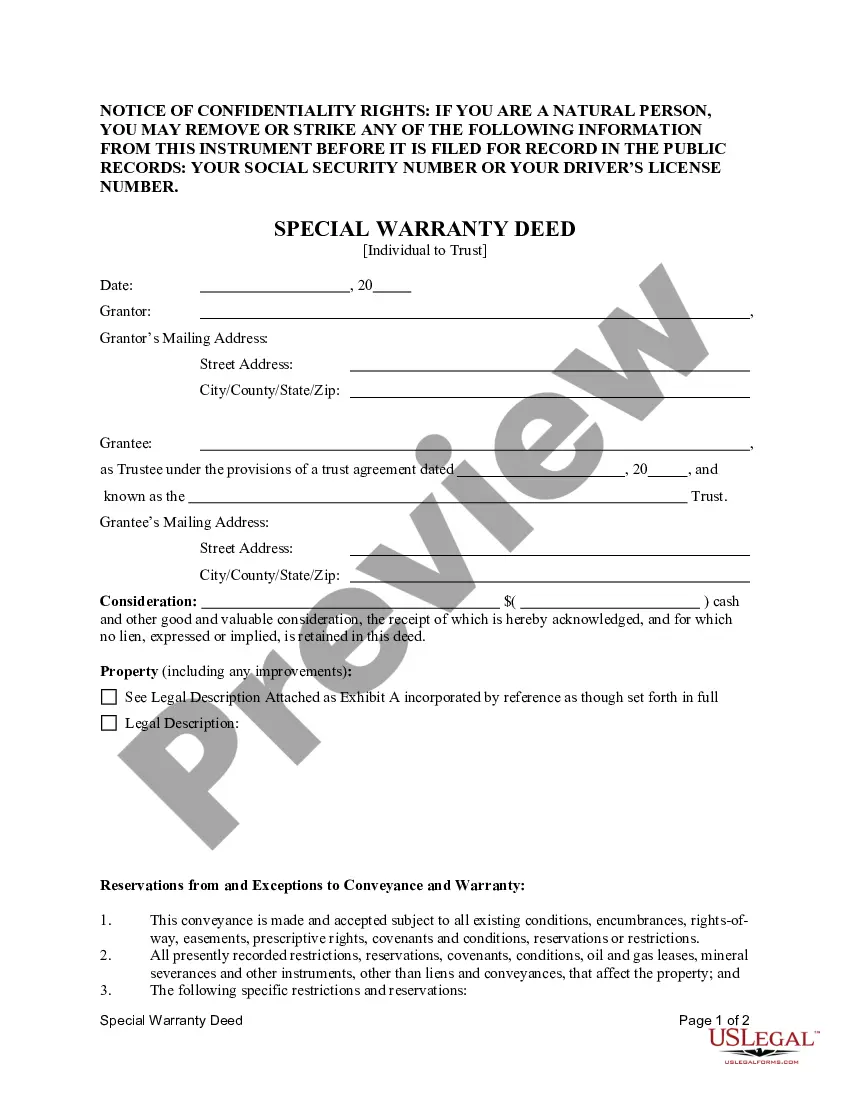
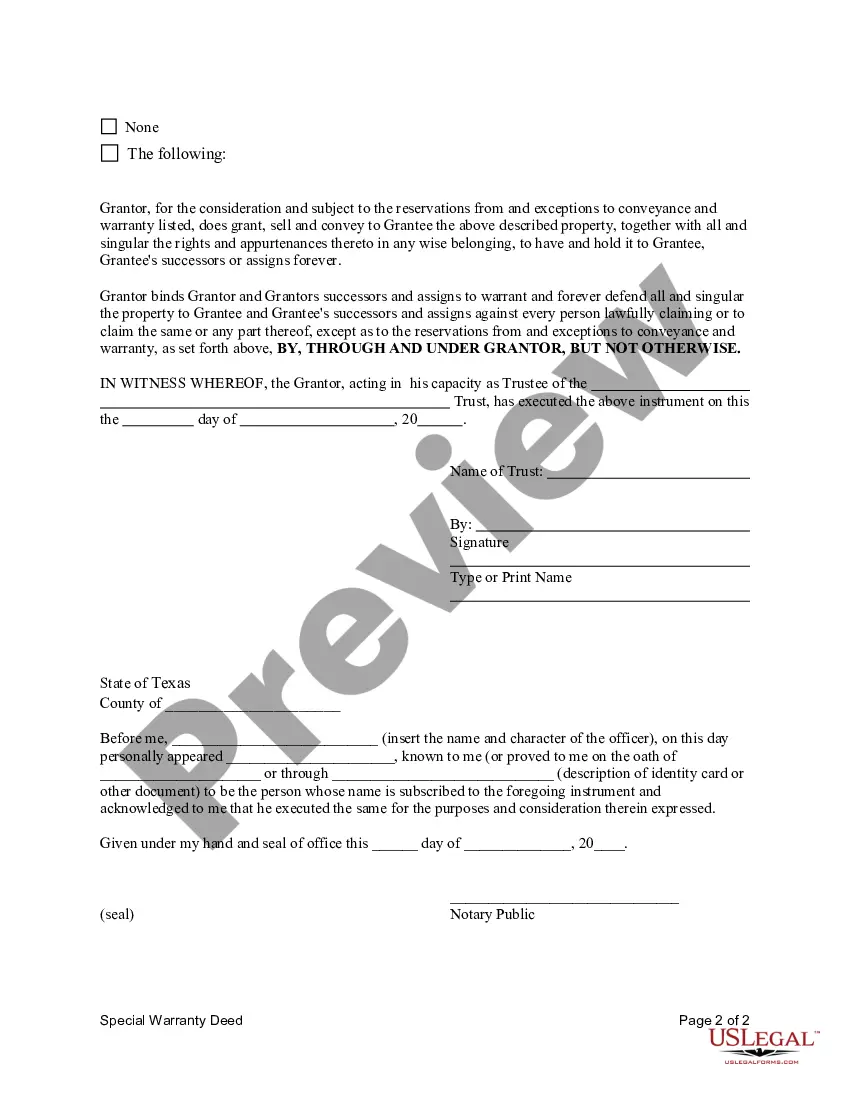
How to fill out Texas Special Warranty Deed From An Individual To A Trust?
- If you are an existing user, log in and download your necessary form by clicking the Download button, ensuring your subscription is active.
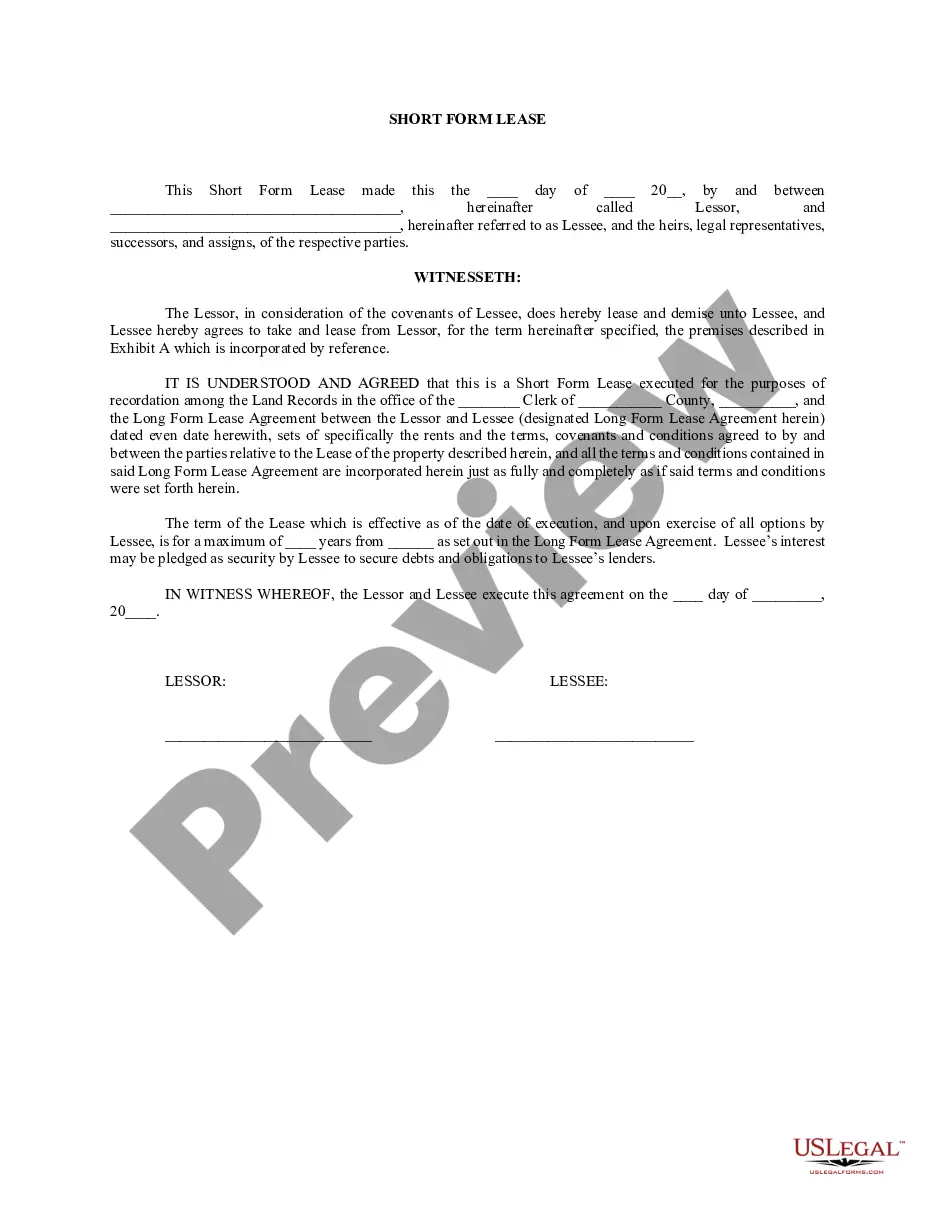
- For first-time users, start by exploring the Preview mode and reading the form description to confirm it fits your requirements.
- If the selected template isn’t quite right, utilize the Search tab above to find another applicable form.
- Once you've found the right document, click the Buy Now button and select your desired subscription plan; registration is necessary for account access.
- Complete your purchase by entering your credit card information or using your PayPal account to finalize the subscription.
- Finally, download your form to your device. You can find it anytime in the My Forms section of your profile.
Using US Legal Forms empowers you to effortlessly obtain legal documents, ensuring you have access to more forms than competitors at a similar cost.
Start your Texas warranty deed transfer today with US Legal Forms, and take advantage of our comprehensive resources and expert support!
Form popularity
FAQ
Filling out a warranty deed in Texas involves several key steps. First, you will need to select the appropriate form and provide the grantor's and grantee's names, along with the property description. Following this, ensure you include any necessary conditions and sign the document before a notary to complete your Texas warranty deed transfer.
Yes, you can prepare your own warranty deed in Texas. There are online platforms like uslegalforms that provide the necessary templates and guidance to help you create a legally valid document. Just be sure to follow the local requirements to ensure your Texas warranty deed transfer is executed properly.
To transfer a deed in Texas, you need to complete a warranty deed that includes necessary information about both parties and the property. After filling it out, sign it in front of a notary and file it with the county clerk's office. This process formalizes the Texas warranty deed transfer and updates public records accordingly.
Writing a warranty deed involves drafting a clear outline with specific details. Include the date, names of the parties, the property description, and the warranties being provided. By using a service like uslegalforms, you can access templates and instructions that simplify the process of creating a Texas warranty deed transfer.
While it is not mandatory to hire a lawyer for a Texas warranty deed transfer, consulting one can be beneficial. A lawyer ensures that the deed complies with local laws and addresses any unique situation you may face. If you prefer to manage the process yourself, uslegalforms offers templates and resources to guide you.
To fill out a Texas warranty deed, begin with the title 'Warranty Deed' at the top. Fill in the parties' names, the property description, and specify any restrictions or covenants. Be sure to sign the deed in front of a notary to make your Texas warranty deed transfer legally binding.
Filling out a warranty form requires you to gather relevant information about the property and the parties involved. Start by indicating the names of the grantor and grantee, followed by the property's legal description. You’ll also need to include the date of execution and any relevant terms, ensuring you meet the requirements for a Texas warranty deed transfer.
Yes, you can transfer a deed without a lawyer in Texas if you understand the process. It involves filling out the warranty deed form, having it notarized, and filing it with the county clerk's office for proper record keeping. However, if you have any uncertainty about the details, using a platform like USLegalForms can provide the necessary guidance and templates for a smooth Texas warranty deed transfer.
To transfer a warranty deed in Texas, begin by gathering necessary information and completing the warranty deed form. Ensure the deed includes details like the property description and both the grantor and grantee’s names. After signing the document in front of a notary, file it with your county clerk’s office. By following these steps, you facilitate a proper Texas warranty deed transfer.
Yes, a warranty deed can be transferred from one owner to another. This process typically involves the completion of a new warranty deed form and following the required steps for a Texas warranty deed transfer. It ensures that the new owner receives full rights and interests in the property. Completing this transfer correctly is crucial for protecting everyone involved.