Deed From To Form Glucose
Description

Get your form ready online
Our built-in tools help you complete, sign, share, and store your documents in one place.
Make edits, fill in missing information, and update formatting in US Legal Forms—just like you would in MS Word.
Download a copy, print it, send it by email, or mail it via USPS—whatever works best for your next step.
Sign and collect signatures with our SignNow integration. Send to multiple recipients, set reminders, and more. Go Premium to unlock E-Sign.
If this form requires notarization, complete it online through a secure video call—no need to meet a notary in person or wait for an appointment.
We protect your documents and personal data by following strict security and privacy standards.

Make edits, fill in missing information, and update formatting in US Legal Forms—just like you would in MS Word.

Download a copy, print it, send it by email, or mail it via USPS—whatever works best for your next step.

Sign and collect signatures with our SignNow integration. Send to multiple recipients, set reminders, and more. Go Premium to unlock E-Sign.

If this form requires notarization, complete it online through a secure video call—no need to meet a notary in person or wait for an appointment.

We protect your documents and personal data by following strict security and privacy standards.
Looking for another form?







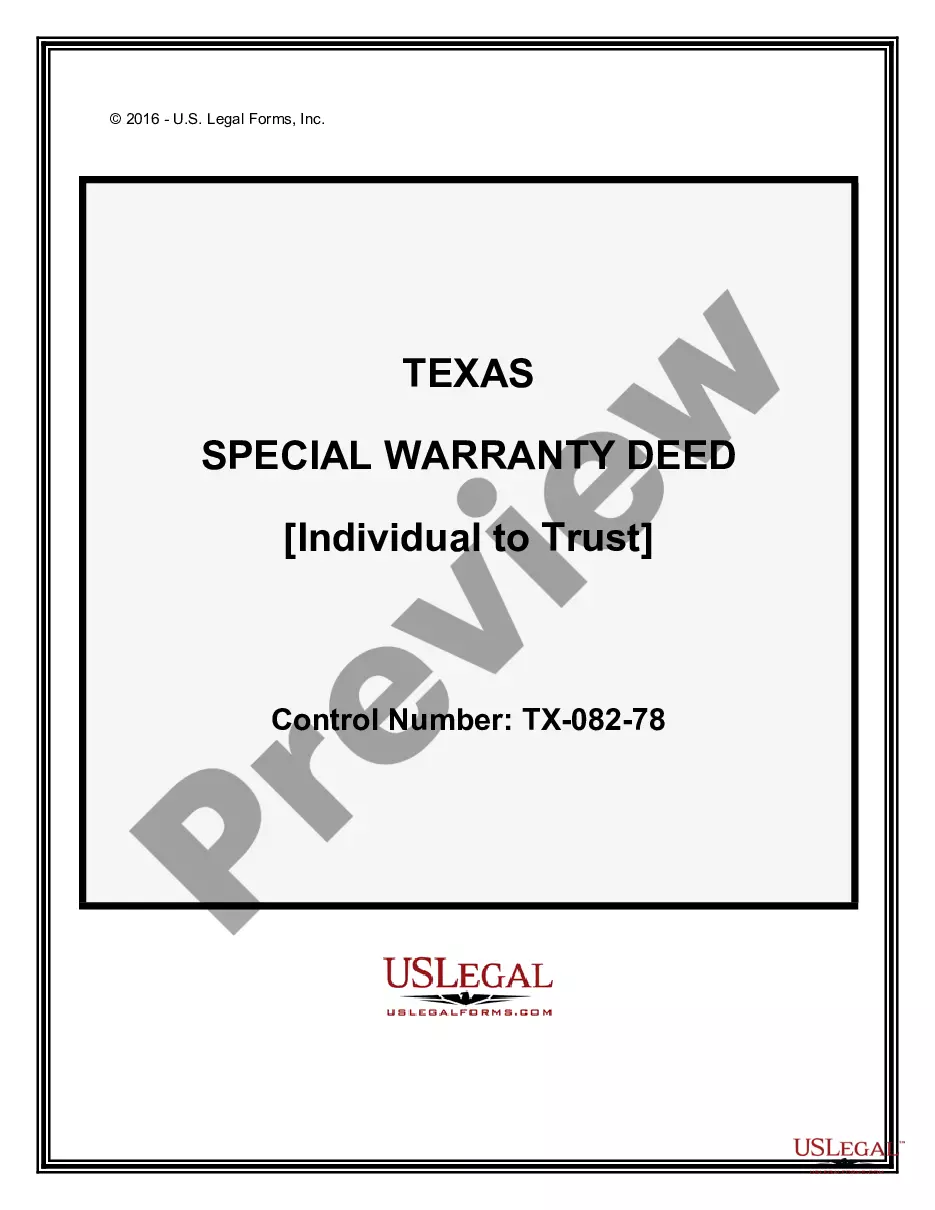
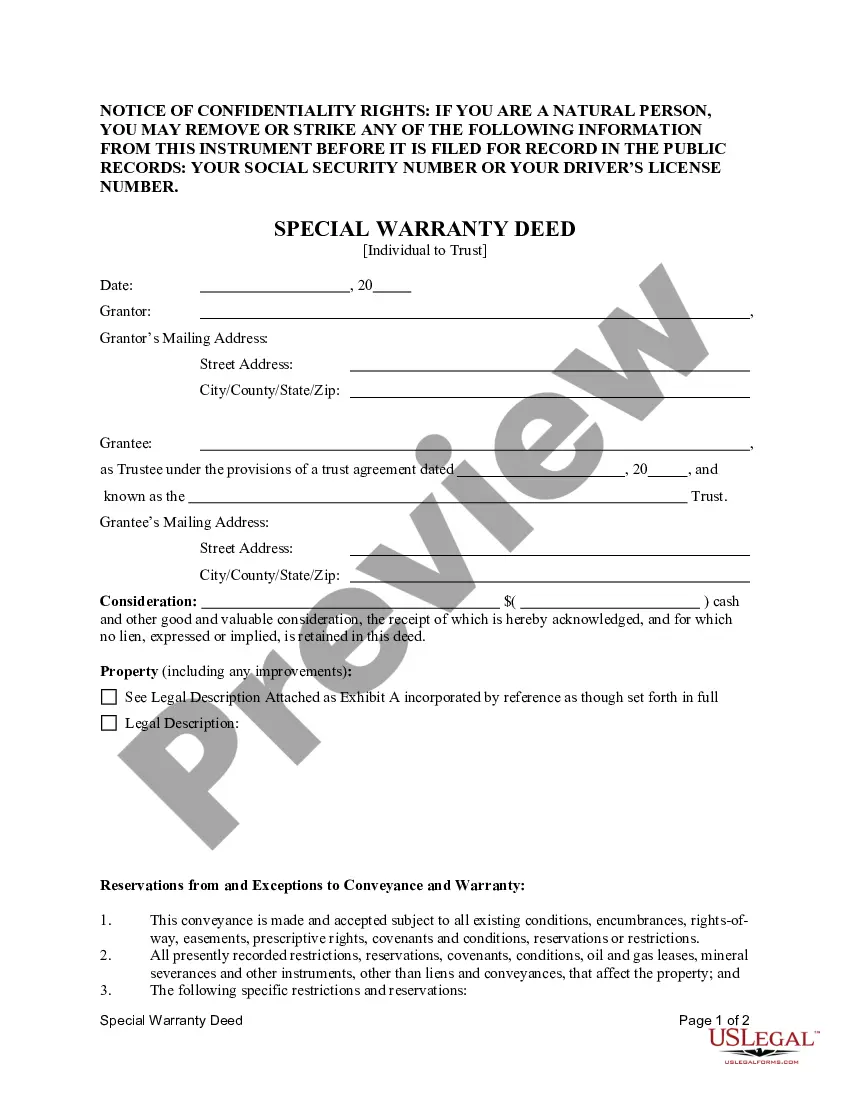
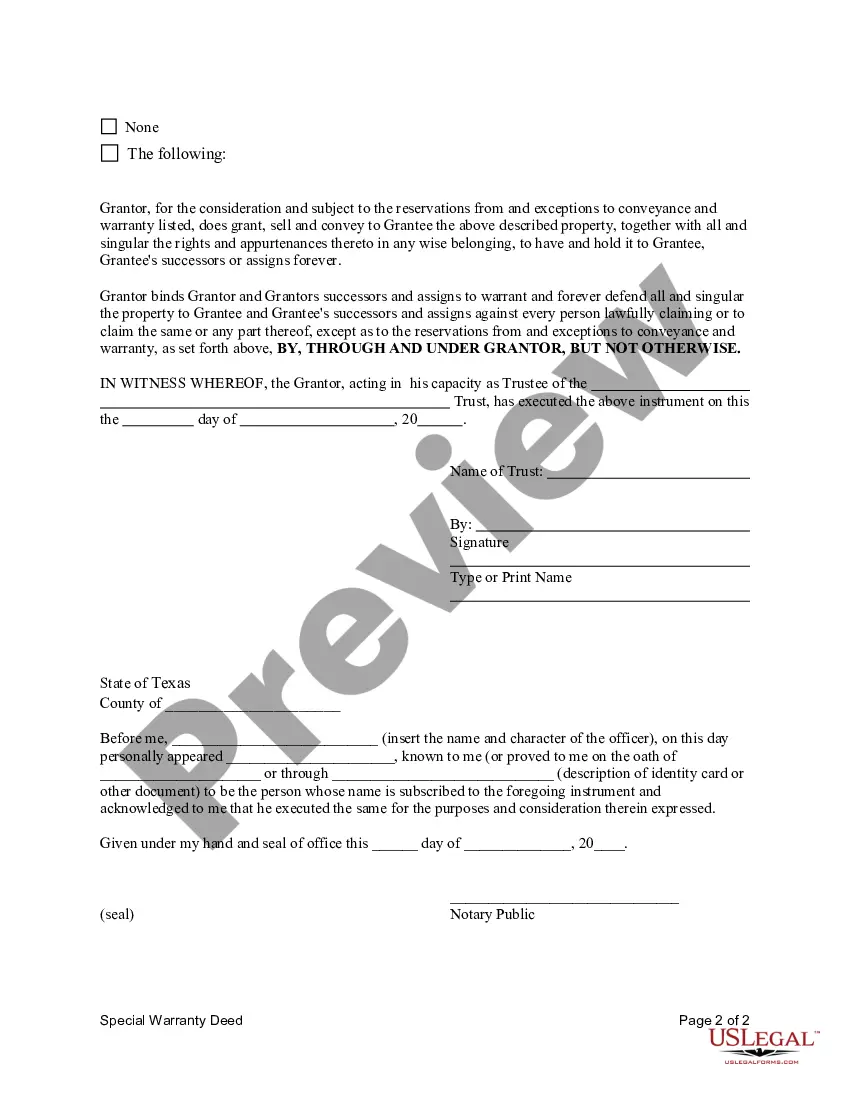
How to fill out Texas Special Warranty Deed From An Individual To A Trust?
Whether for commercial reasons or personal matters, everyone must confront legal circumstances at some point in their lives.
Filling out legal documents requires meticulous attention, starting from choosing the correct form template.
Fill out the account registration form.
- For example, if you select an incorrect version of the Deed From To Form Glucose, it will be rejected once submitted.
- Therefore, it is essential to have a trustworthy source of legal documents like US Legal Forms.
- If you need to acquire a Deed From To Form Glucose sample, adhere to these straightforward steps.
- Obtain the necessary sample using the search field or catalog navigation.
- Examine the form’s details to confirm it corresponds with your situation, state, and county.
- Click on the form’s preview to review it.
- If it is the incorrect form, revert to the search function to locate the required Deed From To Form Glucose sample.
- Get the document when it satisfies your requirements.
- If you possess a US Legal Forms account, simply click Log in to access previously saved documents in My documents.
- In case you don’t have an account yet, you can acquire the form by clicking Buy now.
- Choose the appropriate pricing option.
Form popularity
FAQ
Probate Division | New Hampshire Judicial Branch.
A POA is required prior to the Department of Revenue Administration communicating with anyone other than the taxpayer regarding any issue relating to the taxpayer. All applicable items must be filled in to properly complete Form DP-2848 New Hampshire Power of Attorney (POA).
Most documents in federal courts ? appellate, district, and bankruptcy ? are filed electronically, using a system called Case Management/Electronic Case Files (CM/ECF). The media and public may view most filings found in this system via the Public Access to Court Electronic Records service, better known as PACER.
Public criminal conviction history maintained in the central repository can be disseminated upon request to anyone for a fee. Confidential Criminal History Information, including non-conviction data, can be disseminated only to Law enforcement personnel, or a person requesting his or her own record.
You can obtain a PACER login on-line or by calling (800) 676-6856. If you have a PACER account, you may login to the court's electronic case files. You may also view the court's electronic case files free of charge at the public terminals in the clerk's office.
To request forms, please email forms@dra.nh.gov or call the Forms Line at (603) 230-5001. If you have a substantive question or need assistance completing a form, please contact Taxpayer Services at (603) 230-5920.
Police reports, photographs, and other related items are available to the public for a processing fee. Requests for incident reports, and other items can be made in person at the police station, through the U.S. Mail, or by emailing the Records Department .
A presumption exists that all court records are subject to public inspection. The public right of access to specific court records must be weighed and balanced against nondisclosure interests as established by the Federal and/or New Hampshire Constitution or by statutory provision granting or requiring confidentiality.