Deed Correction Form With Two Points
Description
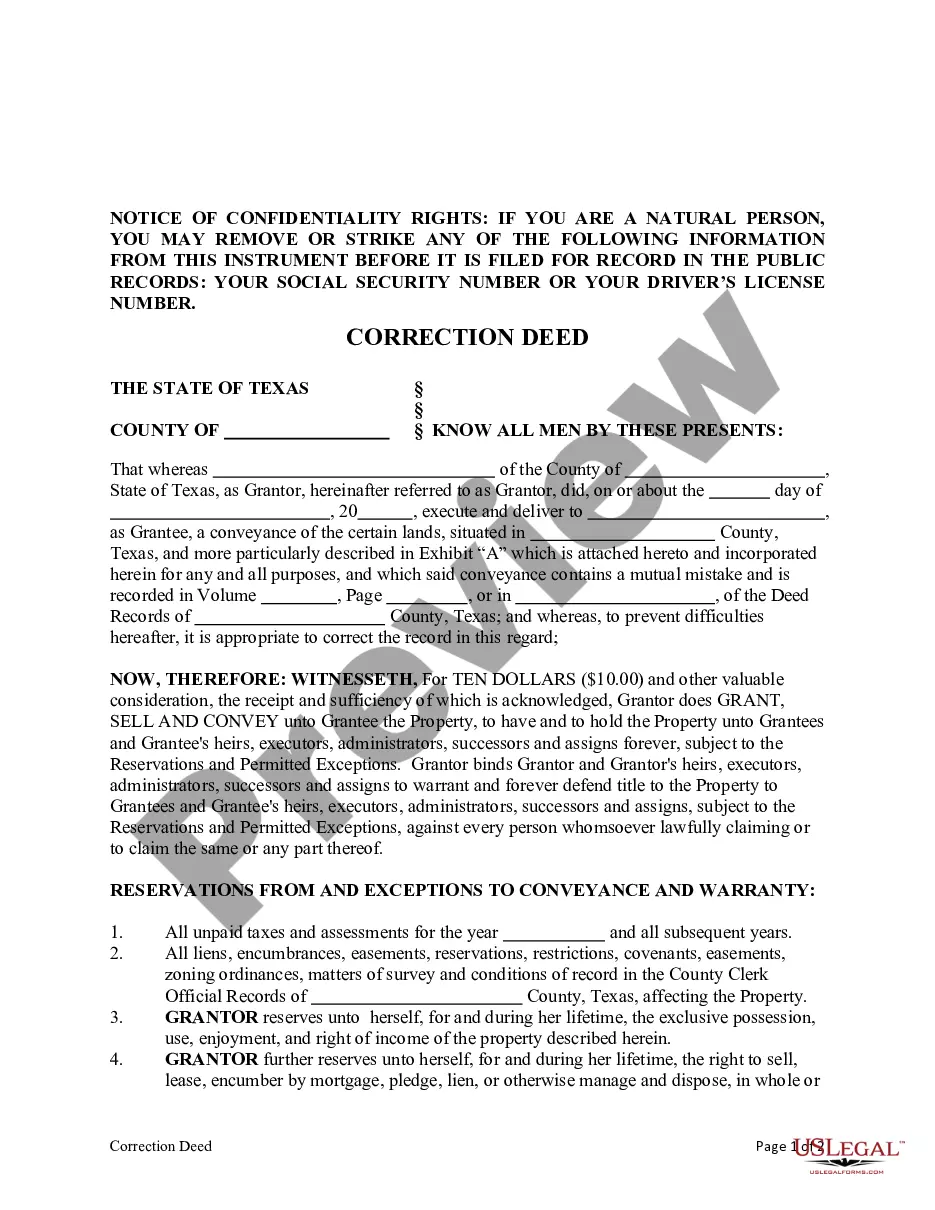
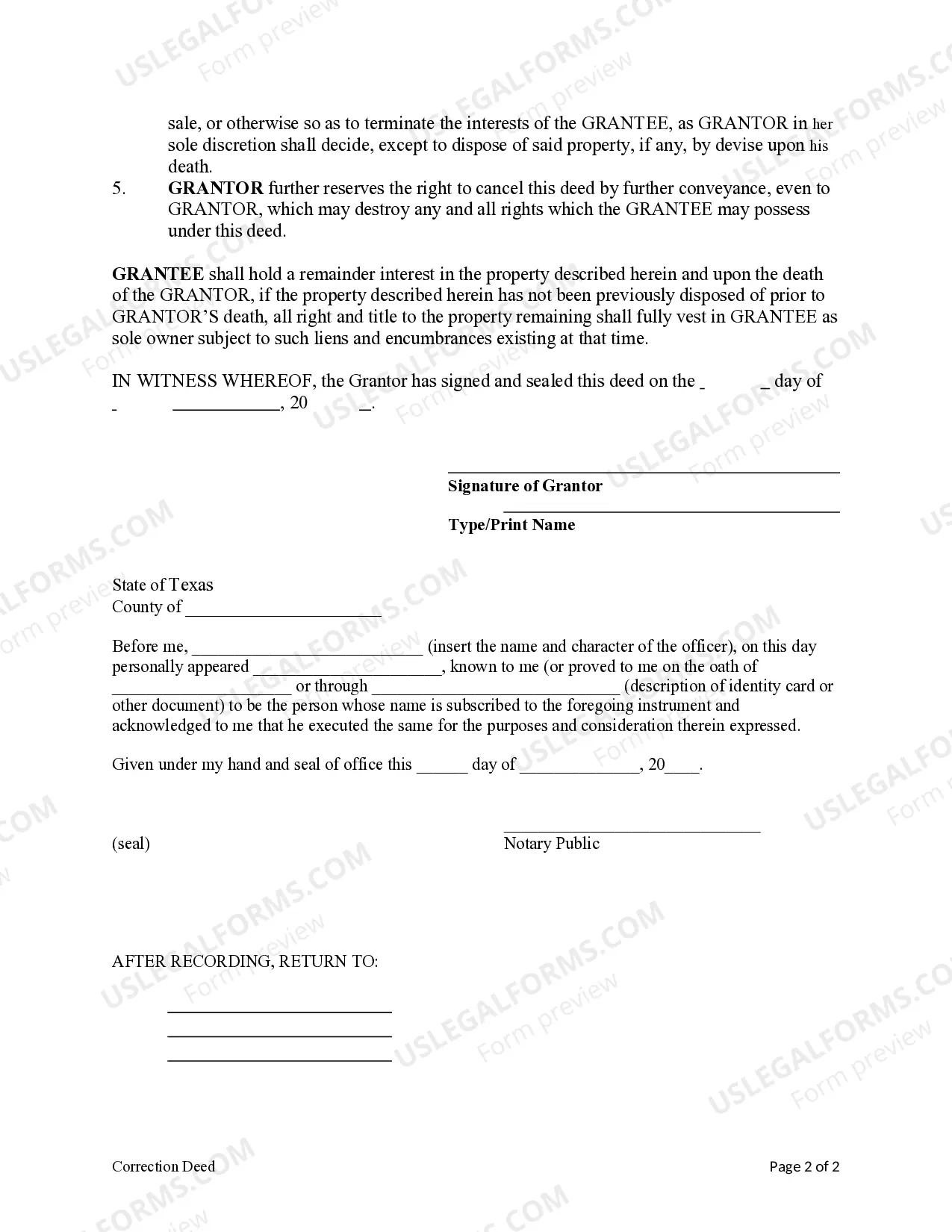
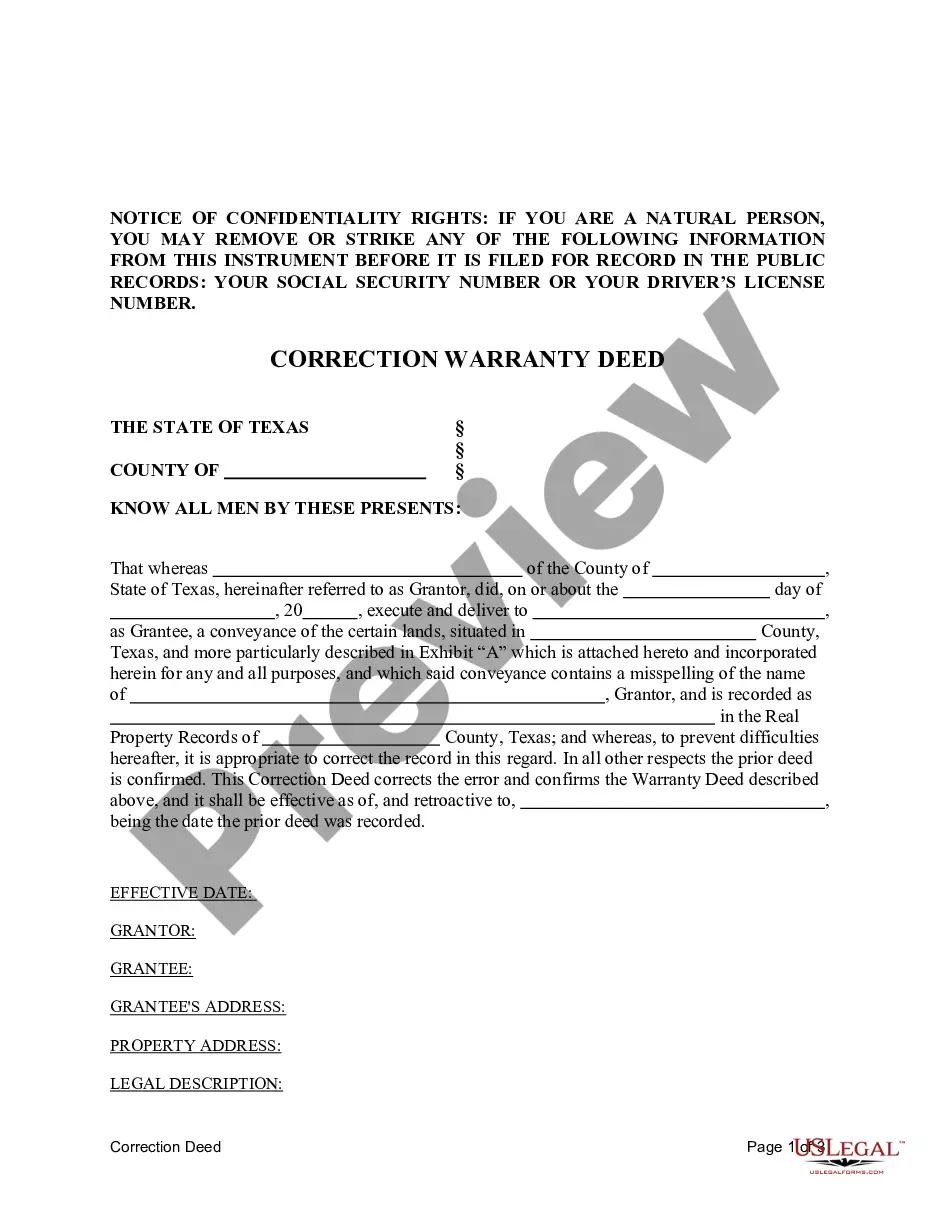
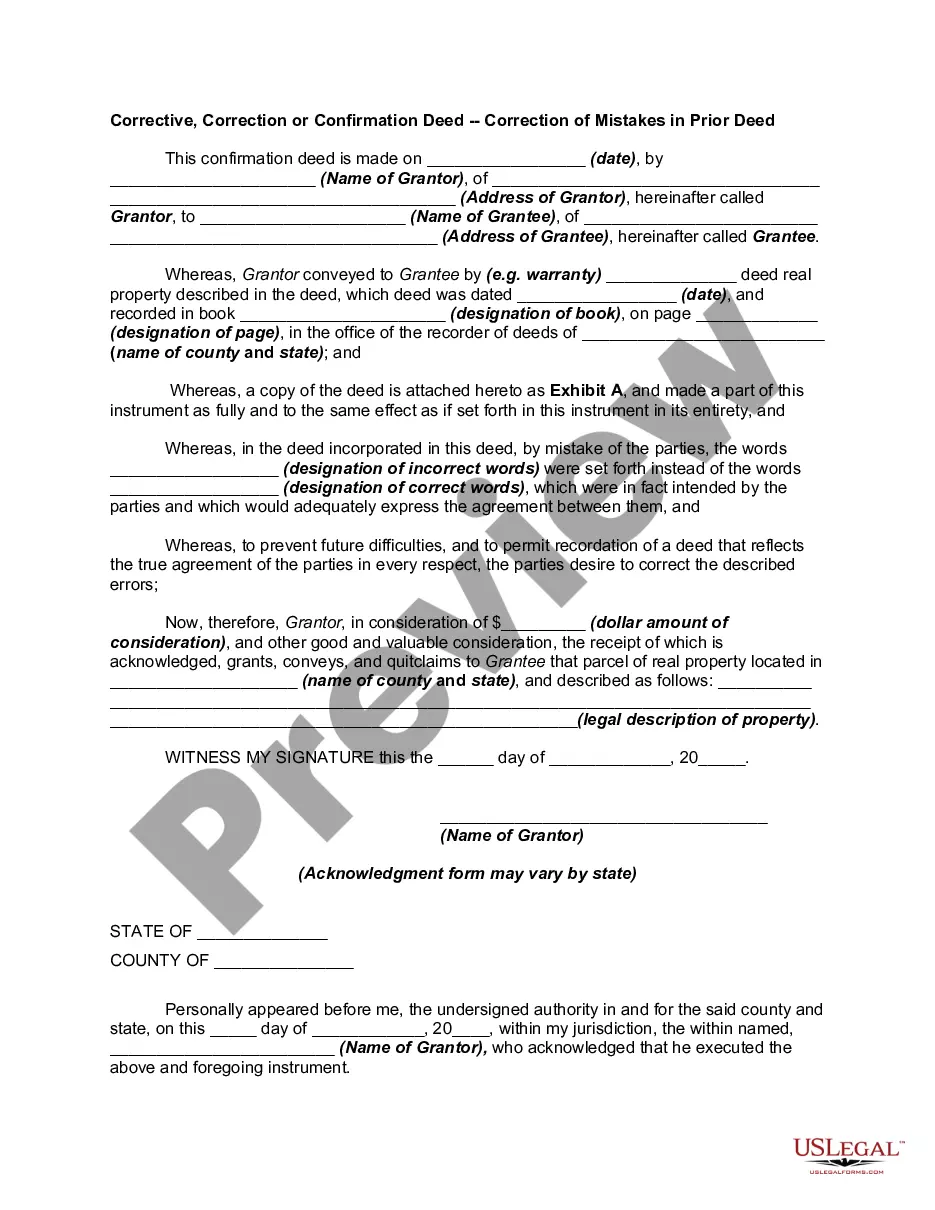

Get your form ready online
Our built-in tools help you complete, sign, share, and store your documents in one place.
Make edits, fill in missing information, and update formatting in US Legal Forms—just like you would in MS Word.
Download a copy, print it, send it by email, or mail it via USPS—whatever works best for your next step.
Sign and collect signatures with our SignNow integration. Send to multiple recipients, set reminders, and more. Go Premium to unlock E-Sign.
If this form requires notarization, complete it online through a secure video call—no need to meet a notary in person or wait for an appointment.
We protect your documents and personal data by following strict security and privacy standards.

Make edits, fill in missing information, and update formatting in US Legal Forms—just like you would in MS Word.

Download a copy, print it, send it by email, or mail it via USPS—whatever works best for your next step.

Sign and collect signatures with our SignNow integration. Send to multiple recipients, set reminders, and more. Go Premium to unlock E-Sign.

If this form requires notarization, complete it online through a secure video call—no need to meet a notary in person or wait for an appointment.

We protect your documents and personal data by following strict security and privacy standards.
Looking for another form?

How to fill out Texas Correction Deed - Prior Deed From An Individual To An Individual?
Securing a reliable destination for obtaining the most up-to-date and pertinent legal templates is a significant part of navigating bureaucracy. Identifying the appropriate legal documents requires accuracy and meticulousness, which is why it is crucial to obtain samples of the Deed Correction Form With Two Points solely from trustworthy sources, such as US Legal Forms. An incorrect template will squander your time and prolong the situation you are facing. With US Legal Forms, you have minimal concerns. You can access and review all information regarding the document’s application and significance for your situation and within your state or county.
Consider the outlined steps to complete your Deed Correction Form With Two Points.
Once you have the form on your device, you can edit it using the editor or print it out and complete it by hand. Eliminate the hassle associated with your legal paperwork. Explore the extensive US Legal Forms repository to discover legal samples, verify their applicability to your situation, and download them instantly.
- Utilize the catalog navigation or search bar to locate your template.
- Access the form’s details to confirm it meets the specifications of your state and locality.
- View the form preview, if available, to verify that the form is indeed the one you need.
- Return to the search and find the correct document if the Deed Correction Form With Two Points does not fulfill your criteria.
- If you are certain about the form’s applicability, download it.
- When you are a registered user, click Log in to verify and access your chosen templates in My documents.
- If you do not possess an account yet, click Buy now to acquire the template.
- Select the pricing plan that suits your needs.
- Proceed with the registration to complete your order.
- Conclude your purchase by choosing a payment method (credit card or PayPal).
- Select the file format for downloading the Deed Correction Form With Two Points.
Form popularity
FAQ
To make a correction on a legal document, first identify the specific errors that need fixing. Depending on the type of document, you may need to draft a new version or prepare a correction form, such as a deed correction form. Ensure you follow any specific requirements for signatures and notarization. For convenience, platforms like USLegalForms offer templates that guide you through this process, making it easier to handle corrections accurately.
Yes, a correction deed typically requires notarization to be legally binding. Notarization confirms the identity of the signers and ensures that the document is executed properly. This requirement adds an extra layer of security, helping to protect your property rights. When filing a correction deed, using a deed correction form from a trusted source can streamline the notarization process.
To complete a Scrivener's affidavit, first gather all relevant documents that detail the original deed and the errors needing correction. Clearly outline the discrepancies in the affidavit, and ensure you provide accurate information about the property and involved parties. After drafting the affidavit, sign it in front of a notary to affirm its authenticity. This process can be efficiently managed using a deed correction form from a reliable platform like USLegalForms.
The most common deed used to correct errors is known as a corrective deed. This type of deed allows property owners to rectify mistakes found in a previously recorded deed, such as typographical errors or incorrect legal descriptions. Utilizing a deed correction form simplifies the process of making necessary adjustments, ensuring that the property records are accurate and up-to-date. This is crucial for maintaining clear title and avoiding potential legal issues.
Yes, an Affidavit of correction must be notarized to be considered valid. Notarization serves as a safeguard that confirms the identity of the signer and verifies the authenticity of the document. By including a notarization step, you enhance the credibility of your deed correction form, making it more likely to be accepted by relevant authorities. This added layer of security protects your interests in any legal matters concerning the property.
A corrective deed in New Jersey is a legal document used to amend errors in a previously recorded deed. This form is essential when there are inaccuracies, such as misspelled names or incorrect property descriptions. By filing a deed correction form, property owners ensure that public records reflect the true ownership and details of the property. This process helps prevent potential disputes related to property rights.
To amend a deed, you need to complete a deed correction form that specifies the changes you want to make. This form typically requires details such as the property description and the corrections needed. Once you fill out the deed correction form, you must sign it and have it notarized. Finally, submit the form to your local county recorder's office to ensure the changes are officially recognized.
In Florida, you can complete a corrective deed by filling out a deed correction form. This form should clearly state the errors you are correcting and include both the original and corrected information. After preparing the document, you will need to sign it in front of a notary and file it with the local county clerk's office. Using a reliable platform like US Legal Forms can simplify this process and ensure you meet all legal requirements.
To correct an error in the title history, you typically need a deed correction form. This document allows you to address inaccuracies, such as misspellings or incorrect property descriptions, ensuring the title reflects the true intent. Using a deed correction form is essential for maintaining the integrity of property records. Make sure to file it with the appropriate county office to update the public record.