Limited Liability Company Benefits
Description


Get your form ready online
Our built-in tools help you complete, sign, share, and store your documents in one place.
Make edits, fill in missing information, and update formatting in US Legal Forms—just like you would in MS Word.
Download a copy, print it, send it by email, or mail it via USPS—whatever works best for your next step.
Sign and collect signatures with our SignNow integration. Send to multiple recipients, set reminders, and more. Go Premium to unlock E-Sign.
If this form requires notarization, complete it online through a secure video call—no need to meet a notary in person or wait for an appointment.
We protect your documents and personal data by following strict security and privacy standards.

Make edits, fill in missing information, and update formatting in US Legal Forms—just like you would in MS Word.

Download a copy, print it, send it by email, or mail it via USPS—whatever works best for your next step.

Sign and collect signatures with our SignNow integration. Send to multiple recipients, set reminders, and more. Go Premium to unlock E-Sign.

If this form requires notarization, complete it online through a secure video call—no need to meet a notary in person or wait for an appointment.

We protect your documents and personal data by following strict security and privacy standards.
Looking for another form?









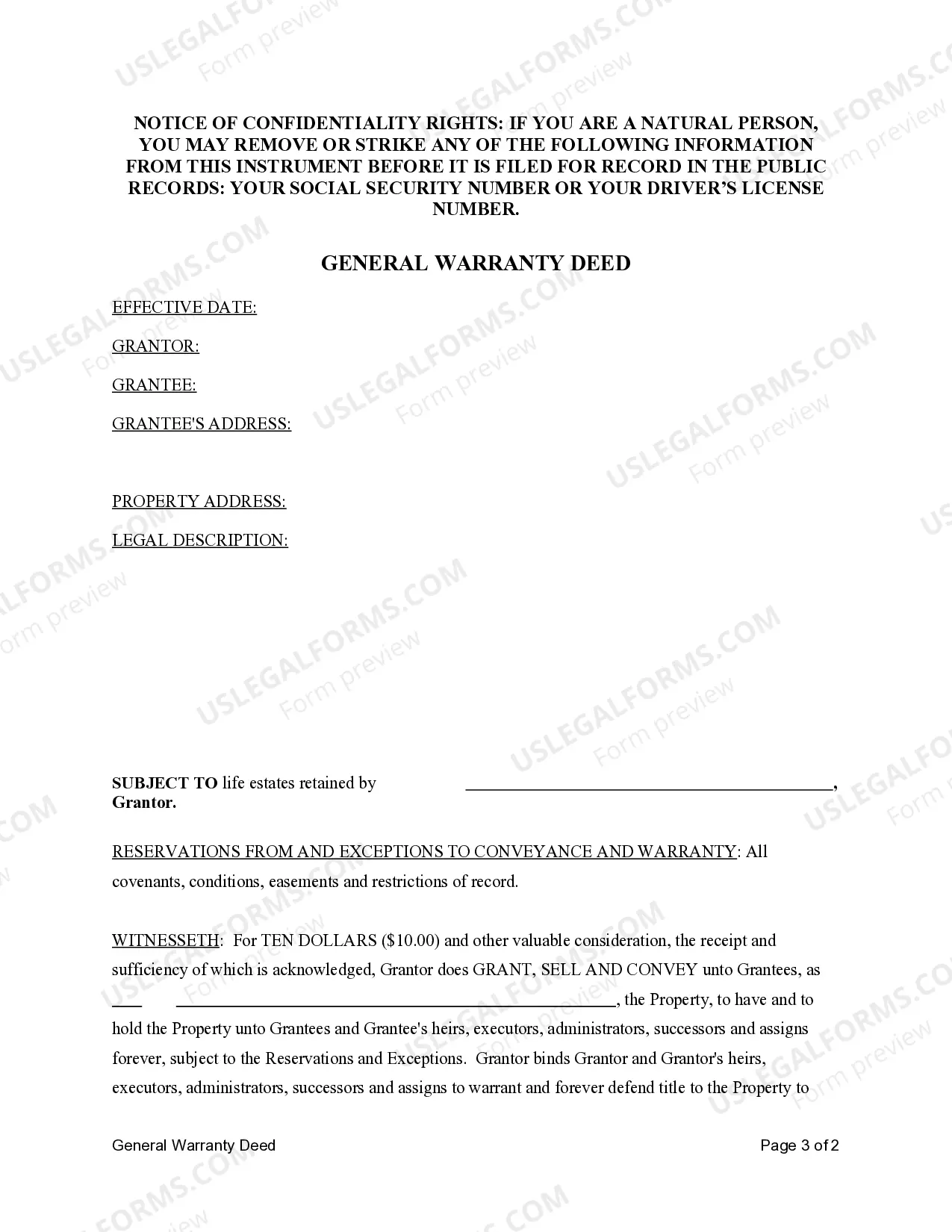
How to fill out Texas Assumption Warranty Deed - Husband And Wife To Limited Liability Company?
- Log in to your existing US Legal Forms account to access your subscription and download the desired form template.
- If this is your first time, start by using the Preview mode to review the form's details and ensure it meets your local jurisdiction's requirements.
- If necessary, leverage the Search tab to find another template that better fits your needs.
- Select the document you want to purchase by clicking the Buy Now button and choose a suitable subscription plan.
- Complete the checkout process by entering your payment information via credit card or PayPal.
- Once your purchase is confirmed, download the form to your device for completion and save it in the My Forms section of your account for future access.
By following these simple steps, you can quickly and accurately obtain the legal documents you need.
Empower yourself today with US Legal Forms and navigate your legal needs with ease! Visit the platform to learn more.
Form popularity
FAQ
Filing taxes for your Limited Liability Company depends on how you’ve chosen to structure it. If the LLC is treated as a pass-through entity, you will report your business income on your personal tax return. However, if you opt for corporate tax treatment, you will file separately. Understanding these limited liability company benefits can streamline your tax filing process and clarify your financial responsibilities.
The amount you can write off with a Limited Liability Company varies based on your business activities and expenses. Common deductible expenses include business costs like equipment, software, and travel. By carefully tracking your expenses, you can potentially lower your taxable income significantly. Embracing these limited liability company benefits can enhance your overall profit margins and financial health.
Having a Limited Liability Company can provide you with significant tax advantages. LLCs allow you to choose between being taxed as a sole proprietorship, partnership, or corporation, providing flexibility based on your financial situation. This can help you optimize your tax outcome and maximize your deductions. Additionally, the limited liability company benefits include protecting your personal assets from business liabilities while benefiting from potential tax reductions.
An LLC can write off various business-related expenses to reduce its taxable income. Common write-offs include operational costs like rent, salaries, and marketing expenses. Depending on the nature of your business, the total amount you can write off may vary, but maximizing these deductions significantly enhances the limited liability company benefits you experience.
Your LLC can provide numerous benefits, enhancing both your personal and business life. It offers liability protection, allowing you to take business risks without jeopardizing your personal savings. Furthermore, by enabling flexible management structures and favorable taxation options, a Limited Liability Company can facilitate growth while optimizing your overall financial situation.
LLC owners can avoid excessive taxes by utilizing deductions that apply to their business activities. They can write off business expenses, such as travel and utilities, which directly reduce the taxable income. Additionally, understanding the specifics of tax laws allows LLC owners to structure their payouts in ways that minimize tax liabilities.
An LLC can minimize its tax burden through various deductions and strategies. Business expenses such as equipment, supplies, and even some operational costs can typically be written off, reducing taxable income. Moreover, by choosing the appropriate tax classification, you may take advantage of different tax treatment, further optimizing your financial strategy.
While there are many limited liability company benefits, there are also tax disadvantages to consider. One potential drawback is that LLCs often face self-employment taxes on the entire income of the business. Additionally, if you choose to be taxed as a corporation, you may miss out on some tax benefits available to sole proprietorships.
The biggest benefit of a Limited Liability Company (LLC) is personal liability protection. This structure separates your personal assets from your business liabilities, ensuring that your home and savings remain safe from business debts. In essence, it allows you to run your business with peace of mind, knowing that your personal finances are protected.
A benefit LLC, similar to a benefit corporation, aims to achieve social and environmental goals while engaging in business practices. It allows owners to protect their personal assets while pursuing a mission that prioritizes positive impact. By recognizing the limited liability company benefits, you can determine if a benefit LLC aligns with your business objectives and ethics.