Texas State Law
Description
Get your form ready online
Our built-in tools help you complete, sign, share, and store your documents in one place.
Make edits, fill in missing information, and update formatting in US Legal Forms—just like you would in MS Word.
Download a copy, print it, send it by email, or mail it via USPS—whatever works best for your next step.
Sign and collect signatures with our SignNow integration. Send to multiple recipients, set reminders, and more. Go Premium to unlock E-Sign.
If this form requires notarization, complete it online through a secure video call—no need to meet a notary in person or wait for an appointment.
We protect your documents and personal data by following strict security and privacy standards.

Make edits, fill in missing information, and update formatting in US Legal Forms—just like you would in MS Word.

Download a copy, print it, send it by email, or mail it via USPS—whatever works best for your next step.

Sign and collect signatures with our SignNow integration. Send to multiple recipients, set reminders, and more. Go Premium to unlock E-Sign.

If this form requires notarization, complete it online through a secure video call—no need to meet a notary in person or wait for an appointment.

We protect your documents and personal data by following strict security and privacy standards.
Looking for another form?
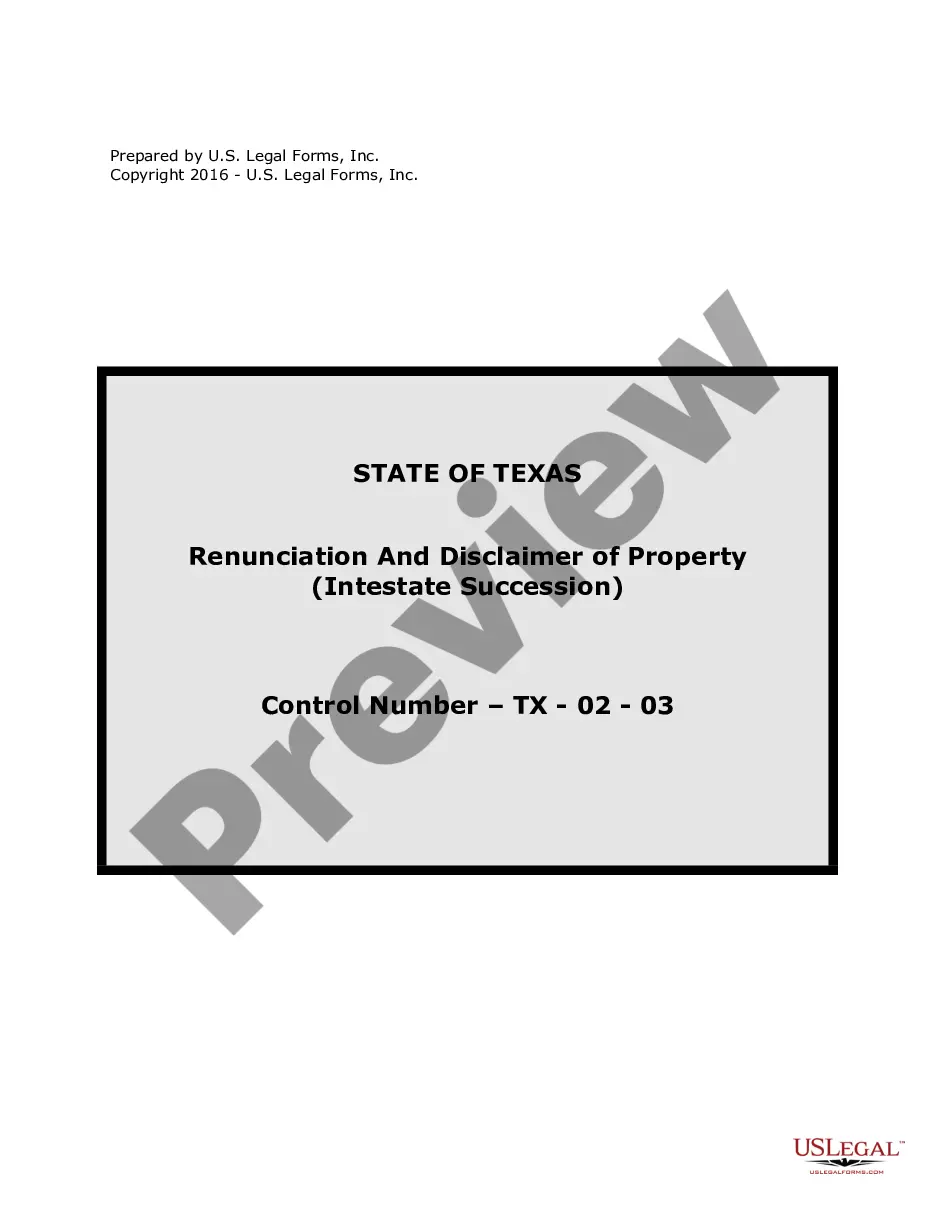
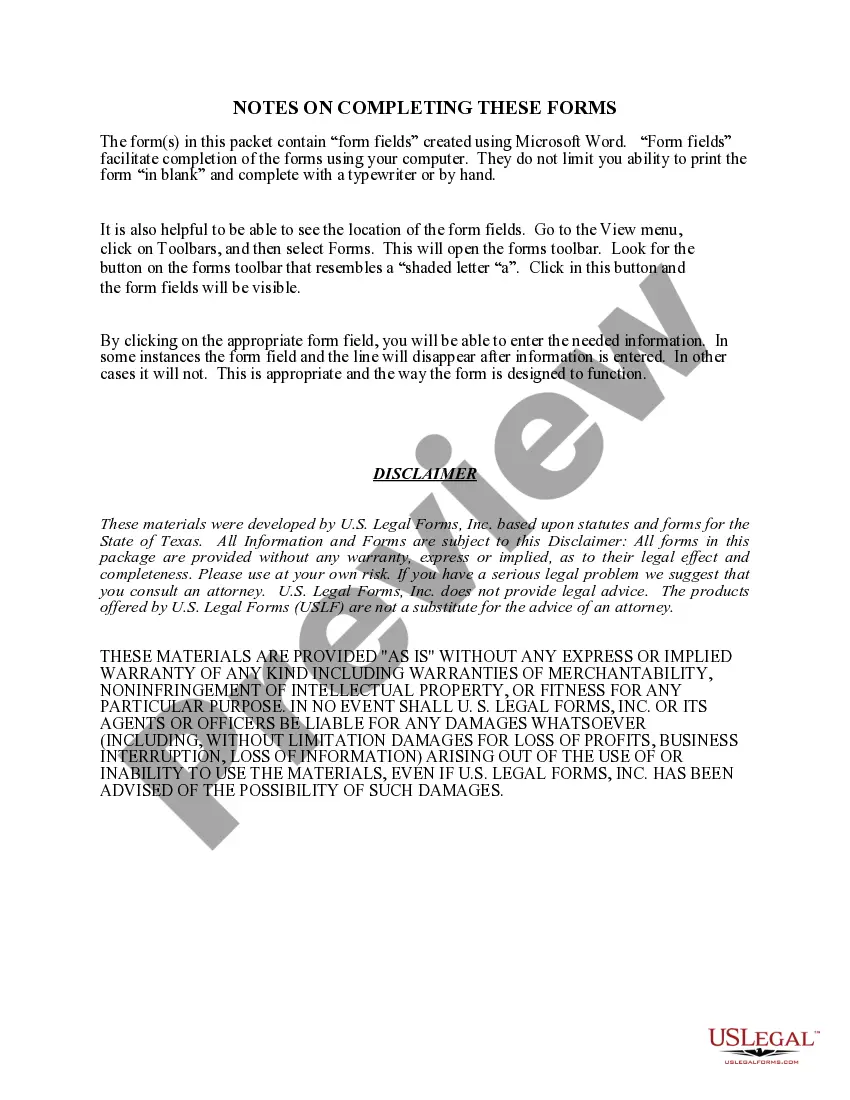
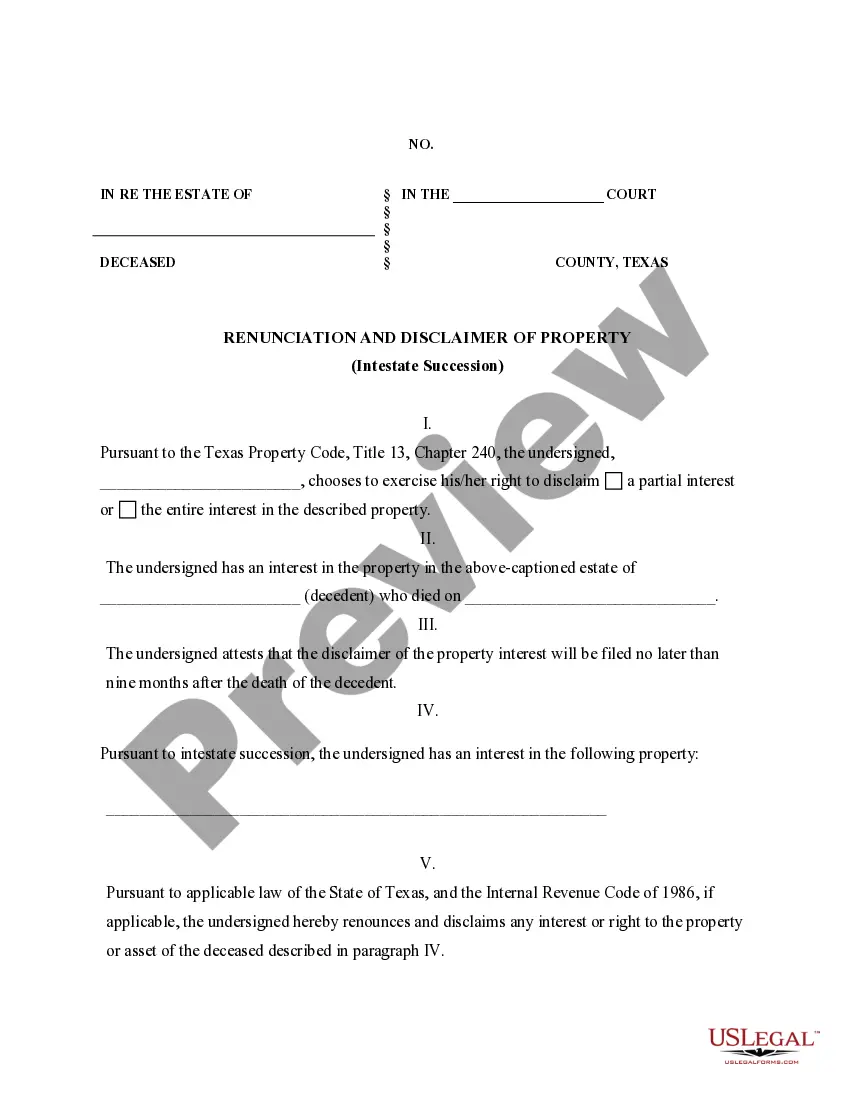
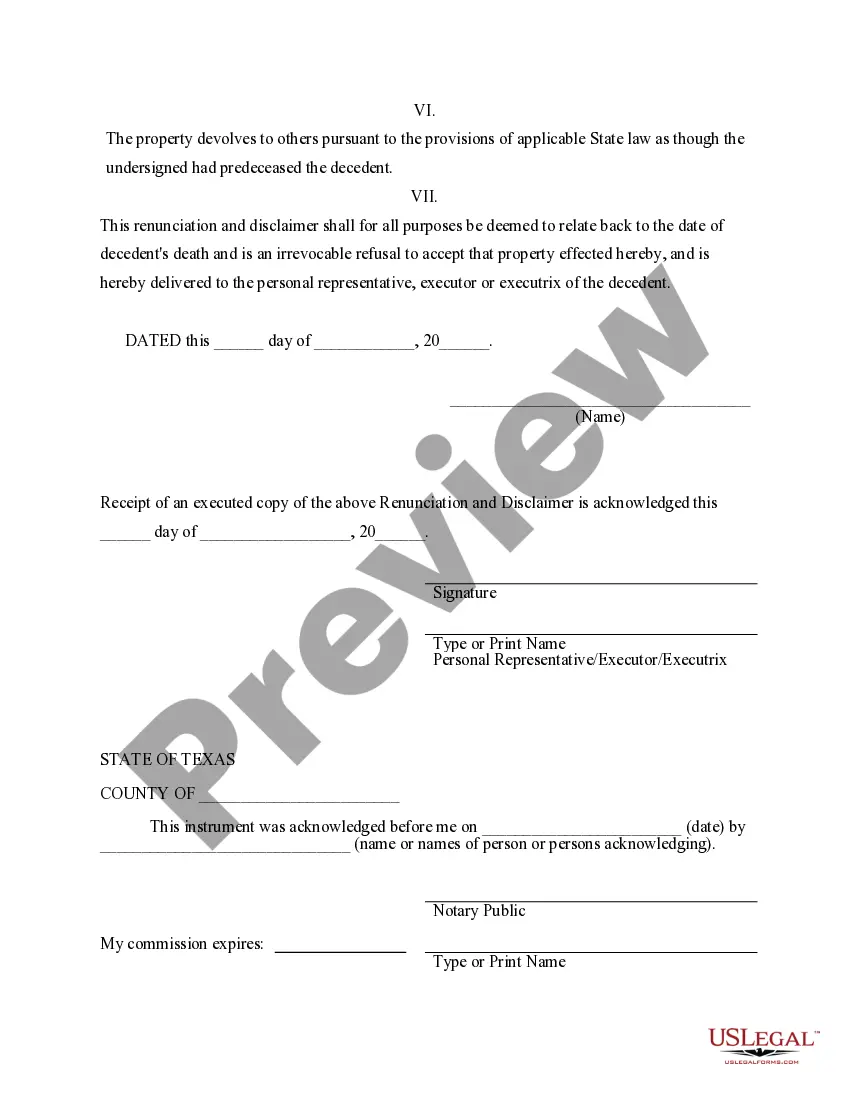
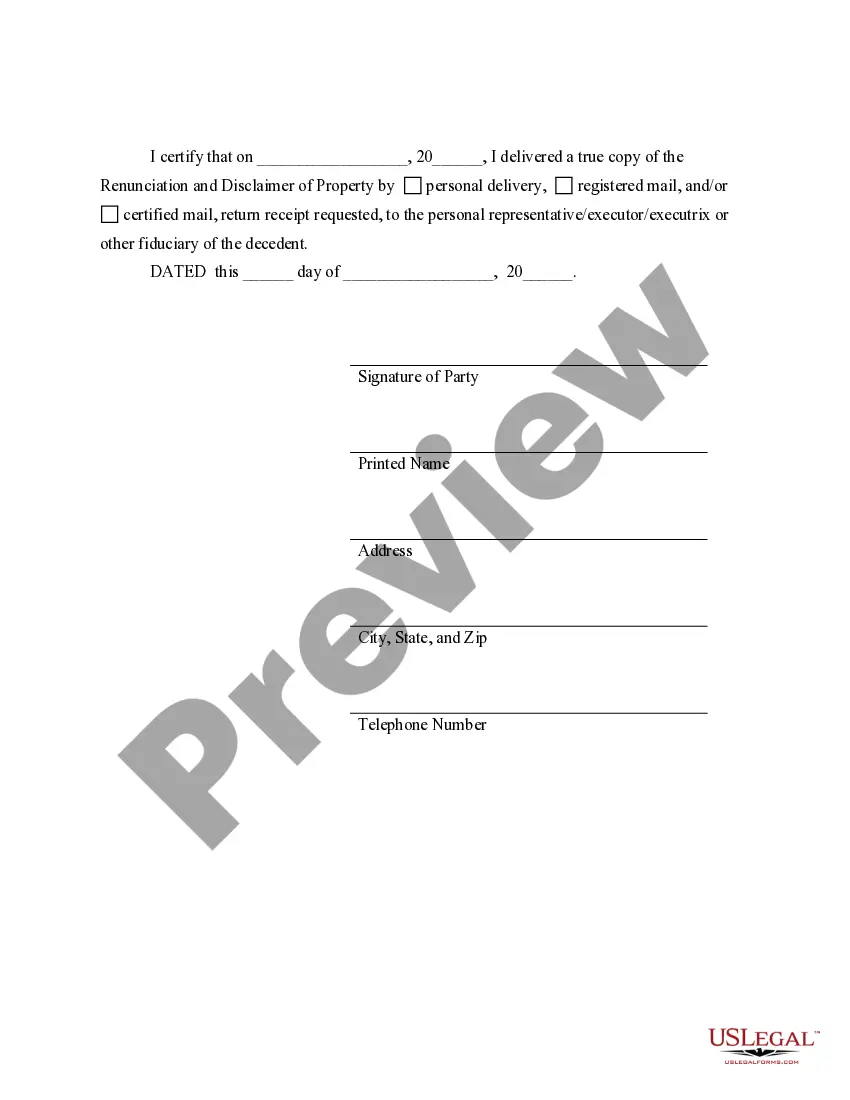
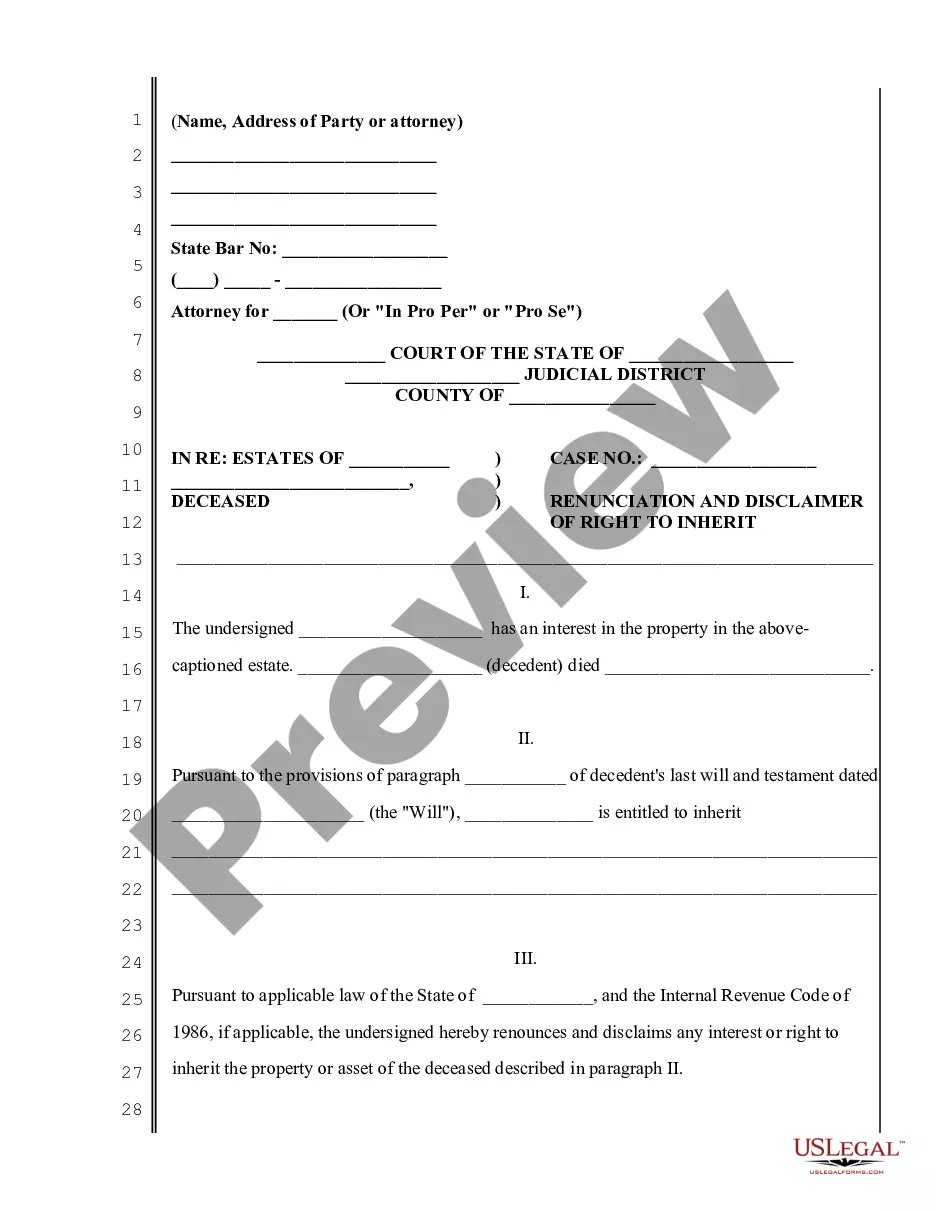
How to fill out Texas Renunciation And Disclaimer Of Property Received By Intestate Succession?
- If you're an existing user, log in to your account and ensure your subscription is active. Click the Download button for the required form.
- For new users, begin by browsing the extensive library. Check the Preview mode and descriptions to confirm that the selected document aligns with your needs and Texas state law.
- If the initial form doesn’t meet your criteria, utilize the Search tab to locate an alternative template that meets your specifications.
- Once you find the appropriate document, click on the Buy Now button, choose a suitable subscription plan, and create an account to gain full access.
- Complete your purchase by entering your payment information or using your PayPal account for convenience.
- Finally, download the form to your device. You can always retrieve it from the My Forms section of your account.
US Legal Forms stands out with a vast collection of over 85,000 forms, more than competitors offer for a similar price. Our platform allows users to edit and fill documents easily, ensuring compliance with Texas state law.
In conclusion, using US Legal Forms not only saves you time but also guarantees that your legal documents are correct and tailored to your needs. Start streamlining your legal process today!
Form popularity
FAQ
The current abortion law in Texas includes significant restrictions based on gestational age, as well as requirements for counseling and waiting periods. Legal challenges may arise, so it's pertinent to stay informed through reliable sources. To access current documents related to Texas state law, consider using platforms like uslegalforms.
The cut-off for abortion in Texas is generally at six weeks of pregnancy, according to current Texas state law. This is before many people may even realize they are pregnant. It's essential to understand these timelines and seek legal guidance to navigate the complexities surrounding this issue.
Common law in Texas consists of legal principles developed through court decisions. It complements statutory laws and helps fill in gaps where no statutes exist. Understanding common law is vital for navigating various legal issues, and resources such as uslegalforms can provide clarity on these matters.
In Texas, if you obtain an abortion, you must adhere to the state's legal requirements, which include mandatory counseling and waiting periods. Providers follow strict protocols to ensure compliance with Texas state law. Failure to follow these procedures can lead to legal implications for both individuals and healthcare providers.
Texas state law imposes specific regulations on abortion procedures. Generally, it requires individuals seeking an abortion to undergo a waiting period and receive counseling. Additionally, certain types of abortions may face restrictions based on gestational age.
To get into Texas law schools, start by preparing for the LSAT and researching the schools you're interested in. Build a solid academic record, obtain strong letters of recommendation, and write a compelling personal statement. Additionally, familiarize yourself with Texas state law, as this knowledge can enhance your application and interview discussions.
Getting into Texas law schools can be competitive, requiring a strong academic record and good LSAT scores. Each law school's admission criteria vary, but typically, the better your GPA and exam scores, the more options you'll have. Understanding Texas state law inherently prepares you for success in your application.
In Texas, it is possible to practice law without traditional law school attendance through an apprenticeship program. This alternative pathway requires substantial mentorship and hands-on experience under a licensed attorney. However, most aspiring lawyers choose to attend law school to ensure a strong foundation in Texas state law.
The duration of a Texas Law course typically takes three years for full-time students pursuing a JD degree. Part-time options can extend this period to four years or more. Dedicating sufficient time to studying Texas state law can greatly enhance your understanding and ability to practice.
You can read Texas state law through various resources such as the Texas Legislature's website, which offers a complete digital library of statutes. Local law libraries and law schools are also excellent places to find textbooks and legal commentaries. Additionally, platforms like USLegalForms provide accessible summaries and templates related to Texas law.