Texas Intestate Succession Rules
Description
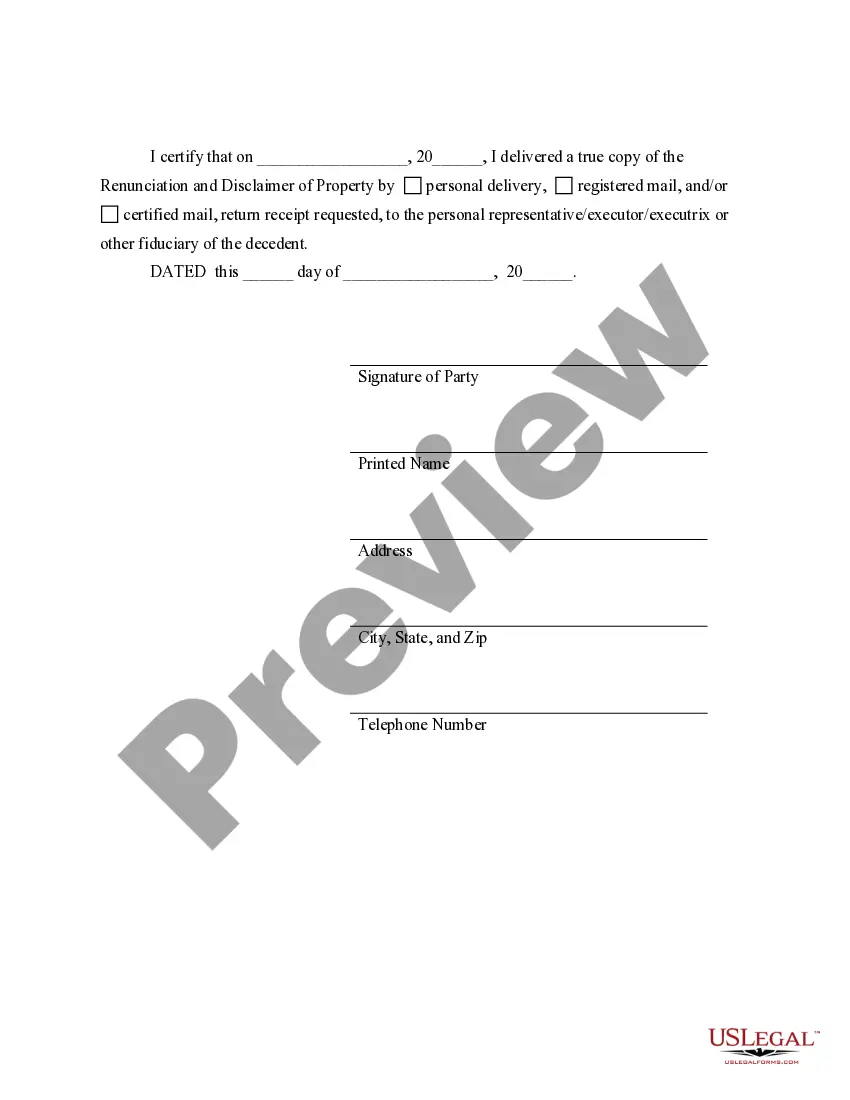
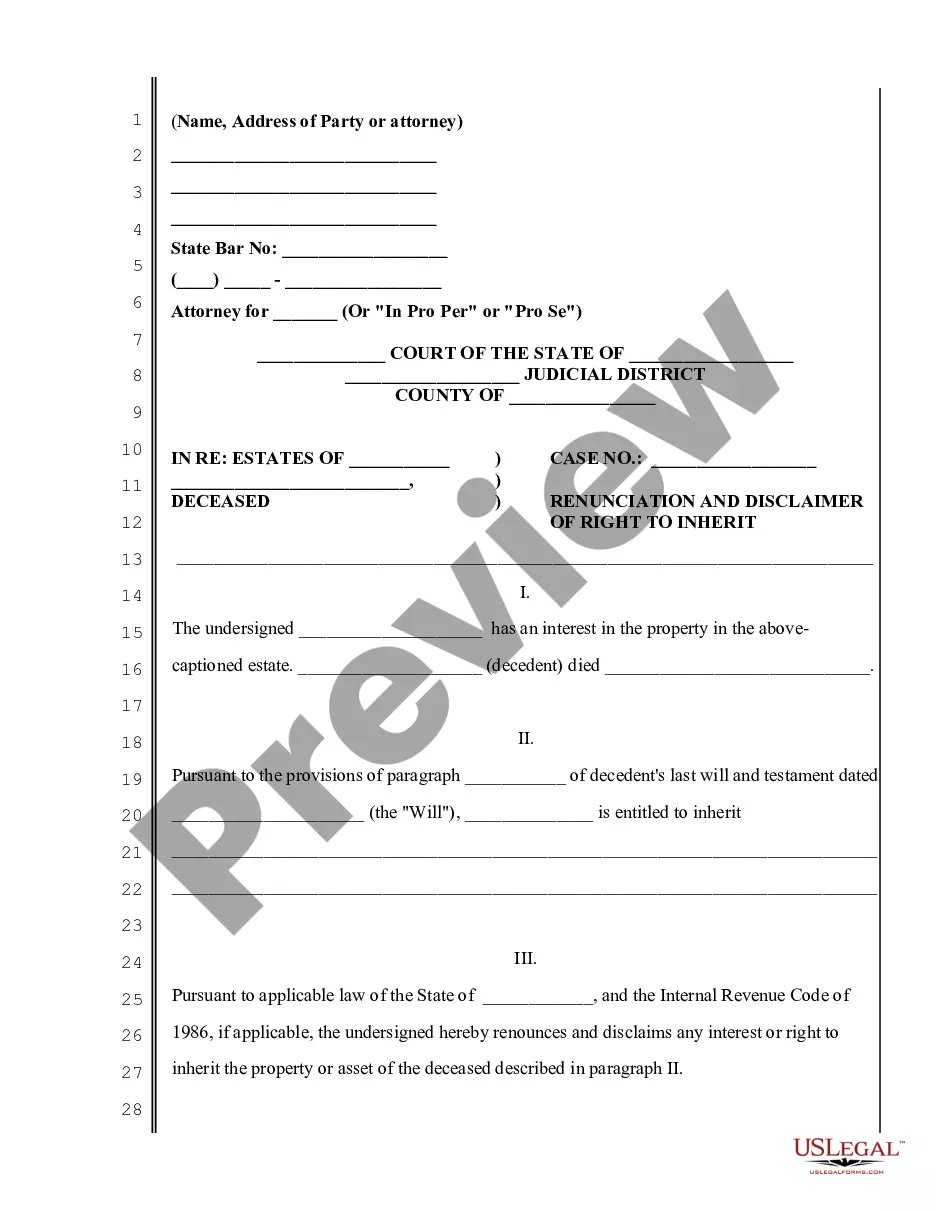
Get your form ready online
Our built-in tools help you complete, sign, share, and store your documents in one place.
Make edits, fill in missing information, and update formatting in US Legal Forms—just like you would in MS Word.
Download a copy, print it, send it by email, or mail it via USPS—whatever works best for your next step.
Sign and collect signatures with our SignNow integration. Send to multiple recipients, set reminders, and more. Go Premium to unlock E-Sign.
If this form requires notarization, complete it online through a secure video call—no need to meet a notary in person or wait for an appointment.
We protect your documents and personal data by following strict security and privacy standards.

Make edits, fill in missing information, and update formatting in US Legal Forms—just like you would in MS Word.

Download a copy, print it, send it by email, or mail it via USPS—whatever works best for your next step.

Sign and collect signatures with our SignNow integration. Send to multiple recipients, set reminders, and more. Go Premium to unlock E-Sign.

If this form requires notarization, complete it online through a secure video call—no need to meet a notary in person or wait for an appointment.

We protect your documents and personal data by following strict security and privacy standards.
Looking for another form?



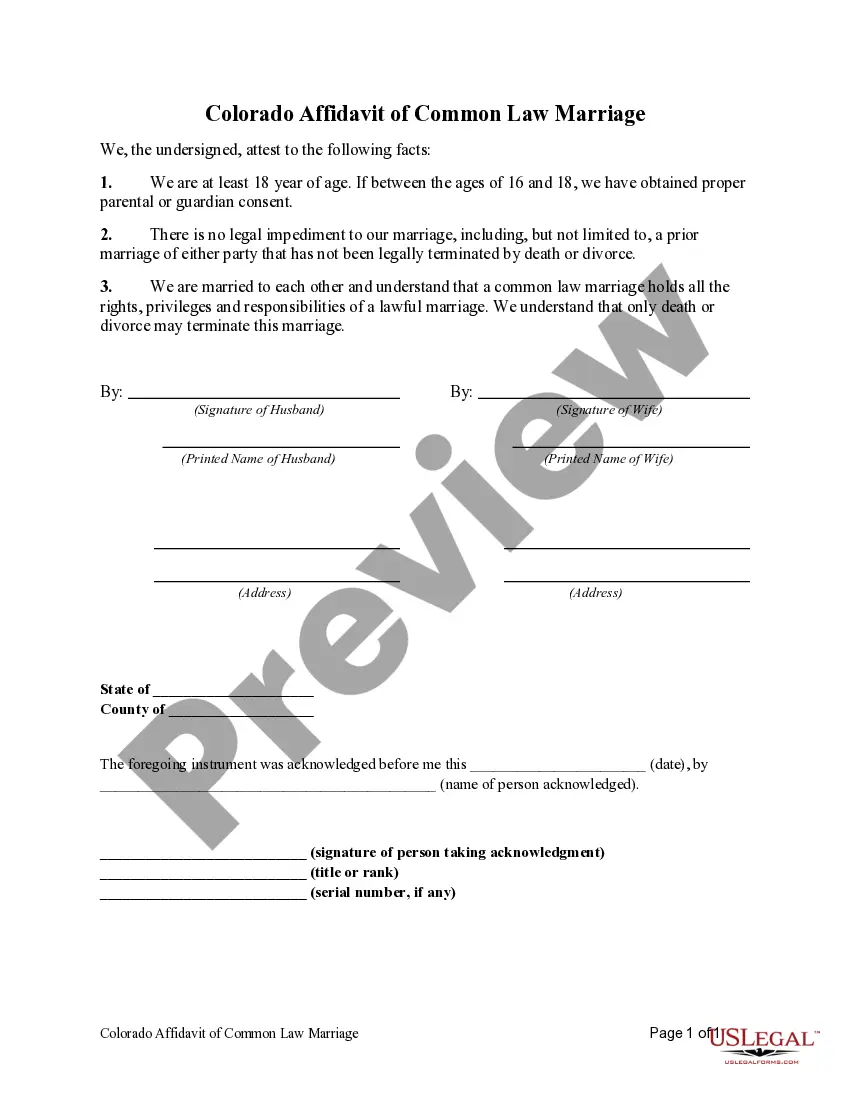




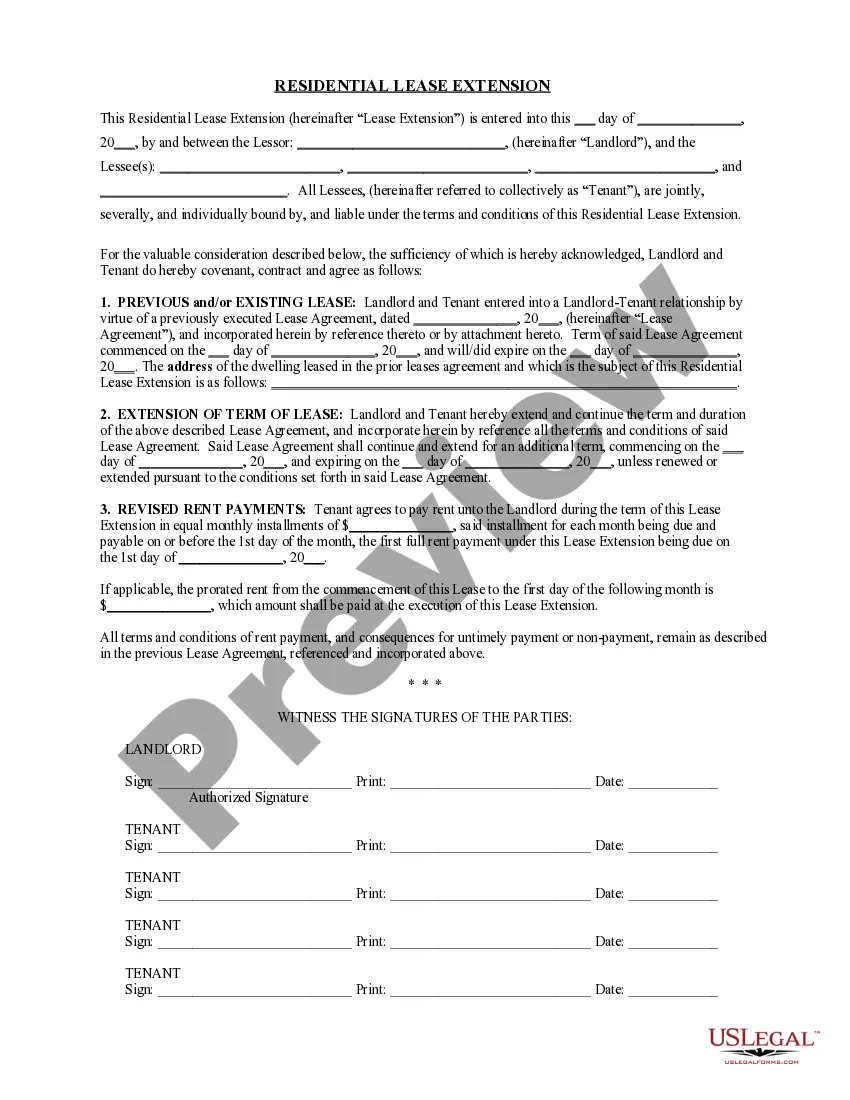
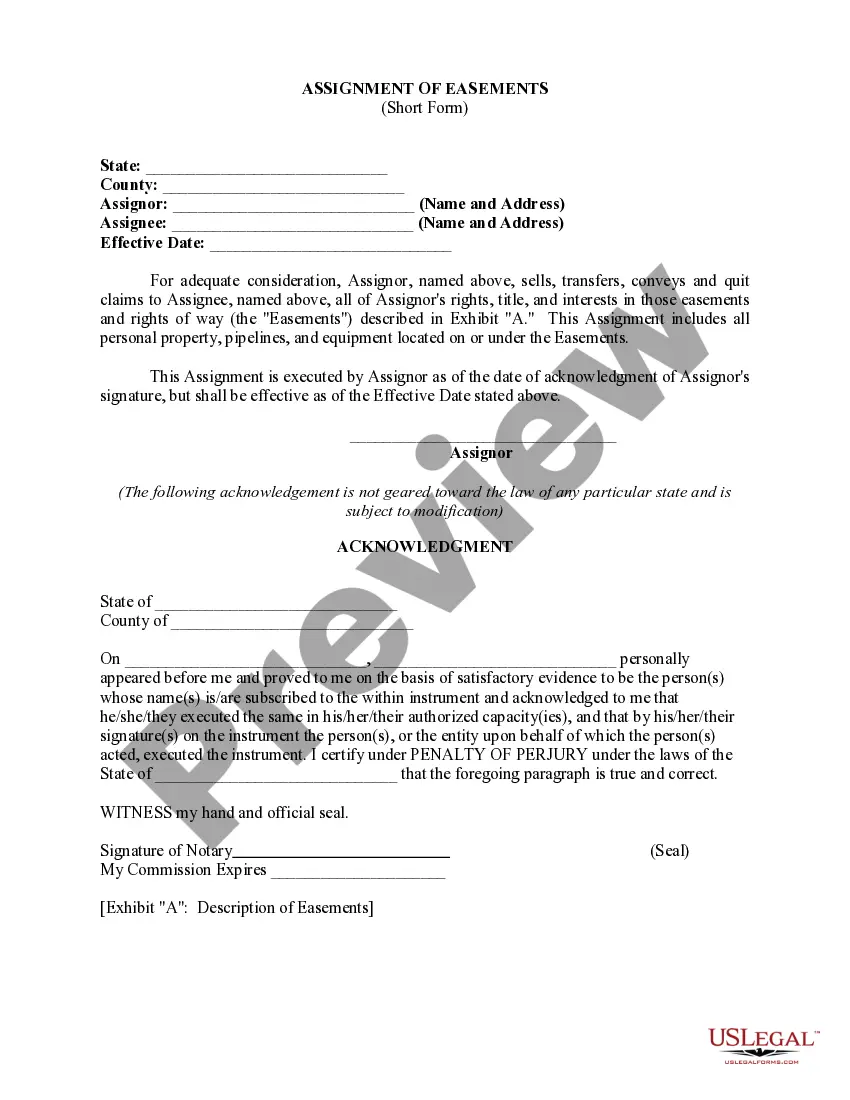
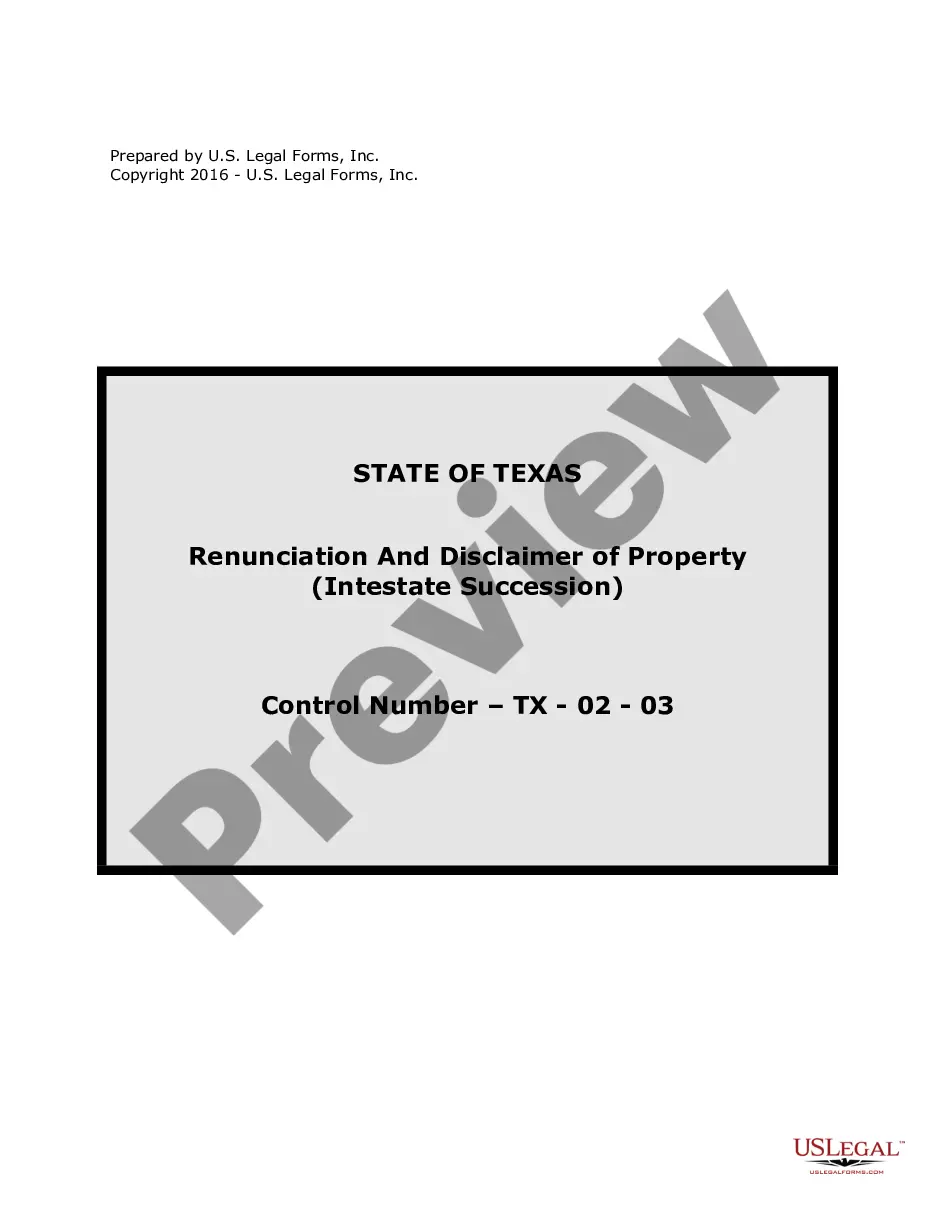
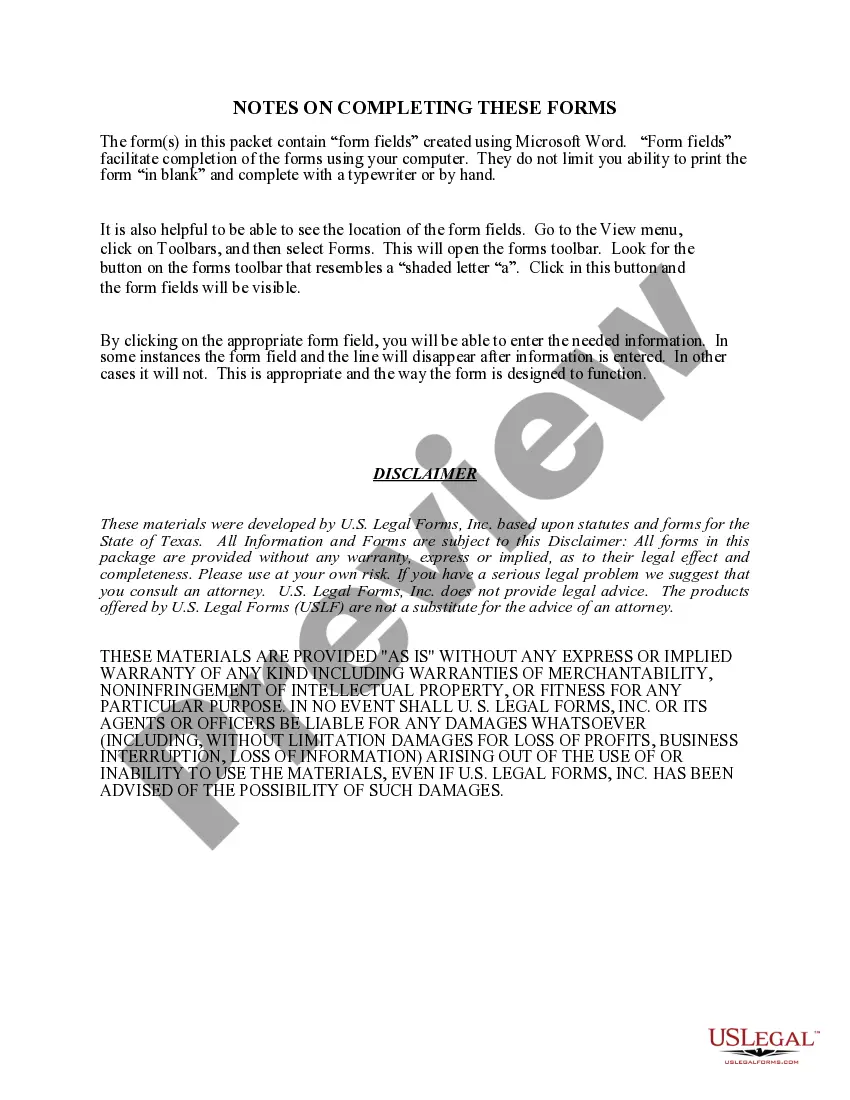
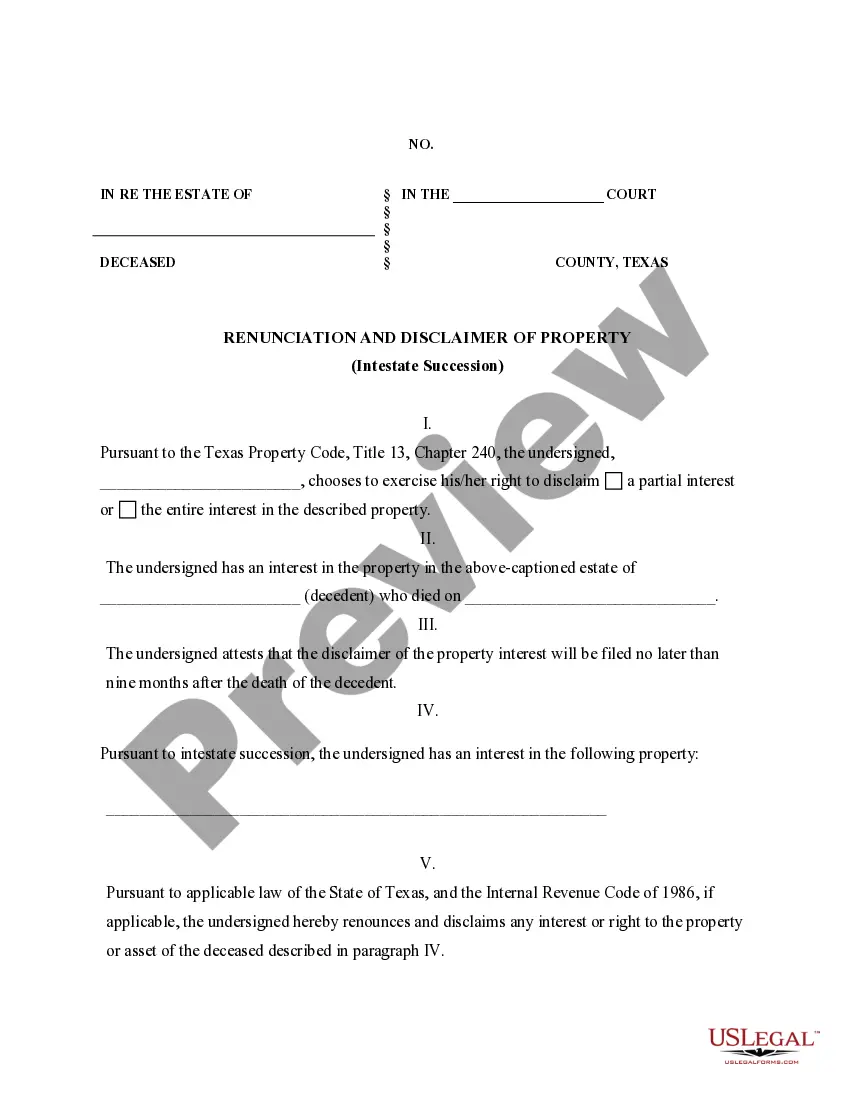
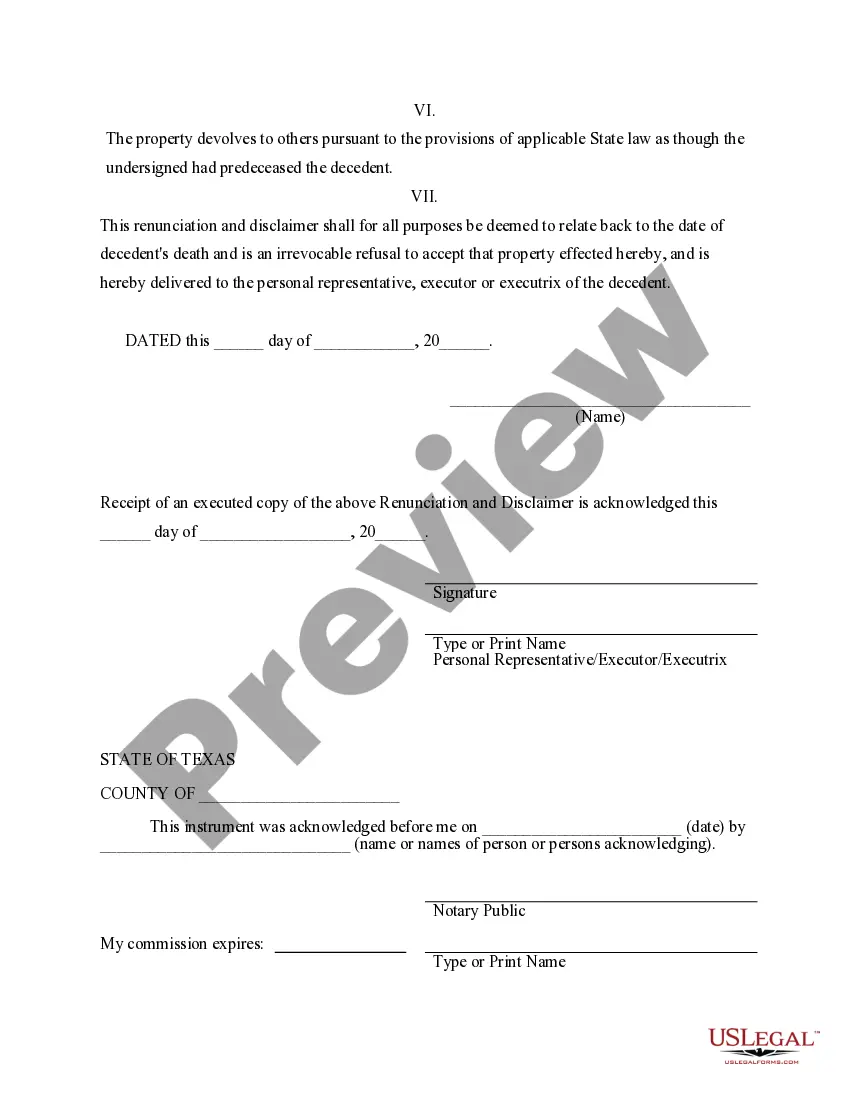
How to fill out Texas Renunciation And Disclaimer Of Property Received By Intestate Succession?
- If you're a returning user, log in to your account. Ensure your subscription is active before downloading the required form template.
- For first-time users, start by browsing the Preview mode and form description to find the correct template that aligns with your needs and local jurisdiction.
- If you don't find the right template, utilize the Search tab to discover alternative options that meet your requirements.
- Once you find the appropriate document, click on the Buy Now button and select your desired subscription plan. A user account registration is essential to access the full library.
- Complete your purchase by providing your payment information, either through credit card or PayPal.
- After payment, download your form to your device for completion. You can also access it anytime through the My Forms section.
In conclusion, US Legal Forms simplifies the process of obtaining legal documents to help you navigate Texas intestate succession rules efficiently.
Sign up today to explore our extensive legal library and ensure your documents are precise and compliant.
Form popularity
FAQ
The order of next of kin in Texas, according to the intestate succession rules, starts with the spouse and children. If no spouse or children exist, parents are next in line, followed by siblings, and then more distant relatives. It's important to understand this hierarchy as it will dictate how assets are distributed when someone dies without a will. Utilizing platforms like U.S. Legal Forms can simplify your understanding of these rules.
Under the Texas intestate succession rules, a surviving spouse does not automatically inherit everything. If the deceased had children, the estate is divided between the spouse and the children. This distribution can depend on whether the children are from the current marriage or previous relationships. It's wise to consult legal resources to understand the specific implications.
To settle an estate in Texas without a will, you must follow the Texas intestate succession rules. First, determine if you need to open an administration proceeding in probate court. You will likely need to gather information about the deceased's assets and debts. Additionally, consider using resources like U.S. Legal Forms to help you navigate this process efficiently.
Texas is predominantly not a per capita state; it follows a per stirpes distribution system. However, in certain contexts, Texas intestate succession rules could include some aspects of per capita with representation when determining how assets are shared among descendants. Knowing these nuances can help clarify the distribution process for beneficiaries.
Many states across the U.S., including Texas, utilize per stirpes as a method of distributing inheritances under intestate succession rules. While the specifics may vary, understanding whether your state follows this method can be vital for estate planning. Familiarizing yourself with local laws can help you navigate potential inheritance issues.
Recent changes to Texas inheritance laws have refined the processes associated with intestate succession. New laws aim to simplify the distribution of an estate, making it easier for heirs to understand their rights. Staying informed about these changes is essential for anyone dealing with estate planning or probate matters in Texas.
Texas intestate succession rules generally apply a per stirpes approach to the distribution of an estate. This means that if an heir predeceases the decedent, their share of the inheritance passes directly to their children. Understanding this can guide heirs and beneficiaries in knowing how inheritances work under Texas laws.
Next of kin in Texas typically includes the decedent's spouse, children, parents, and siblings, following a hierarchy established by Texas intestate succession rules. The order of inheritance can affect who is entitled to inherit, based on the relationship to the deceased. Having clarity about next of kin is crucial in the estate settlement process.
In Texas, an estate must generally be valued at over $75,000 to be subject to probate. However, this threshold can vary depending on the nature of the assets. If the estate qualifies for small estate procedures under Texas intestate succession rules, such as having less than a certain amount in personal property, it may avoid probate altogether, simplifying the distribution process.
In Texas intestate succession rules, the terms 'per stirpes' and 'per capita' refer to different ways of distributing an estate. 'Per stirpes' means that the share of a deceased heir passes down to their children, whereas 'per capita' distributes the estate equally among living descendants. Understanding these distinctions is important for interpreting Texas intestate laws and ensuring proper distribution of assets.