Pay For Spousal Support
Description
Get your form ready online
Our built-in tools help you complete, sign, share, and store your documents in one place.
Make edits, fill in missing information, and update formatting in US Legal Forms—just like you would in MS Word.
Download a copy, print it, send it by email, or mail it via USPS—whatever works best for your next step.
Sign and collect signatures with our SignNow integration. Send to multiple recipients, set reminders, and more. Go Premium to unlock E-Sign.
If this form requires notarization, complete it online through a secure video call—no need to meet a notary in person or wait for an appointment.
We protect your documents and personal data by following strict security and privacy standards.

Make edits, fill in missing information, and update formatting in US Legal Forms—just like you would in MS Word.

Download a copy, print it, send it by email, or mail it via USPS—whatever works best for your next step.

Sign and collect signatures with our SignNow integration. Send to multiple recipients, set reminders, and more. Go Premium to unlock E-Sign.

If this form requires notarization, complete it online through a secure video call—no need to meet a notary in person or wait for an appointment.

We protect your documents and personal data by following strict security and privacy standards.
Looking for another form?








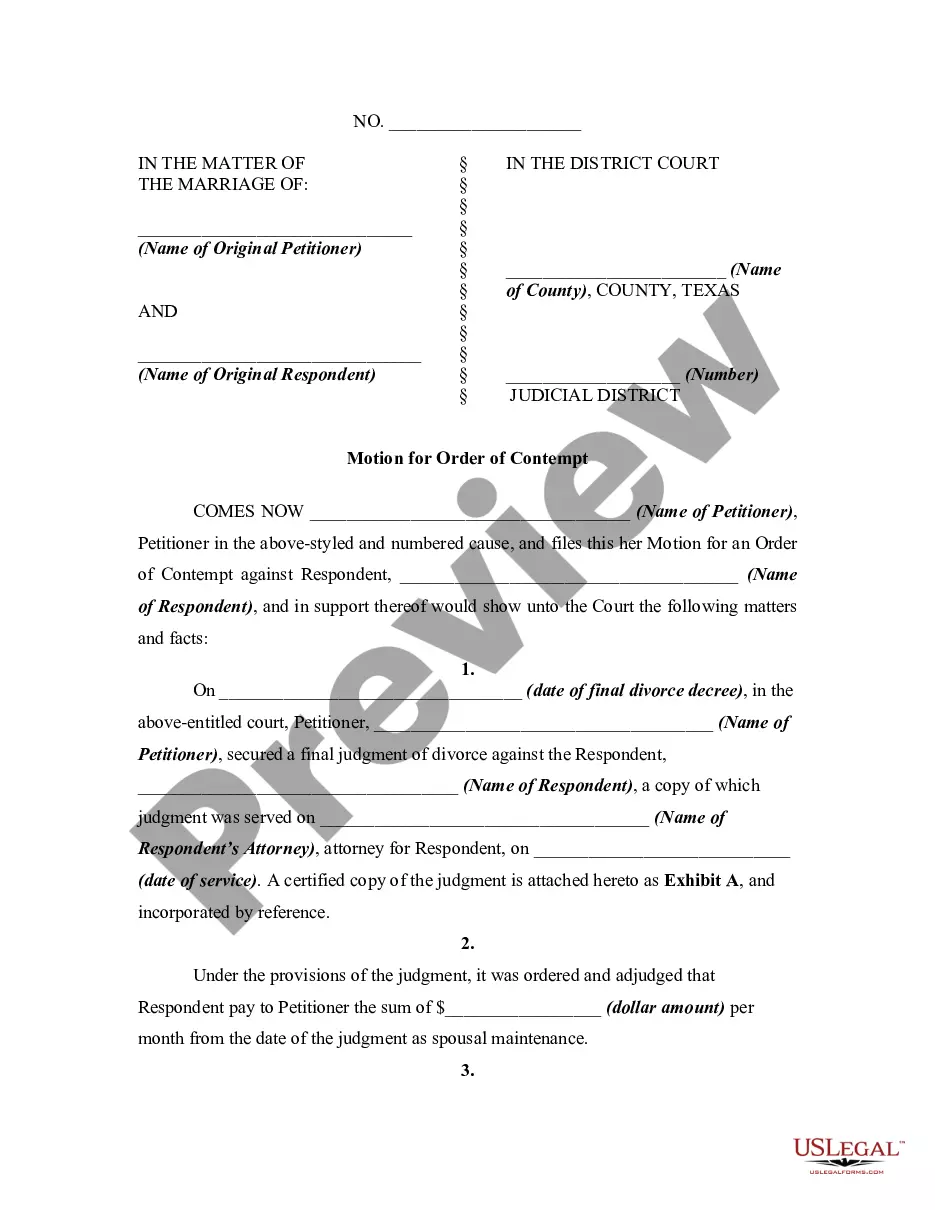
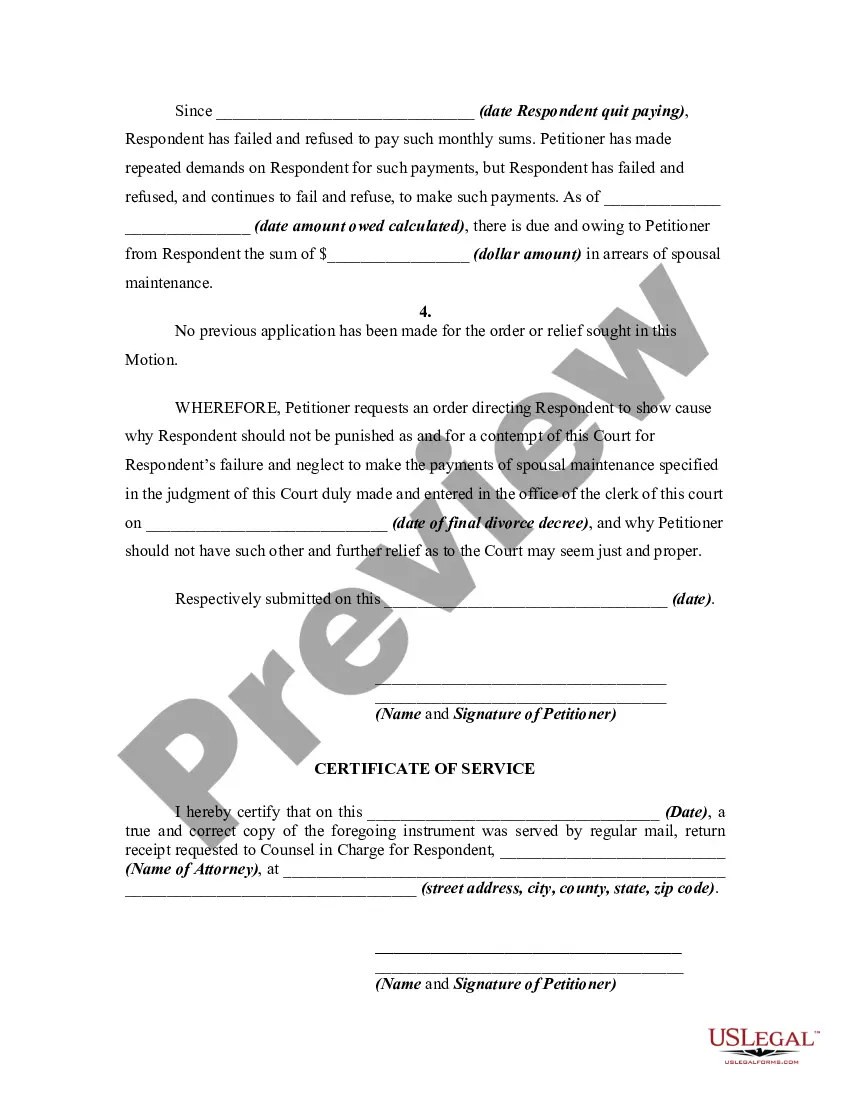
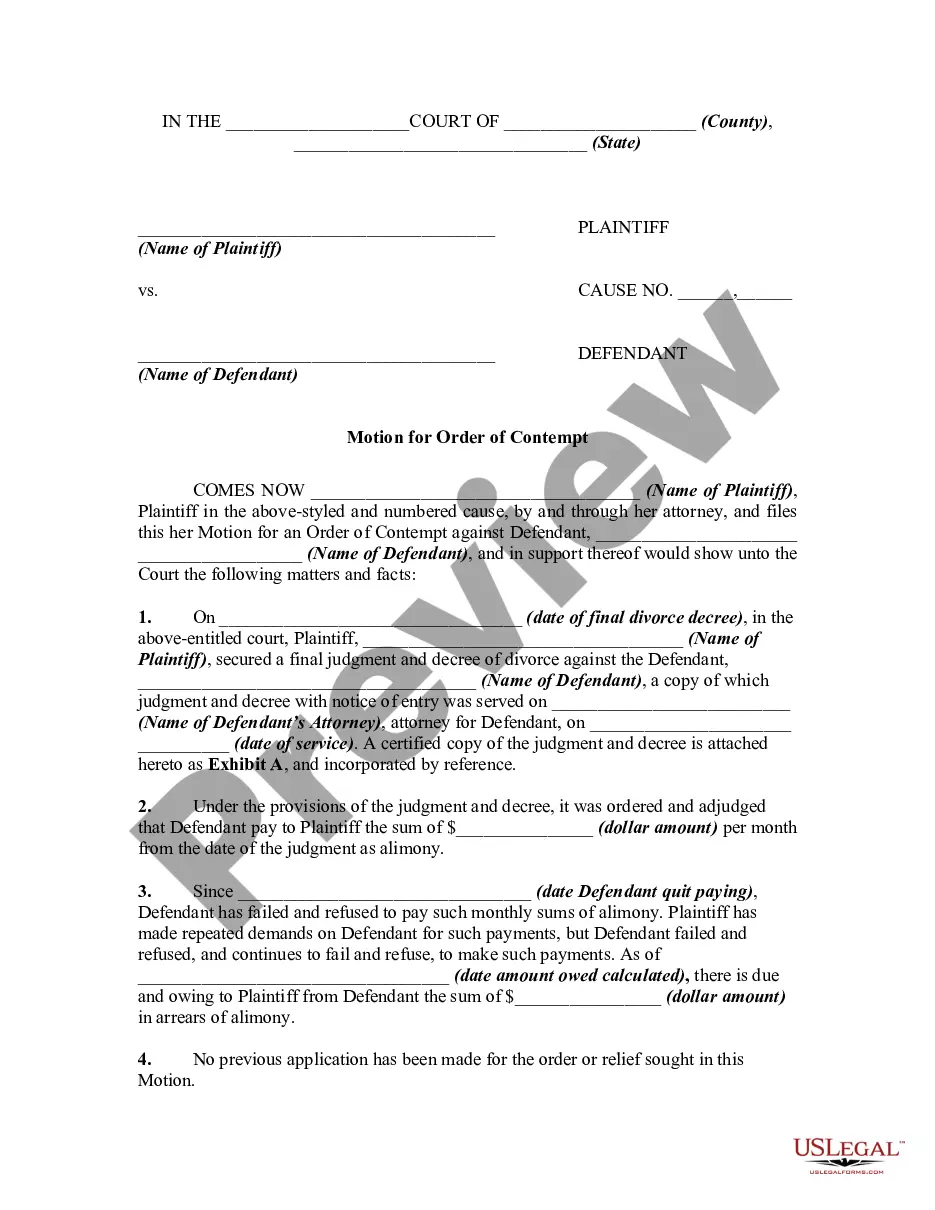
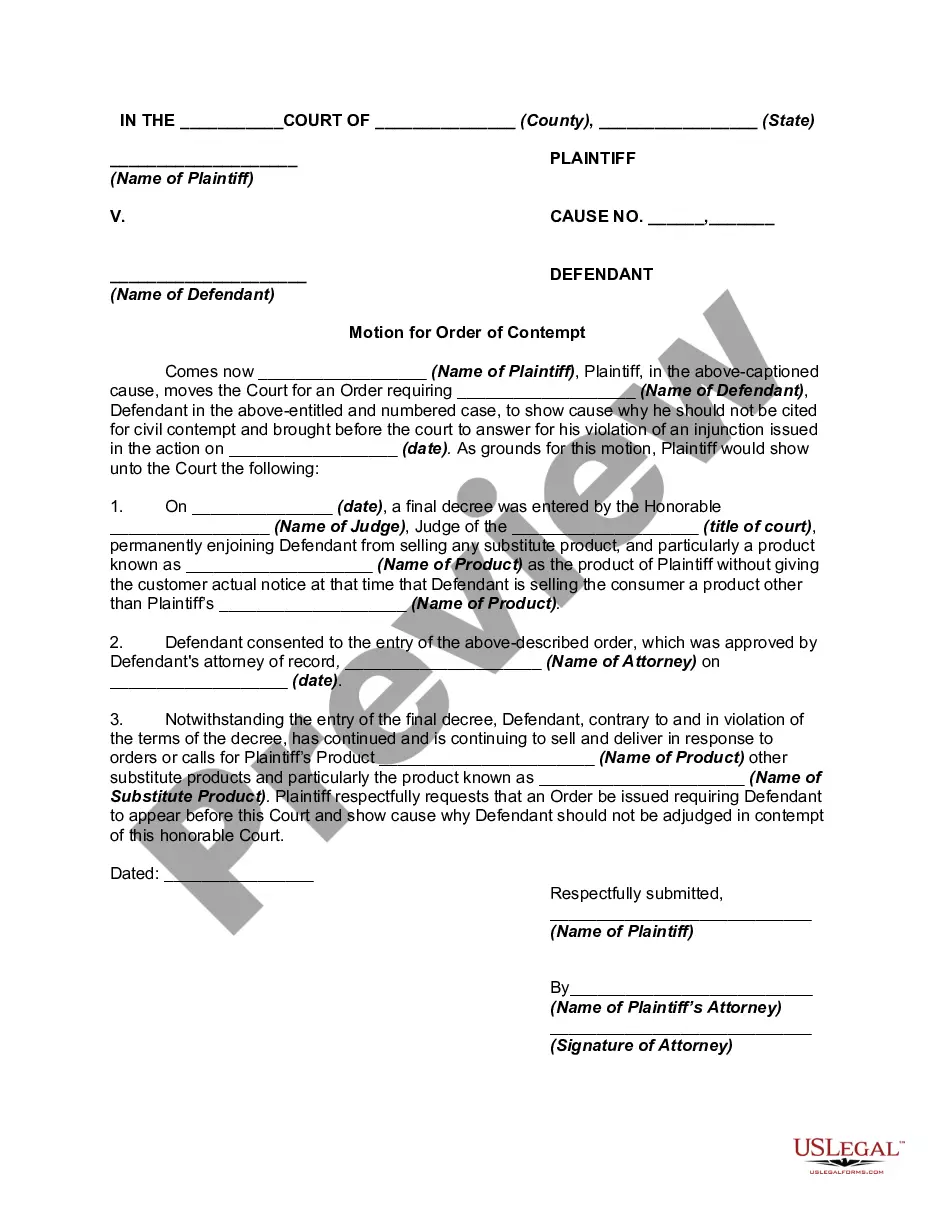
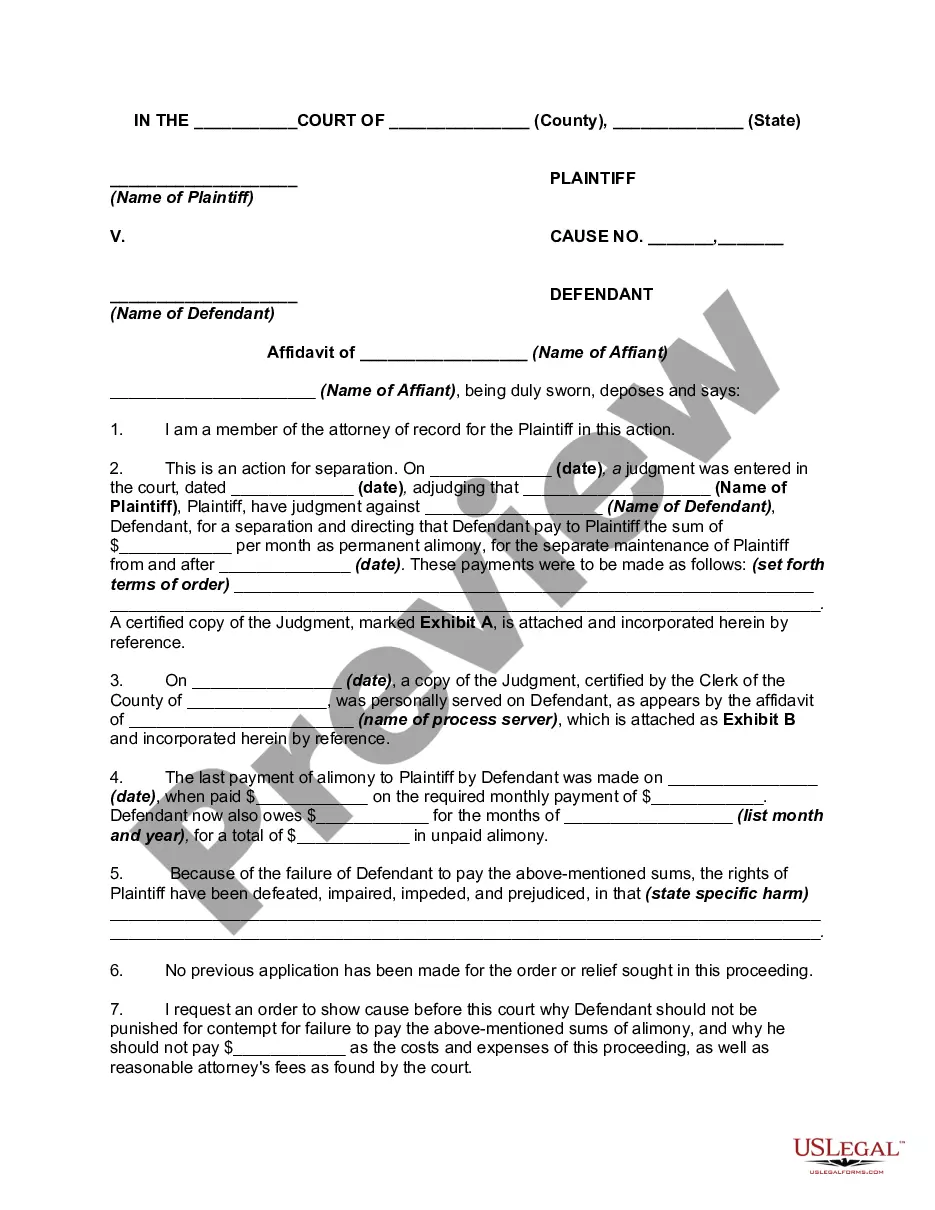
How to fill out Texas Motion For Order Of Contempt For Failure To Pay Spousal Maintenance?
Whether for business purposes or for personal matters, everybody has to handle legal situations sooner or later in their life. Completing legal documents needs careful attention, beginning from selecting the correct form template. For example, when you pick a wrong version of a Pay For Spousal Support, it will be rejected once you submit it. It is therefore crucial to have a reliable source of legal documents like US Legal Forms.
If you need to get a Pay For Spousal Support template, follow these easy steps:
- Get the sample you need using the search field or catalog navigation.
- Look through the form’s information to ensure it matches your case, state, and county.
- Click on the form’s preview to view it.
- If it is the incorrect document, return to the search function to find the Pay For Spousal Support sample you need.
- Get the template when it matches your requirements.
- If you have a US Legal Forms account, simply click Log in to gain access to previously saved templates in My Forms.
- In the event you do not have an account yet, you may obtain the form by clicking Buy now.
- Choose the appropriate pricing option.
- Finish the account registration form.
- Choose your payment method: use a credit card or PayPal account.
- Choose the document format you want and download the Pay For Spousal Support.
- After it is saved, you are able to complete the form with the help of editing software or print it and complete it manually.
With a large US Legal Forms catalog at hand, you do not need to spend time looking for the right sample across the web. Take advantage of the library’s straightforward navigation to find the appropriate template for any situation.
Form popularity
FAQ
The length of payments is determined by the length of the marriage, with longer marriages expecting longer periods of spousal support. The general structure is: Marriages between 0 and 15 years will see payments last 15% ? 30% of that time. Marriages between 15 and 20 years will see payments last 30% ? 40% of that time.
Alimony is usually around 40% of the paying party's income. This number is different in different states and different situations.
The key factors analyzed in an alimony decision are each spouse's income, ability to earn and standards of living established during the marriage. If there is a history of violence, abuse or certain criminal convictions, however, this could bar a spouse from receiving alimony payments under California law.
How Hard Is It to Get Alimony in Texas? Texas is one of the most difficult states to win alimony in a divorce. While it is possible to win alimony or spousal support in court, it is much more likely to receive alimony through a private contract created as part of the divorce settlement.
Eligibility for Court Ordered Spousal Maintenance. the marriage has been for ten years or longer and the spouse made diligent efforts to either earn sufficient income or to develop necessary skills while the divorce is pending to meet his or her minimum reasonable needs; or.